REVIEW · BERLIN
Berlin: Private Bike Tour of the Berlin Wall and Third Reich
Book on Viator →Operated by FREE BERLIN Bike Tours · Bookable on Viator
Berlin’s 20th-century borders feel close on a bike. This private tour links Berlin Wall remains with key Third Reich and Holocaust-era stops, moving you efficiently through the city. I love that you get a flexible, private route feel while still covering the big landmarks like Checkpoint Charlie and the East Side Gallery area.
Two things I especially like: the pace—cycling keeps you from spending your whole trip stuck in long walks between sights—and the clarity of the experience, including straightforward explanations in English. One thing to consider is that Berlin history sites can be emotionally heavy, and the tour is designed to cover several serious memorials in a single run—so pace yourself if you need breaks.
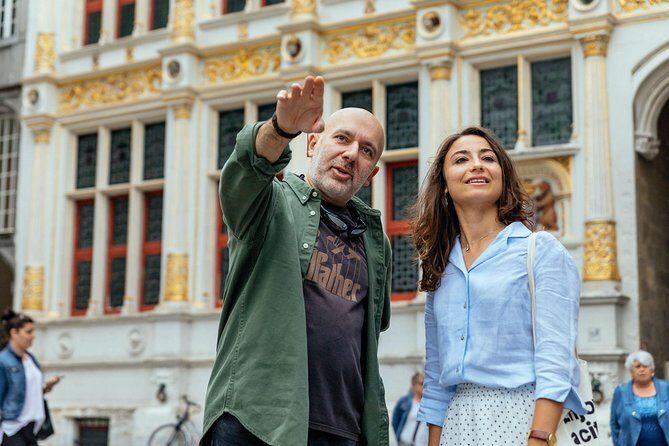
You’ll ride with a professional guide using the Free-Berlin Concept, where each guide designs their own route, so your day can feel a bit different from someone else’s. The tour is family-friendly (kids welcome, infant seats on request), and it runs in all weather, so bring proper layers and rain gear.
In This Review
- Key highlights worth your time
- Private bike touring Berlin’s hardest history
- Where the ride starts: Nikolaiviertel’s “old town” perspective
- The Jewish heritage stop: civil courage at the Neue Synagoge
- GDR-era contrasts: memorials that sit near the edge of mainstream attention
- Seeing the Berlin Wall where it’s still there
- Mauerpark and the idea of a “perfect border”
- Humboldthain Flak Tower: Nazi architecture meets a big viewpoint
- Gunter Litfin memorial: the first person shot at the Wall
- Invalidenfriedhof: a cemetery cut by the Wall
- Spreebogenpark and Albert Speer’s Great Hall plan
- Reichstag from the outside: power grabs vs. democratic history
- Holocaust Memorial: scale, weight, and the uncomfortable irony
- Fuhrerbunker: only a parking lot now
- Checkpoint Charlie: Cold War tension, told in English
- The ride logistics that actually matter
- Who this bike tour is best for
- Should you book? My honest take
- FAQ
- How long is the Berlin Wall and Third Reich private bike tour?
- What is the starting point and where does the tour end?
- Is this tour private?
- What languages are available?
- Does the tour run in bad weather?
- Is it family-friendly?
- What is the cancellation policy?
Key highlights worth your time
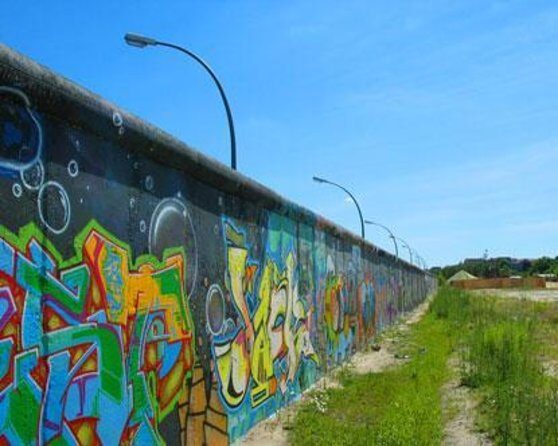
- Wall remains you can actually understand at the stops where the barrier is still “alive”
- Nazism-era and Cold War sites in one ride without losing time between neighborhoods
- Gunter Litfin memorial as a direct, early lesson in the Wall’s human cost
- Panoramas from Humboldthain Flak Tower to connect architecture with what it was built for
- Checkpoint Charlie included in English as a Cold War pressure-cooker story
- Helmets and bikes included so you can focus on the sights, not logistics
Private bike touring Berlin’s hardest history
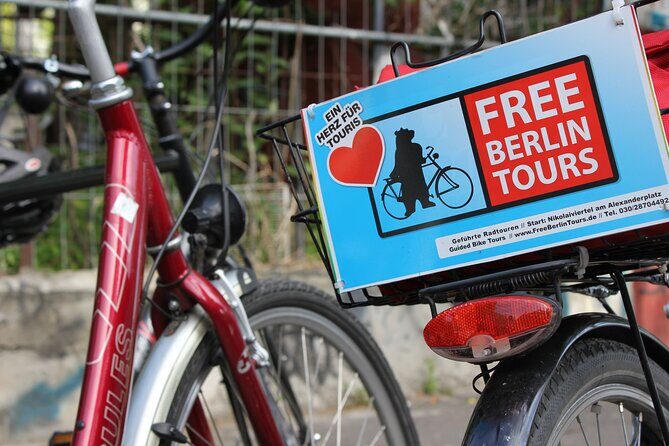
A bike tour in Berlin is practical. The city spreads out, streets can be busy, and many key sites are too far apart for a calm walking day. Here, cycling does something useful: it keeps your momentum while still letting you stop often enough to make sense of what you’re seeing.
This is also a private experience. That matters because you can adjust your pace to your group, ask questions, and slow down at the memorials when you need to. It’s not a rigid conveyor belt. The Free-Berlin Concept means your guide shapes the exact route and emphasis, which can help if you have particular interests within the broader story.
Price-wise, it’s not a “cheap thrills” option. At about $107 per person for roughly 3 hours, you’re paying for a guide, a bicycle, and helmets, plus a route designed around history-heavy stops. If you would otherwise do this by hopping between transit and museums, this format can feel like better value because you buy time and context in one go.
You can also read our reviews of more cycling tours in Berlin
Where the ride starts: Nikolaiviertel’s “old town” perspective
You begin at Free Berlin Bike Tours & Rental on Poststraße 11 (10178 Berlin). From there, the first stop is Nikolaiviertel, often treated like Berlin’s old-town core.
This is a clever start because it’s a reminder that Berlin wasn’t shaped only by the Wall or the Third Reich. You’ll look at what survives of older Berlin—even while keeping in mind the scale of destruction the city endured, including bombings. It’s not about pretending the past is simple. It’s about getting oriented before the heavy chapters begin.
What you’ll like: the way the guide connects place to time, so the later sites don’t feel like random monuments.
Possible drawback: since this is an easy kickoff stop, you’ll want to mentally “switch gears” quickly—once you leave Nikolaiviertel, the story turns much darker.
The Jewish heritage stop: civil courage at the Neue Synagoge
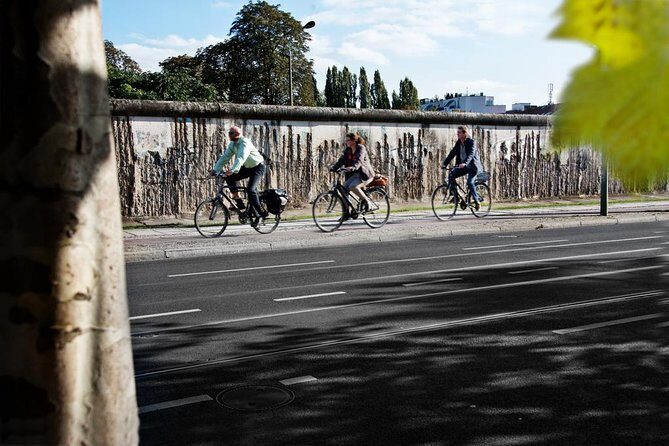
Next comes Stiftung Neue Synagoge Berlin – Centrum Judaicum. The focus is the building’s story of civil courage—especially the account of a police officer who helped save it during the night of broken glass.
This matters because it frames the Nazi era before you reach the Wall: it shows that destruction didn’t only happen through “official” channels. It also highlights how individuals sometimes acted to protect cultural and religious life.
Why it’s valuable on a bike tour: you’re not only collecting facts. You’re building cause-and-effect. From here, the rest of the tour feels less like a timeline you’re memorizing and more like a chain of decisions and consequences.
GDR-era contrasts: memorials that sit near the edge of mainstream attention
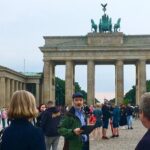
As you move along, you’ll stop at a memorial for the victims of deportation and the Holocaust. The design is linked to GDR times, and the guide points out how it contrasts with the memorial closer to Brandenburg Gate.
That contrast is an important lesson: Germany’s memory culture has evolved in different political eras. Memorials aren’t just “what happened.” They also show what a society chose to emphasize when.
If you’re a history buff, this kind of detail is a win. If you’re sensitive to heavy material, plan to slow down and take your time here rather than rushing photos.
Seeing the Berlin Wall where it’s still there
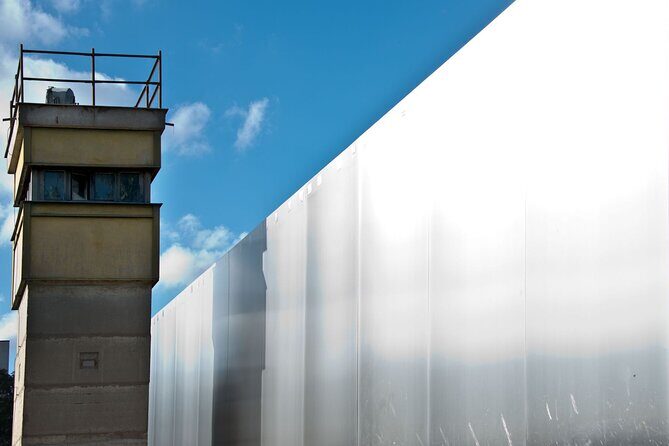
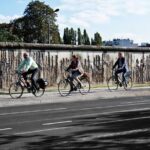
The tour’s centerpiece is the Memorial of the Berlin Wall stop. The guide explains that there are three spots where the Wall is still “alive,” and this is the one where you can truly understand what it did to Berlin—what it meant day to day, not just what it represented on posters.
This is where a bike tour earns its keep. You’re close enough to see the barrier’s physical presence, but you’re also surrounded by context—streets and neighborhoods that help you picture separation as something built into daily movement.
At this point in the day, you might feel the emotional weight of the story more strongly. That’s normal. The value is that you’re not just looking at a single fragment. You’re learning what the barrier changed in real lives.
You can also read our reviews of more private tours in Berlin


Mauerpark and the idea of a “perfect border”
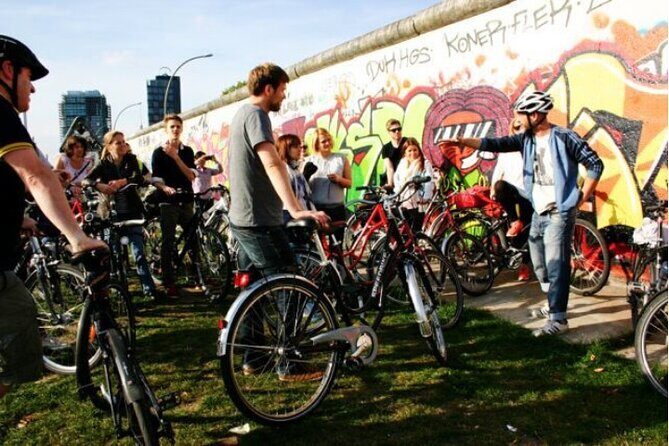
Then you roll to Mauerpark, known for its Sunday flea market. The key takeaway for your tour is how the space shows attempts by East Germany’s rulers to create a perfect border—an ideology turned into built reality.
This stop helps you see the Wall era as more than a line on a map. It shaped how people used space, how communities formed, and what kinds of public life were allowed.
Practical tip: Mauerpark is the kind of place where it’s easy to imagine it as “just a fun market” if you don’t anchor it to history. Let the guide’s framing do the work.
Humboldthain Flak Tower: Nazi architecture meets a big viewpoint
Next up is the Humboldthain Flak Tower. It was once a giant fortress and air-raid shelter, and the tour connects the site to insights about Nazi architecture.
You get a panoramic view too. That’s not just for photos. Seeing the layout from above helps you grasp how power and defense were built into Berlin’s geography.
This stop is a good “mind-body reset” because it mixes heavy context with a clear visual takeaway. You’ll likely leave with a better instinct for how ideology can shape buildings—and how those buildings shape what you see today.
Gunter Litfin memorial: the first person shot at the Wall
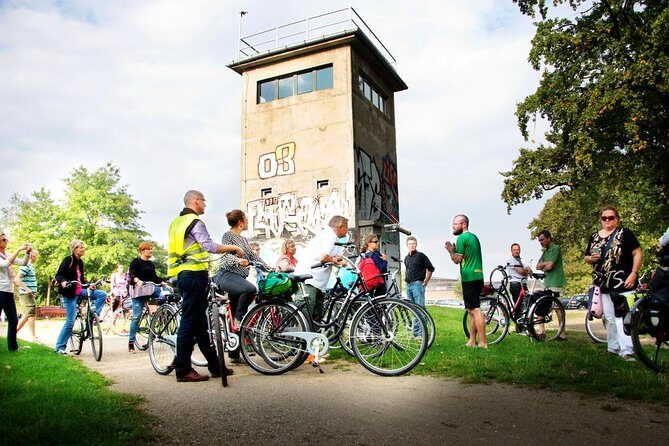
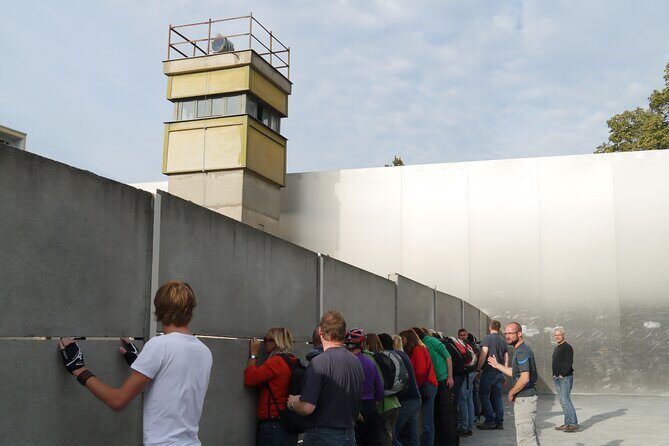
The Gunter Litfin Memorial preserves a tower tied to Günter Litfin, described here as the first person shot at the Wall.
This is one of those stops where cycling suddenly feels less about sightseeing and more about confronting a turning point. The Wall wasn’t an abstraction. It came with consequences that were immediate.
If you’re bringing kids, you may want to gauge their emotional readiness here. The tour is family-friendly overall, but memorials like this require more care in how you handle questions and pacing.
Invalidenfriedhof: a cemetery cut by the Wall
You’ll then stop at Invalidenfriedhof, a burial ground cut in the middle by the Wall. The guide explains it was made for military “heroes,” and the tone here is complicated: some are more important to be remembered than honored.
This is where Berlin differs from places that treat monuments as simple praise or simple blame. The discussion encourages you to think about how commemoration works—who gets celebrated, who gets reduced to propaganda, and what a divided city does to even its burial spaces.
Why it belongs in this bike format: you pass through the city with the Wall as the theme, so the cemetery feels like part of one continuous story rather than an isolated fact.
Spreebogenpark and Albert Speer’s Great Hall plan
At Spreebogenpark, you get an overview of Germany’s governing district. The guide also discusses plans connected to Hitler’s architect Albert Speer, including a vision for a massive Great Hall that could have held 180,000 people.
This is a sharp shift: from human-scale tragedy to the scale of power, designed in concrete and numbers. You’ll likely appreciate how the tour ties architecture and planning to ideology, not as trivia, but as the language of control.
If you like big ideas anchored to physical space, this is one of the most satisfying stops on the ride.
Reichstag from the outside: power grabs vs. democratic history
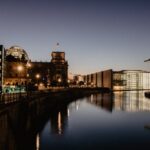
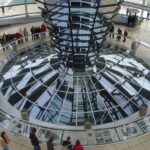
You continue to the Reichstag Building. The guide covers Hitler’s seizure of power and Germany’s democratic history, while noting there’s no time to go inside.
That outside view is still useful. When you can’t enter, you want your guide to do the interpretive work—and here, the stop is timed for the story rather than museum access.
A practical note: the Reichstag area can be busy. Having a guide help you position the group and keep movement smooth is a real advantage when you’re riding.
Holocaust Memorial: scale, weight, and the uncomfortable irony
One of the stops covers another set of memorials for the three biggest victim groups of the Holocaust. Then you reach the Holocaust Memorial – Memorial to the Murdered Jews of Europe, described as the biggest genocide memorial in the world and noted as being created by the ones responsible for the killing.
That phrasing is stark, and it should be. The tour presents the memorial’s size and historical importance as extraordinary. Whether you’re familiar with it or not, the impact comes from the combination of scale and intent.
This is also a stop where cycling stops matter. Walking slowly among memorials helps you process what you’re seeing. If you’re prone to rushing your day, this is where you’ll want to deliberately slow down.
Fuhrerbunker: only a parking lot now
You’ll then visit the area known as Fuhrerbunker, where Hitler hid during the last weeks of the war and committed suicide. Today, what you can see is described as a parking lot, and the guide explains why.
This stop is memorable because it shows how history can vanish into ordinary modern life. You’re standing in a place that once held extraordinary events, and yet the present is plain.
It’s the kind of stop that makes you look around differently. Even if you don’t feel a dramatic “scene,” you learn to spot how cities cover trauma with daily routine.
Checkpoint Charlie: Cold War tension, told in English
The tour includes Checkpoint Charlie, but the details note that this is included only in the English version of the tour. The guide frames it as the most famous border station of the Cold War because it was the only shared one between the USA and USSR.
The story here is tense: there was a period when a third world war almost started right in the heart of Berlin. That kind of context makes the crossing points feel like more than a photo opportunity.
If you choose English, plan to treat this as a narrative climax. It ties the Wall era to global stakes—Berlin as a pressure valve for bigger conflicts.
The ride logistics that actually matter
You’ll use a bicycle and helmet as part of the experience. That small detail is bigger than it sounds. Berlin cycling can be comfortable, but helmets and proper equipment help you stay focused on the guide’s explanations instead of worrying about gear.
The tour is private, but it also operates from 4 persons minimum. If you’re traveling as a solo or small party, you’ll want to check scheduling so you don’t accidentally book a slot that won’t run.
Departures are available at several times throughout the day, which is a plus. A three-hour window is realistic for this kind of content, as long as you’re okay with multiple serious stops back-to-back.
Also, the tour runs in all weather. Berlin can do sudden rain and wind, so dress appropriately.
Who this bike tour is best for
This is perfect if you’re a history fan who wants context, not just locations. It’s also great if you want to cover the Wall and related Third Reich-era sites without spending half a day in transit.
If you travel with kids, it’s family-friendly and you can request infant seats. Still, this tour covers major Holocaust and Wall-related memorials, so it’s best for families who are comfortable with age-appropriate explanations and pacing.
If you hate biking for any reason, this might feel like too much in one go. But if you’re willing to ride, the format is a strong way to connect neighborhoods to events.
Should you book? My honest take
Book it if you want a guided, private way to see the Berlin Wall story as more than a slogan. The stop selection makes sense: it moves from older Berlin orientation to Jewish heritage, then to Wall remains, then to architectural power and genocide memorials, ending with a Cold War pressure point.
Skip it (or consider another format) if you prefer long museum time over quick stops. This is built to move you through many sites in about three hours, so it’s not designed for deep indoor study.
FAQ
How long is the Berlin Wall and Third Reich private bike tour?
It runs about 3 hours.
What is the starting point and where does the tour end?
The tour starts at Free Berlin Bike Tours & Rental, Poststraße 11, 10178 Berlin, Germany, and it ends back at the same meeting point.
Is this tour private?
Yes. It’s a private tour, so only your group participates.
What languages are available?
The tour is offered in English and German. Dutch, French, and Spanish are also possible on request.
Does the tour run in bad weather?
It operates in all weather conditions, so you should dress appropriately.
Is it family-friendly?
Yes. Children are welcome, and infant seats can be provided on request. Children must be accompanied by an adult.
What is the cancellation policy?
You can cancel for free up to 24 hours in advance for a full refund. If you cancel less than 24 hours before the start time, the amount you paid isn’t refunded.