REVIEW · BERLIN
Berlin Reunited and Revived! 3-Hour Alternative Tour
Book on GetYourGuide →Operated by Insider Tour Berlin · Bookable on GetYourGuide
Berlin has layers, and this tour helps. This 3-hour alternative route walks you through Berlin’s neighborhoods that grew out of the Wall’s fall, with stops tied to gentrification, street art politics, and today’s everyday city life. You’ll see major sights like the Kulturbrauerei and the East Side Gallery, but the real win is how the guide connects places to people and choices.
What I like most is the way the route compares four very different areas in one go—starting in Mitte and moving through Prenzlauer Berg, Kreuzberg, and Friedrichshain. The other big plus is the ending at the Turkish Market by the Landwehr Canal, where the city’s mix isn’t just a theory; it shows up in food, fabric, artisans, and even impromptu music. A fair consideration: it’s a walking tour with no food included, so if you want snacks or a proper meal, plan on grabbing something before or after.
In This Review
- Key Things That Make This Berlin Alternative Tour Worth Your Time
- A 3-Hour Route Through Berlin’s After-the-Wall Transformation
- Mitte’s Restored Buildings: Seeing the First Wave of Rebuild
- Prenzlauer Berg and the Kulturbrauerei: From 90s Art Hub to Family-and-Career Life
- Friedrichshain and Kreuzberg: When Alternative Life Fights Back
- East Side Gallery: Street Art With Political Overtones
- The Turkish Market on Landwehr Canal: Ending With Real Daily Variety
- Price and Value: What $352 Buys for a Private Group
- Timing, Walking Pace, and What to Bring
- Who This Tour Is Best For
- Should You Book This Berlin Reunited and Revived Tour?
- FAQ
- How much does the Berlin Reunited and Revived 3-Hour Alternative Tour cost?
- How long is the tour?
- What neighborhoods and landmarks will I see?
- Are food and drinks included?
- When does the tour run?
- Is hotel pickup included, and how do I recognize the guide?
- Is the tour wheelchair accessible?
Key Things That Make This Berlin Alternative Tour Worth Your Time
- Mitte to Friedrichshain in 3 hours: you’ll connect the post-Wall rebuild to current street-level politics.
- Kulturbrauerei stop: an old brewery turned culture-and-arts center that mirrors broader changes.
- Prenzlauer Berg context: learn why the neighborhood attracted young families and professionals after the 90s art scene.
- Friedrichshain and Kreuzberg street reality: hear how left-wing locals resist rent spikes and corporate takeovers.
- East Side Gallery meaning: see why Berlin’s street art carries political weight, not just style.
- Turkish Market finish at Landwehr Canal: a lively food-and-craft market that reflects Berlin’s diversity.
A 3-Hour Route Through Berlin’s After-the-Wall Transformation
Berlin’s story after 1989 isn’t just a headline. It’s written into buildings, streets, and the arguments people have about how a city should change. This tour is designed around that idea: you move through four neighborhoods and a handful of landmark stops, and the guide keeps bringing you back to one question—what does transformation look like for ordinary residents?
The pacing works because you’re not stuck bouncing between far-apart sites. Instead, you get a tight loop: restored central streets in Mitte, shifting creative-and-family life in Prenzlauer Berg, continued tensions and resistance in Friedrichshain and Kreuzberg, and then the big visual statement of the East Side Gallery. Ending at the Turkish Market by the Landwehr Canal is a clever reset too. It pulls the conversation back from ideology to daily life, including food, fabric, local makers, and music.
If you’re the kind of person who likes meaning behind the photo, this format fits you. And since it’s a private group with an English-speaking guide (and German too), you can ask direct questions instead of hoping the group hears you.
You can also read our reviews of more tours and experiences in Berlin
Mitte’s Restored Buildings: Seeing the First Wave of Rebuild
The tour begins in Mitte, where you start with the idea of a city that was neglected and then quickly pulled back into view after the Wall fell. The point isn’t just to admire pretty renovations—it’s to understand why some parts of central Berlin bounced back fast and how restoration can change what the area feels like.
You’ll look at the once-neglected buildings and how they were restored to something like their former glory. That matters because Mitte became a kind of showcase zone: investment, redevelopment, and new uses for old space all hit here early. This is also where you’ll start noticing a pattern you’ll see again later—Berlin doesn’t replace everything. It repurposes it, and the repurposing creates winners, losers, and new debates.
Practical tip: Mitte streets can be dense on foot. Wear shoes that handle pavement well, because the walking adds up over three hours.
Prenzlauer Berg and the Kulturbrauerei: From 90s Art Hub to Family-and-Career Life
Next comes Prenzlauer Berg, an area tied to the creative energy that rose in Berlin in the 90s. The tour frames it in a realistic way: it was an artistic hub, and now it attracts young professionals and families. That shift isn’t random. It’s part of a broader Berlin story—creative life often helps neighborhoods become desirable, and desirability tends to bring rising pressure.
A highlight here is the Kulturbrauerei. This old brewery has been refurbished into a center for culture and the arts, and it works as a symbol without requiring you to be an architecture nerd. You’re seeing the same theme from a different angle: industrial leftovers and “forgotten” structures get new purpose. That kind of transformation can be exciting, but it also creates tension about who the neighborhood is really for.
As you move around, pay attention to what surrounds the buildings—café culture, family-life patterns, and the overall tone of the streets. The tour gives you the background, but you can also judge the change just by watching what people do and where they spend time.
Friedrichshain and Kreuzberg: When Alternative Life Fights Back
This is where the tour takes a sharper turn. Friedrichshain and Kreuzberg are described as alternative districts where left-wing residents try to fend off attacks from corporate businesses and rent-raising landlords. Even if you don’t care about politics in general, you should care here because the neighborhood power struggle shows up in how spaces are used and who feels welcome.
The guide keeps it grounded in what the street-level reality feels like now. The city didn’t just reunite buildings and borders. It also reorganized wealth and influence, and those shifts can hit hardest on people with the least flexibility. This part of the tour helps you understand that Berlin’s alternative scene isn’t only about style. It’s also about survival, identity, and control of housing.
When you think of Berlin only as history and museums, you miss this ongoing part. Here you get something more useful: context for why certain places feel stubbornly non-mainstream and why locals talk about change in terms of power.
East Side Gallery: Street Art With Political Overtones
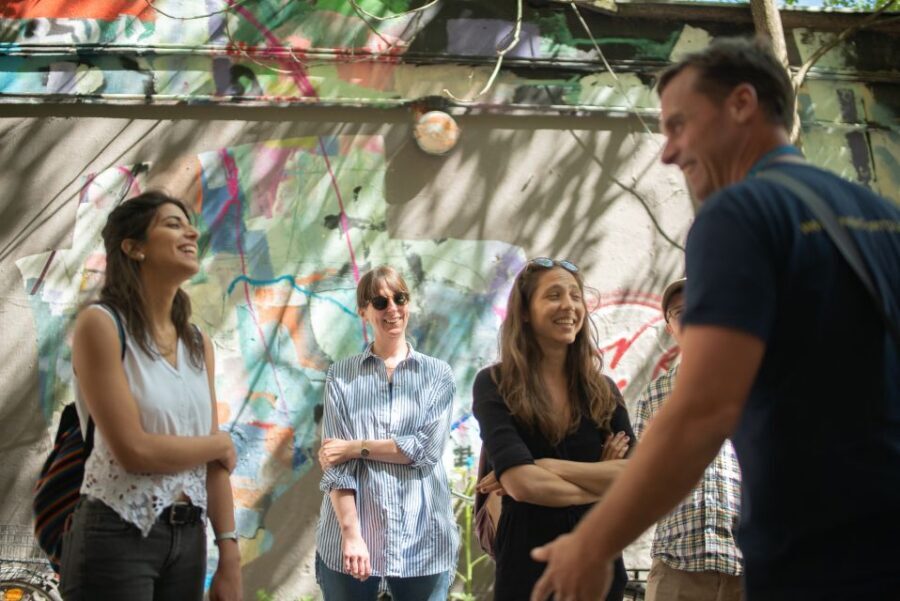
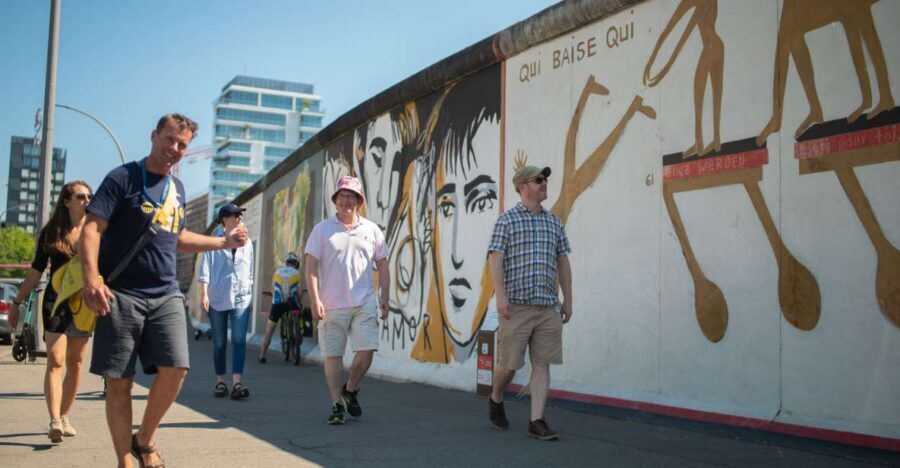
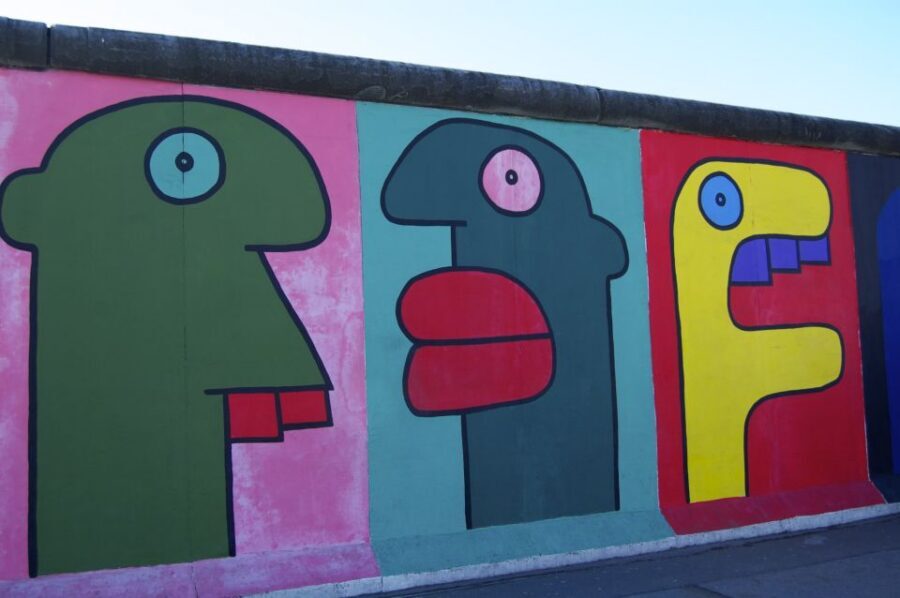
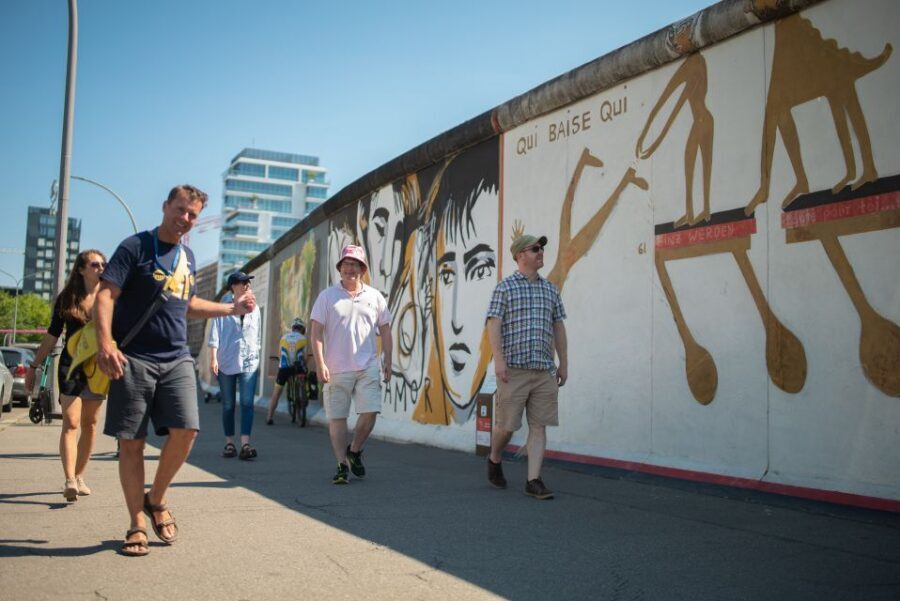
Then you reach the East Side Gallery, a colorful stretch of the Berlin Wall that’s now the largest open-air gallery in the world. On a first pass, it looks like art you can enjoy at face value. The tour makes sure you also see the overtones.
You’ll discuss the origins and political meanings tied to Berlin’s famous street art scene. That matters because Berlin’s murals weren’t created in a vacuum. The Wall, the division, and the later reunification are part of why street art here often carries messages. Even when a piece is playful, the background tension is rarely far away.
What I like about this stop is that it gives you a lens for future looking. After the tour, you’ll probably notice how street art in Berlin often mixes humor, protest, and commentary. You’ll also be quicker to ask who benefits and who gets pushed out when a neighborhood turns into a destination.
Tip: bring weather-appropriate clothing. The East Side Gallery area is outdoors for a good chunk of time, and Berlin’s weather has a talent for changing its mind.
The Turkish Market on Landwehr Canal: Ending With Real Daily Variety
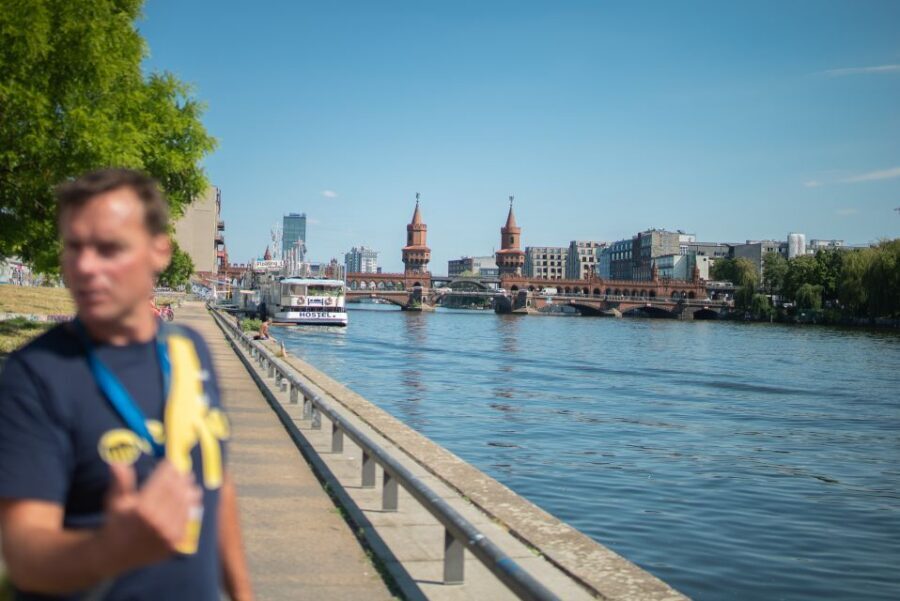
The tour finishes with a crescendo at the Turkish Market on the banks of the Landwehr Canal. It’s an outdoor bazaar, and it’s famous in the way Berlin locals know places that can handle both shopping and social life.
This is not a stop that only satisfies your appetite, either. The market has grown well beyond fresh produce and Turkish cuisine. You’ll see patterned fabric, artisans, local farmers, and plenty of energy around stalls. The tour frames it as a representation of the city’s diverse population, and the best part is that diversity here is practical. People show up, buy what they need, listen to music, and keep the day moving.
Because food and drinks aren’t included on the tour, treat this as your planned payoff. Walk up, browse, and grab something if you still feel hungry. Even if you skip eating, the market is great for soaking up how Berlin mixes cultures in a way that doesn’t feel like a performance.
Price and Value: What $352 Buys for a Private Group
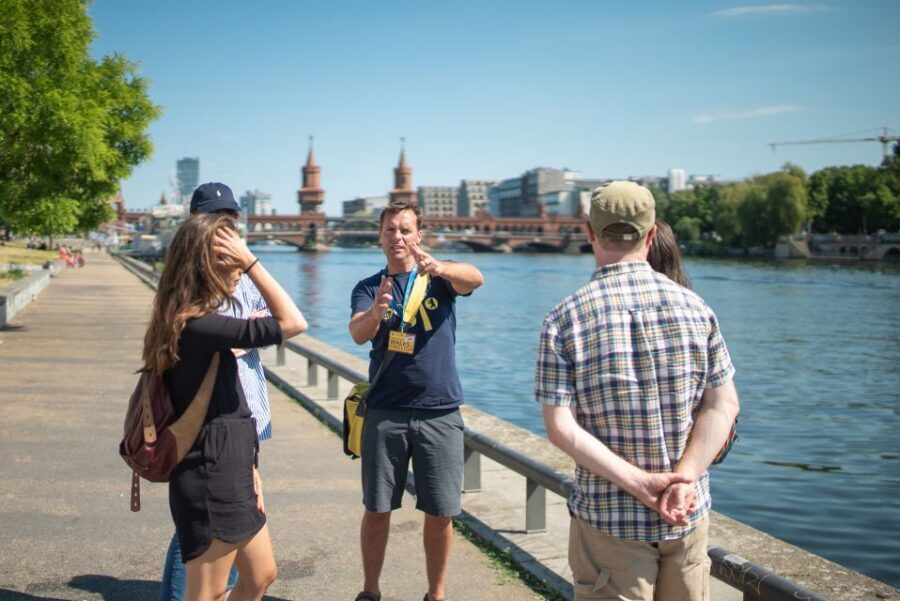
The price is listed at $352 per group, up to 20 people, for a 3-hour private walking tour. If you’re booking for a small group, that can feel straightforward: you’re paying for a guide and a tailored, conversation-friendly pace. If you’re traveling as a family or a set of friends, the group cap is where the value shows up.
Think of it like this: you’re not just buying a few photo stops. You’re buying a guided narrative that connects multiple neighborhoods—Mitte, Prenzlauer Berg, Kreuzberg, Friedrichshain—plus specific places like the Kulturbrauerei and the East Side Gallery. That narrative takes time to explain well, and it’s the difference between seeing a wall and understanding why that wall became a canvas.
Also note: it’s a private group. That’s a real advantage for questions, pace, and comfort. You won’t have to compete with a crowd for attention.
Timing, Walking Pace, and What to Bring
This is built as a 3-hour walking experience, so the main thing you control is your comfort. Wear weather-appropriate clothing. Berlin can swing between cool and suddenly warmer conditions, and you’ll be outside through multiple stops.
You’ll likely spend time standing to look at streets and landmarks, then walking again to cover the next neighborhood. If you’re the type who likes slow looking, pace yourself and don’t rush your photos at the expense of the guide’s explanation—those are the parts that make the stops connect.
Good to know: pickup is included, and you should wait in the hotel lobby about 5 minutes before pickup time. Your guide wears a yellow name tag, so you’ll have a simple way to identify them.
Who This Tour Is Best For
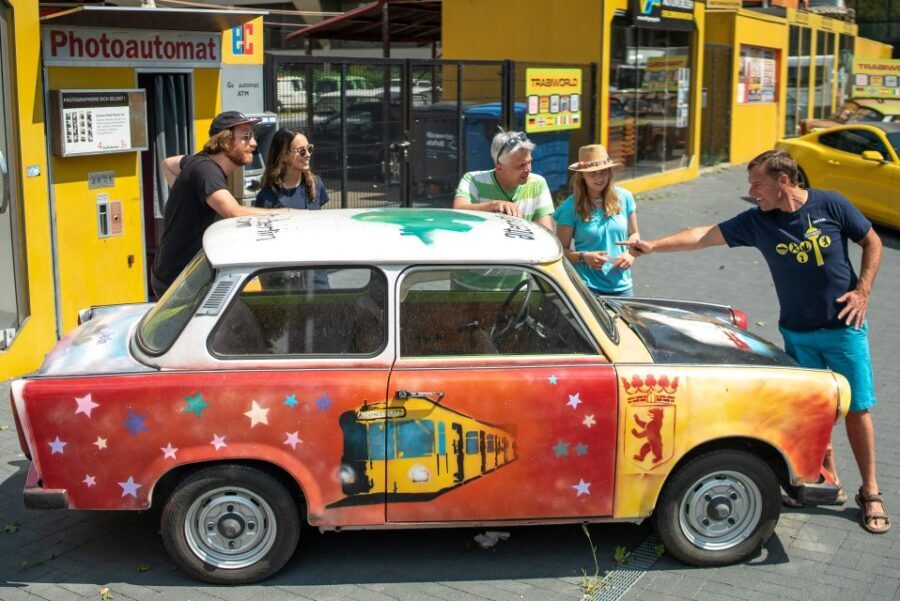
This one fits best if you want Berlin with context, not just sights. It’s especially strong for:
- People interested in how reunification changed neighborhoods, not only politics.
- Travelers who enjoy alternative culture and want to understand the economic pressures behind it.
- First-timers who still want substance, like how gentrification plays out street by street.
- Groups who prefer a private guide and flexible conversation.
If you’re only interested in the most famous landmarks with minimal walking and minimal discussion, you might feel like this is too thematic. But if you want the story and you’re okay moving on foot, it’s a smart use of a half-day.
Should You Book This Berlin Reunited and Revived Tour?
I’d book it if your idea of a great Berlin day includes meaning: restored Mitte versus changed Prenzlauer Berg, the alternative pressures in Kreuzberg and Friedrichshain, and the East Side Gallery as political street art. The end at the Turkish Market also makes it practical. You’ll finish in a place where you can keep exploring without hunting for a meal.
I’d skip or rethink it if you want a short, low-walking sightseeing loop focused mainly on classic monuments. This tour spends its time on neighborhoods and their ongoing debates, so you should be in the mood for that kind of attention.
One more small confidence boost: the guides have a track record for being lively and funny, with examples like Tom bringing humor and charm, Maria keeping things engaging, and JJ leading with energy and strong focus—especially helpful if your group needs English.
FAQ
How much does the Berlin Reunited and Revived 3-Hour Alternative Tour cost?
It costs $352 per group up to 20 people.
How long is the tour?
The tour lasts 3 hours.
What neighborhoods and landmarks will I see?
You’ll visit Mitte, Prenzlauer Berg, Kreuzberg, and Friedrichshain, with stops including the Kulturbrauerei and the East Side Gallery, and you’ll end at the Turkish Market on the Landwehr canal.
Are food and drinks included?
No. Food and drinks are not included.
When does the tour run?
Tours run Tuesdays and Fridays from April to October.
Is hotel pickup included, and how do I recognize the guide?
Yes, pickup is included. Wait in your hotel lobby about 5 minutes before the scheduled pickup time, and look for your guide wearing a yellow name tag.
Is the tour wheelchair accessible?
Yes, the tour is wheelchair accessible.