REVIEW · BERLIN
Berlin: Hitler and the Third Reich – a private walking tour
Book on GetYourGuide →Operated by Sightseeing Point GmbH · Bookable on GetYourGuide
Berlin has layers, and this route walks them. The tour strings together key Third Reich locations, then ends at the Topography of Terror area for a heavy, grounded finish. I especially love the chance to stand at the Holocaust Memorial and the spot where Hitler’s bunker used to be, both with clear explanations and real geographic context. The one drawback: it covers extremely dark subject matter, so come prepared for an emotionally intense walk, even if the pace stays manageable.
What makes this work so well is the private format. You get a local guide who connects the sites to the larger story, from early power moves in Berlin through the Nazi rise and collapse, then onward to the Cold War and today’s unified Germany. And if you like details you can actually see, I like the way the guide uses photos to show how these locations looked in the past, so your brain stops guessing.
Finally, it’s built for walking (comfortable shoes help), and it’s only 2 hours. That’s great for focus, but it also means you’ll want to decide in advance if you prefer a deeper stop inside museum spaces versus a tour that keeps moving through key outdoor sites.
In This Review
- Key highlights worth circling
- Starting at Brandenburg Gate: getting your bearings fast
- Tiergarten’s Soviet War Memorial: two wars, one city
- The Holocaust Memorial with 2,710 steles: scale you can walk through
- Nazi-era government sites you’ll pass on the way
- Hitler’s bunker site: Berlin’s final chapter, in real location terms
- Topography of Terror: former SS and Gestapo ground under your feet
- Price and value for $22 in a 2-hour private walk
- Who this Berlin walk suits best
- Should you book?
- FAQ
- Where do I meet the guide?
- How long is the tour?
- How much does it cost?
- Is this a private tour?
- What languages are offered?
- Is the tour wheelchair accessible?
- What’s included in the price?
- Is entrance to attractions included?
- What should I bring?
Key highlights worth circling
- Brandenburg Gate start gives you instant orientation in the former government district zone
- Holocaust Memorial’s 2,710 concrete steles turns scale into something you can feel while walking
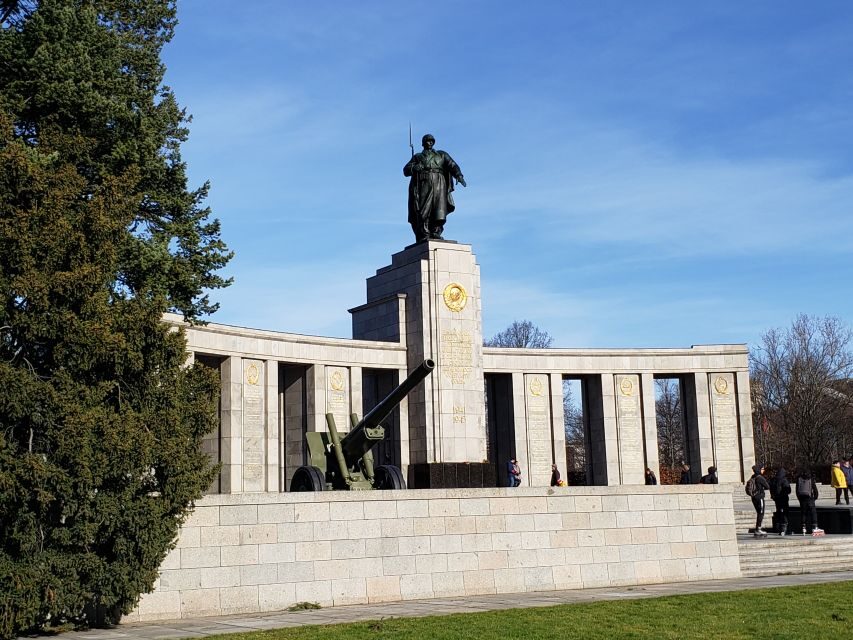
- Soviet War Memorial in Tiergarten shows another layer of WWII memory in leafy surroundings
- Former SS and Secret State Police grounds at Topography of Terror connect buildings to what happened there
- Hitler’s bunker site brings the Third Reich’s final chapter down to street level
- Private group with German or English and a guide who brings old photos to match today’s view
Starting at Brandenburg Gate: getting your bearings fast
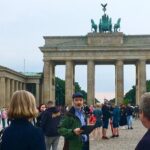
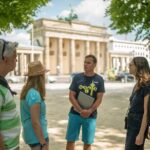
You meet at the Brandenburg Gate, in front of the tourist information center. That’s a smart start because it anchors the tour in a place you’ll recognize, even if you’re new to Berlin. From there, the guide frames the area as part of the political theater of the Third Reich and explains how the city’s power centers shifted over time.
This also sets expectations for the walk style. You’re not “touring Berlin” in the casual sense. You’re moving through a corridor of sites that shaped Nazi rule, then shaped Berlin afterward.
If you’re the type who likes to understand why a building matters, you’ll appreciate that the guide doesn’t treat locations like disconnected postcards. They’re points on a timeline—so you start building the story before the tour turns heavy.
You can also read our reviews of more walking tours in Berlin



Tiergarten’s Soviet War Memorial: two wars, one city
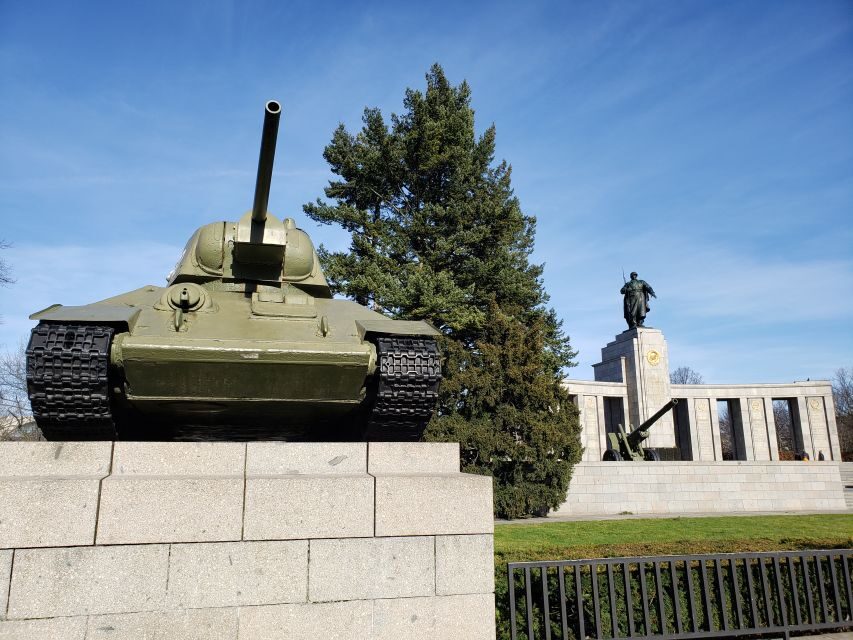
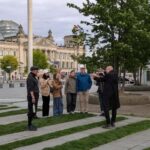
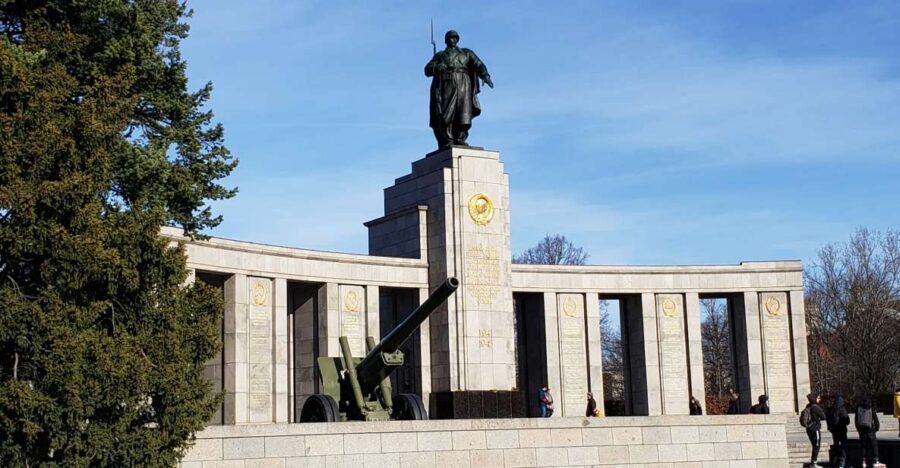
Next comes the Soviet War Memorial in Tiergarten, a towering monument set amid leafy park space. It’s a quiet visual contrast to the Nazi-era stops ahead, but that contrast is useful. You get a reminder that Berlin’s history isn’t one storyline; it’s multiple layers laid over each other.
The guide uses this stop to help you read memory in space. The Soviet memorial isn’t just about one date. It’s part of how Berlin’s postwar identity was shaped, then later reshaped again after reunification.
Practical note: Tiergarten can feel calm, but the stop is still part of a focused history walk. Wear shoes you’re comfortable moving in, because even “park walks” can be longer than you expect once you factor in stops and explaining.
The Holocaust Memorial with 2,710 steles: scale you can walk through
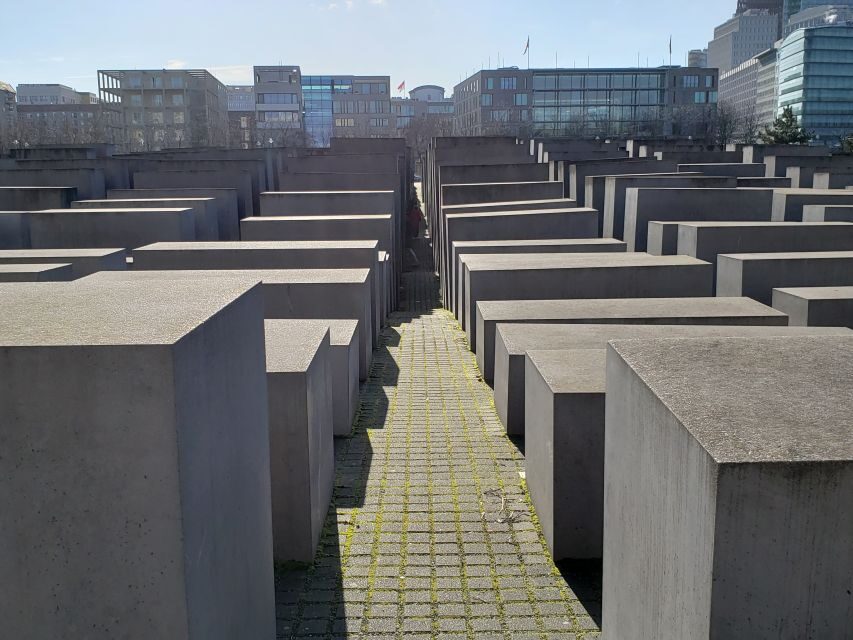
The tour then leads you through the Memorial of the Murdered Jews of Europe, built from 2,710 concrete steles. This is one of those places where the site design does some of the teaching for you. Walking among the steles makes the idea of mass murder feel physical—your body slows down, your focus changes, and you start noticing how space can shape emotion.
A guided walk here adds a crucial layer: meaning. The guide helps connect what you’re seeing to the wider historical picture, including how these memorial choices fit into Berlin’s longer effort to face what happened.
If you’re sensitive to hard topics, plan your pace. Take a few minutes when you need them. This is not a stop for rushing, even if the overall tour stays around two hours. The benefit of having a guide is that you don’t have to guess what each part represents—you can just follow the story where it leads.
Nazi-era government sites you’ll pass on the way
As you move through the former government district, the tour starts connecting the dots between propaganda, administration, and coercion. You’ll learn about original sites of the Third Reich along the route, including the former Propaganda Ministry and the former New Reich Chancellery. The guide also points out areas tied to the Reich Aviation Ministry built for Göring.
This is where the tour becomes more than a highlight list. The Nazi state didn’t run on speeches alone. It ran on offices, infrastructure, and control systems. Seeing these locations in place helps you understand why Berlin mattered so much to the Nazi leadership.
You might also spot references to the SS and Secret State Police buildings as the route progresses. The guide’s job is to keep you from getting lost in names and dates. So instead of treating each building as a trivia win, you’ll start to see patterns: who held power, how the state organized itself, and how these institutions overlapped.
Hitler’s bunker site: Berlin’s final chapter, in real location terms
Then comes one of the tour’s most direct, heavy moments: the former site where Hitler’s bunker used to be. The guide walks you through what happened here during the last days of the Third Reich and where it ended.
Standing above the bunker site is a kind of historical reality check. You’re not watching a film or reading a chapter. You’re in the same city space where the end of that regime played out—so the story lands with a different weight.
A private guide makes this stop easier to handle. You can ask questions if something feels confusing, like how Berlin’s political center shifted or how the Cold War changed the landscape after the war. The guide can also help you avoid the common trap of thinking you’re only learning about Hitler. You’re really learning about the system and its collapse, with Berlin as the stage.
This is also a moment to slow your breathing and take in what you’re seeing. The site is tied to atrocities and mass violence, and the emotional tone of the walk changes here.
You can also read our reviews of more private tours in Berlin




Topography of Terror: former SS and Gestapo ground under your feet
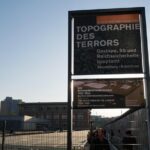
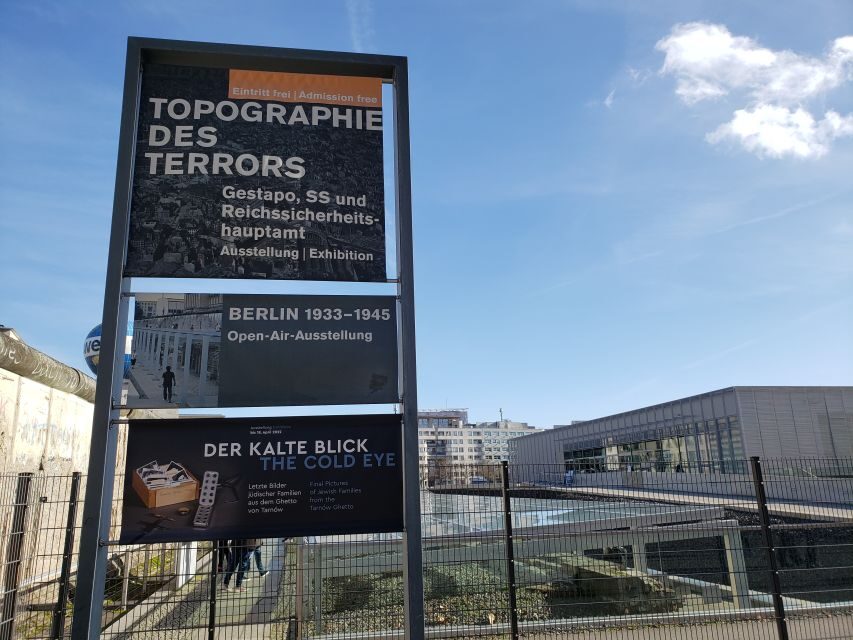
The tour finishes at Topography of Terror, focused on the former grounds of the SS and the Secret State Police. You’ll see the documentation area and the open-air exhibition that occupies the site connected to those institutions.
This stop matters because it bridges “what happened” with “where it happened.” Instead of only discussing policy from a distance, you’re confronting a physical place tied to the machinery of terror. The guide helps you understand the meaning of the installations and how the documentation framing supports a clearer view of what that system did.
Also, along the route you’ll pass several memorials, including ones dedicated to the murdered Jews and the murdered Roma and Sinti. That route design matters. It keeps the walk from becoming purely political or purely chronological. It repeatedly brings you back to victims and targeted groups, so the story stays anchored to human cost.
Price and value for $22 in a 2-hour private walk
At $22 per person for a private walking tour lasting about two hours, the value is mostly in the match between guide time and number of major stops. You’re not relying on self-guided wandering through a dense area. A guide helps you connect Brandenburg Gate, Holocaust Memorial, the Hitler bunker site, and Topography of Terror into one coherent route.
Entrance to attractions is not included, so you should expect that at least some portions could require tickets if you want extra indoor content. The upside is that a lot of what’s covered here happens outdoors or in open-air contexts, which suits a short time window.
This tour is also a good buy because it’s private. You get German or English explanations tailored to your pace. If your group wants to ask questions or needs brief pauses, the format supports it.
What to bring is basic but important: comfortable shoes, water, and weather-appropriate clothing. Berlin weather can flip fast, and your feet do the real work here.
Who this Berlin walk suits best
This is ideal if you want an organized, pointed introduction to Berlin’s Third Reich story without turning it into a museum day. You’ll get a route that covers the emotional anchors (Holocaust Memorial, bunker site) and the institutional anchors (SS/Secret State Police grounds at Topography of Terror).
It also fits you if you like guides who can explain clearly and use visual aids. The standout detail from this experience is the guide’s approach: Stefan (also referred to as Herr Knoll) has a reputation for clear communication and for bringing old photos that help you match past buildings to today’s streets.
If you’re traveling with limited time—two hours is realistic—this gives you a high-impact arc: start at a symbol you already recognize, then move into the sites where the Nazi state operated and where it ended.
Should you book?
I’d book this if you want a focused private walk through Berlin’s most important Nazi-era sites, with a guide who can connect geography to history. The route is tight but not shallow, and it includes the crucial memorial stops instead of only the political buildings.
Skip it (or be ready to adjust your expectations) if you want a lighter, “feel-good” city stroll or you’re not prepared for intense subject matter. Also keep in mind that you may need separate tickets if you plan to add indoor attractions beyond what’s covered on the street and in open-air areas.
FAQ
Where do I meet the guide?
Meet at the Brandenburg Gate, in front of the tourist information center. The guide has a sign with your name written on it.
How long is the tour?
The tour lasts 2 hours.
How much does it cost?
The price is $22 per person.
Is this a private tour?
Yes. It’s a private walking tour with a private group.
What languages are offered?
The live guide is available in German and English.
Is the tour wheelchair accessible?
Yes, the tour is wheelchair accessible.
What’s included in the price?
A tour guide is included, and the format is a private walking tour.
Is entrance to attractions included?
No. Entrance to attractions is not included.
What should I bring?
Bring comfortable shoes, water, and weather-appropriate clothing.