REVIEW · BERLIN
Cold War, Berlin Wall, Spies and the East Side Gallery
Book on GetYourGuide →Operated by Insider Tour Berlin · Bookable on GetYourGuide
Concrete, secrets, and a wall you can touch. This Cold War-themed Berlin outing strings together the places where fear, surveillance, and escape attempts shaped everyday life—ending at the East Side Gallery where the wall became public art. I like that you get more than monuments; the stories focus on informants, the Stasi, and people taking big risks to get out.
I also really like the route’s mix: you cover grand, propaganda-heavy boulevards like Karl-Marx-Allee, then you pivot to the wall’s real atmosphere along the death-strip area. One catch: there are train hops between sites, and you’ll need an AB public transport day pass to move smoothly as the tour goes.
In This Review
- Key Things to Notice on This Cold War and Wall Walk
- Tränenpalast Start: Friedrichstraße Square, Yellow Umbrella, and an Easy Beginning
- Getting Around With the AB Day Pass (So You Don’t Stall the Group)
- Alexanderplatz: Turning a Big Square Into a Human Story
- Karl-Marx-Allee: How Propaganda Hides in Plain Sight
- Friedrichshain and the Wall Segment: Where the Cold War Gets Real
- East Side Gallery: When a Wall Becomes an Open-Air Art Timeline
- Price and Time Value: Why $18 Can Work (If You Use the Day Pass)
- Practical Details That Make the Tour Go Smoothly
- Who This Tour Is Best For (And Who Might Want Something Else)
- Should You Book This Cold War and East Side Gallery Tour?
- FAQ
- Where is the meeting point for the tour?
- How long is the tour, and what does it cost?
- Which sites will we visit?
- Do I need public transportation tickets?
- What should I bring?
- Is the tour accessible for wheelchair users?
- What languages is the tour offered in?
Key Things to Notice on This Cold War and Wall Walk
- Tränenpalast (Palace of Tears): a short stop that sets the emotional tone right away
- Alexanderplatz: classic East Berlin energy with a guided walkthrough
- Karl-Marx-Allee: monumental planning and propaganda built into the streetscape
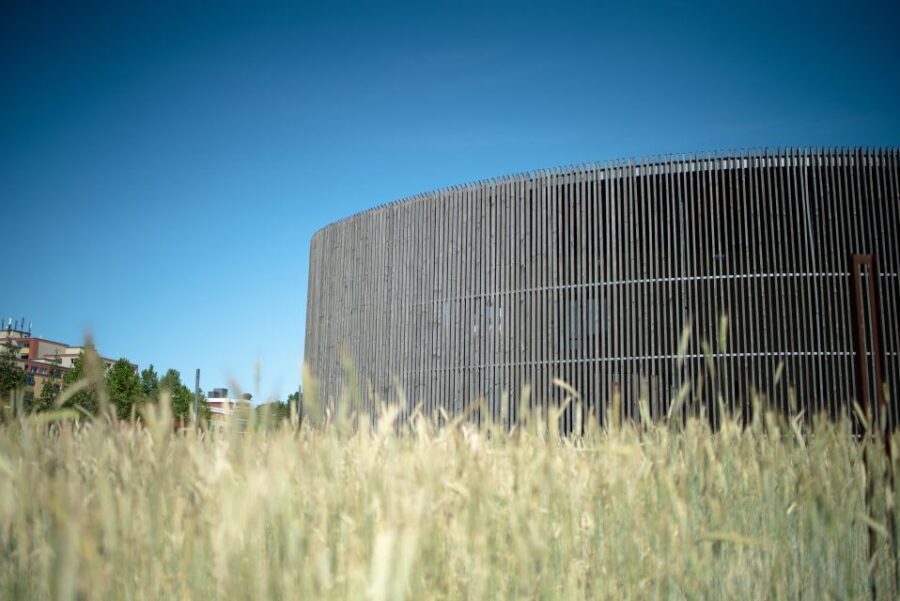
- Berlin Wall death-strip area: where the Cold War turned physical and immediate
- East Side Gallery: the wall remade into a long open-air gallery
- Friedrichshain: an in-between neighborhood segment that keeps the story grounded in real geography
Tränenpalast Start: Friedrichstraße Square, Yellow Umbrella, and an Easy Beginning
This tour kicks off at the Friedrichstraße area, meeting your guide outside the station. You’ll stand on the square beside Tränenpalast (Palace of Tears), and you should look for a guide with a yellow name badge holding a yellow umbrella. That’s a nice touch in a city where train stations can feel like mini-worlds.
The first stop is Tränenpalast, with about 20 minutes for sightseeing. Even though it’s brief, it works as a tone-setter. The tour’s focus isn’t just the Berlin Wall as a symbol; it’s the machinery around it—spies, informants, and the constant pressure East Germans lived under. Starting here helps you understand why “freedom” in Cold War Berlin wasn’t an idea. It was a daily risk.
Practical note: the tour is wheelchair accessible, and the route is paced for walking plus public transit links. You’ll still want to wear shoes that don’t punish you after a couple hours on your feet.
You can also read our reviews of more museum experiences in Berlin

Getting Around With the AB Day Pass (So You Don’t Stall the Group)
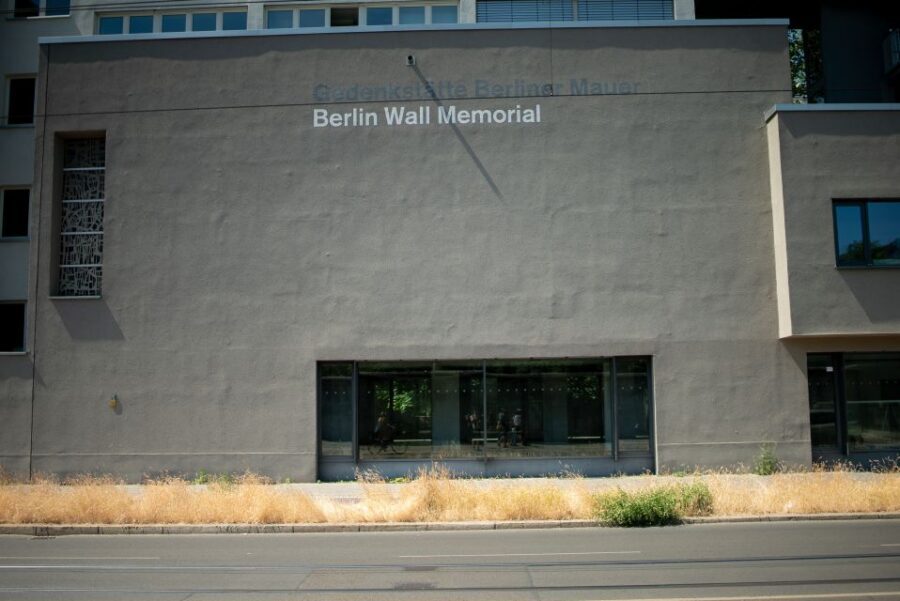
You’ll use public transit during the tour, and this is where people often get tripped up. The tour requires an AB public transport day pass for traveling between sites. The good news is that this ticket can be purchased on the day with help from the on-site staff, so you’re not left guessing what to do.
Why this matters: the tour is only 3 hours. If you show up without the day pass, you’ll waste your short time sorting out transit. With the day pass ready, you can focus on the guided story instead of sprinting between platforms.
Expect a couple short train segments—think a few minutes here and there—plus guided walking stretches. The route is designed for momentum: story, then location, then story again.
Alexanderplatz: Turning a Big Square Into a Human Story
After the opening stop, you head toward Alexanderplatz, one of Berlin’s big central squares. You’ll get about 20 minutes of guided touring and sightseeing here. In practice, Alexanderplatz is one of those places that can feel like “just a square” if you come without context. This tour uses it as a way to picture life behind the Iron Curtain, not as an abstract timeline.
What you’ll likely appreciate is the contrast. The tour frames East Berlin not only as restricted by borders, but as a place with its own rhythm and built environment. Even when you’re standing in open space, you’re guided to notice the architectural vibe that still echoes GDR life.
Drawback to consider: since the time on each stop is relatively tight, you won’t have hours to wander off-script at Alexanderplatz. This is a guided route that trades free roaming for clarity and flow.
Karl-Marx-Allee: How Propaganda Hides in Plain Sight
Then comes one of the tour’s biggest “wow” corridors: Karl-Marx-Allee. You’ll spend about 20 minutes on a guided segment here, and this is where the tour leans hard into the way power expresses itself through design.
The boulevard is described as an immense socialist-paradise plan, and the guide’s job is to help you read what’s there. On a street like this, it’s easy to just admire scale and move on. The tour turns it into a lesson in symbols—how monumental architecture can work like messaging you can walk through.
If you’re the kind of traveler who enjoys architecture, politics, and the “why did they build it like that?” question, you’ll enjoy Karl-Marx-Allee. It’s not only about the building; it’s about what the building was meant to do to your mind.
Tip for your camera: Karl-Marx-Allee is long and visually dramatic. Bring a wide-angle mindset. You’ll often want to step back to capture the scale, not just shoot close-ups.
Friedrichshain and the Wall Segment: Where the Cold War Gets Real
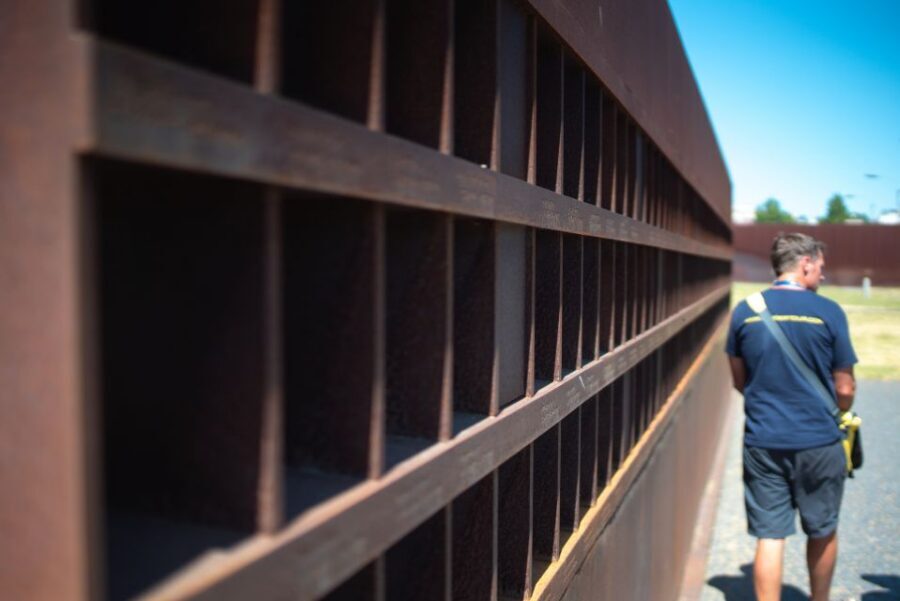
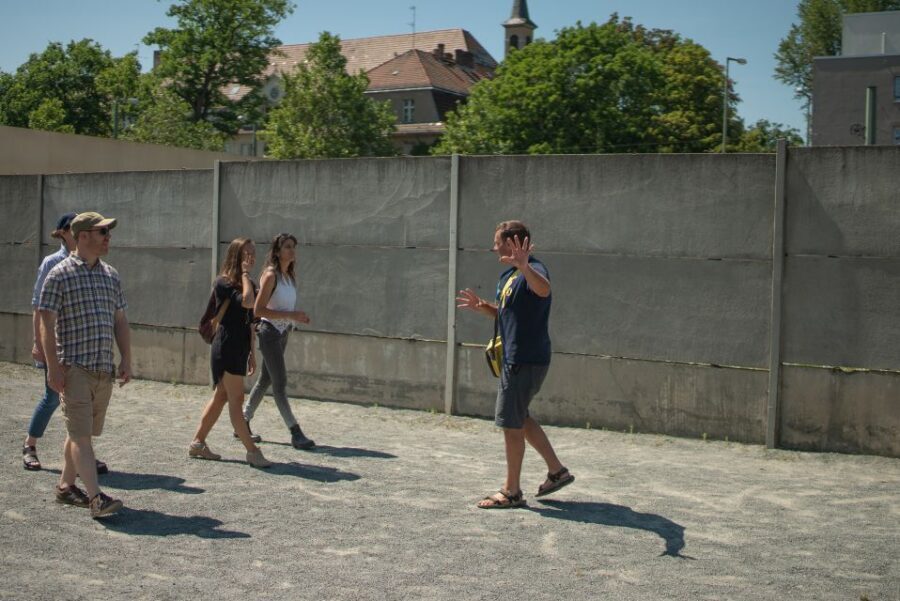
A key part of this tour happens around the Friedrichshain area and then near the Berlin Wall itself. You’ll spend roughly 20 minutes on the Friedrichshain guided sightseeing segment, followed by a 16-minute guided walk at the wall.
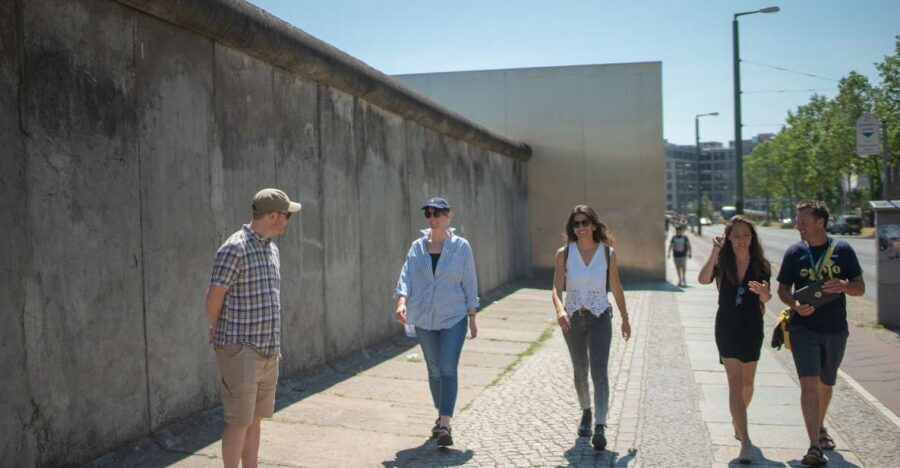
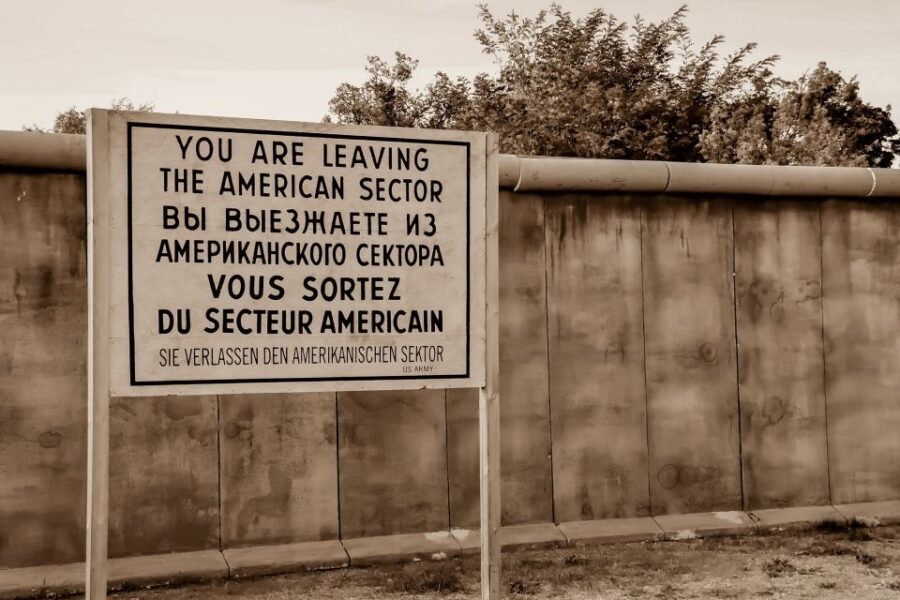
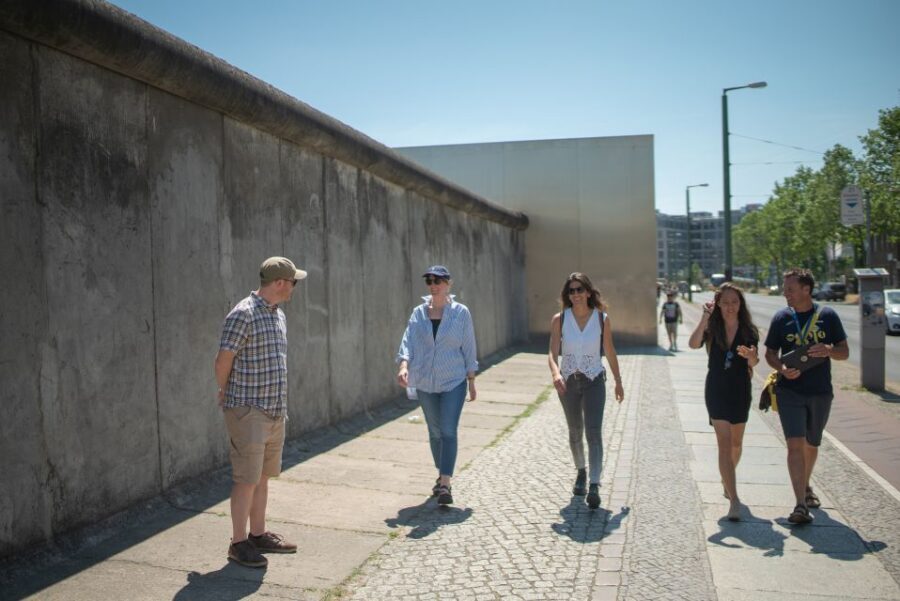
Here’s where the tour’s core themes tighten. The highlights promise the wall and the original death strip area, and that’s exactly the kind of phrase that should make you pay attention. Even in a quick stop, the guide’s storytelling about escape attempts—tunnels, rooftops, and other daring moves—gives the setting a sharp edge.
You’ll also hear about the Stasi watching from the shadows. That idea matters because it explains the pressure of the era: this wasn’t only about who had power. It was about who might be watching you while you tried to live your life.
One consideration: the wall segment is not a long, drawn-out museum visit. It’s a guided walk with a defined stop time. If you want lots of time for detailed looking or you want to stay for multiple memorial angles, you may feel slightly rushed here.


East Side Gallery: When a Wall Becomes an Open-Air Art Timeline
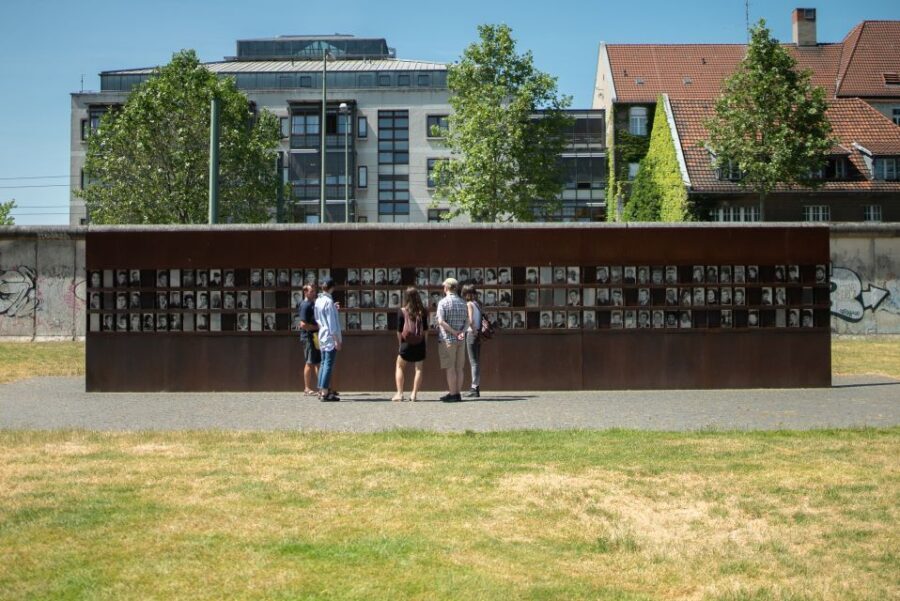
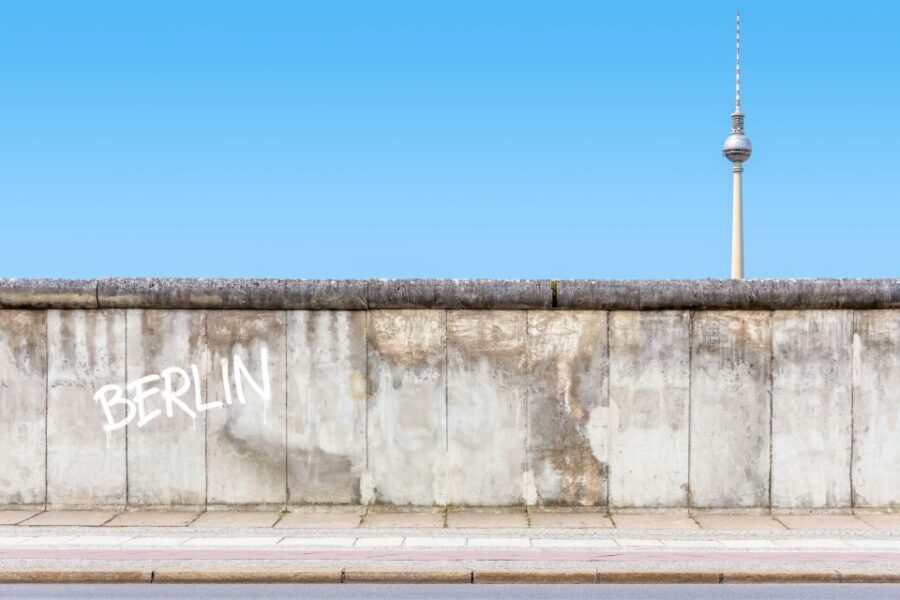
The finale is the East Side Gallery, a 20-minute guided sightseeing stretch along the famous graffiti wall. If you only know the Berlin Wall as a line drawn across history, this is the moment where the tour shows you how the story changed.
The tour frames it clearly: the Berlin Wall was transformed from oppression into the world’s longest open-air art gallery. So instead of ending with only mourning, you end with expression. That doesn’t erase what came before—it reframes it. You’re standing where the message was literal, then looking at it as something people could turn into voice.
This stop is also a good “memory check” location. After Karl-Marx-Allee and the wall’s death-strip context, you’ll likely see the gallery’s art as part of the reunification-era transformation the tour hints at. It’s a fitting end because it puts hope back into the physical scene.
Price and Time Value: Why $18 Can Work (If You Use the Day Pass)
Let’s talk value without hype. $18 per person for a 3-hour guided walk that links Tränenpalast, Alexanderplatz, Karl-Marx-Allee, Friedrichshain, the Berlin Wall area, and the East Side Gallery is strong value—especially for visitors who don’t want to stitch together all these stops themselves.
What you’re really paying for is not just access to locations. You’re paying for interpretation: the guide connects the built world to the human world. The Cold War story here is built around spies, informants, and escape attempts, and that kind of context changes how you experience each site.
The only cost-adjacent factor is transit. Because you need that AB day pass, you should factor that in so the total spend stays predictable. Also plan on bringing what you need for walking—comfortable shoes and weather-appropriate clothing.
Good to know: the tour proceeds regardless of weather. Berlin weather can be dramatic in short bursts, so don’t assume you’ll get a perfect day. Bring what keeps you comfortable long enough to finish strong. The guide’s umbrella cue at the start is a small hint that weather happens.
Practical Details That Make the Tour Go Smoothly
A few things that help you have an easier time:
- Bring a camera. Some areas reward stepping back and framing big structures, not just close-up details.
- Wear comfortable shoes. The walking segments add up, even with short stops.
- No alcohol and drugs are allowed. Keep it clean and practical.
- Languages are English and German, and the tour includes a live guide.
- Pickup can be optional. If you pick that option, you wait about 5 minutes in your hotel lobby before pickup.
The drop-off is also useful to plan your next move. You’ll be dropped at two locations, including Bernauer Straße in Berlin.
Who This Tour Is Best For (And Who Might Want Something Else)
This is a smart fit for you if:
- you want a guided narrative of Berlin’s Cold War division and the Berlin Wall’s real impact
- you’re curious about how surveillance changed daily life, not only where famous barriers stood
- you enjoy a route that mixes major landmarks with story-driven stops like Tränenpalast
You might want a different style of tour if:
- you want a long museum deep dive or lots of time inside memorial spaces
- you dislike using transit mid-tour (you can’t avoid it here)
- you need heavy downtime for photos and wandering; the stops are timed
One quiet advantage: the route hits both “big city East” and “wall reality,” so you get a more complete emotional map than if you only visit a single monument.
Should You Book This Cold War and East Side Gallery Tour?
Yes, book it if you want a focused, story-led way to connect the Cold War dots across Berlin in just 3 hours. The $18 price is especially good for first-time visitors who don’t want to figure out the geography and meaning chain alone.
My call hinges on two things: the guide-led context and the transit efficiency. If you show up with your AB day pass handled, wear comfortable shoes, and are ready for a guided pace, you’ll leave with a clearer mental picture of division—and how Berlin turned the wall’s legacy into something people could see and react to.
FAQ
Where is the meeting point for the tour?
Meet your guide outside Friedrichstraße train station, on the square beside Tränenpalast (Palace of Tears). Look for the guide with a yellow name badge holding a yellow umbrella.
How long is the tour, and what does it cost?
The tour lasts 3 hours and costs $18 per person.
Which sites will we visit?
You’ll visit Tränenpalast, Alexanderplatz, Karl-Marx-Allee, Friedrichshain, the Berlin Wall area, and the East Side Gallery, finishing with drop-off options including Bernauer Straße.
Do I need public transportation tickets?
Yes. You need an AB public transport day pass to travel between sites during the tour. Staff can help you purchase it on the day.
What should I bring?
Bring comfortable shoes and weather-appropriate clothing, plus a camera. The tour runs in any weather.
Is the tour accessible for wheelchair users?
The tour is listed as wheelchair accessible.
What languages is the tour offered in?
The tour is offered with a live guide in English and German.