REVIEW · BERLIN
Dark Berlin Criminal Tour
Book on Viator →Operated by Freizeit-und Reiseclub Berlin · Bookable on Viator
Berlin has a darker side, and it shows. This Dark Berlin Criminal Tour uses real street corners to follow the city’s criminal history from the late 1800s into today, mixing brutal events with moments that feel almost absurd. I love the way the guide connects stories to original locations, and I also like the certified guide approach that keeps the facts moving instead of turning into a generic history lecture.
One thing to consider: the tour needs good weather and it’s non-refundable, so check the forecast before you lock it in. If you prefer light sightseeing only, the subject matter is crime, violence, betrayal, and greed.
In This Review
- Key things you will notice on this tour
- Why Berlin’s criminal history is so easy to see
- Price and time: why $18.52 can make sense
- Start at Rosa-Luxemburg-Platz, finish at Rotes Rathaus
- The tour’s tone: violence first, but not humorless
- What you learn about organized crime in Berlin
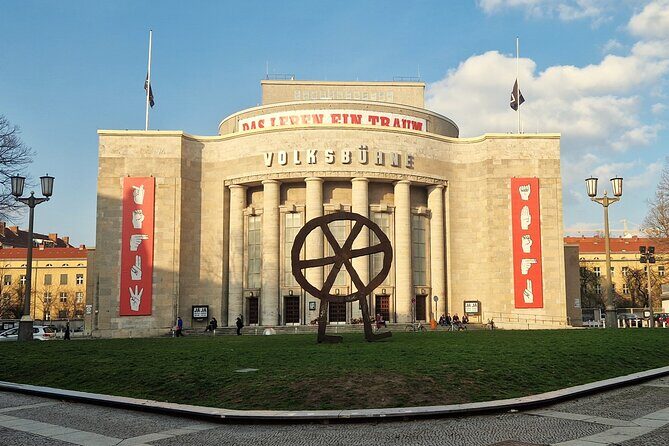
- Stop 1: Volksbühne Berlin and the 1931 shooting
- Stop 2: Scheunenviertel in the 1920s
- Stop 3: Alexanderplatz, Alex, and wartime fear
- Stop 4: Alexa and the pre-war building story
- Stop 5: Littenstraße and the court connection
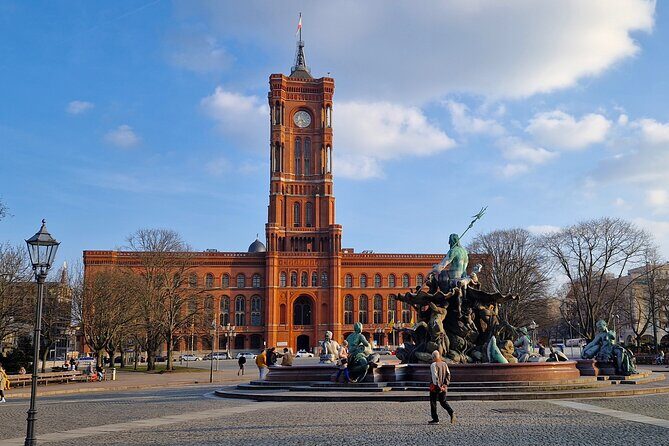
- Stop 6: Rotes Rathaus and Berlin’s first banking scandal
- How the tour ties everything together
- Practical details that affect your experience
- Who should book this tour
- Should you book the Dark Berlin Criminal Tour?
- FAQ
- How long is the Dark Berlin Criminal Tour?
- How much does the tour cost?
- Where do I meet for the tour?
- Where does the tour end?
- Do I get a mobile ticket?
- What is the group size limit?
- What happens if the weather is poor?
- Is the booking refundable or changeable?
Key things you will notice on this tour
- 2 hours of walking through Berlin’s crime hotspots, with a small group size up to 25
- Protection money, prostitution, and stolen goods as the practical money engine behind organized crime
- Volksbühne Berlin (1931), tied to a shooting involving two police officers
- Scheunenviertel in the 1920s, where everyday workers, crooks, and pimps all lived side by side
- Alexanderplatz and Alex, including how the name fits and how a youth gang terrorized the city during war years
- Rotes Rathaus, linked to Berlin’s first big banking scandal and the mayor’s involvement
Why Berlin’s criminal history is so easy to see
Berlin doesn’t hide its layers. Even when you’re standing in a modern square or in front of a shopping center, you’re still close to the places where people made decisions that changed the city’s direction.
What I like on this tour is that it doesn’t treat crime as random scandal. It frames organized crime as a real system with real incentives, from extortion of protection money to trafficking stolen goods. That makes the stories easier to track because you understand what criminals were trying to achieve.
You can also read our reviews of more tours and experiences in Berlin.

Price and time: why $18.52 can make sense
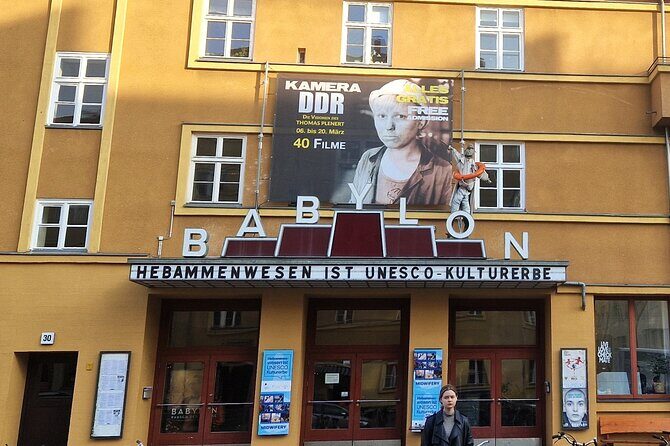
At $18.52 per person for about 2 hours, this is priced like a short, focused experience rather than a full-day sightseeing day. The value is in the density: you move between multiple key stops and the guide ties each one to a specific angle—politics, police work, street life, or financial scandal.
Also, the tour is booked fairly ahead of time (about 44 days on average), which usually means people find it worth planning. If you’re in Berlin for a tight schedule, this is a way to spend limited hours on a theme that doesn’t usually show up in standard landmarks tours.
Start at Rosa-Luxemburg-Platz, finish at Rotes Rathaus
Your meet-up point is Rosa-Luxemburg-Platz 1/u, 10178 Berlin. It’s also close to public transportation, which matters because this is a walking tour and you want an easy arrival path.
The tour ends at Rotes Rathaus at the entrance with direct underground access. That’s handy because you can finish your tour and move on quickly to dinner or another stop without needing to backtrack across the city.
The tour’s tone: violence first, but not humorless
The name Dark Berlin Criminal Tour is not shy about the subject. Expect stories of violence, death, betrayal, greed, and passion. But what surprised me in the way the tour is described is that it also includes comedy and bizarre moments that can pull real laughter out of grim material.
That mix is part of the point. Crime doesn’t only exist in court documents and police reports—it exists in human life, including the strange, theatrical behavior people used to survive and gain leverage. The guide’s job is to keep you oriented, so the tour feels like a sequence of connected scenes rather than random shocks.
What you learn about organized crime in Berlin
The tour focuses on how organized crime gained the upper hand in Berlin and how it made money. You’ll hear about three main income streams: protection money, prostitution, and receiving stolen goods.
You’ll also get a view of how the Berlin criminal police became famous worldwide. The tour notes that you’ll even be surprised by the location of the police headquarters. That kind of detail matters because it changes how you picture the city—crime isn’t just out in the street; it also triggered responses and methods inside police systems.



Stop 1: Volksbühne Berlin and the 1931 shooting
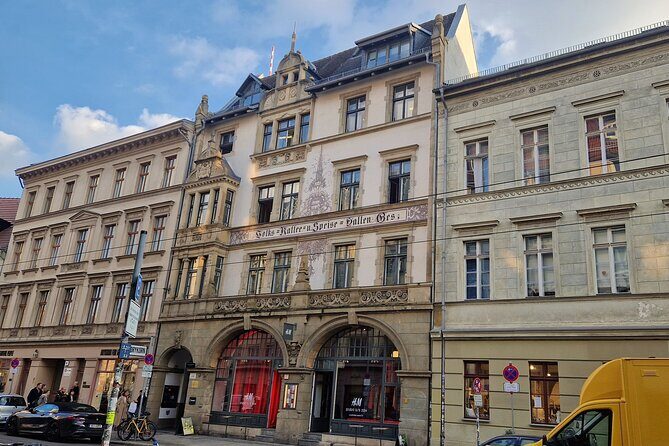
Your first stop is Volksbühne Berlin, where a gruesome event took place on August 9, 1931. The story involves two police officers who were shot here by a later Minister for State Security of the GDR and his buddy.
What makes this stop more than a trivia moment is that the tour doesn’t just drop the crime and move on. It frames the background that led to it, so you’re not only absorbing the headline. You’re getting the chain of events and motives that made the attack possible.
A downside for some people: this early in the tour, you’re immediately in the heavy material. If you want a gradual ramp-up from pleasant to dark, plan your mindset for that first stop.
Stop 2: Scheunenviertel in the 1920s

Next comes Scheunenviertel, described as a neighborhood filled in the 1920s with people returning from factory shifts—tired, worn down, and living in difficult conditions. The tour also points out how you could find brightly dressed sex workers alongside honest office managers with worn jackets and mismatched socks.
That social mix is the real power of this stop. Crime thrives where desperation meets opportunity, and the tour’s description makes it clear that this wasn’t a clean separation between the “law-abiding” and the “criminal.” You had workers having beers with friends, plus crooks and pimps operating in the same sphere.
If you’re the type of person who likes history that feels human instead of textbook-like, this is one of the most vivid scenes on the route.
Stop 3: Alexanderplatz, Alex, and wartime fear
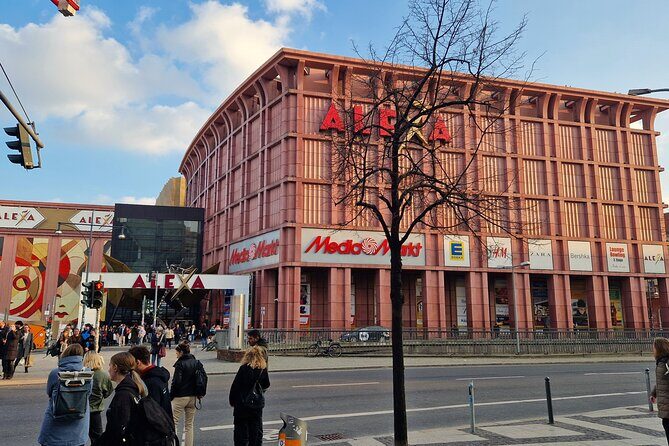
At Alexanderplatz, the tour goes beyond the look of the square today. You’ll learn how Berliners came to call it Alex, and you’ll hear how a gang of young people could terrify the whole city during the war years.
This stop connects name and identity to action. Learning why the square is called what it’s called makes it feel anchored, but the wartime gang story shows that public spaces can become stages for organized fear.
One consideration: Alexanderplatz is a busy area in general. Even with a guided pace, you’ll want to listen carefully over the ambient city noise.
Stop 4: Alexa and the pre-war building story
From Alexanderplatz you’ll reach Alexa, a shopping center where the tour encourages you to look past what you see now. The point here is that few people know which building stood there in the pre-war years, and why that mattered enough to lead to world fame and high esteem.
That’s a nice trick the guide uses: you don’t treat modern Berlin as a finished product. You treat it as a rewrite of older material. Even if you do not know the exact pre-war details ahead of time, you’ll leave with a better sense of how the city’s public face changed over time.
If you’re the kind of traveler who likes to shop, this stop is also a natural pause point to linger after the story lands—without turning the tour into “just shopping.”
Stop 5: Littenstraße and the court connection
Your route includes Littenstraße, where the district court of Berlin Mitte is located today. This is where the tour connects the physical setting of justice to the people who shaped cases in the 1920s.
The highlight here is a famous defense attorney of the 1920s, and the tour notes that he was totally impressed by Lola. The key is the court setting: it’s one thing to talk about criminals making plans, and another to see the legal side where defense, reputation, and strategy mattered.
If you’re curious about how legal careers fit into crime history, this stop gives you that angle. If you’re uncomfortable with courts and legal drama, you might want to mentally frame this as part of the “crime system,” not a lecture.
Stop 6: Rotes Rathaus and Berlin’s first banking scandal
The final stop is Rotes Rathaus, and it takes you into the world of finance and political trust. The tour says the first banking scandal in Berlin’s history occurred in the 1920s, with the mayor involved.
That matters because banking scandals are where crime stops being only street-level. Once money and political power mix, the consequences are bigger and harder to contain. The tour’s framing helps you understand why organized crime could spread influence: it wasn’t just about brawls or hustles; it could also piggyback on institutional weakness.
This ending also makes the tour feel structured. It starts with violence in a specific place, moves through neighborhoods and fear, then lands in the systems of governance and money.
How the tour ties everything together
Even though the stops cover different themes, the through-line is clear: crime in Berlin wasn’t one scene. It was a web of incentives, visibility, and institutions.
You hear about the sources of organized income—protection money, prostitution, and stolen goods—but you also hear how law enforcement evolved. The tour highlights that the Berlin criminal police achieved world fame, and you’re told that the police headquarters location will surprise you. That kind of payoff matters because it gives you a final perspective shift: you stop seeing crime history as only what criminals did, and start seeing how police response shaped what came next.
Practical details that affect your experience
This is a walking tour around central Berlin, lasting about 2 hours. Stops are short (minutes at each), so it helps to arrive ready to listen and move on quickly.
You get a mobile ticket, and you should receive confirmation at the time of booking. The group size is capped at 25, which usually keeps the tour from feeling like a crowd stampede.
Weather is required. The tour is said to depend on good weather, and if it’s canceled due to poor weather, you’ll be offered a different date or a full refund. Since it’s non-refundable and can’t be changed for any reason, I’d treat the forecast as part of your planning, not an afterthought.
Who should book this tour
This tour is a strong match if you want Berlin history that connects to real settings and real motives. It’s also good for travelers who like crime as a social system—how people earned money, how communities mixed, and how institutions responded.
It may be less ideal if you prefer cheerful sightseeing only, or if you’d rather avoid stories involving violence and death. The tour theme is explicit, and the opening stop goes straight into a serious event.
If you’re visiting for a short time and want a distinctive theme beyond museums and monuments, this is a simple way to get a different Berlin in a limited window.
Should you book the Dark Berlin Criminal Tour?
If you like walking tours that explain cause-and-effect, I’d say yes. For the time and price, it gives you a tight route that moves from street life to courts to political and financial scandal, with a guide who keeps the stories tied to where they happened.
I would only hesitate if you’re sensitive to crime narratives or if your schedule is too inflexible to handle a weather-based reschedule. Otherwise, this is one of those Berlin experiences that leaves you looking at ordinary places and thinking, what happened here—and why?
FAQ
How long is the Dark Berlin Criminal Tour?
It runs for about 2 hours.
How much does the tour cost?
The price is $18.52 per person.
Where do I meet for the tour?
You meet at Rosa-Luxemburg-Platz 1/u, 10178 Berlin, Germany.
Where does the tour end?
The tour ends at Rotes Rathaus, at the Red City Hall entrance with direct access to the underground.
Do I get a mobile ticket?
Yes. The tour includes a mobile ticket.
What is the group size limit?
The tour has a maximum of 25 travelers.
What happens if the weather is poor?
This experience requires good weather. If it’s canceled due to poor weather, you’ll be offered a different date or a full refund.
Is the booking refundable or changeable?
No. It’s non-refundable and cannot be changed for any reason.