REVIEW · BERLIN
Historic center of Berlin – Tour in Italian
Book on Viator →Operated by Vive Berlin Tours · Bookable on Viator
Berlin’s scars feel strangely present. This 3.5-hour, Italian-speaking small-group walk strings together the places that shaped Germany’s 20th-century story, from Potsdamer Platz to the Holocaust Memorial and onward to the Brandenburg Gate. I like how you don’t just see big sights—you get the thread of why they matter, spoken clearly by the guide.
Two things I really appreciate: the focused stop sequence that connects dramatic history across different eras, and the way the guide’s commentary turns quick street-level views into something you can actually process. It’s also a practical tour length at about 3 hours 30 minutes, with a maximum group size of 28, so you’re not lost in a crowd.
One possible drawback to keep in mind: most of the route is outside views and short stops, so it’s not the kind of tour where you wander slowly or linger for museum-style time. And since the guide is Italian-speaking, you’ll want at least a basic comfort with Italian (or be ready to follow along with visuals).
In This Review
- Key things to know before you go
- Italian-Language Berlin at street level: why this walk works
- Price and value: what $27.91 buys you (and what it doesn’t)
- Route overview from Potsdamer Platz to Pergamon Museum: what your 3.5 hours look like
- Stop-by-stop: the history you’ll see and the points that deserve your attention
- 1) Vive Berlin Tours meeting point (Potsdamer Platz 10)
- 2) Potsdamer Platz: modern Berlin with wartime memories behind it
- 3) Sony Center: preserved WWII remnants inside contemporary architecture
- 4) Topography of Terror: Nazi headquarters’ ground truth and an exposed Wall segment
- 5) Checkpoint Charlie: Cold War heat in a small space
- 6) Aviation Ministry building: Goering then the Communist ministries
- 7) Führerbunker: Hitler’s last days, explained in context
- 8) Holocaust Memorial (Memorial to the Murdered Jews of Europe): silence with shape
- 9) Reichstag Building: outside views plus dome-booking guidance
- 10) Brandenburg Gate: from royal strength to Cold War symbol to reunification
- 11) Unter den Linden: reading the boulevard’s layers
- 12) Bebelplatz: book burnings and the nearby learning institutions
- 13) Book Burning Memorial at Bebelplatz
- 14) Humboldt University: an educational legacy you can name
- 15) Neue Wache: a memorial against war’s horrors
- 16) Berliner Dom: a grand church concept and Berlin’s religious power
- 17) Museum Island finish: UNESCO setting and next-step guidance
- Group size, timing, and comfort: how to make this tour enjoyable
- Who should book this tour?
- Should you book? My decision guide
- FAQ
- How long is the Historic Center of Berlin tour?
- What language is the guide speaking?
- Where does the tour start and what’s the meeting point?
- Where does the tour end?
- What is the starting time?
- Is there a mobile ticket?
- What landmarks are included on the route?
- Is food included in the price?
- Does the tour run in bad weather?
- How big is the group?
- Are service animals allowed?
Key things to know before you go
- Italian-speaking guide with commentary that links landmarks to Germany’s shifting political eras
- Small group (max 28) for easier listening and less time fighting for attention
- Mobile ticket—handy for a fast start near Potsdamer Platz
- All-weather operation (dress for Berlin weather, not sunshine fantasies)
- Outside-only highlights, including the Reichstag exterior with help on booking the dome
Italian-Language Berlin at street level: why this walk works
Berlin can be overwhelming. So much space, so many monuments, and so many layers stacked on top of each other. This tour helps you put order on it fast by guiding you across key checkpoints—some solemn, some iconic, all central to understanding the city.
What I like most is the pacing. The tour moves steadily from modern Potsdamer Platz into WWII and Nazi memory sites, then forward into Cold War division, then finishes at major landmarks in Berlin-Mitte. That structure matters because Berlin’s history isn’t one story—it’s several stories that overlap like film reels.
It also helps that the feedback I saw names guides who clearly know what they’re doing in Italian—people like Paolo, Giulia, Fabio, Chiara, Elena, and Daniele. The common theme: organized explanations, attentive pacing, and a willingness to match the group’s needs. If you want your guided time to feel purposeful rather than rushed, that’s the right signal.
You can also read our reviews of more historical tours in Berlin



Price and value: what $27.91 buys you (and what it doesn’t)

At $27.91 per person, the price feels reasonable for a 3.5-hour guided walk through some of Berlin’s top historical sites. You’re paying mainly for the guide’s time and local taxes, and the tour is designed to be low-friction: you walk, you listen, you move on.
What’s not included is also clear: no food or drinks, no hotel pickup, and no transportation to and from attractions. That’s fine, because the whole point is a walking route that starts near a major transit hub and ends near one of Berlin’s best-known museum areas.
If you’re budgeting for Berlin, this is a good “history orientation” slot. It won’t replace museum ticket time, but it helps you know what to prioritize later—especially around the Holocaust Memorial area, the Wall-related sites, and the parliamentary and reunification landmarks.
Route overview from Potsdamer Platz to Pergamon Museum: what your 3.5 hours look like
You start at Potsdamer Platz 10 (near S/U-Bahn Potsdamer Platz). Look for the blue bicycle tied to Vive Berlin Tours—if you arrive a few minutes early, you’ll feel in control right away. The tour ends at Pergamon Museum area (Bodestraße 1–3), which is a smart finish if you want to keep exploring afterward.
Your route is built as a chain of meaning. It starts with Potsdamer Platz (modern Berlin’s stage), then walks into WWII and Nazi power memory, then shifts into Cold War tension, then heads into reunification symbols and education/arts-related squares. You leave with a clearer mental map of Berlin’s center.
Also, you’re getting quick orientation help at the end. The finish near the Pergamon Museum comes with directions for continuing your visit, which is useful because Museum Island can feel like a maze if you don’t have a plan.
Stop-by-stop: the history you’ll see and the points that deserve your attention
Here’s how the walk unfolds, and what each location contributes to the bigger story.
1) Vive Berlin Tours meeting point (Potsdamer Platz 10)
This is a practical starting point, because Potsdamer Platz is a hub. You’re near public transportation, so you can reach the meeting place without stress.
This stop is brief, but it’s also your chance to confirm you’re in the right group. The guide start marker—the blue bicycle by Vive Berlin Tours—is there to make that easier.



2) Potsdamer Platz: modern Berlin with wartime memories behind it
Potsdamer Platz is often described as Berlin’s modern square, and that’s exactly why it works as a first stop. The guide sets the tone by explaining how Berlin’s face changed over time—great and tragic changes, all visible once you know what to look for.
Drawback-wise, you’ll get more narrative than sightseeing detail here. It’s a setup stop, not a long photo break.
3) Sony Center: preserved WWII remnants inside contemporary architecture
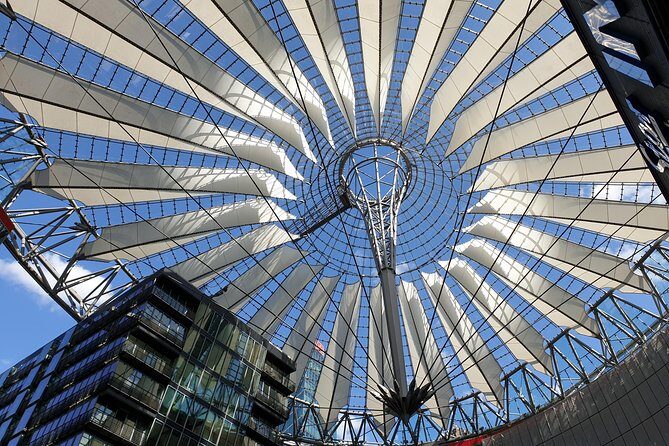
As you enter the Sony Center building, you can see how parts of the earlier square—destroyed during WWII—were preserved and then blended into modern design. This is a good moment to train your eyes: Berlin often keeps traces in plain sight.
Don’t rush the look if you’re interested in architecture. Even if the time is short, this is one of the more “visible” examples of Berlin holding onto its past.
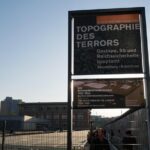
4) Topography of Terror: Nazi headquarters’ ground truth and an exposed Wall segment
Topography of Terror is one of the tour’s emotional anchors. The guide shows you why the site is symbolically powerful—this is where the Nazi dictatorship’s repression machinery is remembered, including the area where the Gestapo and SS had their headquarters.
You can also see nearby landmarks and an original segment of the Berlin Wall from this area. That combination—documents, memory, and the Wall—turns abstract history into geography.
This stop is also the one to mentally slow down at. You’re not meant to treat it like a casual photo stop.
5) Checkpoint Charlie: Cold War heat in a small space
Checkpoint Charlie was a hotspot of Cold War tension. Your guide ties it to the Berlin Wall’s construction and the division of the city under communist dictatorship.
It’s an area that looks simple from the outside, but the story is complicated. If you like history explained with a clear cause-and-effect chain, this is where you’ll feel the guide’s value.
6) Aviation Ministry building: Goering then the Communist ministries
This huge building was constructed by the Nazi dictatorship for the Ministry of Aviation led by Goering. During the Cold War it served as part of the “home of the ministries” of the communist dictatorship, and today it’s used by the Federal Republic of Germany.
That’s the point: one building can flip its role depending on who holds power. The guide’s commentary helps you read the architecture as political evidence, not just a big facade.
7) Führerbunker: Hitler’s last days, explained in context
You’ll reach the area of the bunker where Hitler spent his last days. The guide focuses on what the place means now and why its present-day interpretation matters.
This is another stop where you’ll probably notice your own pace. Even if you’re an upbeat traveler, this is heavy material.
8) Holocaust Memorial (Memorial to the Murdered Jews of Europe): silence with shape
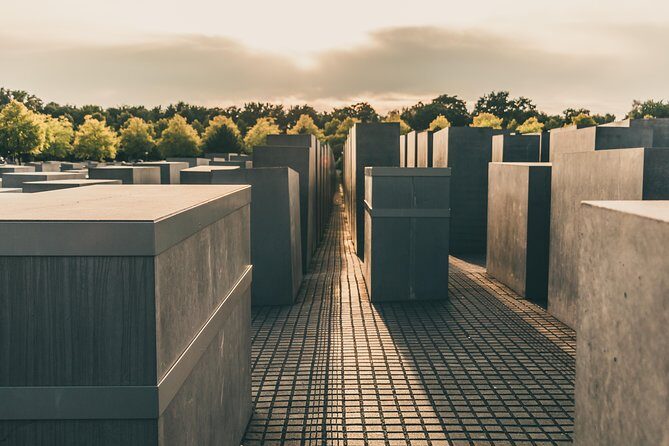
At the Holocaust Memorial, the guide’s storytelling is built for reflection. The memorial stands as a symbol in Berlin remembering the greatest crime committed by the German state during Nazism.
Don’t plan to cram this into “one more stop.” If you take a breath and actually look around for a minute, the memorial makes more sense.
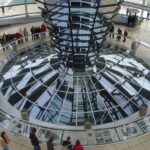
9) Reichstag Building: outside views plus dome-booking guidance
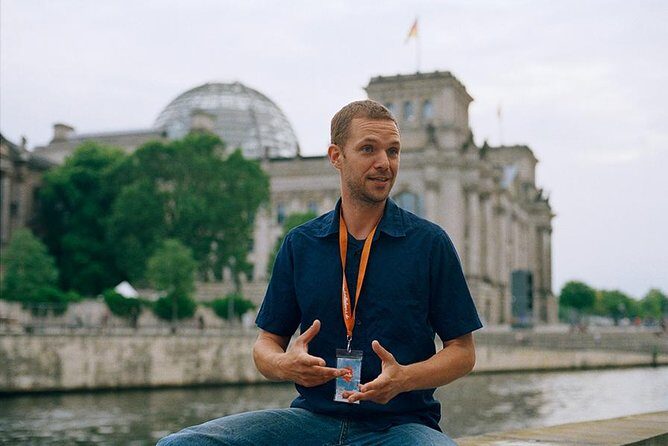
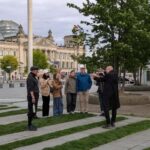
You’ll see the Reichstag Building, seat of the German Parliament. The key detail here: you only visit it outside, and the guide explains how to book a visit to the dome.
That’s practical information, because the dome visit is often the part people want most. Even without going inside on the tour, you’ll leave knowing how to plan the extra time.
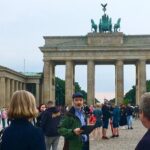
10) Brandenburg Gate: from royal strength to Cold War symbol to reunification
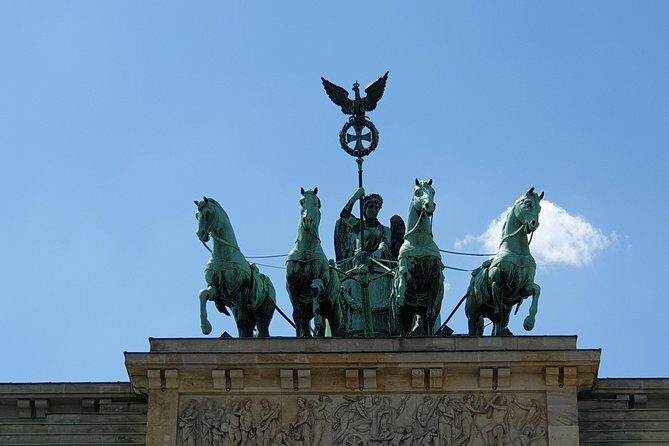
Brandenburg Gate is Berlin’s classic landmark, and it earns its fame. Your guide walks you through its transformation—from a symbol of a king’s strength to a Cold War icon, and eventually a symbol of reunification.
This stop is one of the best photo moments, but it’s also one of the best listening moments. The guide’s story helps you see the gate as a timeline.
11) Unter den Linden: reading the boulevard’s layers
You’ll walk through Unter den Linden, the great avenue once used as the access road to the emperor’s palace. The guide points out how you can recognize different construction periods and the wounds left by war.
This is a “walk-and-notice” segment. It works if you enjoy seeing small contrasts in streets, facades, and spatial design rather than just major monuments.
12) Bebelplatz: book burnings and the nearby learning institutions
At Bebelplatz, the theme is knowledge under threat. The square is linked to the burning of books during Nazi dictatorship, and it also connects you to Humboldt University and the Catholic Cathedral nearby.
If you like history that’s not just about buildings but about ideas, this stop matters. It frames censorship as a real policy, not a vague concept.
13) Book Burning Memorial at Bebelplatz
The guide points out the memorial that remembers the infamous book-burning propaganda action. This is a smaller piece of the story, but it’s one you can understand quickly and remember.
Because the stop is short, watch your time. The memorial is the kind of thing you’ll want to look at more than once.
14) Humboldt University: an educational legacy you can name
You get a brief look at Humboldt University. The guide shares history of the university and mentions famous students, helping you connect Berlin’s culture of learning to the places you’re seeing.
This isn’t a deep academic tour, but it gives you names and context so the area feels less like scenery.
15) Neue Wache: a memorial against war’s horrors
Neue Wache is a memorial that rejects war and its horrors. The image of a mother crying for her son, a soldier who fell in battle, is the core idea.
This stop is emotionally direct. If you’re traveling with kids or you just prefer lighter content, decide in advance how you want to handle the tone.
16) Berliner Dom: a grand church concept and Berlin’s religious power
At Berliner Dom, you’ll see the impressive church built with an imperial concept in mind. The guide frames it as an equivalent of St. Peter’s for Lutheran religion.
This is more visual and architectural than political. It provides a breath after the memorial stops, without pretending the city’s story is over.
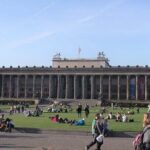
17) Museum Island finish: UNESCO setting and next-step guidance
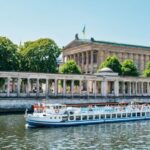
The tour concludes at Museum Island, a UNESCO World Heritage site. You’ll get directions to keep visiting the area afterward, and the tour closes with help getting your bearings in a city with complicated, sometimes tragic history.
Finishing here makes sense if you want to continue with a major museum day. It also means you can align your next plans with what the guide emphasized along the way.
Group size, timing, and comfort: how to make this tour enjoyable
This is scheduled for about 3 hours 30 minutes. With 17 stops, the pace is active: many segments are around 5–15 minutes. That doesn’t mean you’re rushed for no reason. It means the guide is likely designed to hit the major story beats without getting stuck in one place.
The small group limit of 28 travelers helps you hear the guide and not feel drowned out. Still, plan for close proximity in tight memorial areas.
The tour runs in all weather conditions, so dress appropriately. Berlin weather can change fast, and you’ll be walking outside for long enough that comfort matters.
Who should book this tour?
Book it if you want:
- A fast, guided Berlin-Mitte orientation that ties landmarks to history you can understand
- An Italian-language guide and commentary, with clear explanations rather than random sightseeing
- A route that includes major Wall, Nazi memory, and Cold War landmarks plus reunification icons
Skip it or add a different tour if you want:
- Long museum time inside exhibitions or a slower, countryside-style pace
- A fully English setup (this is explicitly Italian-speaking in this experience)
- Deep architectural analysis without stops moving you along
Should you book? My decision guide
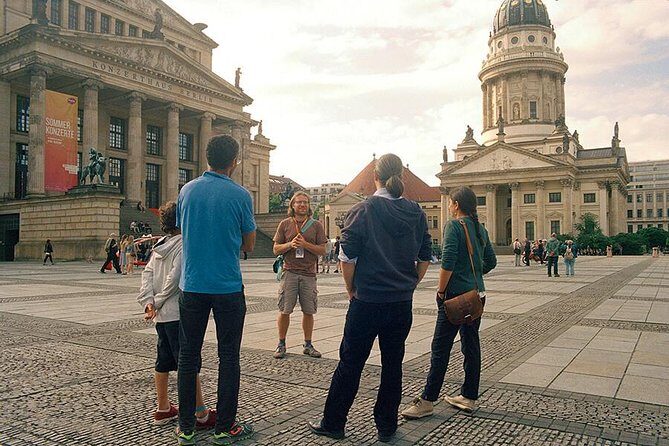
If your first goal is to get your bearings fast in Berlin’s center—especially around the Wall era and the darkest Nazi memory sites—this tour is a strong match. The price is modest for a guided route that covers many headline locations, and the stop sequence helps you make sense of the city’s multiple eras in one go.
I’d book it if you’re also planning to revisit at least one area afterward, like the Parliament area or Museum Island. The ending direction help is a useful bonus because it saves you time figuring out what to do next.
One caution: be ready for the emotional weight in the middle stops. This isn’t a light “highlights only” walk. If you want that, you might pair it with something more relaxed later the same day.
FAQ
How long is the Historic Center of Berlin tour?
It runs for about 3 hours 30 minutes.
What language is the guide speaking?
The guide is described as an Italian-speaking guide.
Where does the tour start and what’s the meeting point?
It starts at Potsdamer Platz 10, 10785 Berlin, near S/U-Bahn Potsdamer Platz. You should look for the blue bicycle by Vive Berlin Tours.
Where does the tour end?
The tour ends near Pergamon Museum, Bodestraße 1–3, 10178 Berlin.
What is the starting time?
The start time is 10:00 am.
Is there a mobile ticket?
Yes, the tour uses a mobile ticket.
What landmarks are included on the route?
The walk includes places such as Berlin Wall-related areas, Checkpoint Charlie, Brandenburg Gate, Topography of Terror, the Holocaust Memorial, and the Reichstag building (outside).
Is food included in the price?
No. Food and drinks are not included.
Does the tour run in bad weather?
It operates in all weather conditions, so dress appropriately.
How big is the group?
The maximum group size is 28 travelers.
Are service animals allowed?
Yes, service animals are allowed.
If you want, tell me your travel dates and whether you’re pairing this with a museum visit (Pergamon, Jewish Museum, Reichstag dome). I can suggest a tight half-day plan around this route.