REVIEW · BERLIN
Hitler to Stalin – WWII & Cold War Tour (Small Group)
Book on Viator →Operated by On the Front Tours · Bookable on Viator
Berlin’s history is right under your feet. This small-group walk connects the fall of Nazi power to the day-to-day pressure of the Cold War. You hit landmark after landmark, but the pacing keeps it human: short explanations, then you’re standing where decisions were made.
Two things I really like: the small group size (max 15) that makes questions easy, and the way the tour links events across decades instead of treating them like separate history chapters. One consideration: this is a heavy topic tour, so if you prefer lighter sightseeing, you may want a different kind of day.
In This Review
- Key points to know before you go
- Why Hitler to Stalin feels different in Berlin
- A $23, 2.5-hour small-group tour: value that makes sense
- How the tour’s flow makes WWII and the Cold War click
- Brandenburg Gate: from former city gate to Europe’s peace symbol
- Reichstag building: German parliament, fire, destruction, and restoration
- Soviet Memorial Tiergarten: remembering the Battle of Berlin
- Holocaust Memorial: 2,711 slabs that make you move differently
- Fuhrerbunker: Hitler’s last command post beneath Berlin
- DPRK embassy and the 1953 uprising: Cold War politics as street-level reality
- Berlin Wall Memorial and Checkpoint Charlie: division you can still feel
- The guide makes it work: Mark’s photos, stories, and Q&A
- Who this tour suits best (and who might prefer a different day)
- Should you book this WWII and Cold War Berlin walk?
- FAQ
- How long is the Hitler to Stalin tour?
- How much does the tour cost?
- Where does the tour start and end?
- What kind of ticket do I get?
- Is admission required for the stops?
- How big is the group?
- Is this tour suitable for most people?
- Does the tour run in any weather?
Key points to know before you go
- You’ll walk from power symbols to war realities: Brandenburg Gate, the Reichstag, and then into the darker sites tied to WWII decisions
- Holocaust Memorial is designed to unsettle: 2,711 concrete slabs on a large grid, with an uneven floor that changes how you move and feel
- Guide Mark helps you picture the past: the best reviews mention photos comparing war-time looks to the present
- Cold War tension doesn’t stay in textbooks: you see places tied to the Berlin Wall era and the 1953 uprising
- All the big stops are listed as admission free: so your money goes to the guide and the experience, not entry fees
Why Hitler to Stalin feels different in Berlin
Berlin is one of Europe’s rare cities where the past is layered so tightly you can’t avoid it. On a map, WWII and the Cold War are eras. On the street, they’re textures: architecture, monuments, and gaps in the urban fabric where something used to be.
This tour’s big strength is the arc. You don’t just bounce between famous landmarks; you move through a timeline. You start with places tied to German political life and European identity, then you shift into sites shaped by occupation, mass murder, and the way survival changed after 1945. The result is a walk where the city starts to feel like a living document.
And yes, it’s intense. The Holocaust Memorial doesn’t try to explain your feelings for you. The space is abstract on purpose, and the uneven ground makes your body understand something your brain might otherwise dodge. That’s not a “tour trick.” It’s part of how the memorial is meant to work.
You can also read our reviews of more tours and experiences in Berlin.
A $23, 2.5-hour small-group tour: value that makes sense
At $23 for about 2 hours 30 minutes, you’re paying for a focused guide-led walk, not a long bus excursion or a museum admission day. That’s a good fit if you want depth without spending half a day inside.
The structure also helps the value. Many of the stops are listed as free to visit, so you’re not layering in ticket costs that can quietly turn a cheap tour into an expensive one. You’ll also be within an area where landmarks are walkable enough to keep the momentum.
Small group matters here. With a maximum of 15 people, your guide can actually answer questions instead of racing past them. In the reviews, the recurring theme is that the guide, Mark, was not just detailed, but able to respond and keep the group engaged. That’s what you want at stops like the Holocaust Memorial and the Fuhrerbunker site—places where people often have questions that don’t fit neatly into a schedule.
How the tour’s flow makes WWII and the Cold War click
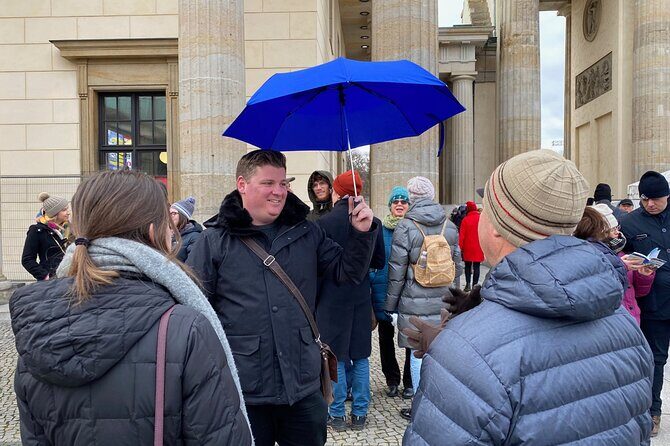
A lot of history tours list stops and facts. This one uses the city to teach cause and effect.
You start at a symbol that once represented a kind of public European “stage” power. Then you move to the Reichstag building, where German parliamentary life becomes inseparable from the collapse that followed. After that, you pivot—war memorials, genocide remembrance, and the private final days of the Nazi regime sit near sites where Cold War pressure later shaped everyday life.
This is what makes the tour useful even if you think you already know Berlin’s story. You’ll still learn things, but more importantly, you’ll connect them: how a war ending doesn’t just end war, and how political power turns into physical space on streets and in buildings.
Brandenburg Gate: from former city gate to Europe’s peace symbol
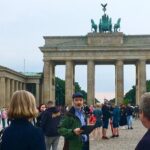
Your walk starts at Brandenburg Gate, in the Pariser Platz area near the Reichstag side of central Berlin. The gate was built in the 18th century by Frederick William II, and it originally stood on the site of a former city gate. That matters: it wasn’t created as a Cold War relic. It became one later, because history kept piling on.
You’re in a spot where the city’s most public, ceremonial identity shows up. That is exactly why it works as the first stop. You get a symbol of unity and peace—today—then you’re ready to absorb the contradiction that follows, where unity splinters and politics turns violent.
Time here is short—about 10 minutes—but it’s enough to set the tone. You look at what the gate represents now, then you learn how the same stone has been used, challenged, and reframed across generations. For a first stop, it’s smart. It gives you bearings fast.
Reichstag building: German parliament, fire, destruction, and restoration
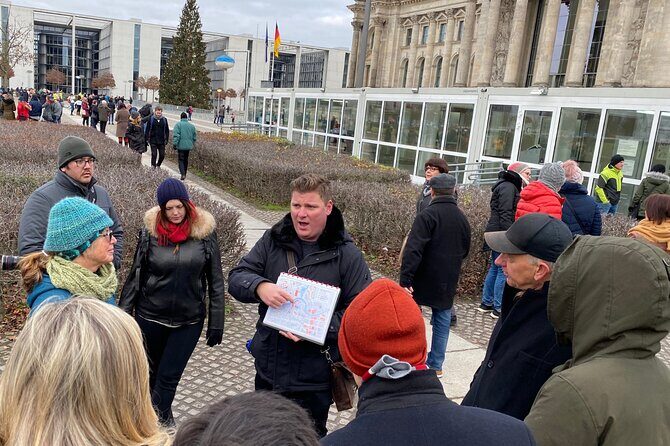
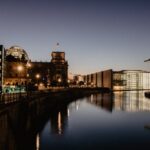
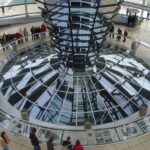
Next comes the Reichstag building, home to the Bundestag, Germany’s lower house of parliament. The building opened in 1894 as the home for the Imperial Diet, then it suffered a defining rupture. In 1933, the Reichstag was destroyed by fire. During World War II it was badly damaged again, and after the war it took until a restoration completed in 1999 to return it to a new role.
This stop is where you feel the contrast between political ideals and political collapse. The structure is not just an old government building; it’s a reminder that institutions can be damaged, rebuilt, and reinterpreted depending on who holds power and what comes next.
Expect about 15 minutes here—enough time to understand why the building is so symbol-heavy, and to notice how the present functions in the shadow of past trauma.



Soviet Memorial Tiergarten: remembering the Battle of Berlin
From central political symbolism, the tour shifts into a different kind of memory: the Soviet War Memorial in the Großer Tiergarten. The Soviet Union erected it in 1945 to commemorate Soviet Armed Forces soldiers who died in the Battle of Berlin.
Location is part of the story. The memorial sits in the northwest corner of Straße des 17. Juni, a street that itself carries the weight of 20th-century upheaval. Standing here, you get a clear reminder that Berlin’s WWII story isn’t just one side’s narrative. It’s a battlefield that different nations experienced through different losses.
This stop is another 15 minutes, and it works best when you treat it like a pause. You’re moving quickly between sites, so a shorter stop like this helps you reset before the heavier emotion that comes next.
Holocaust Memorial: 2,711 slabs that make you move differently
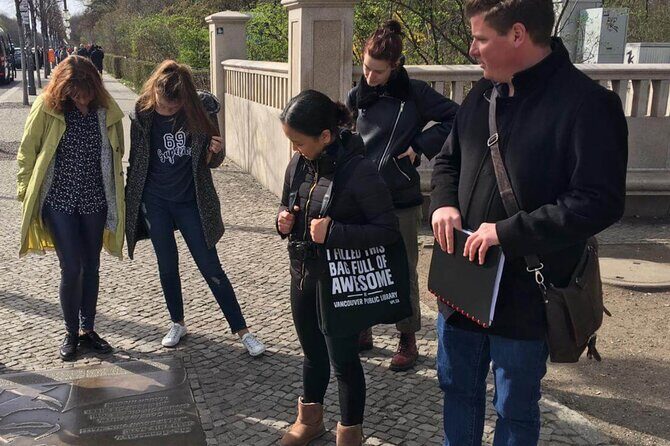
If there’s one stop designed to slow you down without being sentimental, it’s the Memorial to the Murdered Jews of Europe. Created in 1999 and designed by architect Peter Eisenman, it consists of 2,711 concrete slabs on about 19,000 square meters.
The layout does something clever and uncomfortable: the floor isn’t level, so your body adjusts. Visitors often feel uncertainty or even a kind of dizziness because the memorial doesn’t behave like a normal walkway. It’s open and abstract, so you confront the subject in your own way instead of being guided into one prescribed emotional lane.
This matters because it avoids a common problem in memorials: they can turn into photo backdrops. Here, the design resists that. Even the best viewpoint feels secondary to the act of walking through the space and noticing how visibility changes.
Plan around 15 minutes. Use it to wander slowly rather than snapping pictures and rushing out.
Fuhrerbunker: Hitler’s last command post beneath Berlin
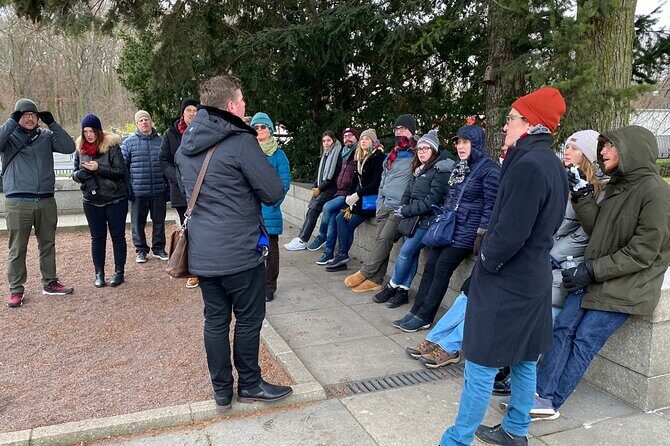
Then you reach the Fuhrerbunker area, an air-raid shelter built in Berlin during WWII and the last of the Führer headquarters. This is one of the stops where the timeline details can feel almost surreal—Hitler took over the bunker on January 16, 1945. He married Eva Braun on April 29, 1945, less than 40 hours before their suicide.
Those facts don’t just add drama. They explain why the bunker matters even today. It’s tied to the final phase of a regime that collapsed fast and brutally, and it reminds you that the end of a government often happens in spaces meant for survival, not celebration.
The underground complex was mostly undisturbed until 1988, which helps explain why this site still carries physical presence in the story of Berlin. Expect about 15 minutes here—enough to understand what it was, where it fits in the final weeks, and how nearby redevelopment changed what you see above ground.
DPRK embassy and the 1953 uprising: Cold War politics as street-level reality
After WWII comes the Cold War pressure, and the tour doesn’t keep it theoretical.
The walk includes the Embassy of the Republic of Korea building—listed here specifically as the Democratic People’s Republic of Korea embassy in Berlin, in Mitte (Glinkastraße 5). You may not get a lesson in modern diplomacy from a building sign alone, but it’s a good reminder that Cold War lines didn’t vanish. They turned into new systems, and Berlin still hosts the symbols.
Then you shift to a monument tied to the June 17, 1953 uprising. This was the first major challenge to the communist regime after the war, and it was suppressed by Soviet tanks. Around 15,000 people were arrested following the incident.
That number is one of those details that makes you stop treating political unrest like a vague “event.” It was mass repression. It shaped who felt safe to speak, and how long fear could last before another crack appeared.
You’ll spend about 15 minutes at this stop. The best way to use it is to remember: this isn’t a single protest story. It’s an early moment in how the Cold War taught the city what consequences looked like.
Berlin Wall Memorial and Checkpoint Charlie: division you can still feel
You finish with the Cold War’s most visible scars: the Berlin Wall Memorial and Checkpoint Charlie.
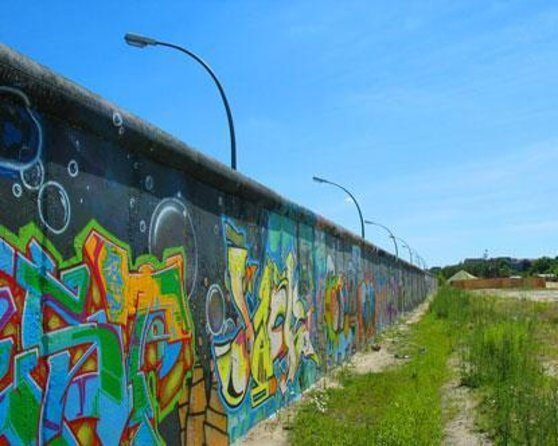
The Berlin Wall Memorial commemorates the wall’s division of Berlin and the deaths that occurred there. Even when you know the broad facts, the memorial context makes the wall feel less like a graphic and more like a system—one that controlled movement and made survival dependent on where you stood.
Then comes Checkpoint Charlie, the famous crossing point where the Berlin Wall separated East and West Berlin during the Cold War period (1947–1991). Western Allies called it Checkpoint Charlie. It’s an instantly recognizable name, but what matters here is how the tour frames it: not as a movie set, but as a real boundary that people navigated under pressure.
Time is about 15 minutes at the wall memorial and about 20 minutes at Checkpoint Charlie. That’s a good allocation. The wall memorial sets emotional grounding; Checkpoint Charlie gives you a concrete example of division made practical.
The guide makes it work: Mark’s photos, stories, and Q&A
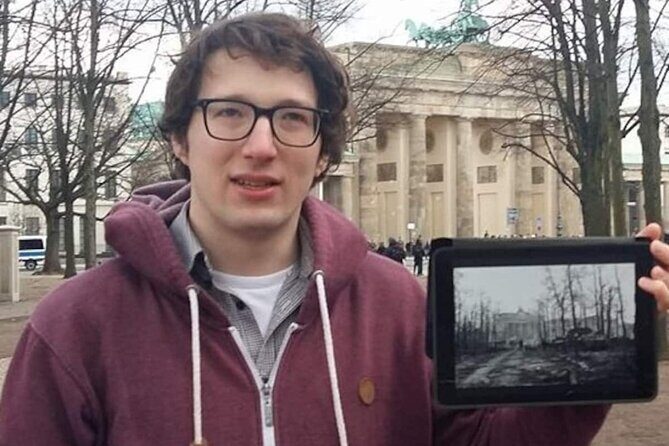
The standout praise from past participants is consistent: Mark brought the experience to life with enthusiasm and strong subject command. The reviews specifically mention that he used pictures to show what places looked like during the war compared with what you see now.
That approach is more useful than it sounds. Berlin is full of reconstructions, replacements, and changed streets. Photos help you rebuild the mental “before” view, so the story stops being abstract. They also make it easier to ask questions, and the best reviews point out Mark could handle them.
If you want a tour that feels like a conversation with an expert rather than a one-way lecture, this guide-driven style is the reason the walk earns its top rating.
Who this tour suits best (and who might prefer a different day)
This is a strong match for you if:
- you want a walk that connects WWII to the Cold War in one coherent story
- you enjoy guides who explain how places changed over time
- you want landmarks with meaning, not just famous names
It’s less ideal if:
- you want carefree, casual sightseeing
- you get uncomfortable with Holocaust remembrance and WWII-linked sites
- you’re looking for lots of museum time rather than street-level context
For most people, participation is straightforward since the tour is a guided walk with public-transport access nearby. It also lists that service animals are allowed.
Should you book this WWII and Cold War Berlin walk?
Yes—if you want an efficient, small-group way to understand Berlin’s “then and now,” and you care about seeing more than the postcard version. At $23 for about 2.5 hours, the value is strong, especially since major stops are listed as free to enter.
Book it if you’re the type who likes to ask why a place matters, not just what it looks like. And if weather can be an issue on your trip, plan with that in mind: this experience requires good weather.
If your goal is to leave Berlin with a clearer timeline and a stronger emotional sense of what the city endured—and how it rebuilt—this tour is a smart use of a half day.
FAQ
How long is the Hitler to Stalin tour?
It lasts about 2 hours 30 minutes.
How much does the tour cost?
The price is listed as $23.
Where does the tour start and end?
It starts at Brandenburg Gate, Pariser Platz 10117 Berlin, and ends at Checkpoint Charlie, Friedrichstraße 43-45, 10117 Berlin.
What kind of ticket do I get?
You receive a mobile ticket.
Is admission required for the stops?
The stops listed for the tour show admission ticket free, so you do not need paid entry tickets for those specific sights.
How big is the group?
The tour has a maximum of 15 travelers.
Is this tour suitable for most people?
Yes, it states that most travelers can participate.
Does the tour run in any weather?
It requires good weather. If canceled due to poor weather, you’ll be offered a different date or a full refund.