REVIEW · BERLIN
Berlin: Jewish Walking Tour including World War II
Book on GetYourGuide →Operated by Talternative · Bookable on GetYourGuide
Berlin’s Jewish story is right on the sidewalks. I liked how the tour connects early Jewish life in Berlin, starting with Moses Mendelssohn, to the community’s brutal WWII destruction, and then to what people remember today. I also liked the stop at the Otto Weidt site, where the story turns from dates on a map into real human choices. One possible drawback: it’s a heavy topic and you’ll be walking for hours, so it’s not ideal if you want a light, casual stroll.
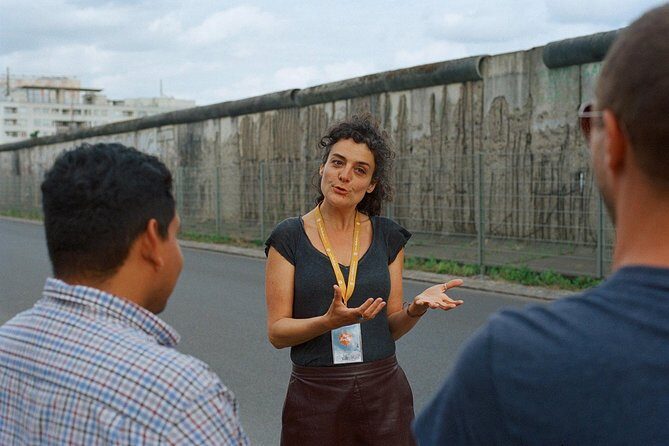
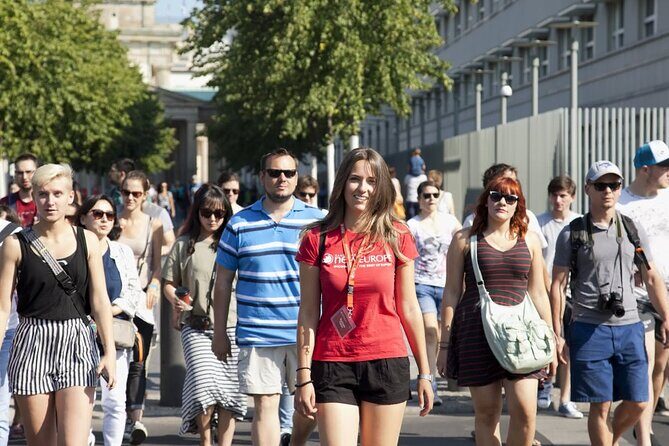
You’ll meet Tal in Mitte at Starbucks near Hackescher Markt, then head through the neighborhood where so many Jewish institutions and everyday landmarks once clustered. Tal is a certified Berlin guide (Berlin Guides Association), and the tour runs in English and Hebrew, in a private group format with time for a short break. Also note a mix-up you should plan around: the tour info says wheelchair accessible, but it also says it’s not suitable for wheelchair users and people with mobility impairments—so if mobility is an issue, you’ll want to double-check before booking.
In This Review
- Key highlights worth your attention
- Walking Berlin’s Jewish story starts at Hackescher Markt
- What I liked most about the pacing
- The main thing to consider
- Stop-by-stop: from Mendelssohn-era reestablishment to WWII memory
- Hackescher Markt: a focal point for Ostjuden
- The women’s protest memorial in Rosentalstraße area
- Otto Weidt Workshop for the Blind: when help was risky
- Rosentalstraße Monument and nearby Jewish institutions
- New Synagogue Berlin (Jewish Centre): the golden era and the fall
- Mendelssohn School and the girls’ school: education as identity
- Old Jewish Cemetery and the first synagogue sites
- What’s included (and what you may need separately)
- Customization: add cemeteries and deportation memorials if you want more
- Price and value: is $318 per person worth it?
- Who should book—and who should pass
- Before you go: practical tips that make the tour easier
- Should you book Tal’s Berlin Jewish WWII walking tour?
- FAQ
- How long is the Berlin Jewish walking tour?
- Where does the tour start?
- Where does the tour end?
- How much does it cost?
- What languages are available?
- Is the tour private?
- What is included in the ticket price?
- Is Centrum Judaicum included?
- Can I customize the tour with extra sites?
- Is it wheelchair accessible?
- What should I bring?
Key highlights worth your attention
- Mendelssohn to today: the arc of Berlin’s Jewish community across centuries, not just WWII.
- Hackescher Markt focus: you learn why this area mattered for Ostjuden seeking refuge.
- WWII remembrance with context: the women’s protest memorial and other WWII-linked stops come with explanation, not just signage.
- Otto Weidt’s story: you see where courage and practical help happened under extreme danger.
- First cemetery and synagogue sites: you visit places that show early Jewish life in Berlin.
- Optional extensions: you can add more cemeteries and deportation/Kindertransport memorials if your interests run deeper.
Walking Berlin’s Jewish story starts at Hackescher Markt
This tour is set up in a smart way: it starts in the center of the old Jewish-institution world. You meet at Starbucks in Mitte, then you’re quickly in the area where you can understand Berlin as more than a postcard city. It’s a working neighborhood with layers, and that matters, because Jewish history here isn’t just museums. You’re learning in front of real street-level landmarks.
Tal’s approach is practical and story-driven. You get the big timeline, then you get the details that explain why those buildings and streets mattered. Expect a mix of cultural history (education, community structures, how different groups lived together) and wartime tragedy (persecution, deportation, and memorial sites).
You can also read our reviews of more walking tours in Berlin



What I liked most about the pacing
The tour runs about 3.5 to 4 hours, with a short break. That’s long enough to connect the dots, but not so long that your brain turns into soup. The private format also helps: you can ask questions without the usual group-pressure feeling.
The main thing to consider
It covers WWII and the Holocaust in a direct way. You’ll likely feel the weight of it. If you’re someone who likes distance from heavy subjects, plan to take your time and maybe bring a notebook so you can process what you’re hearing during breaks.
Stop-by-stop: from Mendelssohn-era reestablishment to WWII memory
The tour moves through Mitte in an order that helps you track how the community changed over time. Instead of treating the sites like isolated photos, you’ll keep building a picture of how Jewish life in Berlin formed, shifted, and broke.
Hackescher Markt: a focal point for Ostjuden
Your first guided stop is Hackescher Markt, where Tal explains why this area became a key focal point for Ostjuden who arrived from Eastern Europe. The point isn’t just geography. You learn what refuge meant in real life—how people sought safety, how communities formed around institutions, and why Berlin’s Jewish story isn’t one single chapter.
You’ll also get your bearings fast for the rest of the walk. This section works especially well if you’ve seen Berlin before but never looked at it through this lens.



The women’s protest memorial in Rosentalstraße area
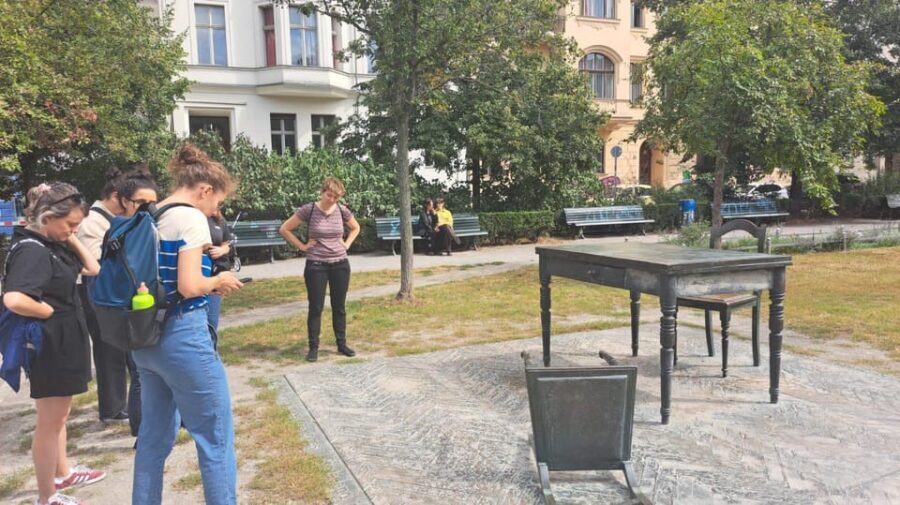
A major WWII-linked moment comes with a stop at the memorial connected to the women’s protest of 1943. This is the kind of place where the name on the plaque matters, but only if you understand the context behind it. Tal’s job here is to connect the memorial to the human decision-making behind it—what protest meant when fear was everywhere.
Even if you already know the outline of WWII history, this stop can shift your attention from what happened to people to what people did in response. That change in viewpoint is often what makes this tour feel different from a standard WWII walk.
Otto Weidt Workshop for the Blind: when help was risky
One of the most memorable stops is the Otto Weidt Workshop for the Blind (with an entry ticket included when open). Tal tells the story of Otto Weidt and his efforts to save lives during the Holocaust. This isn’t a vague “someone was brave” summary. You’ll learn how the workshop functioned and why it mattered—how ordinary work and purposeful action could become a form of protection.
What I like about this part is that it’s not only tragedy. It’s also agency. You walk away with a clearer understanding that survival was not only about fate; it involved people making choices in impossible situations.
Rosentalstraße Monument and nearby Jewish institutions
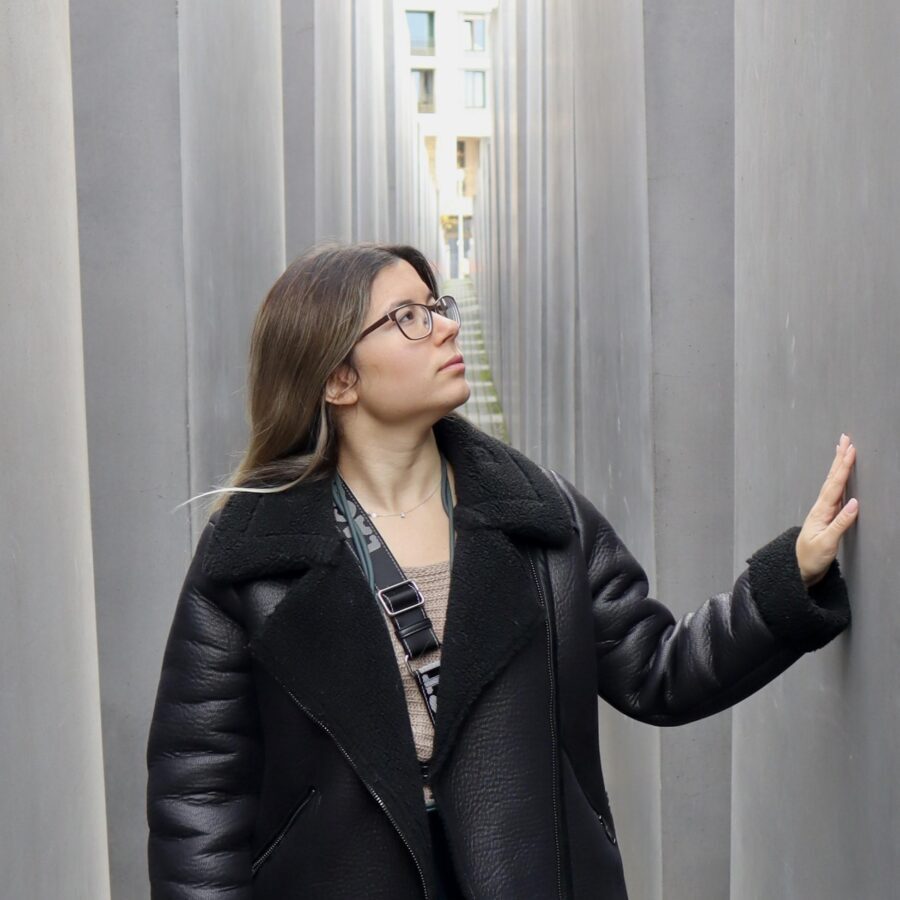
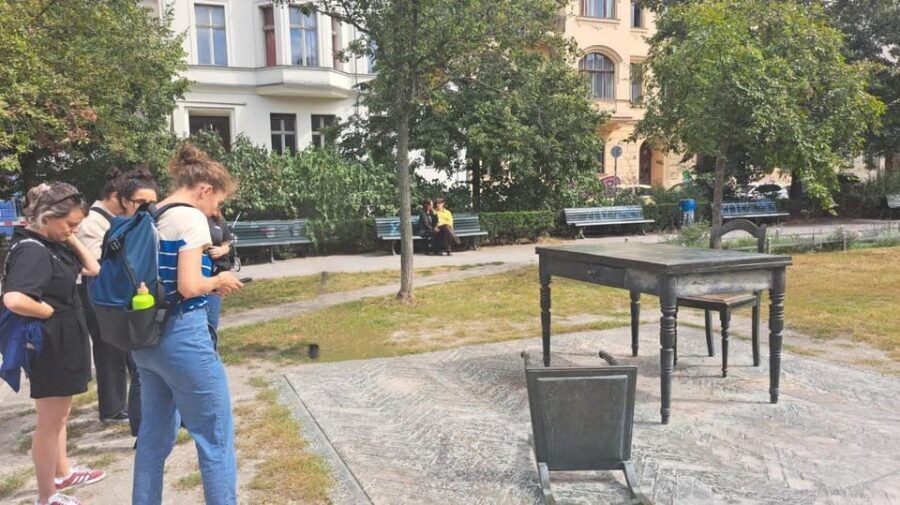
Along the way you also visit the Rosentalstrasse Monument, plus more community-linked sites around Mitte. The tour uses these stops to show how Jewish institutions lived right alongside daily city life. You’ll learn about schools and other organization points tied to community life, which helps you understand that WWII didn’t erase a faceless past. It shattered a functioning world—one that included education, support systems, and daily routines.
New Synagogue Berlin (Jewish Centre): the golden era and the fall
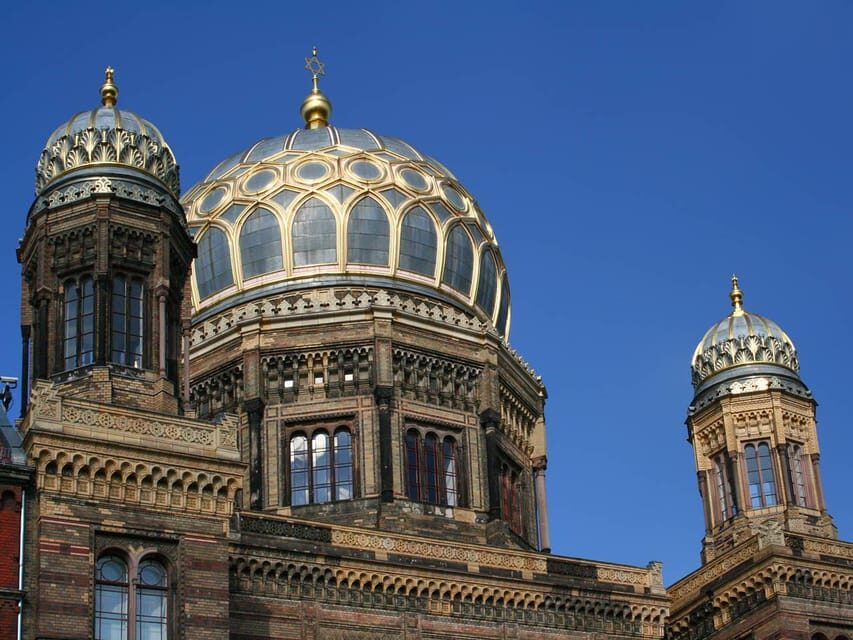
You’ll spend time at the New Synagogue Berlin – Jewish Centre area. Tal explains why this synagogue symbolizes both the golden era of Berlin’s Jewish community and the break that came later. You’ll likely see the synagogue from outside as part of the guided visit, with context on what it represented to the community at different moments.
This stop is valuable because it gives you a visual anchor. When you learn about prosperity, identity, and public presence, it helps to stand near the structures that made that presence real.
Mendelssohn School and the girls’ school: education as identity
The tour includes guided time at community institutions tied to education, including the Mendelssohn School and the girls’ school. These stops are easy to overlook on your own, because they don’t scream “landmark.” On the tour, they become proof of something important: Jewish community life in Berlin wasn’t only religious ritual. It was also schooling, youth development, and community continuity.
If you care about how people rebuild and sustain culture across generations, you’ll get a lot out of these institution stops.
Old Jewish Cemetery and the first synagogue sites
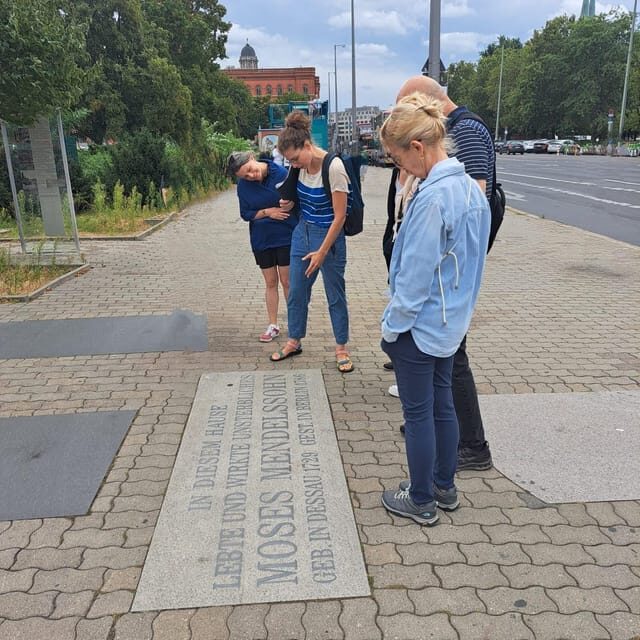
The walk ends at the Memorial Jewish Cemetery, including time at the old cemetery area and the first cemetery tied to the community. Tal discusses the burial of Moses Mendelssohn here, which gives the whole tour a strong emotional and historical landing point. The tour includes entry to the old cemetery when it’s open, except on Jewish holidays and Saturdays.
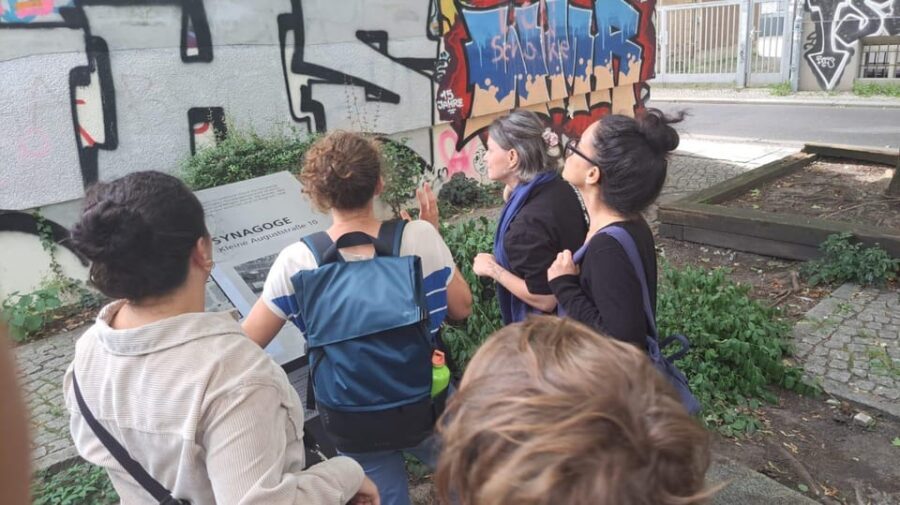
You’ll also see the site connected to the community’s first synagogue. That part helps you feel the early roots of Jewish institutional life in Berlin—how the community established itself and grew even amid limitations and changing political realities.
What’s included (and what you may need separately)
This tour includes a walking guide, and you get entry tickets to the Otto Weidt museum (on days it’s open) and the old cemetery (with the noted exceptions). You don’t have to juggle ticket hassles for those core stops, which is a real value when you’re trying to keep your day moving smoothly.
What isn’t included: entry ticket to Centrum Judaicum, which is separate from what you pay for this tour. If you’re the type who wants to spend extra time inside interpretive spaces, you’ll want to budget for that separately.
Customization: add cemeteries and deportation memorials if you want more
You have the option to extend your tour based on interests. The listed add-ons include:
- Schönhauser Allee Cemetery, connected to famous members from the community’s golden era
- Kindertransport Memorial at Friedrichstraße Station
- Grunewald Deportation Memorial
This is helpful if you already know where your curiosity is pulling you. Some people want more cemetery time and genealogical context. Others want more WWII-linked memorials. Tal can adjust based on what fits your questions.
Price and value: is $318 per person worth it?
At $318 per person for roughly 3.5 to 4 hours, this isn’t a budget tour. But it is built around high-value elements.
Here’s what you’re paying for in practical terms:
- A certified guide, Tal, who teaches both cultural history and WWII-linked context
- Private group time, which usually means faster question-and-answer flow
- Entry included for the Otto Weidt museum (when open) and the old cemetery (when open)
- A focused route that targets significant Mitte institutions tied to the Jewish community’s rise, fall, and remembrance
If you want to piece this together alone, you’d spend time planning the route, verifying which sites require tickets, and figuring out what each place means historically. This tour saves that effort, and it adds interpretation that turns locations into understanding.
If you’re a solo budget traveler who only wants a quick overview, the price will feel steep. If you want depth, and you want to leave with a clearer timeline and emotional context, it can feel fair.
Who should book—and who should pass
This tour fits best if:
- You care about German-Jewish history beyond headlines
- You want a grounded, walking-based look at how institutions shaped everyday life
- You appreciate context that connects the 17th century, the community’s shifting demographics, and WWII memory sites
- You want the story told by a guide who can link personal human actions to the larger historical forces
You might want to skip or choose a different format if:
- You’re looking for light sightseeing
- You have mobility limitations, especially given the notes that conflict on wheelchair suitability
Before you go: practical tips that make the tour easier
Bring comfortable walking shoes. The route is meant for steady walking, and you’ll want your feet to stay happy. Also bring a hat and sunscreen for daytime weather. You may want a head covering or kippah, since it’s listed as recommended.
Not allowed: smoking, and flash photography. If you’re the kind of person who takes lots of photos, plan to keep your camera ready but your flash off.
Should you book Tal’s Berlin Jewish WWII walking tour?
If your goal is to understand Berlin’s Jewish story in a way that feels connected—starting with the community’s reestablishment, moving through key Mitte institutions, and ending at the old cemetery with Moses Mendelssohn—you’ll likely feel satisfied. The Otto Weidt portion adds a rare mix: Holocaust history with a spotlight on practical rescue.
Book it if you want a guided route that gives meaning to the streets, not just dates on a wall. Consider passing if you need a low-walking, low-emotion experience.
FAQ
How long is the Berlin Jewish walking tour?
It runs about 3.5 to 4 hours.
Where does the tour start?
The meeting point is in front of Starbucks.
Where does the tour end?
It ends at the Memorial Jewish Cemetery, with the activity described as ending back at the meeting point.
How much does it cost?
The price is listed as $318 per person.
What languages are available?
The tour is offered in English and Hebrew.
Is the tour private?
Yes, it’s listed as a private group.
What is included in the ticket price?
You get a walking tour with a guide, entry tickets to the Otto Weidt Museum (except days it’s closed), and entry to the old cemetery (except Jewish holiday and Saturday).
Is Centrum Judaicum included?
No. Entry ticket to Centrum Judaicum is not included and requires a separate ticket.
Can I customize the tour with extra sites?
Yes. You can extend the tour to include additional locations based on your interests, such as Schönhauser Allee Cemetery, the Kindertransport Memorial at Friedrichstraße Station, and the Grunewald Deportation Memorial.
Is it wheelchair accessible?
The information includes both a wheelchair-accessible note and a statement that it is not suitable for wheelchair users and people with mobility impairments. If mobility is a concern, you should check before booking.
What should I bring?
Bring comfortable shoes, a hat, head covering or kippah, sunscreen, and water.