REVIEW · BERLIN
An Introduction to Berlin Private Walking Tour
Book on Viator →Operated by Insight Cities · Bookable on Viator
Berlin’s past is right on the sidewalk. This 3-hour private walking tour pairs you with a historian scholar-guide and focuses on how Berlin went from dictatorship to democracy. You’ll use a smart mix of walking and short public-transport hops to hit the big symbols without turning it into a rushed photo line.
I especially like the private format. With only your group, you can ask questions and get answers that actually fit what you’re seeing. In one standout experience, the guide named Jakob shared perspective from his family ties to a Holocaust survivor, then helped explain WWII history with extra clarity.
One thing to keep in mind: the cost is per group (up to 10 people), so it can feel pricey if you’re only two or three. Also, the route uses public transport a few times, so you’ll want a transit plan ready before you start.
In This Review
- Key Things to Know Before You Go
- Why This 3-Hour Berlin Tour Works for First-Timers
- Price and Group Value: When $520.73 Feels Right
- What Makes the Guide Matter (Especially for WWII)
- Stop-by-Stop: What You’ll See and Why It Matters
- Reichstag Building and the Foster Dome Logic
- Brandenburg Gate: A Monument That Keeps Reappearing
- Museum Island: Why Prussia Built Museums Like Power Centers
- Potsdamer Platz: From Division to a City Restart
- Unter den Linden and Tiergarten: The Boulevard and the Breathing Space
- The Holocaust Memorial: Design Details That Change How You Move
- Hackescher Markt: Pre-War Courtyards in a Living Neighborhood
- What About the Berlin Wall and Checkpoint Charlie?
- Transit, Timing, and Practical Tips for a Smooth 3 Hours
- Who This Tour Fits Best
- Should You Book This Private Berlin Walking Tour?
- FAQ
- How long is the Berlin private walking tour?
- Is this a private tour?
- What language is the tour offered in?
- Where do I meet the guide?
- Is pickup available?
- What’s included in the price?
- Are food and drinks included?
- Do I need public transport during the tour?
- What is the cancellation policy?
Key Things to Know Before You Go
- Historian scholar-guide: built for context, not just sightseeing.
- Private group up to 10: more Q&A, fewer bottlenecks.
- Route hits major symbols: Reichstag, Brandenburg Gate, Holocaust Memorial, and more.
- Mixed walking + public transport: helps cover distance in 3 hours.
- Mobile ticket included: easier day-of check-in.
Why This 3-Hour Berlin Tour Works for First-Timers
Berlin can overwhelm you fast. The city looks calm today, but its modern identity was forged by war, division, and political reinvention. This tour is built to make that story readable in just a few hours, using the exact landmarks that keep showing up in Germany’s political memory.
The format matters. Three hours is long enough for real explanation, short enough that you don’t burn out before you even reach the hardest topics. And because it’s private, you don’t have to compete for attention when you want to understand why a place matters.
You also get a helpful structure. The stops form a loose line through Berlin’s political centers and its 20th-century scars. That makes it easier to connect dots later when you explore on your own. In other words, you’ll leave with bearings, not just snapshots.
You can also read our reviews of more walking tours in Berlin


Price and Group Value: When $520.73 Feels Right
The price is listed as $520.73 per group up to 10. That’s not cheap on paper, but private tours often work out well when you share the cost.
Here’s the practical math:
- If you fill all 10 spots, you’re effectively paying about $52 per person.
- If you’re a smaller group, like 4 people, it’s closer to $130 per person.
- If it’s just 2 people, it can land around $260 per person.
So the value really depends on your group size and what you want from the day. If you want a guided narrative with time to ask questions—especially around WWII and the Holocaust Memorial—private format can be worth paying for. If you’re traveling solo or as a couple and you want only quick highlights, you might choose a different style of tour to save money.
What Makes the Guide Matter (Especially for WWII)
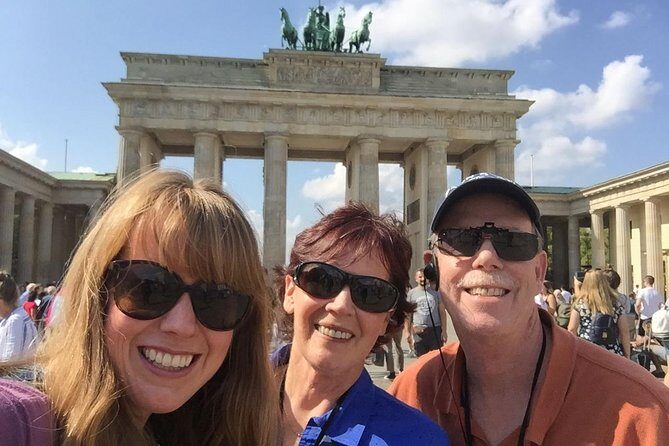
This experience doesn’t just point at landmarks. It pairs them with a historian scholar-guide, which changes what you notice. Instead of learning names and dates only, you start understanding how Berlin’s architecture and street layout reflect shifting power.
The role of the guide is even more important for the emotional stops. The Holocaust Memorial isn’t there to be “seen.” It’s meant to be processed. A guide who can explain what you’re looking at—like the design choices and what visitors feel while moving through it—turns a quick stop into a real moment of understanding.
One review highlighted Jakob specifically. He described his perspective as the grandchild of a Holocaust survivor, and the tour leaned into details of WWII history with extra depth. That’s the kind of thing you’re paying for with a historian-led private tour: the ability to go beyond surface-level explanations and tailor the pace to your questions.
Stop-by-Stop: What You’ll See and Why It Matters
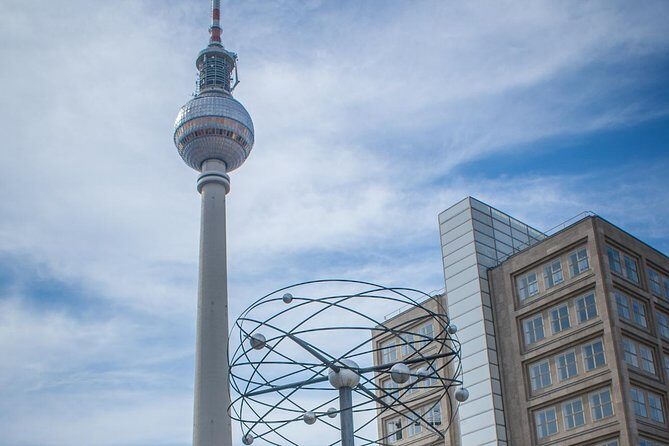
Reichstag Building and the Foster Dome Logic
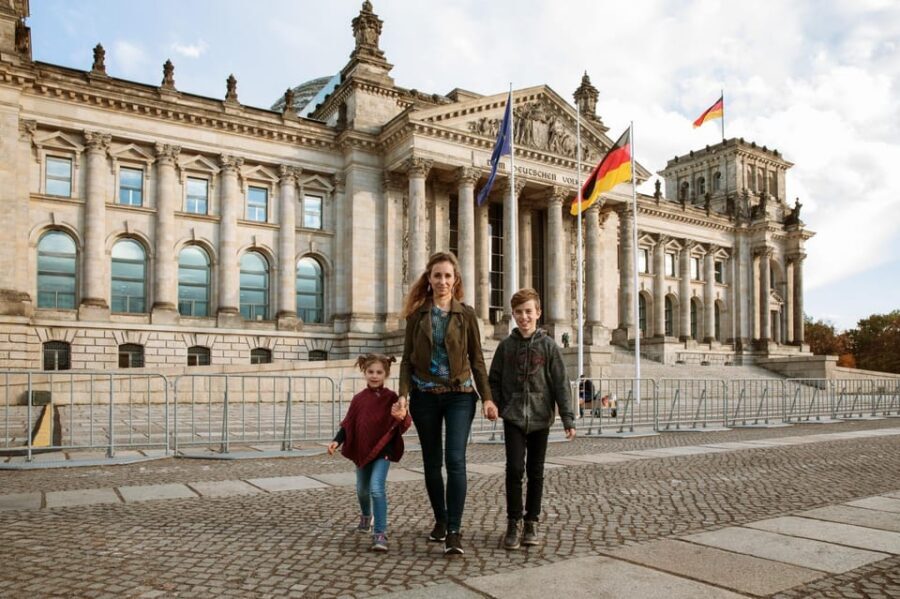
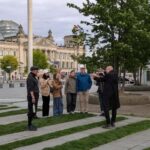
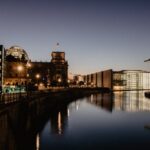
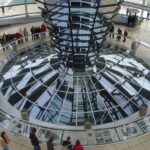
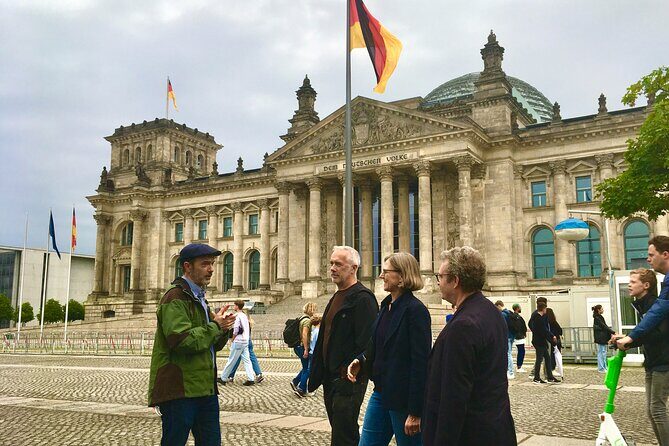
Your tour starts at the Reichstag Building, the meeting place of the Bundestag, Germany’s national legislature. The famous feature here is the glass transparent dome added in the 1990s by architect Norman Foster. It has become an image of modern Germany’s commitment to democratic government.
Plan to look at it as a symbol, not just an impressive structure. The dome’s transparency is the point: you’re meant to see governance from the outside, and to understand that modern Germany wants accountability baked into the architecture. If you’ve ever wondered why Berlin so often uses buildings to talk about politics, this is your first clue.
This stop is listed at about 20 minutes and includes an admission ticket marked as free. That’s enough time to understand the story the guide ties to the building without turning it into an all-day museum detour.
You can also read our reviews of more private tours in Berlin




Brandenburg Gate: A Monument That Keeps Reappearing
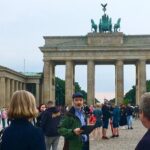
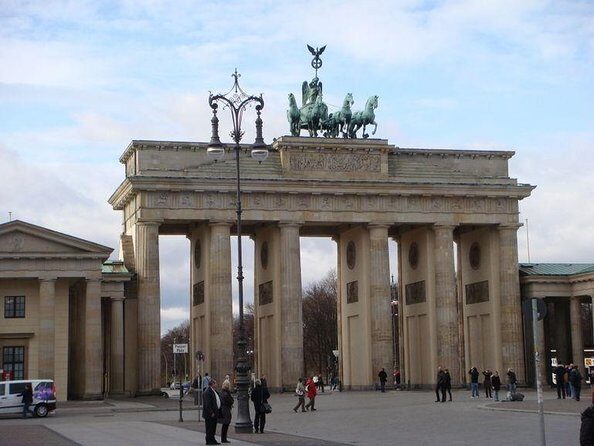
Next up is the Brandenburg Gate, an 18th-century neoclassical monument ordered by Prussian king Frederick William II. This is one of those places that seems to collect history. Napoleon’s entrance is part of its story, and the Cold War also left its mark—Ronald Reagan’s speech is specifically mentioned as one of the famous events tied to the gate.
It’s worth treating this stop like a timeline in stone. You’ll hear how the same monument can represent different eras, depending on who is in power and what audiences need to believe. That’s why the Brandenburg Gate works for first-timers: it’s iconic, but it’s also a tool for explaining Berlin’s political shifts.
The itinerary lists this as about 20 minutes, with admission ticket marked free.
Museum Island: Why Prussia Built Museums Like Power Centers
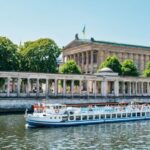
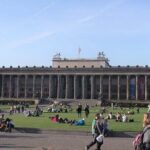
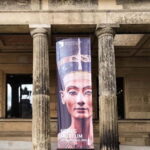
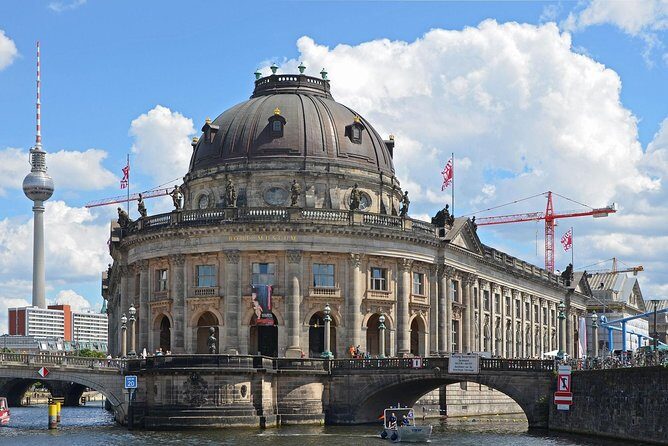
You’ll then reach Museum Island on Spreeinsel (Spree Island), a compact cluster of major museums in central Berlin. The tour calls out five big museums built under the Prussian rulers, including the Pergamon, Neues Museum, and Alte Nationalgalerie.
Even if you don’t go inside every museum, you’ll learn how museums functioned differently when rulers financed them. This area is part of Berlin’s long-term strategy for status and culture. When you’re standing here with a guide, it helps to notice that the “art and history” story is also a power story.
Expect around 20 minutes at this stop, and again the admission ticket is listed as free.
Potsdamer Platz: From Division to a City Restart
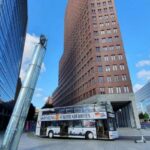
Then comes Potsdamer Platz, a historic square that was reborn after the fall of the Berlin Wall. Today it’s a hub for entertainment, restaurants, and shops. This stop is short—about 15 minutes—but it’s a useful reset point in the tour’s narrative.
I like Potsdamer Platz because it shows how quickly a city can rebrand itself. You go from heavy political memory into a space that feels modern and commercial, and that contrast helps you see how Berlin chose to move forward. The guide’s job is to connect the dots so it doesn’t become just another modern district stop.
The itinerary lists admission ticket as free here too.
Unter den Linden and Tiergarten: The Boulevard and the Breathing Space
After Potsdamer Platz, you head to Unter den Linden, the grand boulevard named after the linden trees lining the street. It runs from the City Palace to the Brandenburg Gate, and it’s often compared to Paris’s Champs-Élysées in how it functions as a ceremonial, prominent axis.
This stop is about 30 minutes. That extra time matters because you’re not just looking at one building. You’re moving along a political spine. It’s the kind of street where distance itself tells a story—what the city wanted to show, how it wanted people to feel, and how that changed over time.
You’ll also hit Tiergarten, Berlin’s best-known inner-city park. It’s listed at about 10 minutes. This quick park break isn’t random. It gives your brain a small reset before the tour shifts back to memory and memorial spaces.
The Holocaust Memorial: Design Details That Change How You Move
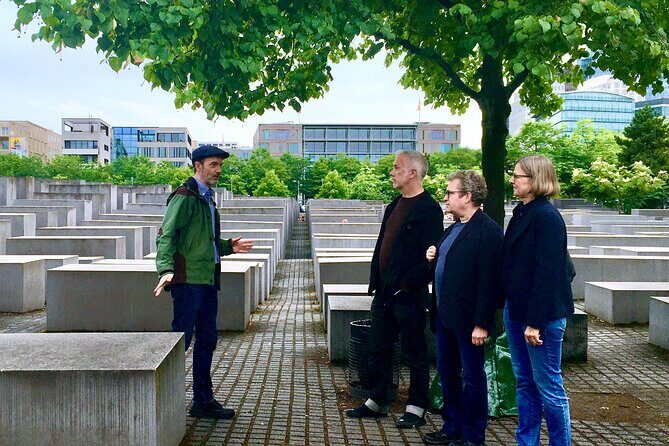
One of the most important stops is the Memorial to the Murdered Jews of Europe. It was designed by architect Peter Eisenman and opened in 2005. The memorial includes 2711 concrete slabs of different heights. The layout creates a kind of somber labyrinth, and the experience is meant for reflection.
This is not a place for quick chatter. With a guide, you’ll likely understand why the slabs vary in height and why the arrangement can make you feel disoriented. Those design choices are part of the message: the memorial doesn’t ask you to look from a single viewpoint, it asks you to navigate.
The stop is about 15 minutes, with admission ticket listed as free. That might sound short, but for many people, it’s the right length when combined with context from the guide.
Hackescher Markt: Pre-War Courtyards in a Living Neighborhood
To close this section of the tour, you’ll go to Hackescher Markt, a lively square that offers a glimpse into preserved Art Nouveau courtyards from pre-war Berlin. The itinerary lists about 10 minutes here.
This stop gives you a different Berlin flavor. After the political landmarks and memorial spaces, the Art Nouveau courtyards remind you that Berlin wasn’t only war and government. It was also neighborhoods, design, and everyday life—then and now.
What About the Berlin Wall and Checkpoint Charlie?
The tour highlights mention learning about the Berlin Wall and Checkpoint Charlie. Even though the written stop list doesn’t spell them out one-by-one, they’re part of the overall route narrative. In practice, that means the guide ties these places to what you’re seeing at nearby political landmarks and memory sites, so the story stays connected rather than jumping around.
If Wall history is a top priority for you, this is a good sign. Berlin is full of Wall-related spots, but most visitors need help deciding which ones matter most and how they connect to the larger story.
Transit, Timing, and Practical Tips for a Smooth 3 Hours
The tour includes no food or drinks, so plan to treat it like a focused history block and eat after. Distances between some sites are too far to walk all day, so you’ll use public transport a few times.
If you don’t already have a visitor transit pass, the tour suggests buying a day metro pass. You’ll see specific fare info like:
- a One Way Tarif AB ticket (2.8 Euro),
- a Day Ticket for one person (7 Euro),
- and senior discount figures (1.70 Euro and 4.70 Euro listed).
Your guide can help you buy the right ticket if you can’t purchase it in advance, including at the first metro station on the tour. That’s a big practical plus when you’re figuring out the system on the fly.
For timing: you’ll meet at Unter den Linden 42, 10117 Berlin. If hotel pickup isn’t arranged, meet 15 minutes before at Cafe Einstein, Unter den Linden 42. The tour notes the meeting area is near public transportation, which helps a lot.
And yes, you get a mobile ticket. That reduces paper clutter and makes it easier to keep everything in one place.
Who This Tour Fits Best
This private experience is a strong match if:
- you want a historian guide who explains the why behind the landmarks,
- you care about WWII and Holocaust memory and want thoughtful context,
- you prefer asking questions without holding up a big group,
- you’re visiting for the first time and want a guided path through Berlin’s major symbols.
It’s also a good choice for families or groups who can handle serious topics, as long as the group is comfortable with the emotional weight of the memorial stop.
If your goal is only quick highlights and photos, you might feel the structure is more than you need. But if you want Berlin to make sense as a political and human story, the stop order and guide focus are built for that.
Should You Book This Private Berlin Walking Tour?
I’d book it if you’re the type who wants context, not just scenery. The tour’s value comes from the mix of major political landmarks and the memorial stop, explained by a historian scholar-guide in a private setting. You’ll also appreciate the smart routing that uses transit a few times so you can actually see everything in three hours.
I’d think twice if you’re traveling as a tiny group and price sensitivity is high. In that case, the per-person cost can jump fast because the price is per group up to 10.
If you want Berlin history with time for real questions, this is the kind of tour that helps you connect the city’s past to what you see today.
FAQ
How long is the Berlin private walking tour?
The tour is listed at about 3 hours.
Is this a private tour?
Yes. It’s a private tour/activity, and only your group participates.
What language is the tour offered in?
The tour is offered in English.
Where do I meet the guide?
The default meeting point is Cafe Einstein, Unter den Linden 42, 10117 Berlin. You should meet 15 minutes before the start time unless hotel pickup is arranged.
Is pickup available?
Pickup is offered. If hotel pickup hasn’t been arranged, you should use the default meeting point.
What’s included in the price?
It includes a 3-hour tour of Berlin in the company of a historian, plus a mobile ticket.
Are food and drinks included?
No. Food and drinks are not included.
Do I need public transport during the tour?
Yes. The tour notes that you’ll need to use public transport a few times because some key distances are too far to walk. A day metro pass is suggested if you don’t already have one.
What is the cancellation policy?
Free cancellation is offered. You can cancel up to 24 hours in advance for a full refund. Canceling less than 24 hours before the start time is not refundable.