REVIEW · BERLIN
Individual city tour Berlin for max. 8 persons
Book on Viator →Operated by Kaibel & Erdmann Stadtrundfahrten · Bookable on Viator
Berlin changes fast when you have a guide. This private route for up to 8 people uses an English-speaking guide and an air-conditioned vehicle to stitch together Berlin’s turning points—division, reunification, and modern life—without wasting your time.
I especially like the question-friendly pace (our guide Katherine handled a wide age range of 17 to 77 with ease) and the way the tour connects famous sights like the Brandenburg Gate and Reichstag to what Germany was going through. The one drawback: the itinerary is packed, so you’ll get smart views and context more than long museum-style time inside every building.
In This Review
- Key highlights to know before you go
- Price and logistics: paying for time, not tickets
- Brandenburg Gate: the photo stop that actually has meaning
- Unter den Linden and the historic center’s big names (and dark dates)
- Berlin State Opera: a restored landmark tied to a conductor’s era
- A tall-tower moment and skyline awareness
- Reichstag and government views: why this building matters
- Museum Island: Pergamon Altar and Nefertiti at street-level scale
- Federal President’s seat and a palace-style Berlin
- The rebuilt palace and a view toward Berlin Cathedral
- Nikolaikirche area: the cradle of Berlin by pedestrian streets
- French Church and refugees: Berlin’s story with a specific lens
- Potsdamer Platz: from one of Europe’s busiest squares to modern architecture
- The Berlin Wall’s longest preserved remnant—painted by the world
- Embassy District: old messages meet hypermodern buildings
- Victory Column: reading power along major axes
- West Berlin reminder: Gedächtniskirche as a WWII ruin
- Checkpoint Charlie: the border crossing you can’t ignore
- Scheunenviertel: the former Jewish quarter and old backyards
- Making the most of your 3 hours
- Should you book this Berlin private highlights tour?
- FAQ
- How long is the Berlin city tour?
- Is this tour private?
- Do you offer pickup in Berlin?
- Is the tour offered in English?
- Are entrance fees included?
- What is the cancellation policy?
Key highlights to know before you go
- Private group of up to 8 means you can actually ask questions and adjust the flow.
- English-guided route across both East and West Berlin in about 3 hours.
- Big-photo landmarks include Brandenburg Gate, Reichstag, Checkpoint Charlie, and the Wall segment at Potsdamer Platz.
- Museum Island plus major viewpoints like the Reichstag area help you orient fast.
- Multiple stop types: street-level history, government-era buildings, squares, and postwar memorials.
- Free admission stops are built into the schedule at Brandenburg Gate, Checkpoint Charlie, and Scheunenviertel.
Price and logistics: paying for time, not tickets
This is priced per group at $447.44 for up to 8 people, with a tour time of about 3 hours. If you fill the group, that’s roughly $56 per person—and that’s where the value really clicks, because you’re not paying for a crowded bus experience. You’re paying for your own vehicle and an English guide focused on your pace.
A few practical items matter here:
- Pickup is offered from the Berlin location you choose. You’ll provide the exact address and your preferred start time.
- The tour includes an air-conditioned vehicle and private transportation, so you’re not relying on sprint-and-bus-hop between far-flung stops.
- You get a mobile ticket, which keeps the whole thing simple when you’re in a hurry.
- Not included: snacks, bottled water, and entrance fees. So if you tend to get hungry or thirsty on tours, plan ahead.
One more logistics note: the tour is near public transportation, but you still get the benefit of being driven between stops. That’s a big deal in Berlin, where distances can surprise you—even when the map looks compact.
Who it suits best? This kind of private highlights tour is ideal if you want an efficient orientation to Berlin’s history and geography, and you’d rather spend your energy asking questions than fighting transit schedules.
You can also read our reviews of more city tours in Berlin
Brandenburg Gate: the photo stop that actually has meaning

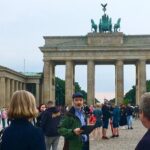
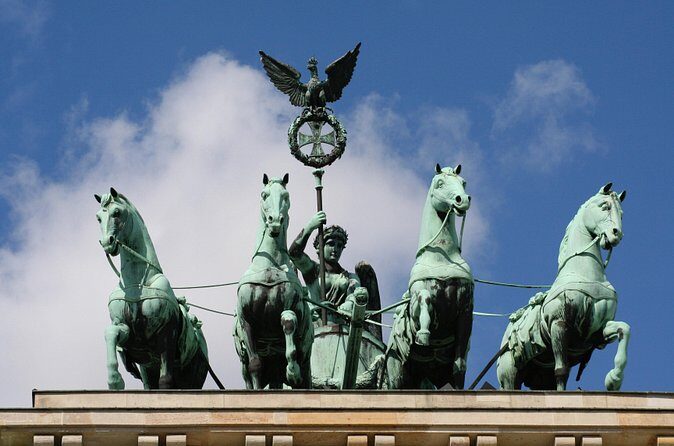
You start at the Brandenburg Gate, Berlin’s best-known symbol of both division and reunification. It’s the kind of place where everyone takes the same souvenir photo, but a good guide changes what that photo represents.
What you’ll do here is quick: take pictures in the area associated with the former border strip. The tour’s real value is the framing—how this monument went from being a barrier to becoming a stage for reunified Germany’s identity.
What to watch for: if the area is crowded, don’t force the perfect angle. Use the guide’s timing to get your photo while moving through the space rather than freezing in one spot.
Possible drawback: Brandenburg Gate can be busy. Your benefit is that with a private group of up to 8, you’re more flexible than a large group stuck in a slow line.
Unter den Linden and the historic center’s big names (and dark dates)
From there, you roll through the boulevard of Berlin’s historic center—famous for its lime trees, classic cafés, and the equestrian statue of Frederick the Great. This part works because it’s not just scenic: it points you toward the institutions and power centers that shaped Berlin.
As you go, you’ll see major landmarks and learn how they fit into the story:
- Humboldt University
- Kronprinzenpalais
- the German Historical Museum
- and the place of book burning by the Nazis
This last stop is heavy, and it’s also where having a guide matters. Berlin is full of physical landmarks, but without context you can miss what they were used for—especially during the Nazi period.
How to make this section work for you: if you like history that connects buildings to events, ask how the guide explains the transition from Prussian power to 20th-century catastrophe. This tour’s structure is built for that kind of conversation.
Trade-off: you’re moving and viewing from the street. If you want to read every plaque slowly, you’ll need extra time later.
Berlin State Opera: a restored landmark tied to a conductor’s era
Next comes the Berlin State Opera, known for its long-standing cultural role and its connection to principal conductor Daniel Barenboim. You’ll also hear that the opera has recently been painstakingly restored.
Why this matters: Berlin has a habit of reworking its own image—repairing what was damaged, rebuilding what was lost, and upgrading what still needs to serve the present. Restoration is a kind of political statement, too. Even if you never go inside, you’ll understand why this building is treated with care.
Practical note: this stop is more “look and learn” than “queue and enter,” since entrance fees aren’t part of the package unless you add them yourself.
A tall-tower moment and skyline awareness
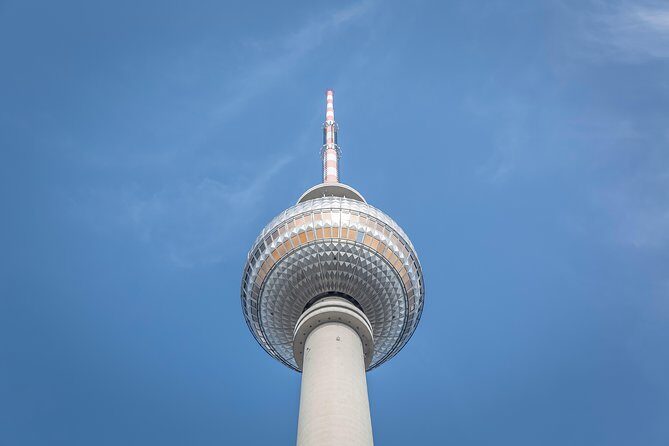
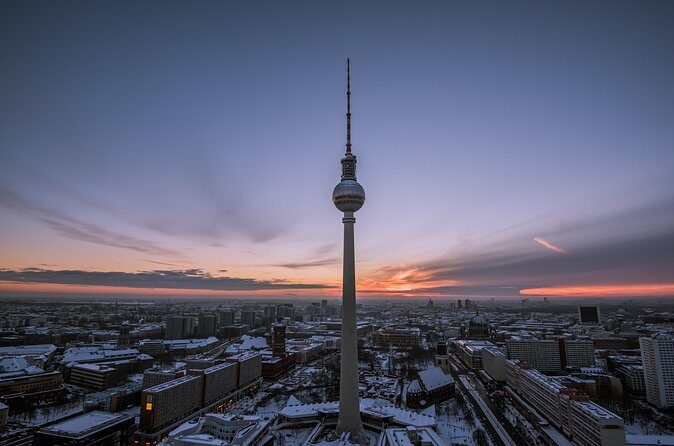
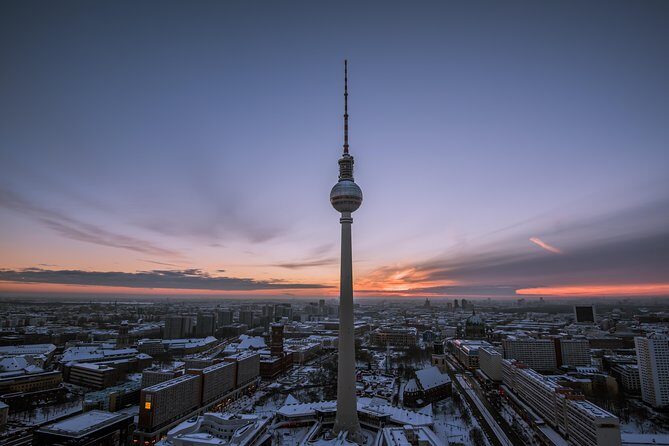
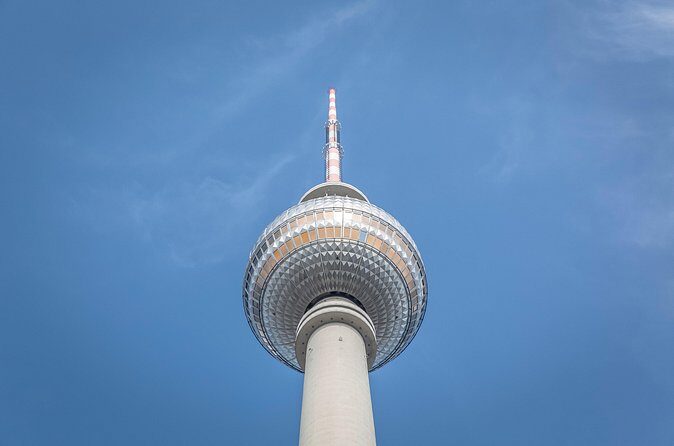
You’ll also see the tallest tower in the city and one of Berlin’s landmarks. Even if you don’t go up, the visual reference helps you later when you’re trying to orient yourself on your own.
Berlin is easier once your brain has landmarks in place. A tall tower functions like a compass point, especially when you’re hopping between historic districts and newer areas.
Possible consideration: if you’re hoping for a guided interior visit (like going all the way up for views), this tour doesn’t promise that. It’s designed for fast, high-value stops.


Reichstag and government views: why this building matters
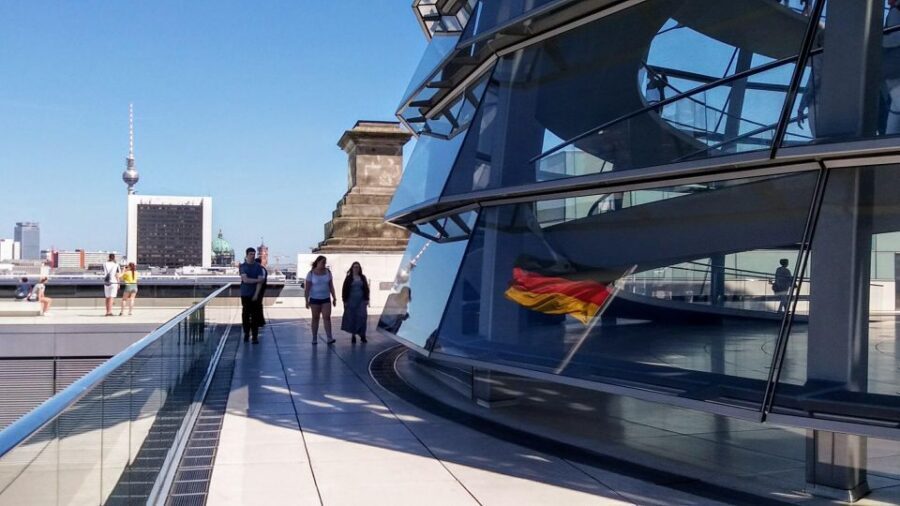
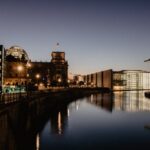
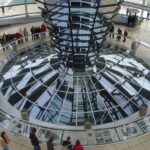
The Reichstag is a central part of the route, and not just because it’s famous. Today it’s still the seat of Germany’s parliament, and the building has become almost a symbol of German changeable history—its past and present linked in one place.
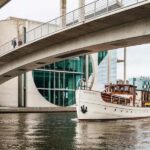
From here, you also get views of the Federal Chancellery and other government buildings. This is where you start understanding Berlin’s “political geography.” It’s not just monuments; it’s the way power is physically arranged.
Photo tip: if you want skyline shots plus government buildings, this is one of your best windows. Try to take at least one wider photo so you’ll remember the layout later.
Trade-off: you’ll see more than you’ll enter. If you want a long stay, plan a separate visit to the parliament area.
Museum Island: Pergamon Altar and Nefertiti at street-level scale
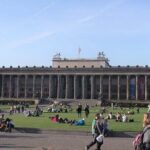
Next up: Museum Island, a World Heritage Site holding several major museums. Even when you’re not going into galleries, this stop helps you connect what you’ve already heard about Berlin’s museum world.
Among the highlights tied to the area:
- the Pergamon Altar
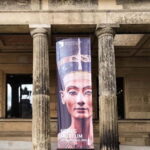
- Nefertiti
Seeing the context of where these museums sit helps you decide later whether you want to prioritize one museum deeply (like Pergamon) or another (like the “Egyptian” focus people associate with Nefertiti).
What you’ll get from this stop: orientation plus motivation. It’s a smart way to avoid feeling lost when you come back for museum time.
Possible drawback: Museum Island can swallow an entire day on its own. This tour won’t replace museum tickets—just points you in the right direction.
Federal President’s seat and a palace-style Berlin
You’ll pass the neat seat of the Federal President, which was formerly a summer palace of the Prussian kings. That’s a subtle but important shift: Berlin doesn’t just keep old buildings; it repurposes them.
Then the tour heads toward the newly built main station (Berlin Hauptbahnhof), described as the largest crossing station in Europe. Even if you’re not a train person, this is a good “modern Germany” moment, because it shows how Berlin builds its future while dealing with its layered past.
The rebuilt palace and a view toward Berlin Cathedral
One of the most visually satisfying segments is seeing the reconstructed 500-room palace with its magnificent Baroque façade. Historically, it was home to princes, kings, and emperors for centuries—and now it houses museums.
From this area, you also get a good view of the Berlin Cathedral. That’s useful because it ties two big visual identities together: Baroque palace grandeur and cathedral silhouette.
How to work this stop: take one photo of the façade and one wider shot that includes the cathedral view. Later, when you’re walking around, those angles help you recognize where you are without checking your phone every five minutes.
Nikolaikirche area: the cradle of Berlin by pedestrian streets
You’ll then move toward the oldest part of the city center, the area around Nikolaikirche—described as the cradle of Berlin. Today it’s a cozy pedestrian zone with pretty cafés.
This stop is a nice palate cleanser after heavier political and war-related content. It’s also a good reminder that Berlin isn’t only about what happened. It’s also where people live, meet, and relax now.
Practical consideration: pedestrian zones can be popular. Your private group size helps, but still expect a bit of movement around cafés and streets.
French Church and refugees: Berlin’s story with a specific lens
Another highlight is the French church, set in one of Europe’s most beautiful squares. This is paired with history about the French religious refugees in Berlin.
This matters because it adds a “people story” layer. Berlin’s major narratives often focus on major political powers and wars. Here, you get a different angle: how refugees and religious communities shaped the city.
Possible drawback: this stop is about learning and seeing. If you’re hoping for lots of interior time inside the church itself, the tour schedule may not allow it. Entrance fees aren’t included unless you choose to add them.
Potsdamer Platz: from one of Europe’s busiest squares to modern architecture
You’ll reach Potsdamer Platz, once the busiest square in Europe and now a modern district with many shops, cafés, and restaurants designed by world-famous architects.
It’s a fascinating contrast stop. Berlin can feel like two cities blended together: old trauma next to modern design, historical checkpoints next to glassy new development.
What you’ll notice: how the architecture tells you which era you’re looking at. A private guide can point out how the city’s rebuilding choices changed the feel of everyday spaces like this square.
The Berlin Wall’s longest preserved remnant—painted by the world
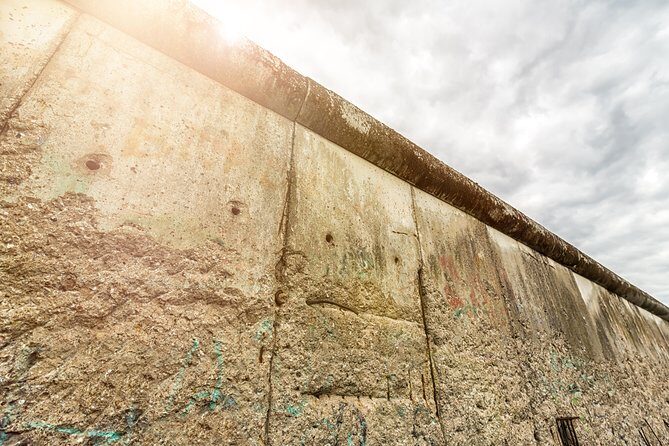
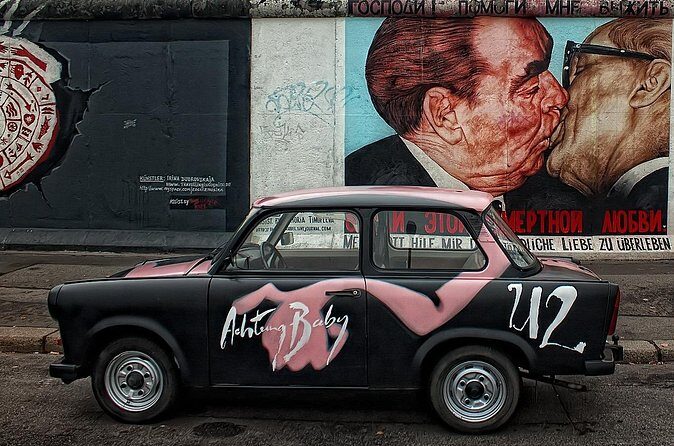
Here’s a standout: you’ll experience the longest preserved remnant of the Berlin Wall, and you’ll see that it’s been completely painted by graffiti artists from all over the world.
This is where Berlin’s memory becomes art. And it’s also where you realize that “the Wall” wasn’t just a physical barrier—it also became a canvas for messages, voices, and later international commentary.
Photo tip: don’t only shoot the wall straight-on. If you can, take one photo from an angle that includes the surrounding space too. It helps you remember that it sits inside a living city, not in a museum vacuum.
Embassy District: old messages meet hypermodern buildings
Next comes the Berlin Embassy District, where you’ll see older messages from the pre-war period mixed with hypermodern buildings of many styles.
This stop is good for anyone who likes layers. Berlin does layering better than almost any other major city in Europe: you’ll often see the past pressed into the same view as the newest architecture.
How to use this: ask the guide what stands out most in terms of transition—what stayed, what changed, and why the messages are still visible.
Victory Column: reading power along major axes
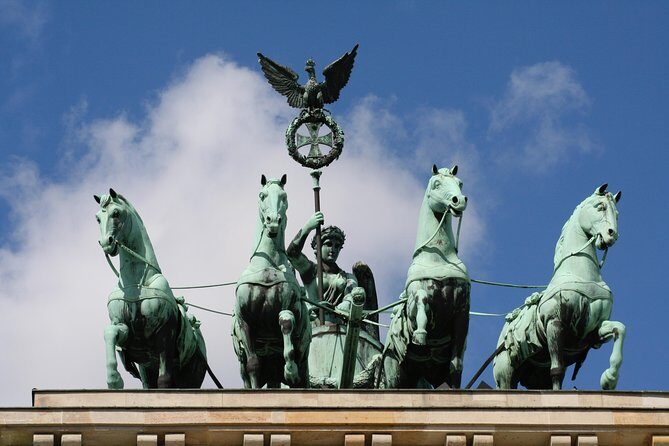
Then you’ll head to the Victory Column, impressively placed at the intersection of East-West and North-South axes. It recalls the victories of the Kingdom of Prussia.
Even though you might not know the details of Prussia at first, the placement tells you why this monument was important. It’s built for sight lines and civic meaning, not hidden for quiet worship.
Possible drawback: like other exterior monuments, this is a view stop. If you want to spend long minutes studying statues and inscriptions, you’ll need more time on your own.
West Berlin reminder: Gedächtniskirche as a WWII ruin
In the west of Berlin, you’ll make one of the city’s most famous stops: Gedächtniskirche, often remembered as a ruin that stands after the terrible destruction of Berlin in World War II.
This is an emotional stop without being theatrical about it. The point isn’t just to see a landmark—it’s to see how Berlin chose to remember destruction in a place where life still continues.
How to approach it: take a slow minute. Let the guide explain the idea of leaving parts damaged rather than erasing everything. It adds weight to the rest of the tour.
Checkpoint Charlie: the border crossing you can’t ignore
Next comes Checkpoint Charlie, described as the most famous border crossing in Berlin. Admission is free here, which is a nice bonus.
Even if you’ve already seen photos online, seeing the location on the ground is different. It helps you understand how checkpoints acted like stage doors—where normal life suddenly became controlled and dangerous.
Photo and timing tip: check the light. If you’re shooting from the same angle as everyone else, you can still get a better result by waiting 30 seconds for fewer people in front of you.
Scheunenviertel: the former Jewish quarter and old backyards
Finally, you end in Scheunenviertel, the former Jewish quarter and a place associated with old Berlin backyards. Admission is listed as free for this stop.
This is a valuable end point because it shifts the story from borders, government, and war damage toward neighborhoods—how people built community through daily life. The “backyards” detail is also a good clue: Berlin’s past isn’t only grand monuments; it’s in smaller corners too.
Possible consideration: if you want to read deeply or explore the area longer, you’ll probably want to break off after the tour ends and keep walking.
Making the most of your 3 hours
This is a highlights route, so your success depends on how you travel inside the tour:
- Bring good walking shoes. The stops include short walks and photo pauses.
- Have 2–3 questions ready. The best guides use your questions to connect the dots between sites.
- Let the guide set your photo strategy. With a private group of up to 8, you can often move faster than you expect.
- Don’t over-plan after. Berlin can keep you curious. If you have a museum ticket right away, you may feel rushed.
Also, this tour is offered in English, and the guide is prepared to handle questions. That’s a big plus if you want more than a lecture-style explanation.
If you’re visiting in peak season, note that this experience is typically booked about 21 days in advance, so planning early helps.
Should you book this Berlin private highlights tour?
I’d book it if you want a smart, efficient Berlin orientation with a guide who can explain both the big monuments and the darker turning points without turning your day into a sprint. The private up-to-8 setup is the main win, because it makes the tour feel tailored instead of scripted.
I would not book it if you already know you want to spend most of your time inside museums or specific buildings. This tour is built for views, context, and quick stops, with entrance fees not included, so you’ll likely want to add extra time on your own afterward.
If you’re traveling as a family group, a friends’ mix, or just want a calmer experience than big group tours, this one fits well. And if you’re the type who likes to ask why things matter—this route gives you plenty of chances to do that.
FAQ
How long is the Berlin city tour?
The tour lasts about 3 hours.
Is this tour private?
Yes. It’s a private tour/activity, and only your group participates. The maximum group size is 8 people.
Do you offer pickup in Berlin?
Yes. You can request pickup at the location of your choice in Berlin. You’ll need to share the exact address and your desired start time.
Is the tour offered in English?
The tour is offered in English.
Are entrance fees included?
No. Entrance fees are not included. Some stops are listed as free, but you should plan entrance costs separately if you want to go into specific buildings or sites.
What is the cancellation policy?
You can cancel for a full refund up to 24 hours before the experience’s start time.