REVIEW · BERLIN
Best of Berlin with a licensed Guide
Book on Viator →Operated by BlackBuck Travels · Bookable on Viator
Berlin clicks faster with a real guide. This half-day, English-language tour is built to help you connect Berlin’s biggest landmarks to the stories behind them, with a licensed guide leading the way and flexible start times that you can match to your day. You’ll also get the kind of attention you want—questions, pacing, and small detours when it makes sense.
The only real catch is simple: it’s a walk-focused 3 hours, so good shoes and a warm layer matter if the weather turns on you.
In This Review
- Key highlights worth planning for
- A 3-hour Berlin highlights route built for real context
- Guides: the difference between seeing and understanding
- Reichstag Building to Brandenburg Gate: power and symbolism, one short stretch at a time
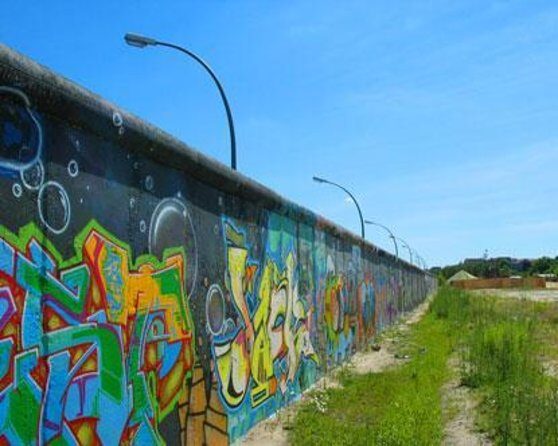
- Potsdamer Platz and the Berlin Wall trace on Niederkirchnerstraße
- Checkpoint Charlie: where the Cold War became a stage
- Gendarmenmarkt and Unter den Linden: how to read Berlin’s architecture
- Crown Prince’s Palace and the National Gallery’s modern art connection
- Berlin Cathedral and the end at Humboldt Forum, inside Berlin’s long arc
- Public transport vs private transport: choosing what matches your group
- Tickets, time, and the one stop that may cost extra
- Value check: how $471.99 per group can work
- Who this tour suits best
- Should you book this Berlin highlights tour?
- FAQ
- What’s the duration of the tour?
- Is this tour private?
- What’s the group size?
- What language is the tour offered in?
- Do I get a ticket on my phone?
- Where does the tour start and end?
- Are admissions included?
- What transport options are available?
- Is transportation included in the price?
- What happens if I cancel?
Key highlights worth planning for
- Licensed guide for your private group: questions stay on topic and you don’t lose time guessing.
- Customizable routing and start time: you can shape the walk to your interests and schedule.
- Free admission at most major stops: Reichstag, Brandenburg Gate, Checkpoint Charlie area, and more.
- Crown Prince’s Palace visit: you get modern art context inside the National Gallery collection.
- Cold War trail you can actually follow: Wall remnants, Checkpoint Charlie, and reunification-era landmarks in order.
- Berlin Cathedral is the one paid admission: it’s worth considering if you want the interior views.
A 3-hour Berlin highlights route built for real context
Berlin can feel like a greatest-hits album—beautiful, famous, and sometimes confusing. This kind of private highlight tour helps you turn the photos into understanding. You’re not just looking at buildings; you’re learning how power, politics, and culture shaped what you see today.
What I like most is that it’s structured like a story. You start at the seat of German political power, slide into reunification symbols, then move through the Cold War geography that still shows up in street corners and checkpoints. By the time you reach the palace complex at the end, Berlin starts to make emotional sense: not just what happened, but why it still matters.
Also, you’re not stuck with a rigid bus tour vibe. You can choose private transport or a mix of walking and public transport, depending on your group’s comfort and your preference for how “local” you want the day to feel. That flexibility is a real quality-of-life upgrade.
You can also read our reviews of more guided tours in Berlin


Guides: the difference between seeing and understanding
The heart of this experience is the private licensed guide, and the reviews make a pattern clear: the guides don’t rush. Steffi’s style, for example, was described as attentive and patient—explaining as they went and making each stop feel complete. Jamie is remembered for practical city help too, including teaching the U-Bahn basics in English. Karen kept the group moving through the cold, which matters more than people think, because when your legs stop, you stop enjoying things. Pascal also stood out for how well he adapted to requests and kept answers connected to what you were actually seeing.
For you, that usually means three things:
- You get clear explanations fast, without long lectures.
- You can ask follow-ups without feeling like you’re slowing a big group down.
- You’ll know what to look for as you walk, not just where you’re walking.
Reichstag Building to Brandenburg Gate: power and symbolism, one short stretch at a time
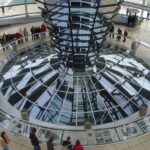
You begin at the Reichstag Building, a Neo-Renaissance landmark and the seat of the German Bundestag. Even if you’re not there for architecture nerd points, this place sets the tone. It’s easy to take politics for granted in modern life, and starting here quietly reminds you that government is an actual, physical building—not an abstract idea.
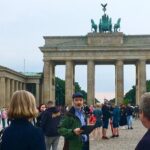
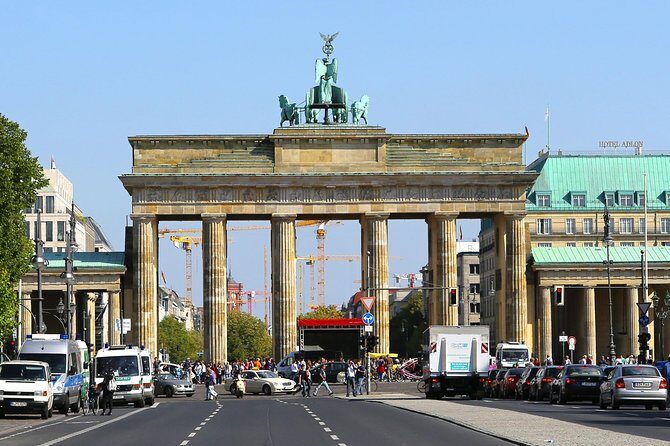
From there, you head to the Brandenburg Gate, one of Berlin’s most photographed monuments. It’s not just a photo stop. The area’s meaning is tied to Cold War tensions and German reunification, so when you look at the gate, you’re also imagining what it represented at different points in the last century. This is where your guide’s framing really pays off: the same stones mean different things depending on the era.
Quick tip: bring a camera you can operate with gloves or cold hands. The stop is short, and the classic angles are popular for a reason.
Potsdamer Platz and the Berlin Wall trace on Niederkirchnerstraße
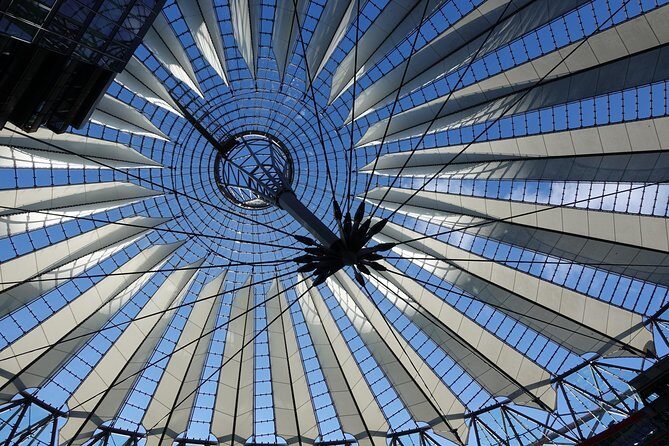
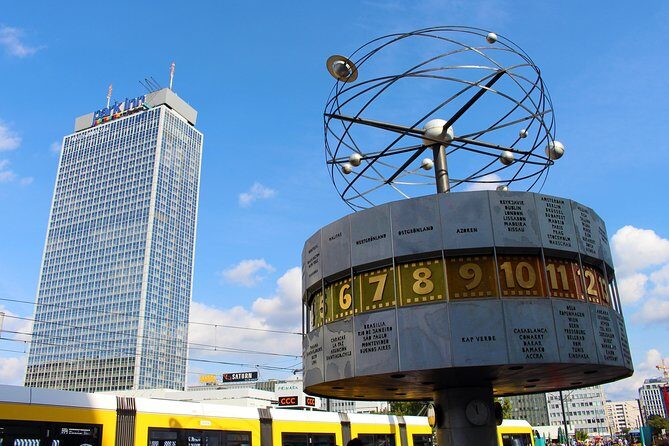
Next comes Potsdamer Platz—major city energy, with the mix of modern buildings and the sense that Berlin reinvented itself here. It’s the kind of place where people-watching works because the setting has layers: old and new, transit and memory all in one area.
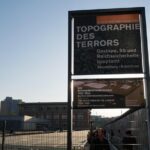
Then you move to Niederkirchnerstraße, where you’ll see remains tied to the Berlin Wall. This is the part I think many visitors underestimate. Looking at a map can make “the Wall” feel like one object. On the ground, it’s different. You can understand division more clearly because the street layout and nearby spaces make it feel real—like the city itself was part of the barrier.
If you like history that you can point to, this leg is a strong payoff. If you’re in a hurry, though, the short walking time at each stop can feel tight, so pacing with your guide matters.
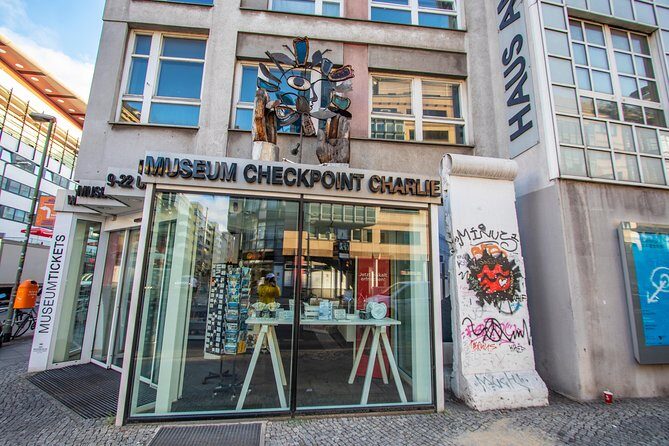
Checkpoint Charlie: where the Cold War became a stage
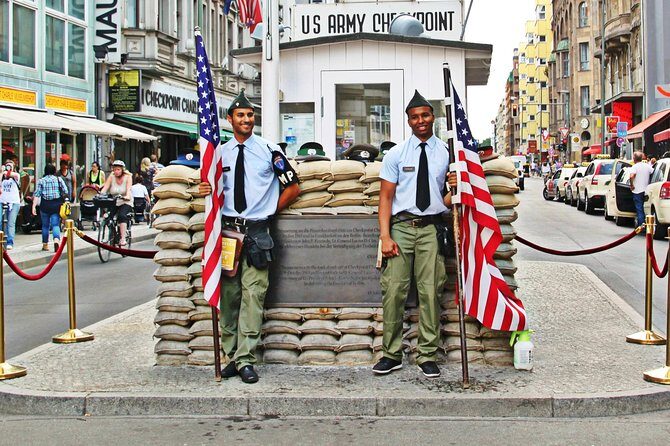
Checkpoint Charlie is famous, and you’ll probably recognize it immediately. But the guide’s job is to turn the name into a mental scene: American and Soviet tanks, tense standoffs, and the way fear and power played out at an actual border crossing.
This stop also comes with pop-culture gravity. It has shown up in spy stories like James Bond in Octopussy and The Spy Who Came In From The Cold. That matters because it gives you an easy bridge between fiction you’ve seen and the real-world stakes behind the locations you’re standing on.
Practical note: this area can feel busy and the photo spots can be contested. The best approach is to let your guide handle timing, so you spend more energy understanding and less energy jockeying for angles.




Gendarmenmarkt and Unter den Linden: how to read Berlin’s architecture
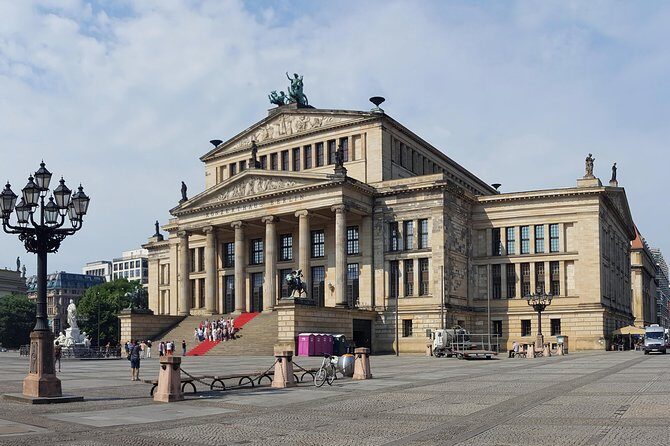
From Checkpoint Charlie, you head toward Gendarmenmarkt, where the architecture does a lot of talking. You’ll pass by the Berlin Theater, admire the French and German Cathedrals, and see a statue honoring Friedrich Schiller. This is a good moment to slow down just a little, because the shapes and symmetry are easier to “read” when you’re not sprinting between major sites.
Then you continue along Unter den Linden, one of Berlin’s best-known cultural corridors. You’ll learn about the 18th-century roots connected to King Frederick II of Prussia, and you’ll also take in how the area survived devastating wars and still signals Berlin’s cultural identity. It’s a reminder that Berlin doesn’t just preserve buildings—it preserves meaning.
Also, this is where seeing an area with a guide helps with orientation. Unter den Linden can look like a long straight line on a map, but on foot you start noticing rhythm: where the streets open, where landmarks anchor your sense of place, and how buildings frame the walking experience.
Crown Prince’s Palace and the National Gallery’s modern art connection
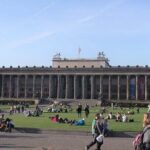
One of the stops you might otherwise miss is the 17th-century Crown Prince’s Palace. Here, you can appreciate the modern art collection tied to the National Gallery and its claim to being the world’s first permanent contemporary art collection.
That’s a big statement, and it can sound abstract until you’re standing in the right setting. A palace space designed for history changes how you experience modern art. It’s a smart contrast: you’re seeing how a place built for status later becomes a platform for contemporary expression.
If art is part of your trip motivation, this is a meaningful addition. If you’re mostly about war and politics, it still works because it shows another side of Berlin—creative power and cultural renewal.
Berlin Cathedral and the end at Humboldt Forum, inside Berlin’s long arc
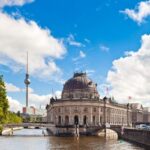
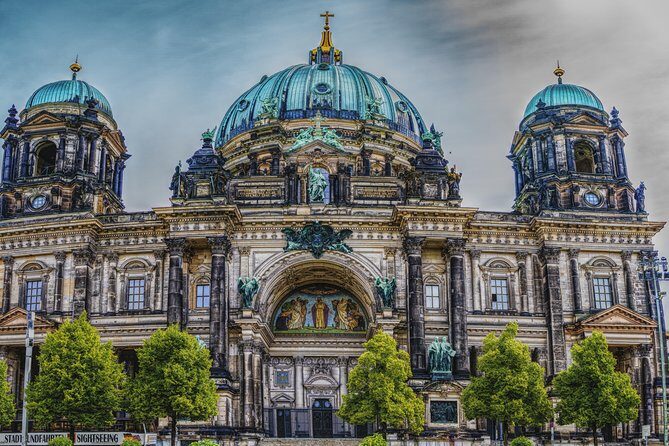
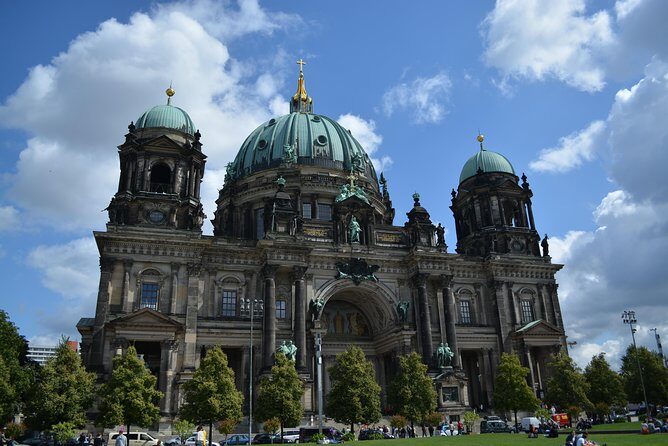
After Unter den Linden 3, you reach Berlin Cathedral with its striking turquoise domes. It’s one of those skyline features that looks amazing from distance, and up close it’s even more ornate. The façade includes carvings, sculptures, and paintings, and the church is also described as offering picturesque views toward the Spree River.
One important practical thing: Berlin Cathedral admission is not included, while most other stops in this tour are marked as free. If you want to go inside, plan a little extra time and be ready to pay that ticket separately. If you just want the exterior and a quick look from nearby viewpoints, you can still get a lot out of the stop.
Finally, the tour ends at Humboldt Forum im Berliner Schloss at Berlin Palace. This is a strong conclusion because it gathers multiple layers of Berlin’s story into one place. The Berlin Palace began as a residence for Kings of Prussia and German Emperors, then later became the Palace of the Republic in East Germany, and today it represents a modern era of interpretation. Standing there after the earlier Cold War and reunification stops helps you see Berlin as a city that constantly rewrites itself—and then tries to explain the rewrite.
Public transport vs private transport: choosing what matches your group
The tour lets you choose how you move. That’s not just about comfort—it affects how you feel during the day.
- Walking + public transport tends to make you feel like you’re moving through the actual city, not along a curated corridor. It can be great if your group likes transit and you don’t mind sharing space with locals.
- Private transport is better when you’re traveling with older relatives, small kids, or anyone who needs frequent breaks.
Either way, transportation costs aren’t included in the price, so think of that as an extra variable. If you choose public transport, you’ll want to be comfortable using the U-Bahn system (and a helpful guide can make that easier—Jamie’s U-Bahn tip story is a good reminder).
If you’re sensitive to long distances, let your guide know early. In a private setup, they can adjust the rhythm.
Tickets, time, and the one stop that may cost extra
The tour’s schedule is tight but reasonable for a half-day: around 15 minutes at many of the main landmarks, then a total duration of about 3 hours.
Most stop access is marked free, including the Reichstag, Brandenburg Gate, Potsdamer Platz, the Berlin Wall remains area on Niederkirchnerstraße, Checkpoint Charlie, Gendarmenmarkt, Unter den Linden, Crown Prince’s Palace/National Gallery modern collection, and Humboldt Forum/Berlin Palace.
The exception is Berlin Cathedral, where admission is not included. That means you have a choice. If you budget for it, you can add interior time. If you skip the interior, you’ll still get plenty from the exterior dome and the nearby views.
Value check: how $471.99 per group can work
The price is $471.99 per group, up to 15 people, for about 3 hours with a licensed guide. On paper, that can look steep if you’re traveling solo or as a couple. In reality, the value depends on how many you bring.
If your group is on the larger side, the cost per person can drop fast, and the private guide becomes a luxury that actually feels practical: you’re paying for explanations, pacing, and the ability to ask questions without waiting.
If you’re just two people, it’s still a smart buy if you want a guide’s context and you care about not wasting time. For a city like Berlin—where symbols, sites, and street layouts matter—that guided efficiency can be worth real money.
Two extra cost reminders:
- Transportation costs aren’t included.
- Berlin Cathedral admission isn’t included.
Still, the “mostly free entry” setup helps keep the surprise costs low.
Who this tour suits best
This is a strong fit if you want:
- A private guide who can explain Berlin in plain language.
- A compact route that links landmarks to the stories behind them.
- Flexibility with start times and how you move (walking vs public transport).
- A trip that works for mixed interests: politics, architecture, and culture all show up.
If your group includes people who get cold easily, use the private setup to stay comfortable. Karen’s cold-weather experience points to the practical reality: guides who keep the pace steady help you enjoy the day instead of endure it.
If you hate walking, though, this may still be challenging. The tour is designed for short stops plus movement, so bring shoes you trust.
Should you book this Berlin highlights tour?
I’d book it if you want Berlin to make sense quickly and you’d rather spend your energy learning than figuring out what matters. The combination of free access at most stops, a licensed guide who can adapt, and a route that connects the Cold War to reunification and beyond is a good deal for a half-day.
I’d skip it (or adjust expectations) if you want long museum time or you hate walking in any weather. In that case, you might prefer a slower, more museum-heavy plan.
Bottom line: if you’re aiming for the heart of Berlin with context you can carry home, this private 3-hour highlight route is an efficient, satisfying choice.
FAQ
What’s the duration of the tour?
The tour lasts about 3 hours.
Is this tour private?
Yes. It’s a private tour/activity, and only your group participates.
What’s the group size?
It’s priced per group for up to 15 people.
What language is the tour offered in?
The tour is offered in English.
Do I get a ticket on my phone?
Yes. It uses a mobile ticket.
Where does the tour start and end?
It starts at Berlin Pavillon, Scheidemannstraße 1, 10557 Berlin, and ends at Schloßpl. 1, 10178 Berlin, at Berlin Palace.
Are admissions included?
Most listed stops are marked as admission free, but Berlin Cathedral admission is not included.
What transport options are available?
You can choose between private transport or a mix of walking and public transport.
Is transportation included in the price?
No. Transportation costs are not included.
What happens if I cancel?
The experience is non-refundable and cannot be changed for any reason.