REVIEW · BERLIN
Private Taxi Tour City East & West History and Architecture 3-4h
Book on Viator →Operated by Gunter Bauer GAT-Productions · Bookable on Viator
Berlin clicks into place fast in a taxi. This private, English-led route ties Berlin’s East and West history to real architecture and street-level context, from the Kaiser Wilhelm Memorial Church to the Reichstag area. I especially liked how Gunter Bauer adapts on the fly and keeps the day moving without turning it into a rushed slideshow.
What I also liked: the comfort factor. You’re in a heated, air-conditioned vehicle with WiFi and enough stops that your legs and eyes get a break. One drawback to plan for: it is a highlights-style day—great for seeing a lot, but you will not get long, sit-down time in every museum or building along the way.
In This Review
- Key Highlights You’ll Actually Feel in the Day
- A Warm, Private Taxi Through Berlin’s East and West
- How the 3–4 Hours Get Packed Without Feeling Chaotic
- West Berlin Highlights: Gedächtniskirche, Ku’damm, KaDeWe, and City Splendor
- Kaiser Wilhelm Memorial Church: war preserved on purpose
- Berlin Zoo area: grand gates and world-style buildings
- Theatre des Westens: a glamorous West Berlin landmark
- Kurfürstendamm (Ku’damm) and the boulevard mood shift
- Memorial Church from the other side: blue glass and serious sound control
- European Center and Berlin’s mall future
- KaDeWe: luxury in the middle of a normal day
- Central Berlin Icons: Reichstag/Bundestag, Humboldt Forum, and Brandenburg Gate
- Reichstag and the rebuilt dome: power made visible
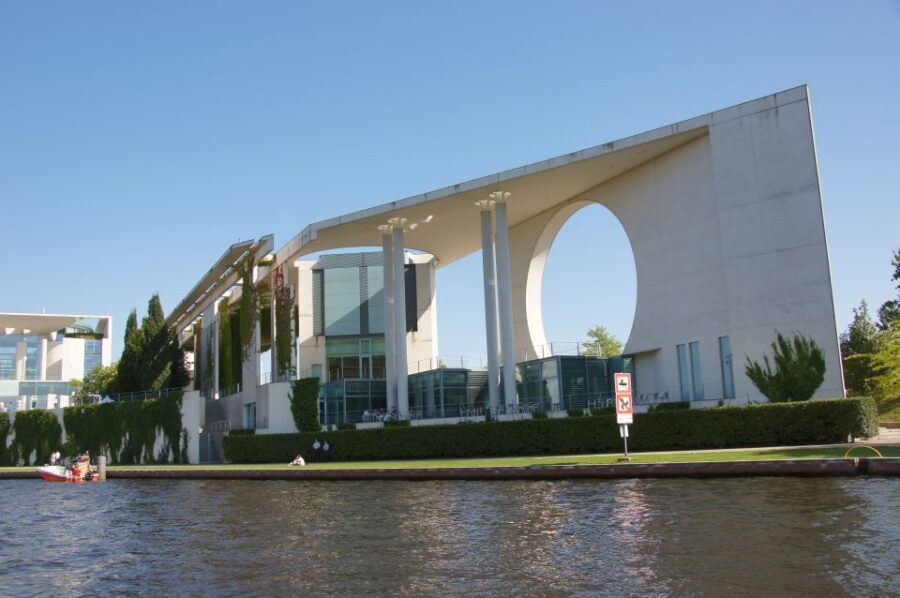
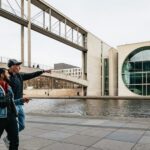
- Bundeskanzleramt (Chancellery): scale that’s hard to imagine
- Humboldt Forum: a baroque palace rebuilt inside modern Berlin
- Forum Fridericianum and the book-burning square context
- Brandenburg Gate: the parlor of Berlin
- East Berlin Flavors: Friedrichstraße, Hackesche Höfe, Synagogue, Nikolaiviertel, and Alexanderplatz
- Hackesche Höfe: Art Nouveau charm after GDR-era damage
- Friedrichstraße: a street of division, escape attempts, and change
- Jewish Museum context and a guarded synagogue exterior
- Nikolaiviertel: reconstructed old Berlin
- Alexanderplatz and the modern socialist city plan
- The Red City Hall: neo-Gothic and worth a look
- Tiergarten, Waterways, Embassies, and the Cold-War Machine Room
- Landwehr Canal: orientation by water
- The congress hall nickname: Pregnant Oyster
- Topography of Terror: four layers of the last 100 years
- Embassy rows and the quiet power of architecture
- Checkpoint Charlie: replica context and Cold War stakes
- Price and Value: Is This $150.18 Private Taxi Deal Fair?
- Tips to Get the Most From This Taxi Day
- Should You Book This Private East & West History Tour?
- FAQ
- How long is the Private Taxi Tour City East & West History and Architecture?
- What is the price per person?
- What’s included in the price?
- Is hotel pickup included?
- Is this a private tour, and is English offered?
- Are admissions included for specific stops?
- Does the vehicle have WiFi and air-conditioning?
- Are child seats available?
- Is free cancellation available?
- Are service animals allowed?
Key Highlights You’ll Actually Feel in the Day
- A private setup with an English guide: Gunter Bauer works with your interests, answers questions, and keeps the mood friendly and easy.
- Warm car comfort plus smart pacing: heated/air-conditioned taxi time when streets get busy, then quick stops for key viewpoints and details.
- East–West architecture on one ticket: Memorial Churches, the Reichstag/Bundestag zone, major squares, and older neighborhoods back-to-back.
- Icon stops that frame Berlin’s bigger story: Berlin Zoo, KaDeWe, Brandenburg Gate, Gendarmenmarkt, Humboldt Forum, and more.
- Practical extras that add up: parking fees, pickup within the S-Bahn ring, and WiFi on board reduce the hassle you’d feel doing it alone.
A Warm, Private Taxi Through Berlin’s East and West

Berlin can be a lot. Big distances. Big history. Big emotions. A private taxi tour turns all that into something you can handle in one day.
This experience is built around one simple idea: you see the sights, but you also understand why they were built that way, and why they changed after 1945 and after reunification. Gunter Bauer is the kind of guide who does more than recite dates. In the small details—names, facades, what was preserved and what was demolished—you start to feel how the city was “edited” again and again.
Comfort matters here. Even if the weather is fine, you’ll spend time moving between neighborhoods. The included air-conditioned (and in colder months, effectively warm) taxi ride keeps you from spending the day sweaty or freezing. And WiFi on board is a real help when you want to check where you are, look up a quick context note, or share a photo immediately.
If you’re traveling with older family members or you want a day that feels low-stress, this format fits. One review even highlighted how Gunter took special care to keep elderly parents comfortable. Another noted how the guide helped handle timing changes when the group’s plans were disrupted, even rescheduling to the next day.
You can also read our reviews of more city tours in Berlin
How the 3–4 Hours Get Packed Without Feeling Chaotic
The tour duration is listed at about 3 to 4 hours, and that’s an important clue. This is not a slow march. It’s a concentrated loop that aims to give you a mental map fast.
You get a steady rhythm:
- brief driving segments to connect zones
- short viewing stops for the “read the building” moments
- a few longer photo or walking breaks where the history is really visible
That pacing is why it works so well if you have limited time. It’s also why it may not satisfy if you want deep museum time, guided interior tours of everything, and long meals as part of the sightseeing.
So I’d think of it as a Berlin orientation day. The kind that makes your next self-guided walk much easier.
West Berlin Highlights: Gedächtniskirche, Ku’damm, KaDeWe, and City Splendor
The West Berlin side brings classic Berlin contrast: war scars, preserved fragments, and then the confident shopping-and-boulevard city that rose after.
Kaiser Wilhelm Memorial Church: war preserved on purpose
A standout stop is the Kaiser Wilhelm Memorial Church area. You’ll see why Berlin calls it a “lipstick and powder compact” type of silhouette: the damaged tower was preserved, and modern additions were built outside around it based on designs by Egon Eiermann. The idea wasn’t to erase the damage. It was to keep a visible reminder and still move forward with architecture that feels unmistakably 20th century.
Even the sculpture program at the preserved portal ties into how the memorial was intended—via Wilhelm I and the Hohenzollern family—so the church becomes more than a pretty facade. It’s an argument about memory and who gets honored.
Berlin Zoo area: grand gates and world-style buildings
Another classic West stop is Berlin Zoo. From the outside, the elephant gate and the lion gate are particularly striking. The zoo is described as one of Germany’s oldest, with about 16,000 animals across roughly 1,600 species. It’s also tied to monarchy and rethinking public access—animals were moved near Berlin, using parts of hunting grounds to create what became a major public institution.
If you like architecture that reflects its themes, the zoo’s buildings are designed in styles connected to the animals’ places of origin, which makes the post-war damage easier to contextualize visually.
You can also read our reviews of more private tours in Berlin

Theatre des Westens: a glamorous West Berlin landmark
The Theatre of the West (Theater des Westens) is included as a reminder that the West grew into a cultural showpiece. It was built in what was then a new extension of the city to the west, when people wanted out of the crowded Mitte. Today it’s used as a musical theatre, but the old sense of splendor still shows, including an imperial box inside.
Kurfürstendamm (Ku’damm) and the boulevard mood shift
You also get Kurfürstendamm—the Ku’damm. The experience highlights how far it really runs (it’s almost 5 km to Halensee) and how it was modeled on Paris’s Champs Élysées, including the candelabras reference that even ties back to Bismarck’s admiration after the German victory over France.
But the story changes in modern times. The boulevard has shifted into a shopping mile with flagship stores like Apple and Tesla, plus luxury brands further west. The atmosphere in that description is almost cinematic: chic and commercial, but not always lively at night.
Memorial Church from the other side: blue glass and serious sound control
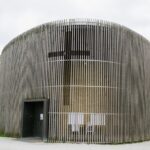
The tour revisits the Memorial Church area from another side, focusing on the newer building. The new church interior gets filtered into a mysterious blue light by thousands of glass stones made in France. And it’s surprisingly quiet inside, thanks to a double wall with about 2 meters of soundproofing air between.
There’s a realistic drawback here: because the structure is exposed to traffic emissions, one building is often surrounded by scaffolding. It’s a reminder that modern memorial architecture has maintenance needs, not just aesthetic ones.
European Center and Berlin’s mall future
Right behind is the European Center, described as Berlin’s oldest shopping center (about 50 years old). It originally had an ice rink in the middle—later removed to optimize space. The tour frames this as Berlin’s mall era: more than 70 malls already, with more on the way.
KaDeWe: luxury in the middle of a normal day
If your dream of Berlin includes a luxury-food fantasy, KaDeWe is the stop. The description calls it the largest single department store in continental Europe, around 60,000 square meters.
You’ll see how the store is organized to tempt every appetite: gourmet floor, champagne sipping, oysters, and massive choices in chocolate, bread, and cheese. It even gets a nickname in local sarcasm: “Fressetage.” Even if you don’t plan to buy anything, it’s an eye-opening look at how West Berlin turned into a consumer capital.
Central Berlin Icons: Reichstag/Bundestag, Humboldt Forum, and Brandenburg Gate
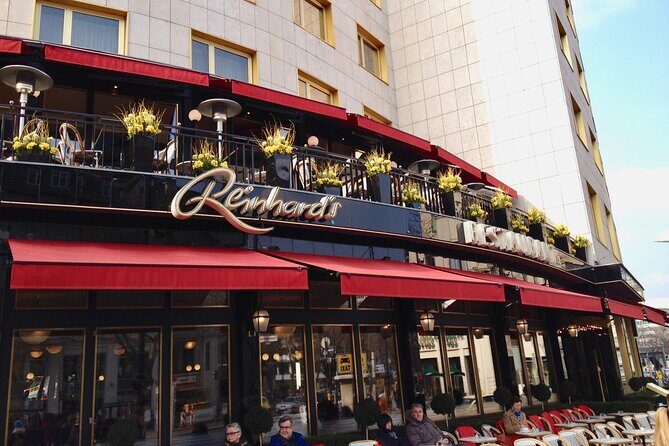
This is where Berlin turns from “places” into “meaning.” Squares, government buildings, and reconstructions all start telling the same story: conflict, rebuilding, and what the city decides to show the world.
Reichstag and the rebuilt dome: power made visible
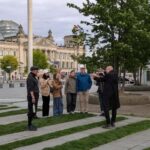
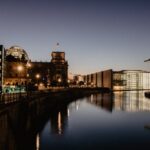
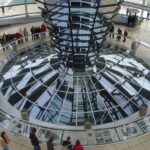
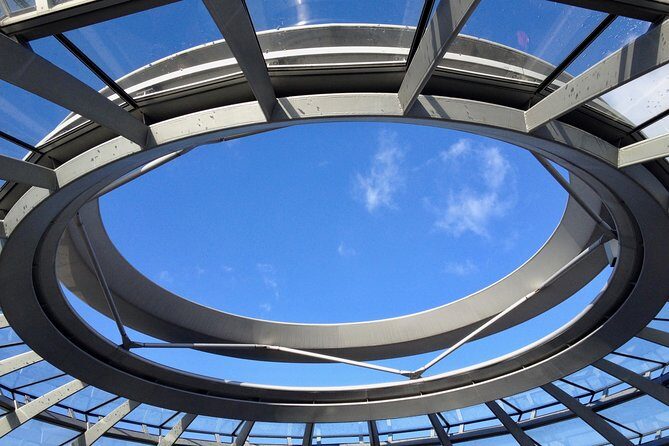
The tour includes the Reichstag area and focuses on the Reichstag dome and glass modernization. The building is described as being gutted in the 1990s and redesigned for the reunited Bundestag, now with over 700 members. You also get a reference to Christo’s wrapping action and how the modern dome symbolizes new Berlin—very much “see-through” governance.
A useful detail: parliamentary work happens inside committee spaces. The tour emphasizes that only closing speeches are held in the main parliamentary space, while the actual debate and voting happen in the committees and glass galleries where you can watch from different areas. That helps you understand what you’re looking at rather than just taking pictures of a famous facade.
Bundeskanzleramt (Chancellery): scale that’s hard to imagine
The chancellery building gets its own attention for sheer size: about 36 meters tall, ten floors, and roughly 500 office rooms for over 300 employees. The guide also points out the chancellor’s office location and mentions an official apartment in the rotunda area that isn’t used.
Even if the inside is off-limits, it’s a great lesson in government geography. Berlin isn’t just museums. The city is also a machine for administration.
Humboldt Forum: a baroque palace rebuilt inside modern Berlin
One of the most important stops is Humboldt Forum. The description explains that the site used to be nothing but a big parking lot for decades, even while the Berlin palace silhouette remained partly standing after the war.
Then came demolition. Later came reconstruction. The tour frames it as a reconstruction of the Schlüeter inner courtyard and the addition of non-European art collections and Humboldt University collections to a modern concrete building. It also notes planned opening in sections as Humboldt Forum 2020/2021.
What I like about this stop is that it gives you two stories at once:
1) the baroque palace dream
2) the modern museum “function” built into today’s Germany
Forum Fridericianum and the book-burning square context
Near the Humboldt University zone, you’ll get the broader Forum Fridericianum area: St. Hedwig Cathedral, the State Opera, and the square named for historical layering. A striking moment is the glass floor window pointing to an empty library space—context for the May 10, 1933 book burning where works considered unsuitable by the Nazis were burned.
If you care about how architecture reflects ideology, this is the kind of stop that changes how you see the city after.
Brandenburg Gate: the parlor of Berlin
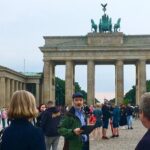
Finally, there’s Brandenburg Gate. The tour calls it the city’s parlor: the place where Berlin shows its best side to visitors. But it also explains how isolation and division shaped it—thick walls, fencing, the missing access routes, and the demolition choices around the Hotel Adlon area.
After reunification, rebuilding modernized the area in style while keeping the general structure. Now it’s surrounded by embassies and cultural buildings like the Liebermannhaus and the Academy of the Arts.
East Berlin Flavors: Friedrichstraße, Hackesche Höfe, Synagogue, Nikolaiviertel, and Alexanderplatz
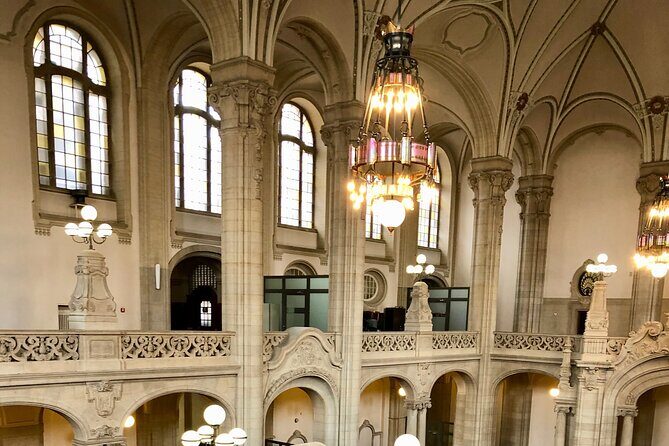
The East side doesn’t feel like one neighborhood. It feels like multiple drafts of Berlin’s identity.
Hackesche Höfe: Art Nouveau charm after GDR-era damage
Hackesche Höfe is introduced as a courtyard ensemble built in 1908, designed as a showcase for mixing life and work—small factories, printing houses, workshops, plus green atria big enough for living above.
After GDR damage and use as storage space, the courtyards were restored, and today the workshops are mostly replaced by shops. It’s a great stop if you like old courtyards because you get the sense of how Berlin life used to be layered inside rather than spread out across streets.
You’ll also see references to KPM porcelain and the Ampelmännchen figure set, linking the art/craft tradition to East Berlin pop culture.
Friedrichstraße: a street of division, escape attempts, and change
Friedrichstraße is another key line. The tour notes it as one of Berlin’s most famous streets, with sections that feel different at different times. It even points out how nearby areas like Oranienburger Straße connect to shopping-gallery history and later redevelopment energy.
It also includes the station area that mattered during the Wall years—one of the only points where East–West travel happened. The tour’s context includes barriers, customs checkpoints, and Stasi observation corridors. If you’re interested in escape history, the nearby Palace of Tears reconstruction is mentioned as a place to understand what goodbyes were like there.
Jewish Museum context and a guarded synagogue exterior
A powerful stop on this side is the synagogue area with Moorish style elements and a golden dome. The church itself was destroyed in the war, and the front portal-type building was started for rebuilding in Eastern times. Today, the entrance building hosts an exhibition on Jewish life in Berlin, with very strict security measures similar to an airport.
The tone here is practical and direct: this is a living community space, and it shows how security becomes part of daily reality.
Nikolaiviertel: reconstructed old Berlin
Nikolaiviertel is presented as an area where you can experience old Berlin, but in a very specific way. It’s a declared reconstruction from the 1980s: only three houses existed truly, plus the Nikolaikirche walls without roof and spire. Still, the result lets you “zoom into” an older, almost baroque-feeling Berlin pocket.
The Nikolaikirche itself is the oldest church in Berlin today and functions as a city museum. Nearby, the original Knoblauchhaus is furnished in Biedermeier style and described as free to visit, with a focus on family life in a cloth maker household.
And because you’re by the Spree, you also get that classic Berlin mix: historic-looking streets and real-life eating options.
Alexanderplatz and the modern socialist city plan
Alexanderplatz is included as the big showpiece of East Berlin urban design. The tour links its origin to Ochsenplatz and a trading square history, then explains how during the GDR era it was redesigned with socialist planning in mind—wide space for marches and modern buildings reflecting socialist modernity.
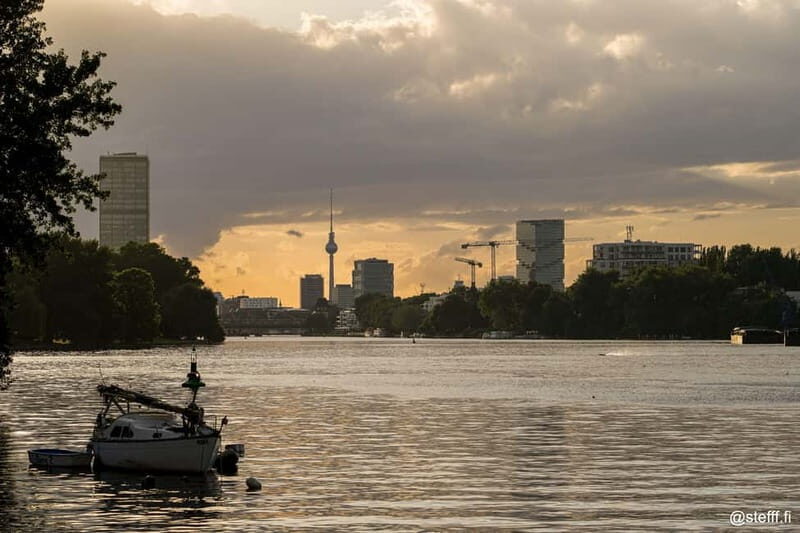
The television tower is included as a construction statement that still anchors the skyline.
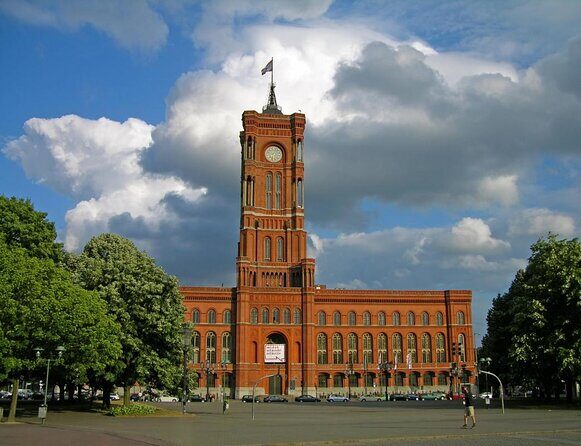
The Red City Hall: neo-Gothic and worth a look
The tour notes the Red City Hall with neo-Gothic style and emphasizes that you can visit for free at least some interesting rooms. It also points out how its role parallels other countries’ prime minister offices, and then compares East and West governance by naming the Schöneberg Town Hall.
Tiergarten, Waterways, Embassies, and the Cold-War Machine Room
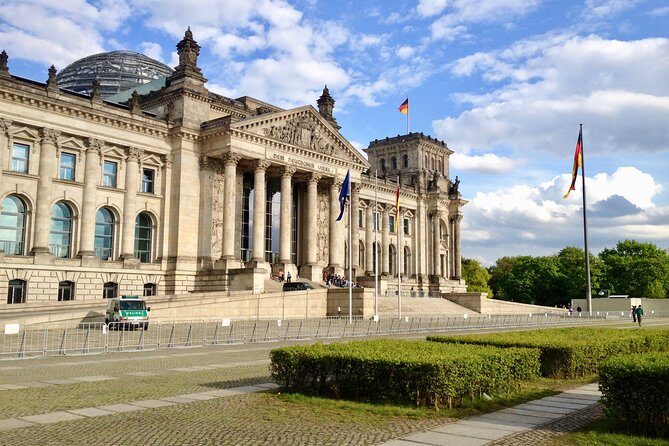
Berlin isn’t just stones. It’s water, canals, and the political geography built along them.
Landwehr Canal: orientation by water
The tour explains Berlin’s heavy water geography: groundwater is very shallow, and centuries of damming, drainage, and canal-building created about 200 km of waterways. Landwehr Canal is highlighted as a key one, planned and shaped by Peter Joseph Lenné.
The canal’s history includes shipping and drainage functions, and the tour even hints that many sights are easier to understand from water if you take a boat tour.
The congress hall nickname: Pregnant Oyster
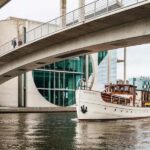
One of the most memorable architecture anecdotes is the former congress hall with the curved roof nickname Pregnant Oyster. Today it operates as the House of World Cultures (Haus der Kulturen der Welt).
The design story is part engineering, part cultural stage. It mentions how the roof collapsed in 1980 and was rebuilt, then used for non-European artists and even roof-terrace concerts facing the Spree. The tour also mentions events connected with Berlinale awards.
Topography of Terror: four layers of the last 100 years
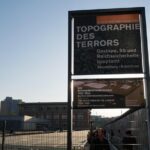
Topography of Terror gets a short tour here, but with heavy meaning. It’s presented as four levels of history: the Imperial/Prussian layer, interwar Nazi architecture, later excavations in the 1980s revealing torture cells, and a Berlin Wall remnant.
The documentation center focuses on Nazi terror after reunification, and it also notes toilets on site, which is practical to know when you’re planning a condensed day.
Embassy rows and the quiet power of architecture
The tour then moves through embassy-focused areas near historic government routes, describing a mix of Axis-era design placement and later diplomatic use. You also get references to the BMVe location and the story of Claus Schenk Graf von Stauffenberg’s execution location in a courtyard tied to the former military administration buildings.
Even if you only glance from the curb, you’ll come away with a clear sense that this part of Berlin runs on protocols, security, and power architecture.
Checkpoint Charlie: replica context and Cold War stakes
Checkpoint Charlie is included with a short photo stop and a mini explanation. The tour points out what’s replicated: the checkpoint is a replica of the US armed forces version from the 1960s, replaced by a container in the 1980s. The famous sign is also not the original wall-station context.
Then it pivots back to what matters most: the tank confrontation of October 1961 and why this specific Cold War moment still draws intense attention.
Price and Value: Is This $150.18 Private Taxi Deal Fair?
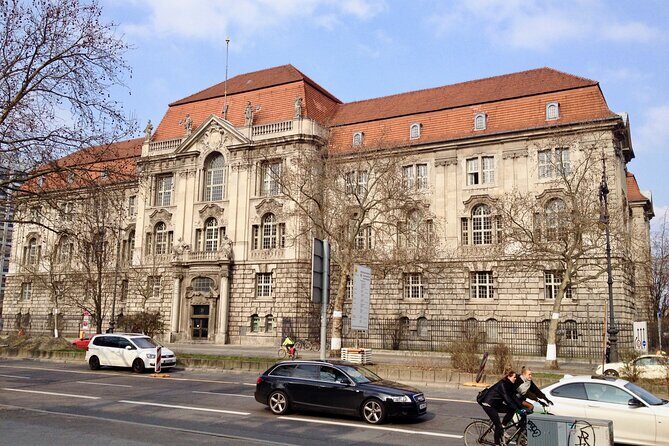
At $150.18 per person for about 3 to 4 hours, you’re paying for three big things: private transport, an English guide who can connect the dots, and a route that covers far-flung landmarks without you doing the navigation math.
What makes the price feel fair in this case:
- pickup within the S-Bahn ring is included
- parking fees, WiFi on board, and air-conditioned vehicle are included
- both the taxi ride and the city tour VAT are covered
- you get a curated East–West loop that would take multiple transit hops to recreate efficiently
If you’re a couple, a small family group, or anyone with limited time, the “saved effort” has real value. Instead of spending your morning figuring out best transit lines and timing museum entries, you get an organized orientation.
Where the price may feel less attractive: if you only care about one or two specific sites and want deeper time inside, you might be better off doing those points on your own with separate tickets.
Tips to Get the Most From This Taxi Day
Bring a bottle of water. Even with breaks built into the route, you’ll appreciate hydration during driving and short walk segments.
Wear comfortable shoes. A lot of the “best learning” comes from looking closely at entrances, towers, and facade details, which means short steps add up.
If you care about photos, ask Gunter to time them. The reviews specifically mention that he takes photos and shares them afterward, which is a nice bonus when you’re trying to capture the exact moment a building detail makes sense.
Finally, go in with one goal: get your bearings. By the time you finish, you should be able to walk Berlin afterward with far less guesswork.
Should You Book This Private East & West History Tour?
Yes, if you want a fast, structured day that makes Berlin’s political and architectural layers easier to understand. It’s especially worth it if you:
- have only half a day and want a strong overview
- prefer a warm, low-hassle format over transit lines
- appreciate a guide who connects street views to real historical decisions
- want the kind of personalized touch where your guide can adjust to your interests and timing
I’d skip it only if you expect full museum immersion at every stop. This tour is built for highlights, context, and getting the city to click in your mind—then letting you choose what to explore next on your own.
FAQ
How long is the Private Taxi Tour City East & West History and Architecture?
The tour lasts about 3 to 4 hours.
What is the price per person?
The price is $150.18 per person.
What’s included in the price?
Private transportation is included, along with WiFi on board, an air-conditioned vehicle, parking fees, pickup from your desired location within the city, and both the taxi ride and the city tour with VAT included.
Is hotel pickup included?
Pickup is included within the S-Bahn ring. Pickup from BER airport or outside the S-Bahn ring is available for an extra charge.
Is this a private tour, and is English offered?
Yes, it’s private, meaning only your group participates. English is offered.
Are admissions included for specific stops?
A mobile ticket is included, and Humboldt Forum is listed as having the admission ticket included. Several other listed stops show admission ticket free.
Does the vehicle have WiFi and air-conditioning?
Yes. WiFi on board and an air-conditioned vehicle are included.
Are child seats available?
Yes. A child seat is available for toddlers from six months to three years, a booster seat is available for older children, and a baby seat can be brought on request (MaxiCosy).
Is free cancellation available?
Yes. Free cancellation is available up to 24 hours in advance for a full refund.
Are service animals allowed?
Yes, service animals are allowed.