REVIEW · BERLIN
Wall Tour Berlin – Fates, Heroes & Love Stories
Book on Viator →Operated by Freizeit-und Reiseclub Berlin · Bookable on Viator
A wall walk with teeth. In two hours, this guided Berlin route moves from planning to collapse, using exact spots where people lived, ran, and suffered.
I especially like how the tour explains the Wall as a system, not just a monument. You learn why there were so-called ghost stations, how the border strip was built, and what life became inside the GDR’s tight control.
The biggest consideration is the subject matter. Expect hard stories—deaths, coercion, and propaganda—and the route depends on good weather, so dress for staying outside.
In This Review
- Key points you’ll care about
- Why this Berlin Wall tour works in about two hours
- Starting at Elisabeth-Schwarzhaupt-Platz and Nordbahnhof’s border reality
- How the Wall went from words to construction in 1961
- The memorial windows and the math of loss (with unknowns)
- Bernauer Strasse viewpoints: seeing the border strip like it’s still there
- Ackerstraße and the Church of Reconciliation: when East and West shared space
- Passenger agreements, Stasi abuse of young people, and propaganda logic
- Loudspeaker war, tunnels, and kidnappings that crossed borders
- The jump of Conrad Schumann: one escape you can’t forget
- Getting your bearings around Memorial stops and keeping up
- Ending at Mauerpark: what you can do next
- Price and value: is $19.66 worth it?
- Who this Berlin Wall tour suits best
- One caution: do your homework about showing up
- Should you book Wall Tour Berlin?
- FAQ
- How long is the Wall Tour Berlin experience?
- Where does the tour start and end?
- What is the price per person?
- Do I get a ticket on my phone?
- Is the tour mostly outdoors?
- Is the tour limited in group size?
- How far in advance should I book?
- Are memorial entries included?
- What if the tour can’t run because weather or traveler numbers?
- Is the tour suitable for most people?
Key points you’ll care about
- A fast, focused route: about 2 hours, with short stops that keep the story moving.
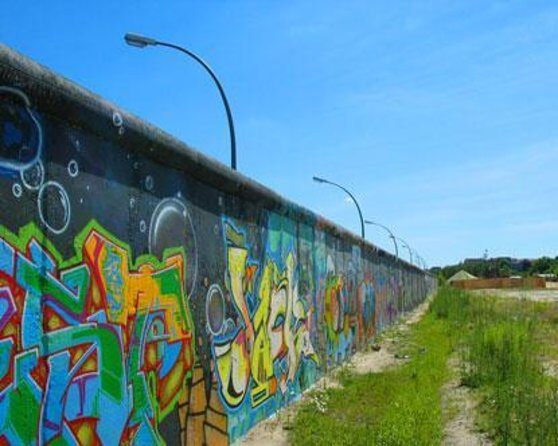
- Real place-by-place context: the walk strings together construction, escapes, and memorial sites you can still see today.
- Ghost stations and border-strip design: you’ll get practical explanations for how movement was restricted.
- Human stories, not just politics: fates at the Wall, Stasi abuses of young people, kidnappings, and forced narratives.
- Multiple escape attempts: tunnels and the famous jump of Conrad Schumann are part of the story.
- Ends at Mauerpark: you finish near a public area, easy to keep going on your own.
Why this Berlin Wall tour works in about two hours
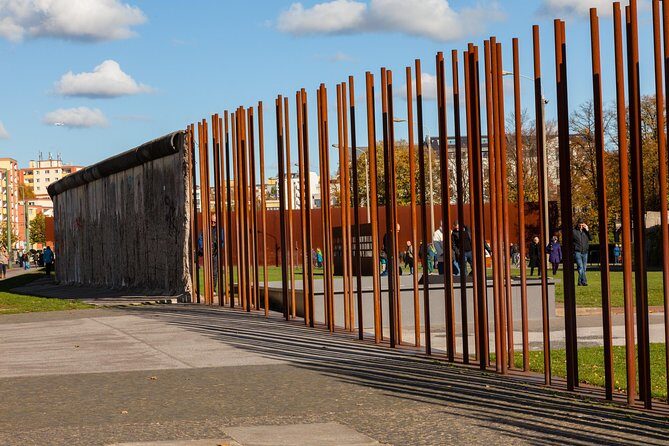
Berlin is huge. The Wall ran through it like a scar, slicing through neighborhoods for more than 40 kilometers. This tour is built to make that scale feel understandable without turning into a day-long lecture.
You’ll keep a steady rhythm: brief orientation, a move to the next marker, and a story tied to what you’re standing near. It’s not “stand and read.” It’s more like getting a guide who connects the dots quickly, so you actually leave with a picture in your head.
You can also read our reviews of more tours and experiences in Berlin.


Starting at Elisabeth-Schwarzhaupt-Platz and Nordbahnhof’s border reality
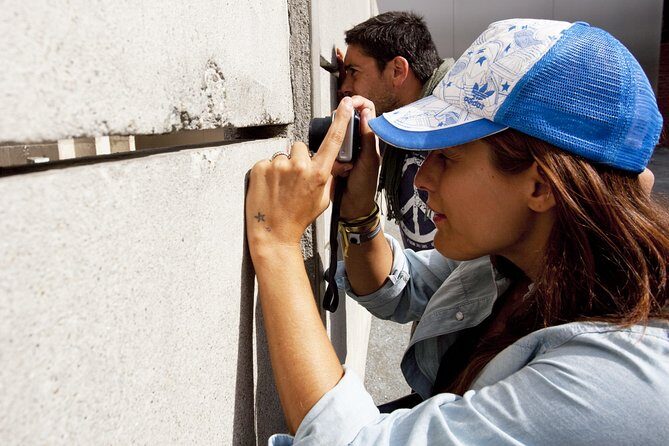
The tour begins at Elisabeth-Schwarzhaupt-Platz, and the action kicks off near Nordbahnhof S-Bahn station on Gartenstraße. Right away, you’re in the right mindset: this was not an abstract tragedy. People crossed, hid, or tried to run in real street-level spaces.
One of the first ideas you’ll hear is the concept of ghost stations. These were areas where trains passed through, yet daily life and movement were tightly controlled under GDR rules. It’s chilling in a practical way: even public transport became a tool for restriction.
Then you get a quick preview of how a wall like this could be built in the first place. That early setup matters. Without it, later stories can feel like isolated headlines. With it, they snap into place as outcomes of a deliberate system.
How the Wall went from words to construction in 1961
One stop zeroes in on the early timeline. In 1961, Walter Ulbricht made a famous claim that no wall was planned. Less than two months later, the border was sealed and the wall was built.
Why this part is so useful is simple: it shows how quickly a political decision became brick-and-barbed-wire reality. You’re not just hearing dates. You’re learning how the GDR turned policy into physical barriers, and what that meant for ordinary people.
The tour also explains the border strip’s construction in plain terms. Expect a focus on the mechanics of control—why certain designs were used and what they were meant to prevent. It’s the difference between knowing the Wall existed and understanding why escape was so hard.
The memorial windows and the math of loss (with unknowns)
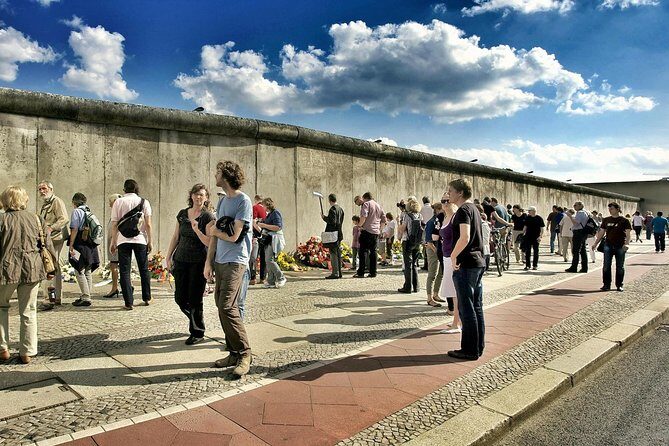
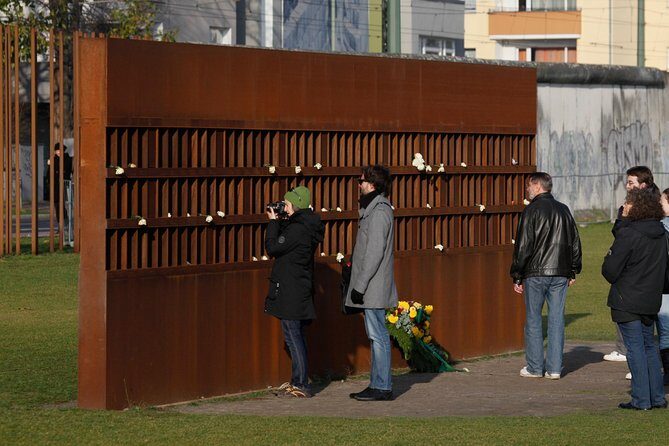
At the Wall memorial, the guide addresses the deaths recorded between 1961 and 1989. You’ll hear that at least 140 people died, and that the exact number of victims is unknown.
That “unknown” detail matters. It’s a reminder that this wasn’t just a war-era tragedy with clean records. People were stopped, hidden, or lost in chaotic conditions, and the full scale didn’t always get documented.
At this point in the walk, the focus is on real fates—stories of individuals who paid with their lives for their freedom. The tone is serious, and that’s appropriate. If you prefer history that stays calm and neat, this stop will feel heavy.
Bernauer Strasse viewpoints: seeing the border strip like it’s still there
You’ll move to a viewing platform where Bernauer Strasse gives a broader look at the border strip’s layout. This is where the tour becomes easier to understand. From above, you can connect the earlier explanations about construction and restrictions to the geography around you.
The guide then points out a core feature of the tragedy along Bernauer Strasse: residential buildings with windows and exits facing the West, while the houses themselves were in GDR-controlled territory. That setup created heartbreaking desperation. In many cases, people chose jumps out of fear and despair.
Along the way, there are pictures and videos at your leisure. That means you’re not forced to stare at every image in lockstep. If you need a minute to process, you can take it.




Ackerstraße and the Church of Reconciliation: when East and West shared space
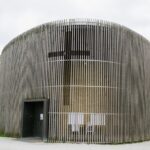
Not all of the story is barricades and flight. One stop near Ackerstraße centers on the chapel of the Church of Reconciliation—where a church once stood right in the middle of the border strip.
This is where the human angle gets real. The tour explains that people from East and West Berlin celebrated services together in that church. Then, after the border was closed, the guide explains what happened to the church.
This stop works because it complicates the picture. You see how divided life could still include shared moments, right up until separation became absolute. It’s one of those reminders that history isn’t only about what breaks—it’s also about what people tried to keep.
Passenger agreements, Stasi abuse of young people, and propaganda logic
One segment focuses on passenger agreements—arrangements between West Berlin’s Senate and the GDR meant to make the Wall more permeable. In theory, it sounds like compromise.
In practice, your guide frames it as a trap: agreements didn’t remove the power imbalance. They still left the GDR in control of movement and information.
Then comes a hard topic: the guide explains how the Stasi abused children and young people for propaganda purposes. The mechanics are not easy to imagine today, and that’s exactly why it’s included here. You leave understanding that oppression wasn’t limited to adults or direct violence. It could be engineered into youth and schooling.
Loudspeaker war, tunnels, and kidnappings that crossed borders
The tour widens the Cold War idea beyond spies in coats. You’ll learn about a loudspeaker war in Berlin, where West and East used audio battles to make daily life unbearable for the other side. It’s a reminder that psychological pressure was part of the infrastructure.
A nearby stop covers tunnel escapes. One tunnel becomes legendary due to its proximity to a border-area location, and the guide explains how the GDR used propaganda to change history’s meaning around such events. That’s a key lesson for Berlin history: information didn’t just report reality—it shaped it.
Then you get the section on kidnappings. The guide explains that kidnappings were part of the GDR’s core business, with former employees of the NVA and People’s Police targeted by criminal gangs working on the GDR’s orders to bring people back from the West. The story includes the detail that one kidnapping ended in death.
Even if you’ve read about Cold War tactics before, this cluster helps you see how wide the control system reached—physical barriers, persuasion, intimidation, and forced removals.
The jump of Conrad Schumann: one escape you can’t forget
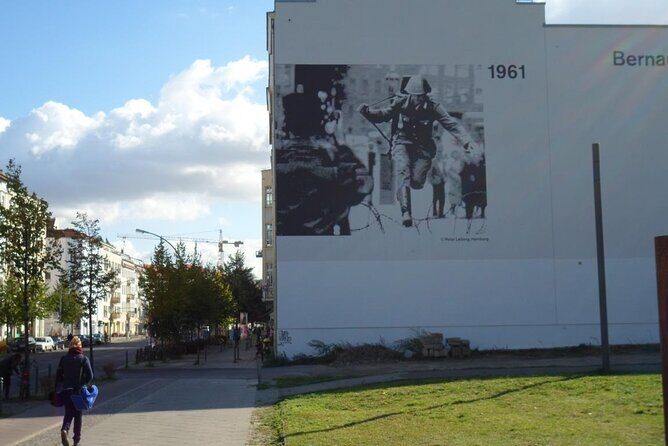
One of the most famous stories is the jump of border guard Conrad Schumann. The guide explains that Schumann was wanted even after the fall of the GDR, and shares details from his life.
This stop is powerful because it breaks the usual storyline of victims only. It shows that the Wall’s system also produced refusals inside the system itself. When the guide ties the event to what followed, you understand why it became such a symbol.
It’s also a good stop for learning how history sticks. Some events become landmarks not because they represent the whole system, but because they show the system’s human stakes in a single, unforgettable act.
Getting your bearings around Memorial stops and keeping up
Every stop in this tour is short—think five to fifteen minutes—so you’re constantly moving between meaning and location. That works well for most people because it keeps attention from drifting.
All the memorial stops have free admission listed, which is a nice value layer. You’re paying for the guide’s interpretation and the sequence of places, not for additional ticket costs.
The trade-off is that you won’t linger long enough to read everything on your own. If you’re the type who loves slow museum-style reading, you’ll want to plan extra time afterward. Consider this tour your setup act.
Ending at Mauerpark: what you can do next
The tour finishes right at Mauerpark. That’s a practical win: you’re not dropped in the middle of nowhere, and you can keep exploring Berlin on your schedule.
Since you’re ending after a concentrated emotional and historical route, I’d plan an easy next step—grab a snack, sit for a bit, and let the story settle. The Wall is one of those topics where your brain keeps replaying details for hours.
Price and value: is $19.66 worth it?
At about $19.66 per person and roughly two hours long, this tour is strong value if you want guided clarity. You’re not paying for transport passes or paid entry fees at memorial stops; you’re paying for the storytelling structure that connects ghost stations, construction, memorial sites, and famous escapes.
The group size cap is also a value point: up to 25 travelers means the guide should have enough room to manage the group without turning it into a marching crowd.
So the question becomes: do you want meaning, not just sights? If yes, this price makes sense. If you’re more into self-guided reading with zero emotional framing, you might get less out of a timed route.
Who this Berlin Wall tour suits best
This tour is a great fit if you want a guided storyline that covers a lot of ground without overwhelming you. It’s also ideal if you like real-world history—sites you can physically locate, paired with why those sites mattered.
It may not suit you if you want a lighter history walk. This route deals with deaths, abuse, coercion, and propaganda. Even with careful guidance, the material is heavy.
If you’re traveling with limited time in Berlin, this is one of the more efficient ways to build understanding of the Wall’s full arc—from “nobody plans a wall” to the reality that followed.
One caution: do your homework about showing up
The overall rating is 4.1 based on 9 reviews, and there are a couple of low-score reports describing a guide not appearing at the meeting point. I can’t verify what happened from here, but I do think it’s worth taking seriously.
My advice: confirm your booking details, arrive a few minutes early, and keep an eye on your contact info. If anything feels off, ask immediately rather than waiting.
That’s the main risk with any tour—timing and attendance. If everything runs normally, this tour looks like a very worthwhile way to learn Berlin Wall history quickly and humanely.
Should you book Wall Tour Berlin?
Book it if you want a tight, guided route through major Wall sites, with stories that explain how the GDR controlled movement and how people fought back. The sequence—from ghost stations to border-strip design to famous escapes—helps you build understanding fast.
Skip it if you dislike heavy topics or if you hate timed stops where you can’t linger. Also consider waiting or choosing a different option if you’re worried about a no-show risk—this tour’s strong value depends on the guide actually arriving and leading as planned.
If you do book, bring a calm mindset and good outdoor clothing. This is history that still feels personal, even decades later.
FAQ
How long is the Wall Tour Berlin experience?
It lasts about 2 hours.
Where does the tour start and end?
It starts at Elisabeth-Schwarzhaupt-Platz (10115 Berlin) and ends at Oderberger Straße / Bernauer Str. near the end point shown for Mauerpark.
What is the price per person?
The price is listed as $19.66 per person.
Do I get a ticket on my phone?
Yes. The tour uses a mobile ticket.
Is the tour mostly outdoors?
The stops are memorial and street-level areas along the Wall route, so it works only with good weather.
Is the tour limited in group size?
Yes. It has a maximum of 25 travelers.
How far in advance should I book?
On average, it’s booked about 30 days in advance.
Are memorial entries included?
The itinerary indicates free admission tickets for the memorial stops.
What if the tour can’t run because weather or traveler numbers?
If it’s canceled due to poor weather, you’re offered a different date or a full refund. If a minimum number of travelers isn’t met, you’re offered a different experience/date or a full refund.
Is the tour suitable for most people?
Most travelers can participate.