REVIEW · BERLIN
East Berlin: City of Shadows Walking Tour
Book on GetYourGuide →Operated by insightcities.com · Bookable on GetYourGuide
Berlin’s past is written into the streets.
This 3-hour East Berlin experience, run by insightcities.com, turns Cold War landmarks into an easy story you can actually picture, especially with a historian guide explaining how modern Berlin sits on top of darker decisions. I especially like the focus on real surviving monuments—from the Berlin Wall memorial areas to Stasi headquarters—and the way the tour explains everyday life rather than just dates and slogans. One thing to keep in mind: you’ll use public transport during the tour, and those ticket costs are not included in the price.
The route also has built-in emotional weight, so if you prefer light sightseeing only, this may feel heavy. Still, that seriousness is exactly why the tour works: the stops are chosen to show what it meant to live behind the Iron Curtain, and how people pushed back in 1989.
In This Review
- Key highlights you should know
- Following the Iron Curtain across East Berlin
- Starting at Unter den Linden: where the story meets the street
- Brandenburg Gate area: the Soviet Embassy and postwar ambition
- Friedrichstrasse: the Palace of Tears and the cost of separation
- The Berlin Wall memorial and the Death Strip: what escapes really risked
- Stasi headquarters: Eric Mielke and surveillance as a machine
- Alexanderplatz: East Berlin’s public heart and the 1989 tipping point
- Price and what you really get for $153
- How to get the most from the tour
- Who this tour is best for (and who should skip it)
- Should you book East Berlin: City of Shadows?
- FAQ
- Where do I meet the guide?
- How long is the East Berlin City of Shadows walking tour?
- How much does the tour cost?
- Is the tour guided, or self-paced?
- Does the price include transport tickets?
- What are some of the main places you visit?
- Who leads the tour?
- Are there private or small-group options?
- Is there free cancellation?
- Is reserve and pay later available?
Key highlights you should know
- Historian-led storytelling: Guides are professors, doctoral students, historians, journalists, art critics, or published authors.
- Friedrichstrasse and the Palace of Tears: You’ll visit the building linked to family separations and goodbye procedures.
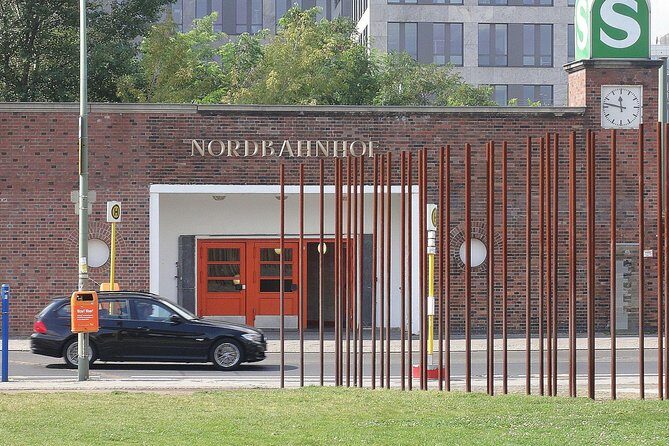
- Berlin Wall memorial and the Death Strip: The tour connects the commemorations to escape-attempt realities.
- Stasi HQ and Eric Mielke: You’ll learn how surveillance was organized on a massive scale.
- Alexanderplatz demonstrations in 1989: You’ll see where public life in East Berlin became the setting for regime change.
Following the Iron Curtain across East Berlin
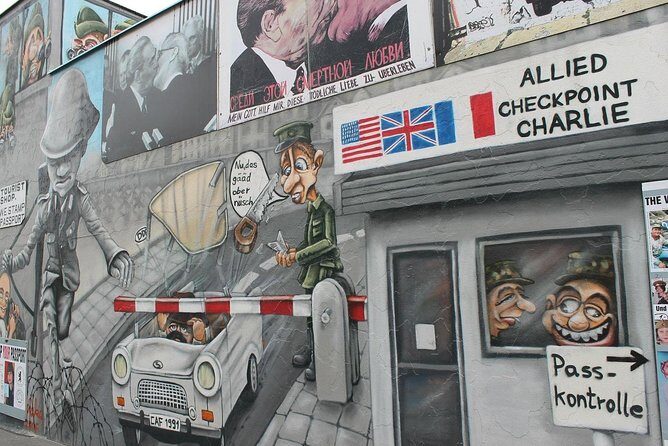
East Berlin has a special kind of visual contrast. Some of the city looks ordinary if you rush past it. This tour slows you down on purpose, so the concrete, buildings, and public squares start making sense as part of a system—one designed to control movement, information, and even family life.
You’ll take a 3-hour guided walk with stops tied to how the East German state operated before the Berlin Wall fell. The guide’s job is to connect what you’re seeing now to what those places meant then, especially the “hidden” links between modern Berlin’s layout and the Communist regime’s priorities.
The route is also practical. You’ll start in central Berlin and then work your way through major sites using public transport when distances make sense. That matters because East Berlin’s story isn’t confined to one neighborhood. You need a guide to keep the timeline straight while you hop between places that are physically separate but historically connected.
You can also read our reviews of more walking tours in Berlin



Starting at Unter den Linden: where the story meets the street
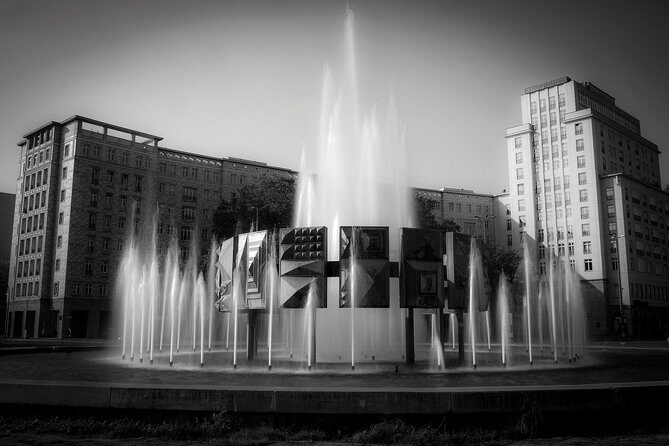
The meeting point is Unter den Linden 42. From there, the tour heads toward the Brandenburg Gate area, which sets the tone fast: this isn’t just Cold War trivia. It’s about power after World War II, and the way Berlin’s rebuilding reflected competing ambitions.
One reason I like this start is that it gives you a foundation before you hit the more intense locations. You learn what the city looked like in the aftermath of war and how major institutions and embassies fit into a larger struggle over control. In other words, by the time you reach the sites connected to the Wall and Stasi, you’re not feeling dropped into a random set of stops.
You’ll also benefit from how the guides teach. In previous groups, guides like Martin and Dan were praised for explaining hidden details and keeping the group comfortable and on track—even during a cold afternoon. That kind of attention makes the tour feel like more than a march. It feels guided, not rushed.
Brandenburg Gate area: the Soviet Embassy and postwar ambition

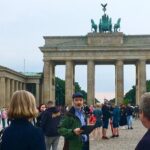
One of the first major lessons is how the built environment carries political messages. You’ll begin near the Brandenburg Gate and the grandiose former Soviet Embassy, described as having been built from rubble from World War II. The point isn’t architectural bragging rights. The point is what that rubble meant: a bold declaration of Stalin’s ambition to control all Berlin.
This stop works well because it frames the Cold War before it turns into daily coercion. You see a landmark you may already associate with reunification-era symbolism, but the tour asks you to look at it from the other side of the curtain—where reconstruction wasn’t neutral. It was strategy.
Friedrichstrasse: the Palace of Tears and the cost of separation
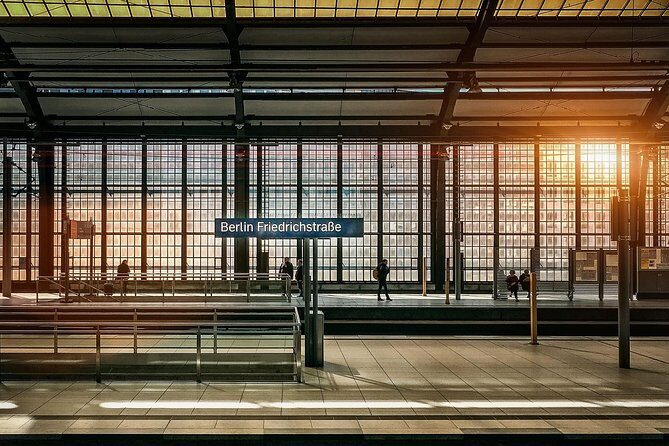
Next comes Friedrichstrasse station, one of the key crossing points between East and West Berlin. The tour focuses on what crossings really meant for families—especially East Germany’s strict immigration laws.
This is where you visit the mournful Palace of Tears. The name lands because the tour explains it as an office where families said sad goodbyes under policies that forced separation. It’s not presented as a vague tragedy. You’re shown why this place became a symbol: bureaucratic procedures that made heartbreak routine.
If you’re the type of traveler who likes history that connects to human consequences, this is one of the strongest stops. It explains how the system worked not only through guards and borders, but through forms, processing, and rules that families had to live with in real time.
The Berlin Wall memorial and the Death Strip: what escapes really risked
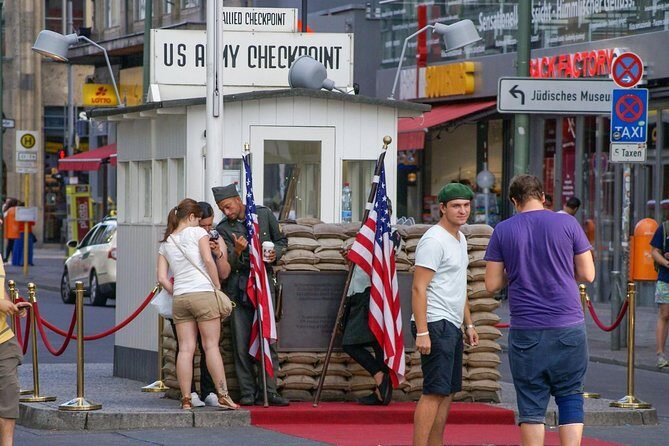
After Friedrichstrasse, the tour shifts to the Berlin Wall memorial, where you get the chance to experience the notorious Death Strip—the area associated with attempts to flee East Berlin.
This is one of those stops where the guide’s framing matters. The tour isn’t just pointing at a wall line on a map. You’re hearing stories about people whose attempts to escape led to their tragic deaths, and you’re learning what the memorial is trying to preserve in your head: the barrier wasn’t just physical. It was lethal, enforced, and designed to end risk-taking.
Why this matters for your understanding is simple. It turns the Wall from an object into a policy. You leave with a clearer sense of what East Berlin residents were dealing with every day, and why public speeches and demonstrations in 1989 weren’t abstract protests. They were reactions to a system people had lived under for decades.
You can also read our reviews of more city tours in Berlin




Stasi headquarters: Eric Mielke and surveillance as a machine
Then you’ll head to the former Stasi headquarters, one of the most important places in Berlin for understanding fear as a method of control. Here, the tour zeroes in on Stasi leadership, including Eric Mielke, described as having built a massive network of spies and created innovative surveillance techniques.
This stop is valuable because it shows surveillance wasn’t only about breaking rules. It was about shaping behavior. Once you know how a spy network can make people doubt their own safety and privacy, the rest of the tour starts clicking into place: why crossings were tense, why public spaces were watched, and why demonstrations mattered so much.
I also like that the tour makes the connection between those methods and the way you see modern Berlin today. You’re shown how a city’s layout and preserved structures can carry the residue of surveillance and coercion. That makes the trip feel more honest than a purely celebratory city tour.
Alexanderplatz: East Berlin’s public heart and the 1989 tipping point
The final major anchor is Alexanderplatz, the center of public life in East Berlin. The tour explains that the square was rebuilt in the 1960s and functioned as a symbol of East German pride.
But the story turns. In 1989, Alexanderplatz became the setting for mass demonstrations that helped bring 40 years of Communist rule to an end. This is the part where the tour stops being only about restrictions and starts showing how pressure can flip into collective action.
Why this last stop is so useful is because it gives you a “before and after” feeling in one neighborhood. Earlier, you saw systems built to separate and block. Here, you see a space that became a stage for public pressure.
And if you enjoy the emotional arc of a good walk—start with political ambition, move into family pain and forced control, then end at the place where mass action mattered—this ending lands.
Price and what you really get for $153
The tour costs $153 per person for 3 hours with a live English guide who brings academic or professional expertise. On paper, that can feel “pricey” for a walking tour. In practice, the value is in how the guide frames multiple high-impact sites that don’t tell the same story on their own.
What’s included is the historian guide. What’s not included is transportation ticket cost because you’ll take public transport between certain stops. That’s worth planning for when you budget—especially if your city transit pass isn’t already set.
Where the money tends to make sense is the match between guide quality and stop selection. Reviews praised guides like Martin and Dan for clarity and helpful pacing, plus a friendly, polite attitude. One review also emphasized that the guide checked in and kept the group doing well, which matters when the subject is intense and the afternoon runs long in the cold.
If you want a tour that simply points at monuments, you can find cheaper options. If you want a guided explanation that helps you understand what the monuments meant and why the architecture matters, $153 starts to feel more reasonable.
How to get the most from the tour
This is not the type of walking tour where you can zone out and still get the full benefit. The tour succeeds when you listen for connections: how the state used policy, how it used space, and how it used fear.
Here are a few ways to get more out of your 3 hours:
- Pay attention to transitions between stops, because the tour builds a cause-and-effect story rather than listing sites.
- Ask yourself what each location is really about: paperwork and goodbyes at Friedrichstrasse, fatal risk in the Death Strip, surveillance systems at Stasi HQ.
- If you get overwhelmed, it helps that the tour includes time with a professional guide and keeps groups moving. Previous guests noted that the guide was proactive about making sure everyone was okay.
Also, Berlin weather can matter. One review highlighted that even a cold afternoon went quickly, suggesting the tour keeps momentum and doesn’t drag.
Who this tour is best for (and who should skip it)
This tour is best for you if you like political history with real places attached. You’ll probably enjoy it most if you want more than generic Berlin Wall talking points and you care about how control worked in everyday life.
You’ll also like the tour if you’re the kind of person who appreciates expert context. The fact that guides are drawn from academic and professional backgrounds is a real advantage here. It helps the stories stay grounded while still being human.
You might want to choose something lighter if you only want quick photo stops or you’re sensitive to stories involving death, coercion, and family separation. This tour doesn’t shy away from the darker side because that darkness is part of the sites themselves.
Should you book East Berlin: City of Shadows?
I’d book it if your goal is to understand East Berlin as a lived system, not just a timeline. The strongest reason is the combination of stops: Brandenburg Gate area framing, the emotional weight of the Palace of Tears, the concrete meaning behind the Death Strip, the mechanics of Stasi surveillance under Eric Mielke, and then the turning point at Alexanderplatz in 1989.
It’s also a good choice if you want an expert guide. Reviews specifically praised guides like Martin and Dan for explaining hidden details clearly and maintaining a helpful, friendly vibe.
Before you go, just plan on public transport tickets for some segments. Also think about your mood: this is history with consequences, and it’s designed to make you feel the human stakes.
If that’s your kind of travel, this tour is a smart way to spend a half-day in Berlin.
FAQ
Where do I meet the guide?
Meet at Unter den Linden 42, Berlin, Germany.
How long is the East Berlin City of Shadows walking tour?
The tour lasts 3 hours.
How much does the tour cost?
It costs $153 per person.
Is the tour guided, or self-paced?
It is a live tour with an English-speaking guide.
Does the price include transport tickets?
No. You will need public transport on the tour, and the cost of transport tickets is not included.
What are some of the main places you visit?
The tour includes stops such as Friedrichstrasse station and the Palace of Tears, the Berlin Wall memorial, Stasi headquarters, and Alexanderplatz, with the route also starting near the Brandenburg Gate area.
Who leads the tour?
Guides are described as professors, doctoral students, historians, journalists, art critics, or published authors.
Are there private or small-group options?
Yes. Private or small groups are available.
Is there free cancellation?
Yes, you can cancel up to 24 hours in advance for a full refund.
Is reserve and pay later available?
Yes. You can reserve now and pay later to keep plans flexible.