REVIEW · BERLIN
Berlin: Gay Berlin Out in Schöneberg Walking Tour
Book on GetYourGuide →Operated by Sonderweg-Berlin · Bookable on GetYourGuide
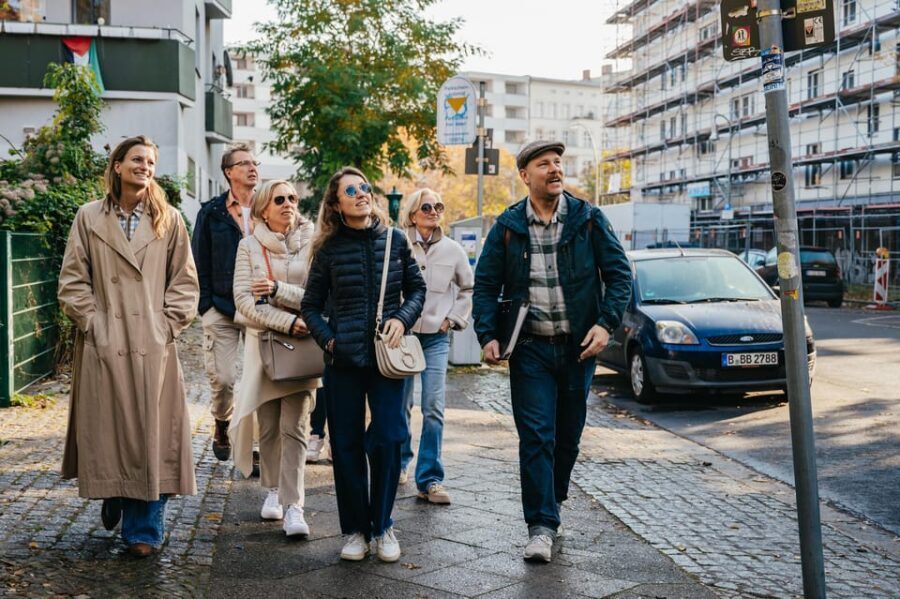
Schöneberg feels like queer Berlin’s living timeline. This Berlin Gay Berlin Out in Schöneberg walking tour strings together famous names and vanished venues so you understand how the community formed, fought for rights, and rebuilt itself after brutal setbacks. I especially like how Tobias tells the story with wit and clear cause-and-effect, so facts actually stick.
You’ll also love the stop selection and the way the guide supports it with archive pictures and text, helping you picture interwar nightlife and later West Berlin culture even when the original places are gone. And the route is paced like a real neighborhood walk, with a few breaks for comfort and chances to ask questions.
One consideration: the tour doesn’t include food or drinks, so if you’re sensitive to long outdoor strolling, bring water or plan a nearby cafe for after the walk.
In This Review
- Key things you’ll notice on this Schöneberg walk
- Schöneberg’s queer map: what a 2.5-hour tour actually gives you
- Tobias’s storytelling: why the tour sticks with you
- Nationalhof and the interwar rights movement: the stop that explains the whole city
- Motzstraße and El Dorado: reading nightlife into today’s street
- Hollandais club and Kleist Casino: how venues built community
- Nollendorfstraße and Christopher Isherwood: literature that fed liberation
- The lesbian quarter on Schwerin Straße: keeping gender-diverse stories central
- Eisenacher Straße and the present-day neighborhood feeling
- Price and value: $23 for a 2.5-hour guided walk
- Who this tour fits best
- Quick heads-up on timing and ending questions
- Should you book this Schöneberg gay history walking tour?
- FAQ
- How long is the Berlin Gay Berlin Out in Schöneberg walking tour?
- How much does the tour cost?
- Is food and drinks included?
- What languages is the live tour guide available in?
- Where do we meet for the tour?
- Is the tour wheelchair accessible?
Key things you’ll notice on this Schöneberg walk
- Nationalhof as the movement’s heart: you’ll see the place tied to organized gay rights in the 1920s.
- Motzstraße and El Dorado’s cabaret legacy: the street still carries the nightlife story.
- Hollandais club and Kleist Casino stops: you connect venues to the people who built the scene.
- Christopher Isherwood on Nollendorfstraße: literature, liberation, and the wider Gay Liberation conversation connect.
- Lesbian quarter on Schwerin Straße: the walk keeps gender-diverse stories part of the map.
- From late-1960s West Berlin to today: you end with the sense of continuity, not just nostalgia.
Schöneberg’s queer map: what a 2.5-hour tour actually gives you
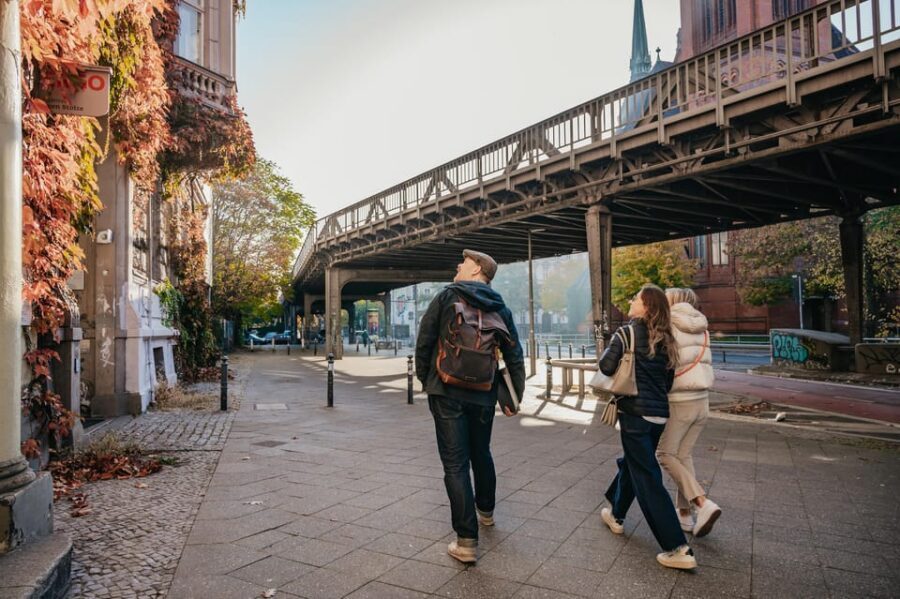
Schöneberg sits in the middle of the story for queer Berlin, and this tour makes that clear fast. In just about two and a half hours, you walk around Nollendorfplatz and trace a chain of real-world addresses tied to clubs, rights activism, and the daily culture that grew around them. It’s not a museum tour where you only look at plaques. It’s a streets-and-buildings tour where the city becomes the text.
That matters because Berlin’s queer history isn’t just dates. It’s geography: where people gathered, where they performed, where they organized, and how public life changed as politics tightened. When you connect those dots, you’ll understand why Schöneberg became the West Berlin gay district and how the area’s identity held onto the later decades.
The pacing is practical. You’ll move long enough to feel you’re traveling through the neighborhood, but you’re not rushed like a sprint. One review even highlighted comfort stops and the option to sit, stand, walk, and ask questions as you go, which is exactly how you want an outdoor history walk to feel.
You can also read our reviews of more walking tours in Berlin


Tobias’s storytelling: why the tour sticks with you
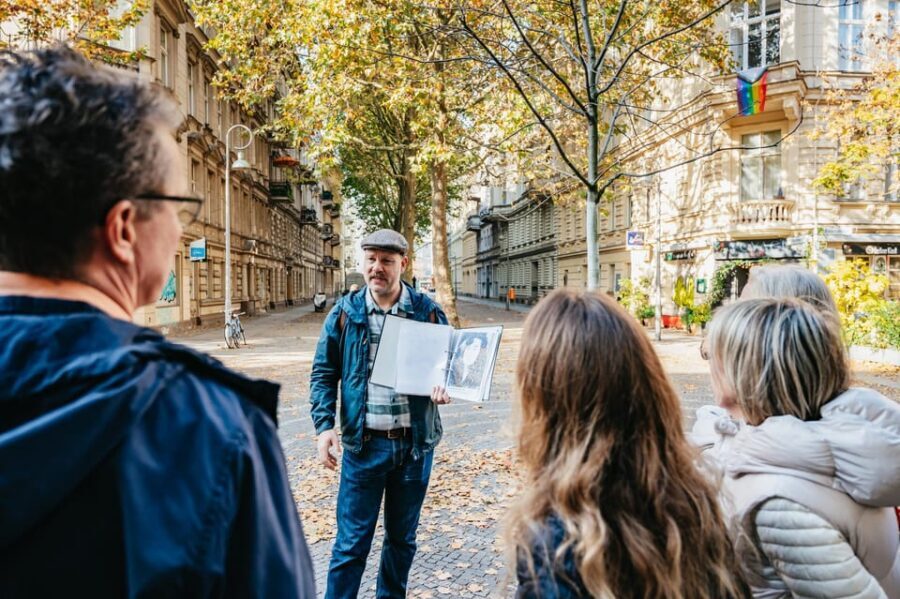
The biggest reason this tour rates so high is delivery. The guide, Tobias, mixes historical context with a storyteller’s rhythm: what happened, who it affected, and why it changed the neighborhood. You also get humor without turning the topic into a joke, which is a tricky balance and he pulls it off.
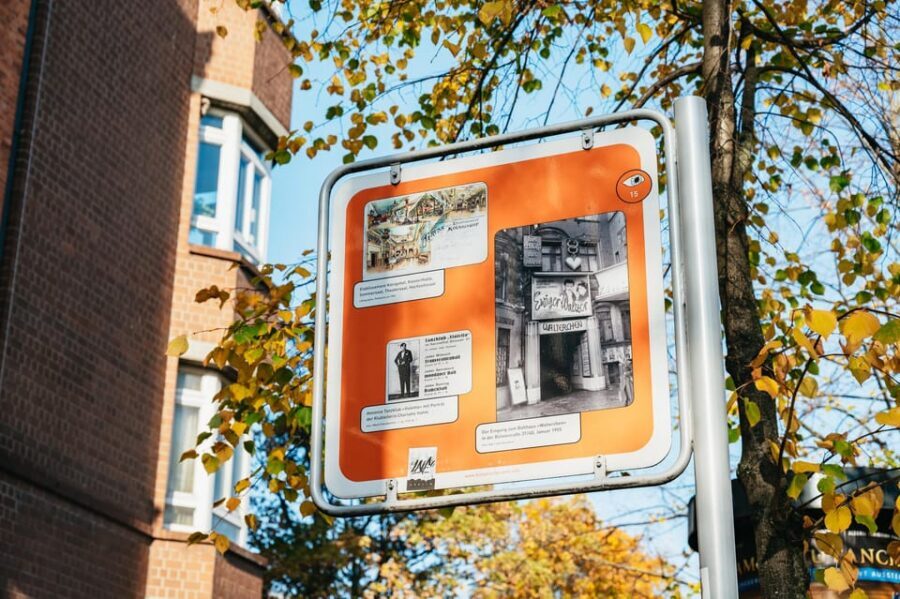
You’ll notice the tour doesn’t rely only on spoken descriptions. The guide uses archive pictures and text to show what the scene looked like, especially for the interwar years. That’s huge for two reasons:
- It helps you visualize spaces that no longer look the way they once did.
- It turns names into people, instead of just names on a list.
A personal-touch detail also comes through in the way the guide engages. He’s responsive to questions and adapts when timing or the group’s needs shift. If you’re the type who likes to ask small follow-ups as you walk, this format works well.
Nationalhof and the interwar rights movement: the stop that explains the whole city
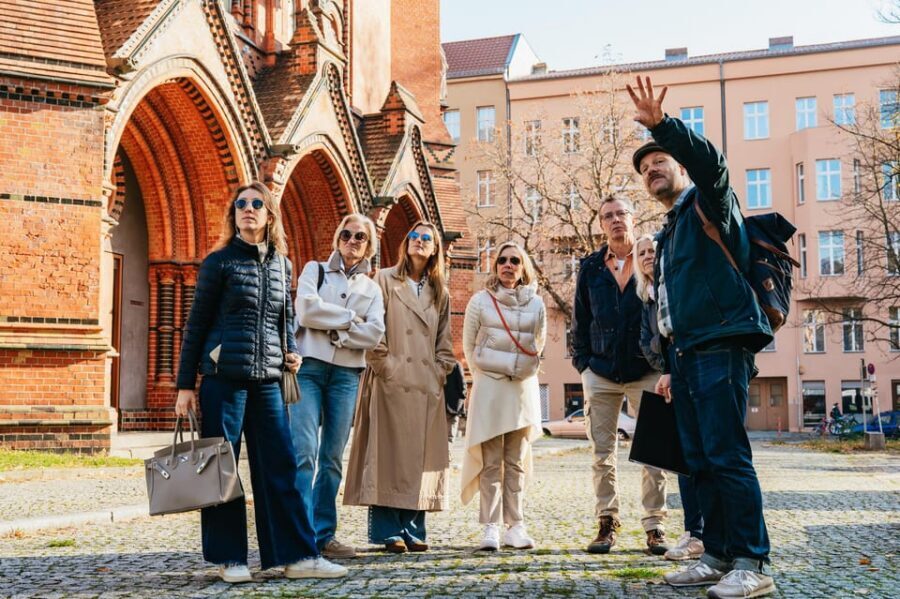
If you only remember one location, make it the site of the Nationalhof. This is described as the heart of the gay rights movement, and that’s exactly how the guide frames it on the route. You’re not just learning that activism existed. You’re learning that it had a center, a meeting point, and a public-facing role that shaped how people argued for their place in society.
The interwar period matters because it’s when the scene became more organized and visible. Your walk places Schöneberg’s gay community in that broader context: the end of World War I into the early 1930s, just as the Nazi Party rose. By keeping those political shifts linked to the neighborhood, the tour makes the history feel logical rather than random. It also shows why rights work and culture work were intertwined: gatherings, venues, and social networks weren’t separate from activism.
What I like about this part of the tour is the perspective. You see that the movement wasn’t only nightlife. It included organizing, community-building, and a push for recognition. Once you grasp that, the later stops across clubs and cabaret read differently, not just as entertainment addresses.
Motzstraße and El Dorado: reading nightlife into today’s street
Then comes Motzstraße, and with it, one of the most recognizable pieces of queer Berlin pop-culture: the site of the famed El Dorado cabaret club. Cabaret in Berlin wasn’t only about showmanship. It was a social technology. It gave people a place to gather, to perform identity, and to experiment with public life in a way that was hard to find elsewhere.
When you walk this stretch, you get the feeling the guide is teaching you how to look. Instead of treating the street as just scenery, you’re encouraged to connect the location to what it once made possible. That’s why stopping at El Dorado’s site is powerful even if the building no longer functions like a club. The story still lives in the address.
If you’re a first-time visitor, this stop helps you understand Berlin’s queer history as something theatrical and social, not only political. If you’ve been in Berlin before, it gives you a second lens: you’ll start noticing how street life and cultural venues shaped community survival.
Hollandais club and Kleist Casino: how venues built community
The tour also points you to major venue sites tied to the gay scene’s development, including the Hollandais club and the Kleist Casino. These are the kinds of places that sound like names on a list until you place them in context. This walk does that placement for you.
Here’s the practical payoff: venues tell you what community life looked like on a typical evening. They also show you how public spaces could be claimed by marginalized groups, at least for a time. And when politics changed, those same spaces often became more fragile. Seeing multiple venue sites in one walking loop helps you understand the neighborhood as an ecosystem rather than a single landmark.
The guide’s approach makes you slow down at the right moments. You’re not just scanning street signs. You’re learning how each site contributes a piece of the bigger picture: social life, visibility, and the networks that formed through regular gatherings.
You can also read our reviews of more tours and experiences in Berlin

Nollendorfstraße and Christopher Isherwood: literature that fed liberation
On Nollendorfstraße, you’ll stop by the former home of novelist Christopher Isherwood. Isherwood matters because his works formed an integral part of the Gay Liberation movement. The tour doesn’t treat him like a detached literary figure. It links the writing to a wider culture shift: how stories and representations helped people see possibilities beyond their immediate circumstances.
In plain terms, this stop makes the tour feel bigger than Schöneberg. You’re walking a neighborhood, but you’re also tracing how ideas travel. Isherwood’s name anchors the idea that Berlin’s queer community wasn’t only shaping itself; it was influencing how queer life was talked about and understood elsewhere.
If you like the humanities side of travel, you’ll probably enjoy this portion the most. It gives your walking tour a second engine besides politics and clubs: narrative and identity.
The lesbian quarter on Schwerin Straße: keeping gender-diverse stories central
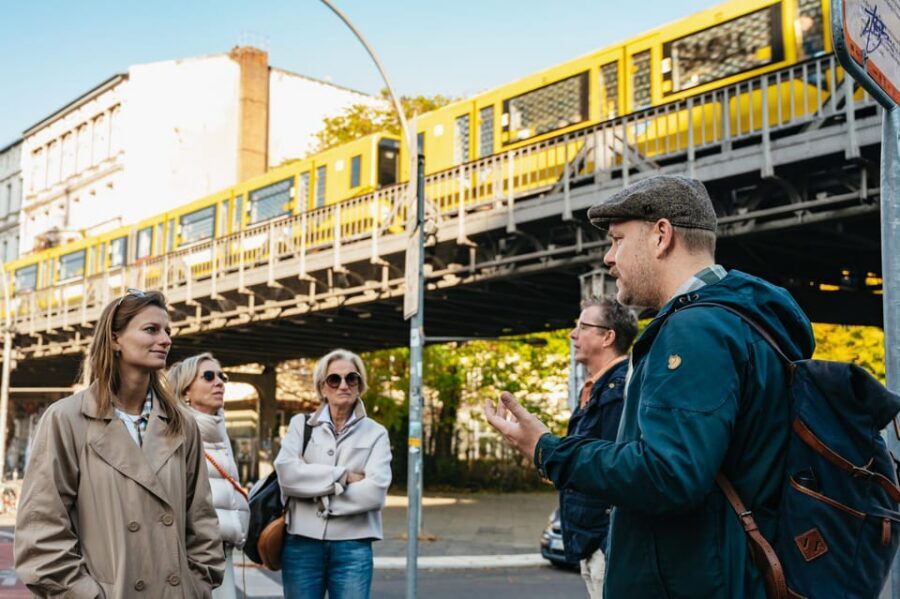
A lot of queer-history tours flatten the story into one line. This one tries to keep the map balanced. You’ll stroll through the lesbian quarter on Schwerin Straße, which is where the tour shifts into a different kind of emphasis: community presence, not only male-coded venues and activism.
This is more than a checkbox stop. It changes what you notice as you walk. You start picking up the way community identity shows up in everyday life: who’s visible on the street, what kinds of social spaces exist nearby, and how neighborhoods hold multiple strands at once.
It also connects to the later part of the tour, when the walk explains how the area began to bloom again as West Berlin’s only gay district from the end of the 1960s up to the present day. When you see a lesbian quarter in the route, that “present-day continuity” feels more grounded. It’s not only about a single chapter in one decade.
Eisenacher Straße and the present-day neighborhood feeling
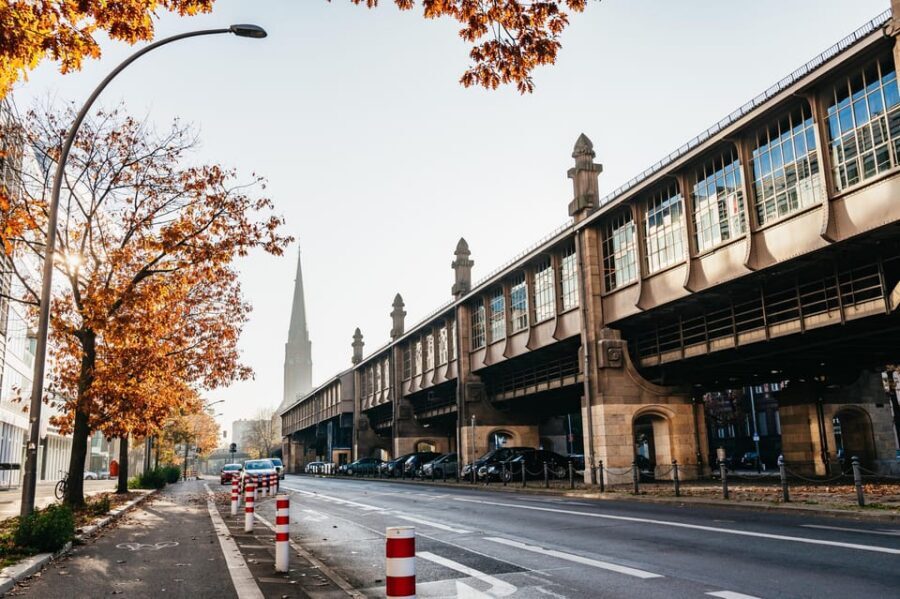
Toward the end, you’ll move down Eisenacher Straße, which still reflects the varied life of the neighborhood. This is the part that helps you stop viewing the tour as pure backstory. By the time you’re here, you’ve already learned how the community formed and how it got reshaped by major political forces. So the “today” elements feel earned.
Also, Berlin is a city where old and new overlap constantly. Seeing the present-day street life after stops tied to the interwar scene and later West Berlin resurgence gives you a clearer read on why people keep returning to Schöneberg. It’s not just a historical site. It’s a place where identity can exist with a degree of normalcy.
This ending rhythm works for me because it answers a question you might have while walking: what happens after the story’s hardest moments? The tour’s answer is practical and local. People kept showing up, kept building, and kept the neighborhood relevant into the decades that followed.
Price and value: $23 for a 2.5-hour guided walk
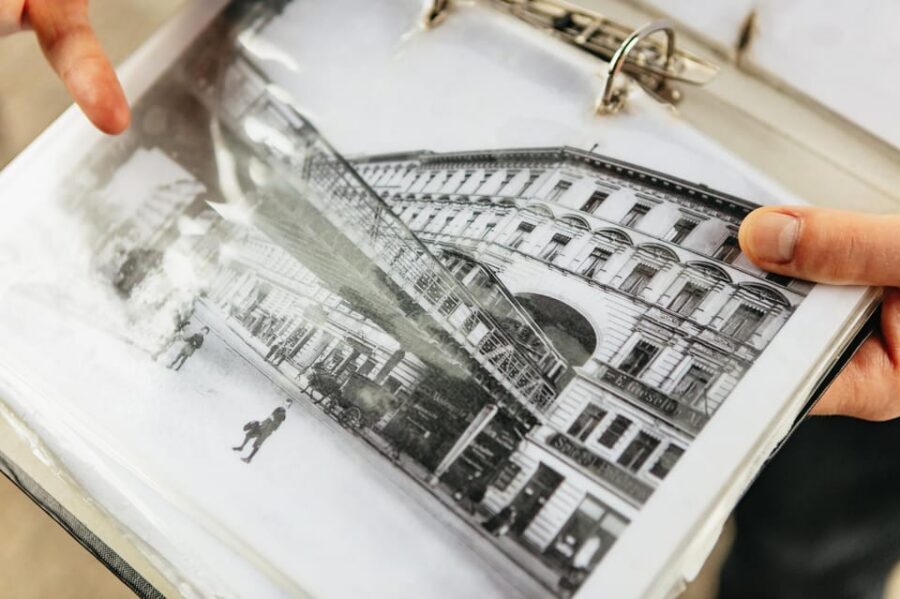
At about $23 per person for a 2.5-hour guided walking tour, you’re paying for more than “someone to lead you around.” You’re paying for interpretation: the ability to connect Nationalhof, El Dorado, Hollandais, Kleist Casino, and Isherwood to a single narrative arc.
That matters because these places can be hard to understand on your own. Without context, it’s easy to walk past street names and end up with trivia instead of understanding. With a guide who can explain why the interwar years mattered, why activism mattered, and why the neighborhood returned as a key West Berlin district, the time starts to feel like a shortcut to real learning.
You also get a guide included (no add-on museum tickets, no separate transport cost in the description), and the route is wheelchair accessible. The tour language options include German and English, which is a real advantage if you want the guide’s explanations without relying on your own language skills.
Who this tour fits best
This is a good match if you want queer Berlin history at street level. It’s also ideal if you’re short on time but still want the meaningful landmarks, not just a general overview. The pace and frequent question time make it work well for couples, small groups, and solo travelers who like to think while they walk.
You’ll likely get extra value if you’re:
- visiting Berlin for the first time and want the Schöneberg story in a clear sequence
- interested in how culture and rights activism shaped each other
- the type who enjoys architecture, street names, and the feel of real neighborhoods
If you hate walking or you’re hoping for a snack-and-sit tour, you might find it less comfortable since food and drinks aren’t included.
Quick heads-up on timing and ending questions
A small practical note: the tour wraps at the end of the walk, and you may have lingering questions once you’ve seen the final stops. If you care about follow-ups, ask them while you’re still moving through the route, not after the group finishes. The guide’s approach is interactive during the walk, which is the best time to use it.
Should you book this Schöneberg gay history walking tour?
I think it’s an easy yes if you want queer Berlin history in a form that feels alive. You get a strong chain of stops tied to activism, nightlife, and literature, plus presentation that uses photos and text to make lost spaces feel real. The $23 price for 2.5 hours is fair, especially because the guide’s storytelling is the whole point, not a bonus.
Book it if you:
- like guided walking tours over museum-only experiences
- want the Nationalhof and El Dorado story explained in context
- value a guide who can handle sensitive topics with tact and still keep the mood human
Skip it only if you need built-in food breaks or you’re not comfortable doing an outdoor history walk.
FAQ
How long is the Berlin Gay Berlin Out in Schöneberg walking tour?
The tour lasts 2.5 hours.
How much does the tour cost?
It costs $23 per person.
Is food and drinks included?
No. Food and drinks are not included.
What languages is the live tour guide available in?
The guide is available in German and English.
Where do we meet for the tour?
The meeting point may vary depending on the option booked.
Is the tour wheelchair accessible?
Yes, the tour is wheelchair accessible.