REVIEW · BERLIN
Berlin: Guided Private Bike Tour to Explore the Highlights
Book on Viator →Operated by FREE BERLIN Bike Tours · Bookable on Viator
Berlin by bike turns postcards into real streets. This private 3-hour ride is a smart way to cover Berlin’s key sights with a local guide, while keeping things safe and hassle-free thanks to included bike and helmet.
I also like how the route is guide-designed, so you’re not trapped on a cookie-cutter loop. One thing to consider: parts of the itinerary depend on your language (English includes Checkpoint Charlie, while Prenzlauer Berg shows up only on the German version), so check what’s offered before you lock your time.
In This Review
- Key things to look forward to
- Where you start at Free Berlin Bike Tours
- Nikolaiviertel and the TV Tower: Berlin’s first layer of time
- Bebelplatz book burning memorial: why Berlin won’t look away
- Cold War edge in motion: Checkpoint Charlie (English version)
- Unter den Linden: the grand avenue with modern interruptions
- Potsdamer Platz: from roaring nights to no-man’s-land
- Holocaust Memorial: taking in the unthinkable without rushing
- Tiergarten break: a park with a former job title
- Brandenburg Gate and the Reichstag dome: two symbols, two moods
- When the route changes by language: Prenzlauer Berg and Museum Island
- How cycling feels over 3 hours (and how to prepare)
- Price and value: is $107.77 per person worth it?
- Who should book this bike tour
- Should you book this Berlin private bike tour?
- FAQ
- How long is the Berlin private bike tour?
- How much does it cost per person?
- What’s included in the price?
- Where do we meet and where does the tour end?
- Is this a private tour or a shared group tour?
- Are all stops the same in English and German?
- Can we change the start time?
- Is it family-friendly?
- What if the weather is bad?
- Is there free cancellation?
Key things to look forward to
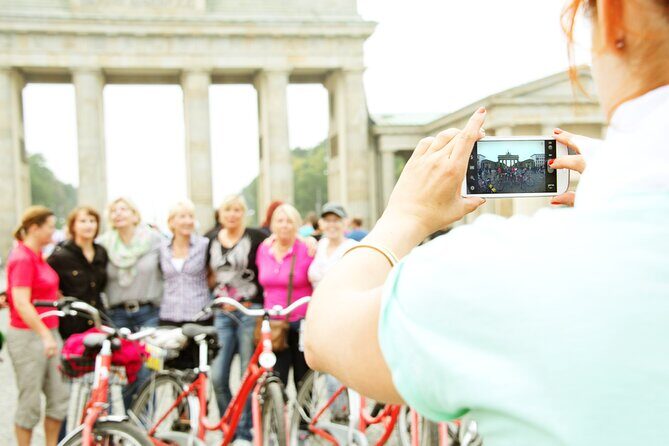
- Private tour feel with a local pro: only your group, guided end to end.
- Bike and helmet included: you show up ready to roll.
- Free-Berlin Concept routing: each guide builds their own version of the best-of highlights.
- Big Berlin moments in a short window: from Cold War borders to modern landmarks.
- Language-specific stops: you might not see everything if you switch between English and German.
- Family-friendly option: kids are welcome, with infant seats available on request.
Where you start at Free Berlin Bike Tours
You’ll meet at Free Berlin Bike Tours & Rental at Poststraße 11 (10178 Berlin). It’s a central spot, close to public transit, and you finish back at the same place, which keeps logistics simple.
In the first stretch, your guide typically gets bikes sorted, hands you a helmet, and sets expectations for the pace. That matters in a city like Berlin where roads can change quickly, and you’ll be hopping from one major landmark area to the next without long breaks for transit.
You can also read our reviews of more cycling tours in Berlin
Nikolaiviertel and the TV Tower: Berlin’s first layer of time
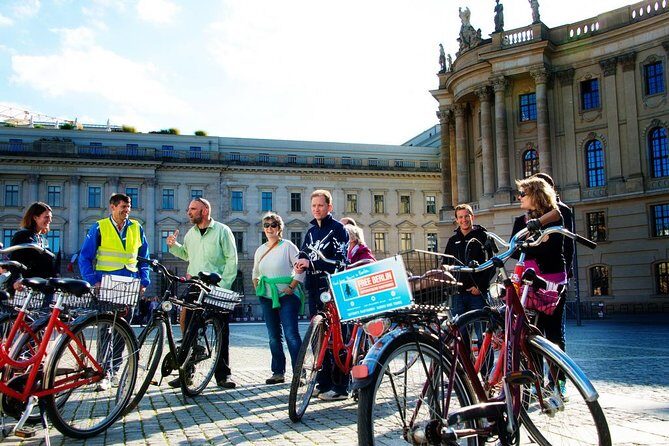
Your morning-style ride starts in Nikolaiviertel. This is old-town atmosphere, but with a twist: the area you see today was created in the late eighties. That means it’s not medieval authenticity, but it’s still useful. You get a cozy feel for how Berlin likes to rebuild its past—then you move on to the landmarks that show the 20th-century turns more bluntly.
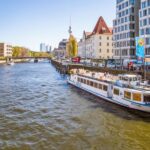
A bit later, you’ll pass the TV tower, a defining Berlin silhouette. When it opened in 1969, it was the second tallest tower in the world. Even if you don’t go up, seeing it from street level gives you a sense of scale and how Berlin projected confidence during the Cold War era.
Practical note: these are quick stops. You’ll get time for a look and photos, but plan to treat it as orientation, not an in-depth viewing.
Bebelplatz book burning memorial: why Berlin won’t look away
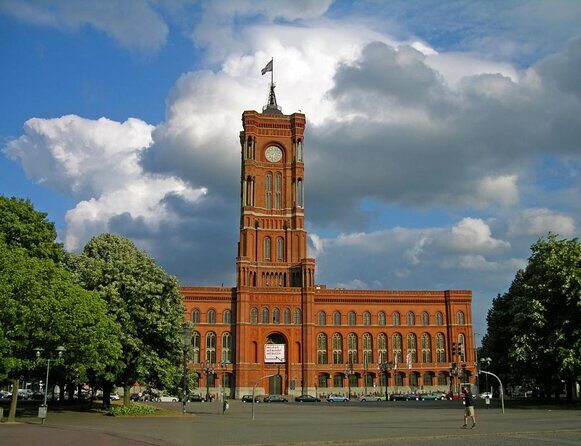
Next up is Bebelplatz and the Book Burning Memorial. This is one of those stops that changes how you walk through the surrounding square. It marks where the Nazis burned thousands of books in public—an act meant to silence ideas, erase culture, and control the future.
Right next door, the university angle is part of why this stop lands so hard. Berlin’s oldest university sits in the center here, and the area has strong ties to major minds. You’ll hear how many notable figures studied there, including Albert Einstein and Karl Marx. That mix—high-level scholarship paired with a place that represents forced censorship—helps you understand that history in Berlin is not just monuments. It’s also institutions.
Possible drawback: this is emotionally heavy. If you’re the type who prefers to keep the mood light while sightseeing, you might want to mentally prep for a more serious moment in the middle of a bike tour.
Cold War edge in motion: Checkpoint Charlie (English version)
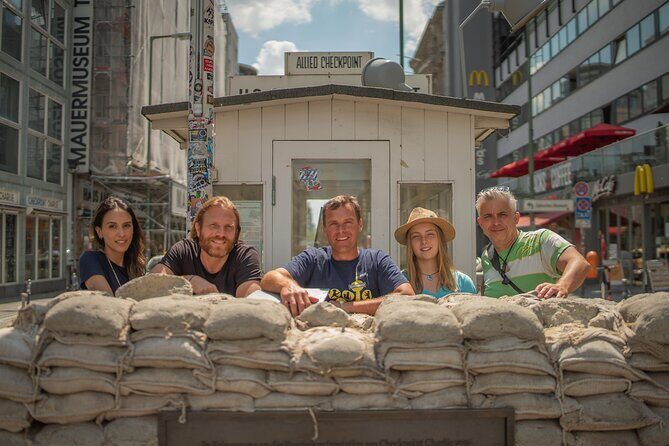
Checkpoint Charlie is included only in the English version. The spot is famous for one reason: it was the Cold War’s best-known border station. On a bike, you feel the geography differently than you would standing in a single spot—your guide can point out how the street layout reflects separation and control.
This is also where you’ll likely notice how much Berlin has turned the border concept into a public storytelling moment. The guide’s role is key here: instead of turning it into just a photo stop, a good guide frames it as a lesson about political reality, not just a landmark name.
Quick consideration: places like this can be busy. Even with a small, private group, expect a bit of stop-and-go around pedestrian flow.
Unter den Linden: the grand avenue with modern interruptions
Unter den Linden is Berlin’s big ceremonial street—often compared to the Champs-Élysées vibe. It’s also a working city street, and you’ll see how Berlin keeps layering new infrastructure into classic-looking spaces.
One specific detail: a subway line has been added recently. That’s a good “how Berlin adapts” lesson. Your guide may steer you toward less obvious bike paths instead of keeping you glued to the main tourist lines. That’s a big quality-of-life improvement when you’re cycling for hours.
You can also read our reviews of more guided tours in Berlin


Potsdamer Platz: from roaring nights to no-man’s-land
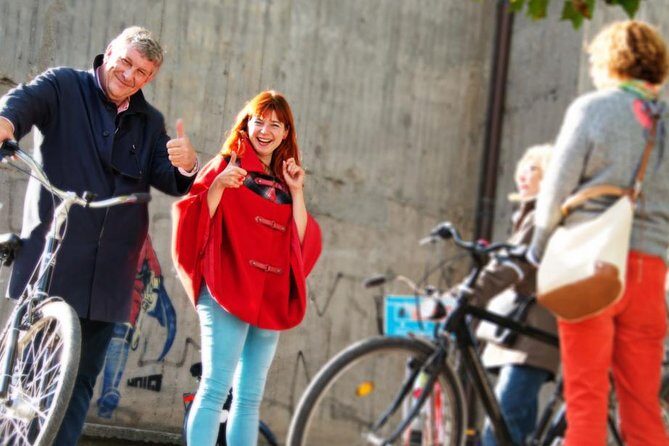
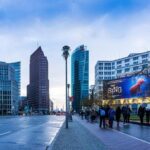
Potsdamer Platz is one of Berlin’s best “read the city like a timeline” locations. During the Roaring Twenties vibe, it’s known for lively traffic and the feeling of a modern hub. Then the story flips: during Berlin’s division, this area became no-man’s-land—Europe’s biggest construction site around the Millennium later, as the city tried to reunite what had been torn apart.
Because you’re on a bike, the context feels physical. You’re not just seeing buildings; you’re moving through space that once functioned under completely different rules.
Possible drawback: it can be noisy and busy around crossings. If you’re sensitive to crowded streets or prefer ultra-quiet viewpoints, this part might feel a little more intense than the calmer inner-city segments.
Holocaust Memorial: taking in the unthinkable without rushing
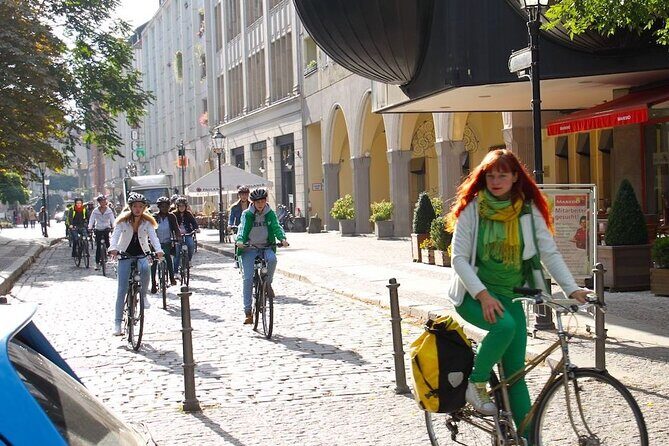
The Holocaust Memorial (Memorial to the Murdered Jews of Europe) is next on the route. There’s no easy way to “sightsee” this. Germany doesn’t treat it like a box to check; the point is to confront a crime that’s hard to measure, and to keep learning from it rather than burying it.
On a bike tour, the risk is moving too fast. But the structure of this stop helps: you get a short, focused time window that encourages you to slow down while you’re there, even if you’re moving through the city the rest of the day.
Respect note: if your group is talkative, I’d set the tone early. This is one of those places where quieter behavior makes the experience feel more human and less like sightseeing.
Tiergarten break: a park with a former job title
After the memorial, you’ll get a breath of green at one of Berlin’s biggest parks—often associated with the Garden of the Animals. The fun twist is the name: it has no relation to the current “garden” idea. It’s tied to the park’s earlier use as a zoo.
This is where the tour’s rhythm helps. You’ve had heavy history, high-impact landmarks, then you get a chance to reset your senses before the iconic photo moments.
Brandenburg Gate and the Reichstag dome: two symbols, two moods
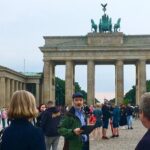
Then comes Brandenburg Gate, the Berlin icon. It’s iconic for multiple reasons: it’s visually recognizable, tied to key national moments, and it sits in a space where Berlin keeps reinventing its public meaning over time.
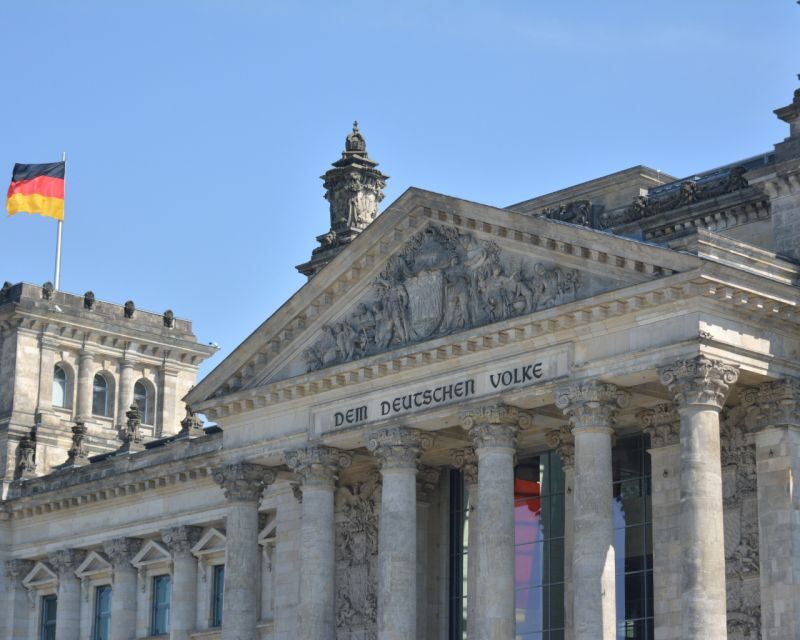
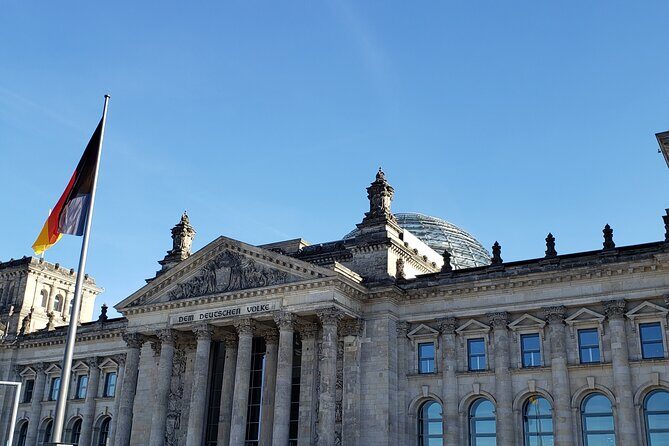
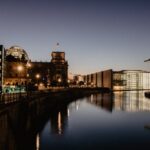
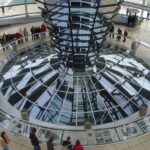
From there, you’ll reach the Reichstag building—Germany’s parliament—surrounded by the modern government quarter. A big focus is the transparent dome, which is meant to signal openness. Your guide’s job here is to connect the design choice to the idea of a state that wants to show itself clearly, not hide behind walls.
There’s also usually a playful moment: your guide may share fun stories about Germany’s White House, with the reminder that most of the jokes you hear aren’t really true. It’s a nice way to keep morale up while still talking seriously about what government looks like in real life.
When the route changes by language: Prenzlauer Berg and Museum Island
Two stops are explicitly language-dependent, so pay attention to your booking language:
- Checkpoint Charlie is only in the English version.
- Prenzlauer Berg is only included in the German version, where you’ll get a longer look (about 30 minutes). This district is often described as a model of Berlin’s transformation since reunification, with a more bohemian feel.
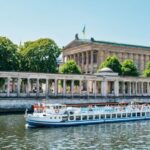
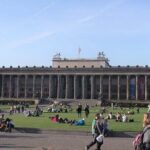
Another stop present in the main sweep is Museum Island. Your guide frames it around architecture—often described as Berlin’s Spree Athens. Even with a short stop, you’ll get enough time to appreciate how the buildings sit together as an intentional cultural zone.
Practical takeaway: if you want both Cold War border energy and a Berlin-after-reunification neighborhood feel, you’ll need to choose the language that includes those pieces.
How cycling feels over 3 hours (and how to prepare)
This is a private bike tour of about 3 hours, with multiple stops around 10 minutes each and one longer segment depending on the language version. That stop rhythm is part of why this works: you’re constantly moving, but you’re not sprinting between landmarks.
You can expect a solid ride, not a leisurely roll with endless gliding. One group reported cycling about 14 km during a similar 3-hour run, and that sounds about right for a highlights loop that hits major areas without extra transit.
What you should do before you go:
- wear comfortable shoes you can pedal in
- layer up if it’s cool; the tour runs in all weather, so you’re outside
- if you’re bringing kids, make sure they can handle the basic ride time; infant seats are available on request
Also keep in mind: it’s a private tour, so you’re not sharing your guide’s attention with strangers. That tends to make the pace and bike handling feel smoother.
Price and value: is $107.77 per person worth it?
At $107.77 per person for around 3 hours, this isn’t the cheapest way to see Berlin. But the value comes from what’s included and what you avoid:
- Bike and helmet are included, so you don’t need to rent or troubleshoot gear separately.
- You get a professional guide who connects what you see to what it meant—especially around the Berlin that’s split by history.
- It’s private, so your guide can keep the route efficient for your group.
- The Free-Berlin Concept means the guide builds a route, so you’re more likely to feel the city rather than follow a rigid checklist.
If you’re traveling solo, couples might feel the cost more than a group of four or five. If you’re with friends or family and you want a guided day that cuts down on guesswork, it starts to look like a smart use of time.
If you’re mainly after museum interiors and want ticketed entry experiences, you might need to pair this with other plans. Think of this tour as a fast, story-driven way to get your bearings and your context—then you decide what’s worth slowing down for.
Who should book this bike tour
This tour is a strong fit if:
- you’re a first-time visitor and want an efficient highlights sweep in a few hours
- you like history, but prefer it told through the city’s real geography
- you want the comfort of bike + helmet included rather than handling rentals
- you’re traveling with kids and want a family-friendly format (with infant seats available on request)
It may be less ideal if:
- you’re not comfortable biking in city traffic conditions, even with a guide
- you prefer to spend long periods at a single site rather than moving through several in one session
- your group is easily overwhelmed by heavy subject matter, since the Holocaust Memorial stop is part of the core experience
Should you book this Berlin private bike tour?
Book it if you want a guided “best-of” route that moves quickly, teaches meaning behind the landmarks, and keeps you from wasting time figuring out transit or where to start.
Skip or reconsider if cycling is a deal-breaker for your group, or if you want mostly indoor museum time instead of city scenes with narrative context.
If you do book, my practical tip is simple: schedule it early in your trip. You’ll come away with a mental map that makes the rest of Berlin easier to explore on your own.
FAQ
How long is the Berlin private bike tour?
The tour runs for about 3 hours.
How much does it cost per person?
It costs $107.77 per person.
What’s included in the price?
You get a professional guide, use of a bicycle, and a helmet. It’s also a private tour.
Where do we meet and where does the tour end?
You start at Free Berlin Bike Tours & Rental, Poststraße 11, 10178 Berlin, and the tour ends back at the meeting point.
Is this a private tour or a shared group tour?
It’s private, so only your group participates.
Are all stops the same in English and German?
No. Checkpoint Charlie is included only in the English version, while Prenzlauer Berg is included only in the German version.
Can we change the start time?
Yes. You can request a different start time by email or phone.
Is it family-friendly?
Yes. Children are welcome, and infant seats can be provided on request. Children must be accompanied by an adult.
What if the weather is bad?
It operates in all weather conditions, so dress appropriately for the day.
Is there free cancellation?
Yes. You can cancel for a full refund up to 24 hours in advance of the start time.