REVIEW · BERLIN
Berlin: Walking Tour of the Top 10 Sightseeing Attractions
Book on GetYourGuide →Operated by TOURGUIDEME BERLIN · Bookable on GetYourGuide
Berlin feels different when you walk it.
This 2-hour tour strings together the big turning points of the city—from the government district to Museum Island—with a guide who keeps things moving and adds a wink of Berlin humor. It’s a compact way to get oriented fast, especially if it’s your first time in Berlin.
I especially liked two things: the way you stand at Brandenburg Gate and get the story of unity and change, and how the walk treats architecture like a clue—especially at Gendarmenmarkt, where the three landmark buildings make sense once the guide explains what you’re looking at. You’ll get more than photo ops; you’ll understand the why behind the scenes.
The main drawback to consider is the pace. This is a fast, immersive 2-hour walk (about 4 km), so if you want long, stop-and-stare time at every site, you may feel a little rushed.
In This Review
- Key highlights worth planning around
- Starting at Paul-Löbe-Haus: the government-district warm-up
- Reichstag and Brandenburg Gate: the symbols that explain Berlin
- Holocaust Memorial to Potsdamer Platz: moving from memory to the city grid
- Unter den Linden and Gendarmenmarkt: architecture you can actually read
- Bebelplatz to Berlin Cathedral: when the past feels personal
- Lustgarten, Museum Island, and the TV-tower view angle
- Price and pacing: is $82 worth a 2-hour walking tour?
- Who this tour suits (and who should consider another option)
- Should you book this Berlin walking tour?
- FAQ
- How long is the Berlin walking tour?
- Where does the tour meet?
- What time does the tour start?
- How much walking is involved?
- What sights are included on the route?
- What languages are offered?
- Is it wheelchair accessible?
- Is the group size private or small group?
- Is the price fixed and are there hidden costs?
Key highlights worth planning around

- Brandenburg Gate storytelling with time for photos and Q&A
- Government district route that links the Chancellery, Reichstag, and major memorials
- Gendarmenmarkt architecture explained as part of Berlin’s power and culture
- Bebelplatz book burning with context that makes the location hit harder
- Museum Island plus cathedral sights to close with a strong “where-to-next” view
- Small groups or private options with an English/Spanish/German live guide
Starting at Paul-Löbe-Haus: the government-district warm-up
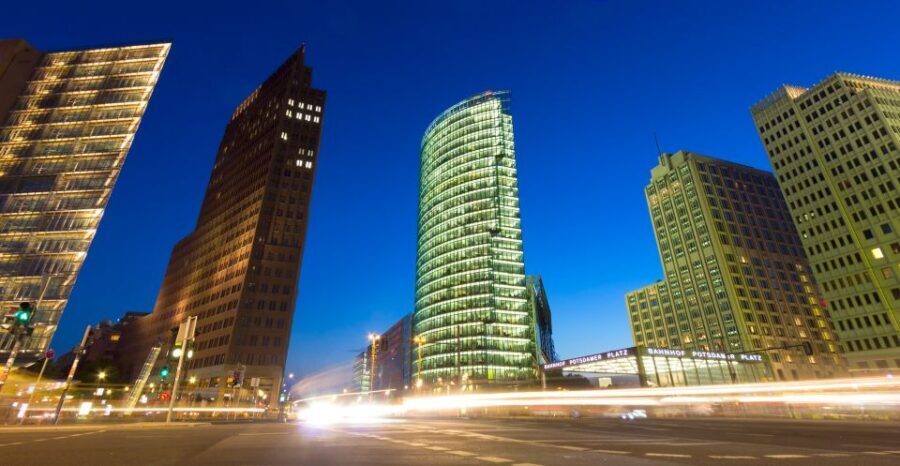
Your walk starts at the entrance of the Paul-Löbe-Haus, directly opposite the Federal Chancellery, at Konrad-Adenauer-Straße 1 (10557 Berlin). That’s a smart choice because it drops you into Berlin’s political center right away, not later. You begin with the “modern Berlin” skyline—Central Station and the Chancellery area—then the guide turns the volume down on today and starts layering in the past.
Expect an easy rhythm at the start. You’ll get practical orientation on the route and then move toward the historic core. It’s not a slow sightseeing stroll; it’s more like walking with someone who wants you to get the map in your head—and fast.
One small detail that matters: the tour covers roughly 4 km total. That’s very doable in two hours, but it’s still real walking. Wear comfortable shoes and keep your camera accessible.
You can also read our reviews of more walking tours in Berlin



Reichstag and Brandenburg Gate: the symbols that explain Berlin

Next up is the Reichstag area, where you’ll see the seat of Germany’s parliament and hear how the city’s political story kept changing shape. The Reichstag isn’t just a landmark—it’s a point in time. Once the guide connects it to the broader shifts in German history, you’ll notice how often Berlin revisits power, democracy, and rebuilding.
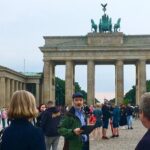
Then comes the big moment: Brandenburg Gate. This is the site most people recognize instantly, but the guide’s job is to make the gate more than a postcard. You’ll learn why it became a symbol of unity and change, and you’ll frame it with what’s around it—like the nearby embassies and the Hotel Adlon.
From this area, you also get a sense of Berlin’s “before and after” layering. The tour takes in sightlines that include the Victory Column and the Soviet War Memorial in the distance. Even if you’ve seen those names before, having them placed in one view helps you build a mental geography that makes future museum time easier.
Photo stop time is built in. A recent highlight from a tour led by Max: he took questions, made space for photos, and helped the group absorb the details without feeling rushed. That combination—story + time to capture the scene—really works here.
Holocaust Memorial to Potsdamer Platz: moving from memory to the city grid
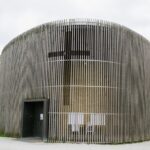
After the gate, the route heads through areas tied to the 20th century’s hardest chapters. The Holocaust Memorial is one of the most important stops on the walk, and it’s not treated like a quick checkbox. The guide connects what you’re seeing to the broader story of the Nazi era and the long shadow it cast across Europe.
It’s heavy, but it’s handled with care and clarity, and the walking format keeps you from getting trapped in information overload. You’ll still have to process emotions, but you won’t get lost.
Then the tour shifts again toward the Cold War and post-war urban reshaping with Potsdamer Platz. This is where Berlin’s history becomes visible in the way the city is laid out—modern energy built on ground that once represented division. Even if you don’t spend time inside any buildings, the guide helps you read the space like a document.
Unter den Linden and Gendarmenmarkt: architecture you can actually read
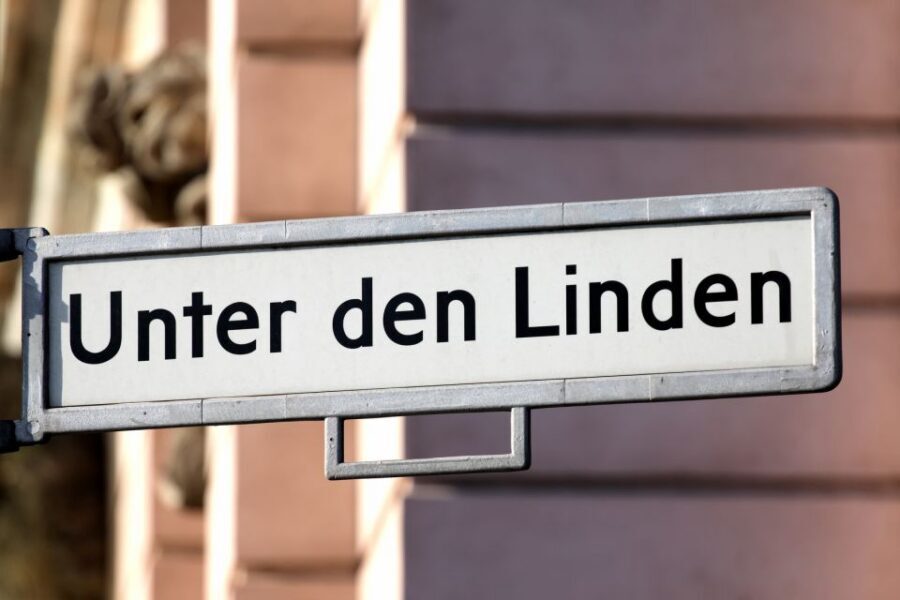
One of my favorite parts of this tour is how it uses Unter den Linden as a narrative spine. This boulevard shows up in a lot of Berlin planning, but here you don’t just walk it—you learn why emperors and revolutionaries mattered to the city’s shape. You start noticing how broad streets, strong sightlines, and landmark placement were used to project authority.
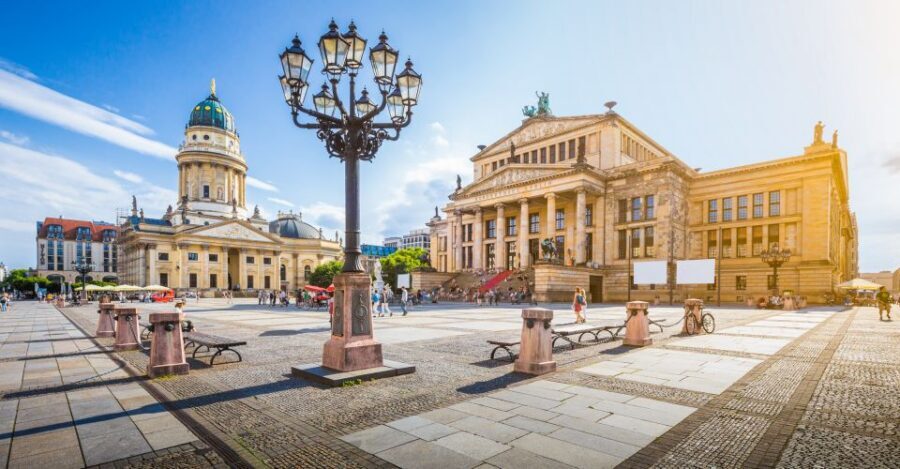
Then you reach Gendarmenmarkt, one of Berlin’s most beautiful squares, and the guide points out the three architectural masterpieces in a way that clicks quickly: the German Cathedral, the French Cathedral, and the Konzerthaus. If you’ve ever looked at a square like this and thought, okay… but what’s the point?—this is where the tour answers that.
Look closely as you’re there. The guide helps you understand how the buildings work together and why this square became a stage for culture and identity in Berlin. You’ll finish the stop with better visual instincts, not just a list of names.
Bebelplatz to Berlin Cathedral: when the past feels personal
The tour includes Bebelplatz, where books were burned. That fact alone can be chilling, but the tour also gives you the context so it’s not just a headline. By the time you’re standing there, you understand why this location matters to freedom of expression and what happens when societies decide certain ideas should never be allowed to live.
This is also a good moment to slow your brain down. The tour gives you a bit of free time at Bebelplatz, which helps you absorb the story and take a few photos without the pressure of constant talking. If you’re photographing, keep in mind the lighting can shift fast depending on the weather.
Next the walk moves toward the Berlin Cathedral, another major stop that benefits from the guide’s framing. You’ll connect the cathedral to the city’s Prussian-era evolution and the way Berlin’s power structures changed over time. It’s one of those places where the building is impressive, but the real payoff is learning what it represented.


Lustgarten, Museum Island, and the TV-tower view angle
From the cathedral area, you move toward Lustgarten, a site connected to Prussian history. This stop works best if you pay attention to what the guide says about shifting eras. Berlin’s story isn’t linear, and the walk makes that clear—Prussia, then later upheavals and realignment, all within reach of your feet.
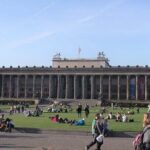
Then you arrive at Museum Island, where the tour leans into the idea of Berlin as a city of institutions and memory. You’ll see why this area became central to education and cultural identity, and you’ll get a clearer sense of what to prioritize later if you want to add museum time.
The tour also references views toward the TV Tower from the direction of the Nikolaiviertel and the Berlin City Palace area. You may not get a long viewpoint setup, but the guide’s cues help you notice where the best angles tend to be.
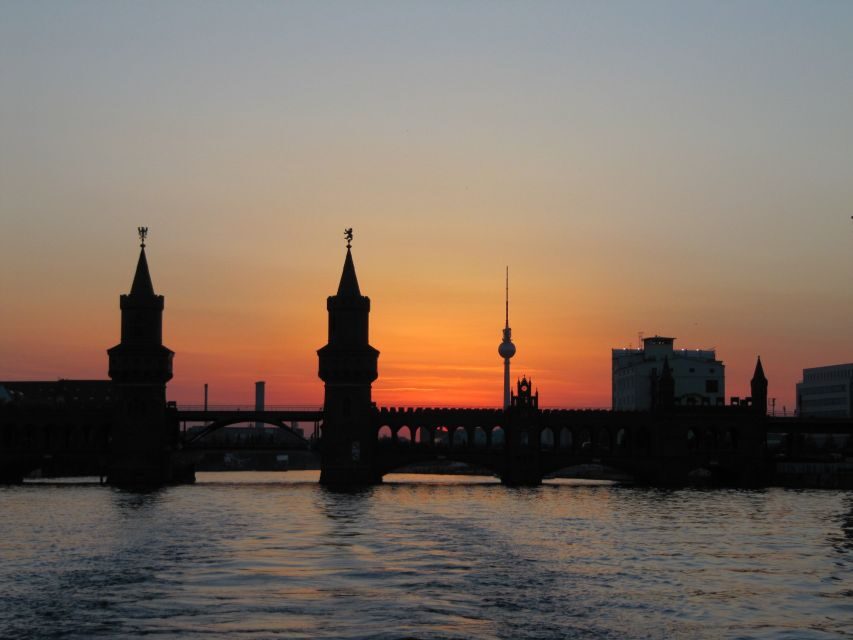
Finally, you end at Friedrichsbrücke, which is a convenient finish if you want to hop to public transit afterward and keep exploring on your own.
Price and pacing: is $82 worth a 2-hour walking tour?
At $82 per person for a 2-hour walking tour, the value depends on one thing: do you want context, or do you just want scenery?
If you want a fast overview with the landmarks placed into a story, this price can feel reasonable. You’re getting a certified local guide, small groups (or private options), live narration in English, Spanish, or German, and guided stops at major sites like Brandenburg Gate, Holocaust Memorial, Gendarmenmarkt, Bebelplatz, Berlin Cathedral, and Museum Island. There’s also a “skip the ticket line” perk included.
If you’re the kind of traveler who prefers to wander without structure or already knows Berlin deeply, you might feel the 2 hours could be too short to justify guided cost. But for most first-timers, it’s a good deal because it helps you build a working mental map. The real payoff is what you’ll notice later—when you read a plaque, see a memorial, or pick a museum.
Timing helps too. It runs daily at 10:00 AM and 2:00 PM, so it fits both an early day and a midday reset.
Who this tour suits (and who should consider another option)
This tour fits best if:
- You want a high-impact first taste of Berlin without spending your entire day in museums.
- You appreciate a guide who answers questions and keeps the pace under control.
- You’re okay with roughly 4 km of walking in two hours and want the route to stay focused.
It may be less ideal if:
- You need lots of time for each site (this walk is fast by design).
- You want long, indoor exploration at every stop. The tour is built for seeing and understanding outdoors and nearby.
Families and seniors can do it thanks to the moderate distance, and the tour notes it’s suitable for all ages and fitness levels. Also, it runs in all-weather conditions, so bring the right layer.
Should you book this Berlin walking tour?
I’d book it if you want to connect the dots quickly: Brandenburg Gate to political power, Holocaust Memorial to Cold War consequences, Bebelplatz to free-speech history, and Museum Island to Berlin’s cultural identity. The guide style matters here, and the best sign is consistency—guides like Max are praised for being attentive, answering questions, and giving photo time without turning the walk into a lecture.
Skip it if you already know Berlin well or if you’re searching for a slow, museum-style day. For a focused 2-hour route, this is a strong way to start—then you can decide what deserves longer time after you’ve got your bearings.
FAQ
How long is the Berlin walking tour?
It lasts 2 hours.
Where does the tour meet?
The meeting point is in front of the main entrance of Paul-Löbe-Haus, opposite the Federal Chancellery, at Konrad-Adenauer-Straße 1, 10557 Berlin.
What time does the tour start?
It runs daily at 10:00 AM and 2:00 PM.
How much walking is involved?
It’s about 4 km of walking.
What sights are included on the route?
The tour includes major stops such as the German Chancellery, Reichstag, Brandenburg Gate, Holocaust Memorial, Potsdamer Platz, Gendarmenmarkt, Bebelplatz, Lustgarten, Berlin Cathedral, and Museum Island, with the walk finishing at Friedrichsbrücke.
What languages are offered?
The live guide is available in English, Spanish, and German.
Is it wheelchair accessible?
Yes, the tour is listed as wheelchair accessible.
Is the group size private or small group?
Both are available: private tours or small groups.
Is the price fixed and are there hidden costs?
The price is listed as a transparent fixed price with no hidden costs.