REVIEW · BERLIN
Never Again Sachsenhausen Concentration Camp
Book on Viator →Operated by Rude Bastards Tour Berlin · Bookable on Viator
Sachsenhausen is heavy, and it’s worth your time. In about 4 hours, you’ll move from Potsdamer Platz to the Sachsenhausen memorial and leave with a clearer picture of how a Nazi camp worked, and how that past echoes into the present. You get an English experience that’s guided, but not rigid or lifeless, which matters when you’re dealing with sites like this.
Siobhán’s commentary really is the difference-maker, especially the way she uses a progressive, feminist lens to connect what happened then with what’s happening now. She keeps the tone respectful and human, while still giving the group enough breathing room to think, ask questions, and process what you’re seeing.
One possible drawback: the framing is explicitly political and doesn’t try to be neutral. If you strongly prefer a strictly clinical, non-confrontational approach, you may find this less your style.
In This Review
- Key things to know before you go
- Starting at Potsdamer Platz and getting to the memorial
- Visitors’ Center: models that explain control, not just facts
- The mix of guided context and autonomous walking
- The prisoners’ areas: seeing the camp as lived reality
- Infirmary stop: racism, eugenics, and control over bodies
- How the tour connects Sachsenhausen to today’s Germany
- Price and value: what $31.29 really buys you
- What to bring and how to prepare for a site like this
- Who this tour is best for
- Should you book Never Again Sachsenhausen Concentration Camp?
- FAQ
- What language is the tour offered in?
- How long does the experience last?
- Where do we meet, and does it return us there?
- Is the memorial admission ticket included?
- Is public transport included?
- Is this tour mostly guided or self-guided?
- How many people can be in the group?
- Can I cancel for a full refund?
- Are service animals allowed?
Key things to know before you go
- Max 15 people means you don’t get lost in a crowd, and questions actually have space.
- Admission ticket and memorial donation are included, so you’re not doing extra budgeting on-site.
- Visitors’ Center models show the camp’s design for control, not just its suffering after the fact.
- You get a self-guided segment inside the prisoners’ area, so you can set your own pace for reading and absorbing.
- The tour links past to present, including how far-right denial and sexism echo the structures the Nazis used.
- Former SS training camp context adds another layer when you learn what’s there now.
Starting at Potsdamer Platz and getting to the memorial
You meet at Potsdamer Platz 10, 10785 Berlin, and the tour ends back at the same starting point. The schedule is tight enough that the day stays efficient, but not so rushed that you’re sprinting between exhibits.
Because this is a small-group outing (up to 15 people), you’ll feel the rhythm of the site rather than bouncing through it like a checklist. Berlin is easy for transit, and the tour is near public transportation, but you’ll still want to plan your arrival a bit early so you don’t feel stressed before things get serious.
Also, you’ll get a mobile ticket, which is convenient if you don’t want to hunt for paper vouchers in your phone case.
You can also read our reviews of more tours and experiences in Berlin.



Visitors’ Center: models that explain control, not just facts
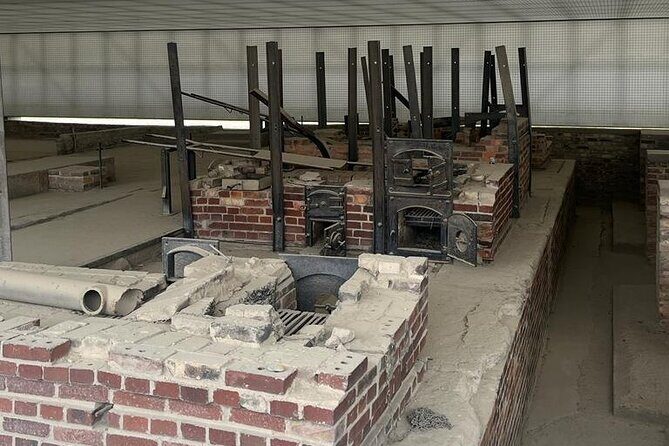
The first major stop is the Memorial and Museum Sachsenhausen visitors’ center. You’ll walk from nearby transit into the complex, then begin with models that show how the camp’s layout supported domination—structures built to control prisoners and reinforce a worldview of superiority.
This is where I think this tour earns its keep. A lot of memorial visits start with names and dates. Here, you also get the physical logic of the place: why certain spaces existed, how movement and confinement were shaped, and how the camp was engineered to break people down systematically.
Then the guide brings in an uncomfortable transformation. Sachsenhausen was once a Nazi SS training camp, and today the area relates to a Brandenburg police academy. That contrast matters. It forces you to face the fact that buildings don’t just disappear when history does. They get reused, rebranded, and folded into normal life—while the memory and meaning need protection.
The mix of guided context and autonomous walking
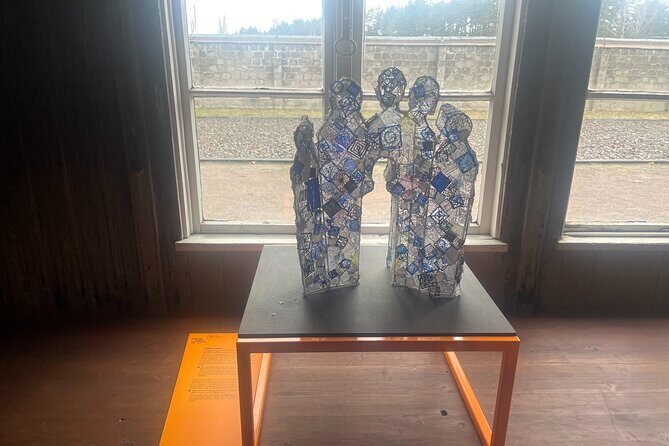
After the visitors’ center, you move into an autonomous exploration section. You’ll have time to look around the prisoners’ barracks and the camp kitchen on your own, after getting guidance that helps you understand what you’re seeing.
This balance is smart for two reasons. First, a fully scripted tour can make a memorial feel like a lecture. Second, going completely solo without context can make it harder to connect the layout to the harm. The approach here lets you slow down where you need to, especially in areas that feel emotionally overwhelming.
A practical note: this part still requires you to pay attention. There’s no point pretending you’re just doing a sightseeing stop. You’ll be reading, looking closely, and absorbing details in a space where the whole purpose is to confront what happened.
The prisoners’ areas: seeing the camp as lived reality
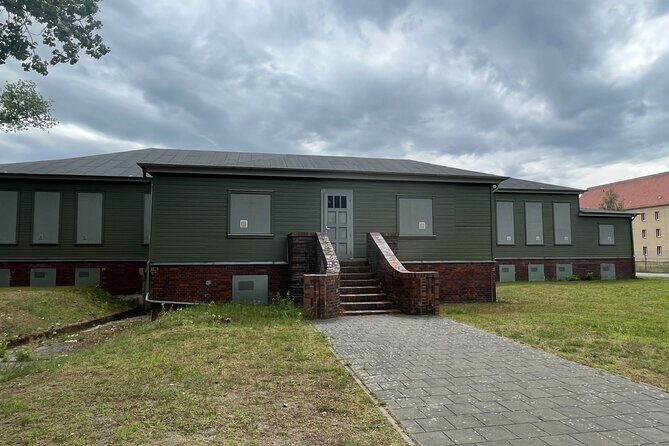
Walking through the prisoners’ areas is where the site stops being abstract. The barracks and camp kitchen give you a sense of daily existence under the camp’s rules, and they make the cruelty feel more immediate than it does when you’re only looking at photos.
At this stage, the tour also widens the lens beyond the past. You’ll connect what you’re seeing to present-day attacks associated with neo-Nazi Holocaust denial and to how far-right politics like the AfD has gained momentum in Germany. That connection can feel intense, but it’s also honest. The memorial isn’t just about what happened in 1940-something; it’s about how denial and extremist ideology keep trying to rewrite reality.
If you’re the type who likes closure—clean timelines and clear villains—this part may feel messy. Real life doesn’t wrap up neatly. The value here is learning how to recognize the patterns early.
Infirmary stop: racism, eugenics, and control over bodies
The infirmary is the most emotionally difficult part of this experience. You’ll learn how the Nazi system used people as instruments of ideology, including racism and the horrific logic behind eugenics.
What makes this segment especially chilling is the focus on control over women’s bodies and the way Nazi doctors treated prisoners as lab rats—not just for experiments, but for advancement and professional gain. That’s the kind of detail that changes how you understand the era. It’s not only about prisons and guards; it’s also about institutions, authority, and how professionals can become part of atrocity.
This is also where the guide’s tone matters. You’re not just collecting information. You’re being asked to hold the weight of it with care. The group feels it, and you’ll probably feel it too. That’s why a respectful, sensitive approach is more than a nice touch here—it’s essential.




How the tour connects Sachsenhausen to today’s Germany
One of the most praised aspects is how the tour frames the site through a progressive, feminist lens. That means the guide doesn’t treat the memorial like an isolated chapter. Instead, you get connections to present-day sexism, racist thinking, and propaganda tactics.
You’ll also hear about the idea that the past doesn’t stay buried. Denial campaigns, extremist politics, and attacks on truth are part of the modern world. The tour doesn’t just say atrocities happened. It asks you to notice how similar mechanisms—dehumanization, exclusion, and control—can show up again.
If you’re politically indifferent, that doesn’t automatically make this wrong for you. But you should know the framing is part of the design. It’s meant to help you leave with understanding, not just sadness.
Price and value: what $31.29 really buys you
At $31.29 per person, this is a strong value for a Berlin-area memorial outing that includes real teaching time, an English guide, and key admissions.
Here’s what you’re paying for, in practical terms:
- A 4-hour guided experience with time built in for looking on your own.
- Admission included (and a donation for the memorial is included too).
- Small-group size up to 15, so the experience doesn’t feel like you’re moving through a crowd.
- Mobile ticket for easy check-in.
What’s not included is also important. You’ll want to bring snacks and water since those aren’t provided. And you’ll need your own public transport plan because the tour does not include a ticket for the ABC zone.
Also, average booking happens about 17 days in advance, which is a clue that spots are not infinite. If you’re traveling in a busy season or with tight dates, booking earlier is the safer move.
What to bring and how to prepare for a site like this
This is a memorial visit, not casual museum time. Plan for emotional heaviness and for the physical reality of walking and standing.
Bring the basics:
- Comfortable shoes you can stand in for stretches.
- Water and a light snack so you don’t run on empty. (It’s the kind of day where low blood sugar can ruin your attention.)
- Your phone battery charged, since you’ll use a mobile ticket.
The experience calls for moderate physical fitness. That usually means you should be able to walk at a steady pace and handle some time outdoors and in indoor areas without needing constant breaks.
One more thing: if you know you get overwhelmed easily by violence and human suffering, plan a little extra quiet time afterward. The tour is designed to educate and connect the past to the present, not to numb you.
Who this tour is best for
This experience fits best if you want:
- An English guided memorial visit with real explanation, not just an audio file.
- A balance of guided context and time to explore on your own.
- A guide who connects the site to modern threats like denial and far-right ideology.
- A small-group format that stays attentive to the room.
It may be less ideal if you strongly prefer a strictly non-political approach or if you want a purely academic, scripted tour with no social framing.
If you’re visiting Berlin and want one memorial stop that feels purposeful rather than rushed, this is a solid choice.
Should you book Never Again Sachsenhausen Concentration Camp?
I’d book it if you want more than basic facts. The combination of museum models, context about the camp’s transformation, time for self-guided areas, and a guide who links the past to present-day far-right denial makes the experience feel focused and alive in your mind afterward.
I’d think twice only if you’re uncomfortable with a feminist and progressive lens, since that framing is part of how the tour communicates meaning. Also, since you’ll spend time on your own inside parts of the site, it helps if you’re willing to slow down and read what’s in front of you.
Bottom line: if you come ready for a serious, respectful memorial visit that takes the present seriously too, this tour is a worthwhile way to spend four hours in Berlin.
FAQ
What language is the tour offered in?
The tour is offered in English.
How long does the experience last?
It lasts about 4 hours.
Where do we meet, and does it return us there?
You start at Potsdamer Platz 10, 10785 Berlin, Germany, and the activity ends back at the meeting point.
Is the memorial admission ticket included?
Yes. Admission Ticket Included is part of the experience.
Is public transport included?
No. A public transport ticket for the ABC zone is not included.
Is this tour mostly guided or self-guided?
It’s guided, but you also get autonomous exploration of the prisoners’ barracks and the camp kitchen after the initial briefing.
How many people can be in the group?
The tour has a maximum of 15 travelers.
Can I cancel for a full refund?
Yes. You can cancel up to 24 hours in advance for a full refund.
Are service animals allowed?
Yes. Service animals are allowed.