REVIEW · BERLIN
Private Sachsenhausen Concentration Camp Memorial Tour
Book on Viator →Operated by Your Tour Berlin · Bookable on Viator
Sachsenhausen is a tough, honest lesson. This private, licensed-guide visit turns the memorial into a guided story of how the Nazi camp system formed and grew, not just a list of buildings. I also like that you focus on the first purpose-built camp in Nazi Germany, explained with real historical context.
I also like the pacing. You’re scheduled for about 6 hours, hitting the major sites while still keeping room for questions and a more personal rhythm. The one consideration: it’s heavy subject matter, and you should expect a lot of walking, so plan for a slower, sober day.
In This Review
- Key things you’ll experience on this Sachsenhausen private tour
- Why Sachsenhausen needs a guide (not just a ticket)
- Meeting at Pariser Platz and setting the tone for a long day
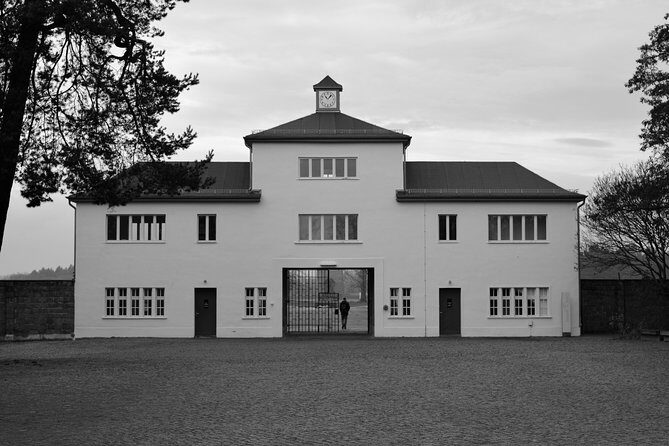
- Tower A: the camp’s entry point and why it matters
- Camp infirmary and the pathology building: when “medicine” turns into harm
- Station Z: understanding the purpose-built execution facility
- Exhibition in the former camp kitchen building
- SS and Gestapo prison spaces: the security system behind the violence
- Prisoner barrack blocks: the numbers, nationalities, and changes over time
- Private pacing with real room for questions
- English-language guidance that keeps difficult topics clear
- Price and value: $390.50 per group up to 5 people
- Transport and logistics: simple meeting point, not a full pickup service
- Who this Sachsenhausen private tour is best for
- Should you book this tour?
- FAQ
- Where does the tour start?
- Is this tour private, and how many people are in the group?
- How long is the Sachsenhausen memorial tour?
- Is the tour offered in English?
- What parts of Sachsenhausen will we visit?
- Is the memorial admission ticket included?
- Do I need to buy public transport tickets?
- Do I need to print tickets?
- Are service animals allowed?
Key things you’ll experience on this Sachsenhausen private tour
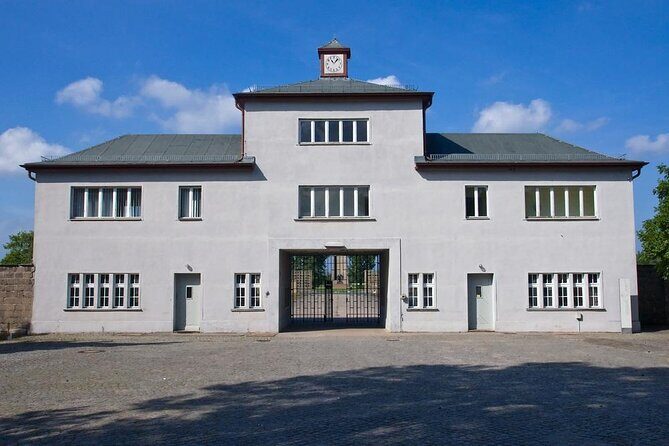
- Tower A and the main entrance layout: a clear start point for understanding how the camp worked.
- Station Z, the purpose-built execution facility: you see how planned killing was built into the system.
- SS and Gestapo prison areas: you connect the camp’s violence to the broader Nazi security machine.
- Infirmary and pathology building: a chilling look at how medical facilities were distorted.
- Prisoner barrack blocks and camp kitchen exhibition: you get the evolution of prisoner groups and the timeline behind it.
- A licensed guide from the memorial’s foundation: you’re not piecing it together from signs.
Why Sachsenhausen needs a guide (not just a ticket)
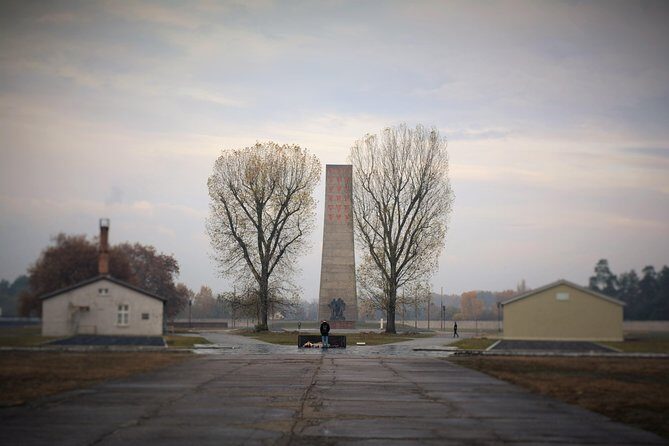
Sachsenhausen isn’t one of those places where you can skim, take a few photos, and move on. The value here is how a licensed guide helps you read the site. When you understand the logic behind the buildings—entry points, confinement areas, execution spaces, and the role of the SS and Gestapo—it stops being a set of ruins. It becomes a system with a beginning, a hard middle, and a devastating outcome.
A private setup makes a difference. With a smaller group (up to 5), the day feels less like a factory tour and more like a focused conversation. You can ask questions that come up as you look at specific locations, instead of saving them for the end when everyone is ready to bolt.
You can also read our reviews of more private tours in Berlin

Meeting at Pariser Platz and setting the tone for a long day
You start at Academy of Arts, Pariser Platz 4, 10117 Berlin. From there, you’ll spend your day moving between key areas of the memorial and museum complex, then end back at the same meeting point.
This matters more than it sounds. Good tours don’t just list stops—they help you mentally shift into the right mode. Beginning in central Berlin also keeps the start simple. You’re not hunting for obscure addresses while your brain is already working overtime.
The schedule is about 6 hours total, and the memorial admission is included for the key on-site portion (listed as about 3 hours). In practice, that means you’re not rushing the hardest parts to fit around ticket timing.
Tower A: the camp’s entry point and why it matters
Tower A (the main entrance) is the first big “read” of the day. This is where you start connecting the physical layout to the purpose. A good guide doesn’t treat it like a historical landmark. They use it like a diagram: where people entered, how control was asserted, and how the camp’s architecture supported constant surveillance and control.
What I like about starting here is that it gives you a framework before you hit the darkest locations. You’re not learning terms and procedures while standing in the middle of them. Instead, you build a mental map first.
Practical note: you’ll likely want sturdy shoes. Even when the ground looks manageable, walking between multiple memorial points adds up fast.
Camp infirmary and the pathology building: when “medicine” turns into harm
From the entrance, you move to the Camp Infirmary and Pathology Building. This stop is emotionally heavy, because it shows how the Nazi system could twist institutions that many people associate with care into tools of violence and exploitation.
You’ll learn how the camp developed over time—how the system expanded and how different categories of prisoners were processed. In a good tour, this isn’t handled as one-off cruelty. It’s connected to the larger functioning of the camp and the way policies hardened as the Nazi dictatorship strengthened.
If you’re coming to Sachsenhausen to understand how the machinery of terror worked, this is one of the clearest places to see that the violence wasn’t random. It was structured.
Station Z: understanding the purpose-built execution facility
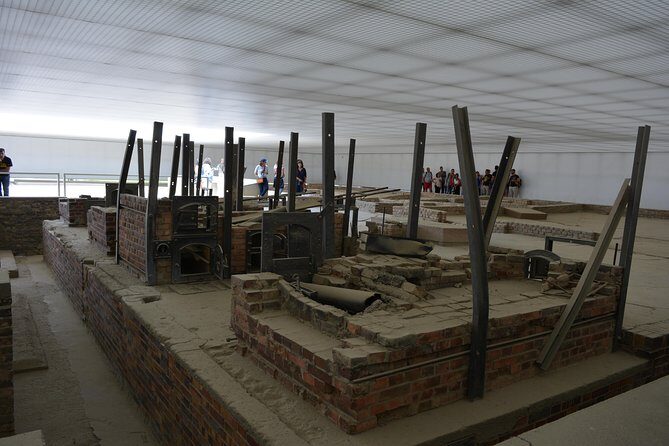
Next comes Station Z, described as the purpose-built execution facility. This is one of the stops where you’ll feel the site doing its job: forcing you to understand that mass murder wasn’t only carried out—it was planned, built, and made part of the camp’s operations.
I appreciate that the tour doesn’t treat this as a single horrifying photo opportunity. With a licensed guide, it’s explained as part of a broader system. You’re shown how the camp’s function fit into the Nazi regime’s goals, especially as the situation shifted in the 1930s and later under the pressure of WWII.
A consideration: you may need a moment to step back mentally at this stop. This isn’t a “power through it” site. It’s okay to take a slower pace.



Exhibition in the former camp kitchen building
The former camp kitchen building includes an exhibition. This is where the day starts adding layers. You’re still in the camp, still facing the reality of what happened, but you’re also learning how the camp functioned day-to-day and how Nazi power shaped daily life through institutions, rules, and deprivation.
This is also where the historical arc becomes clearer. You’ll be guided through how Sachsenhausen and the prisoner system came into being, how it developed, and how prisoner numbers and nationalities changed.
That last part is key. People often think of camps as a single uniform experience. Here, you’ll understand the shifts—how the camp’s prisoner population changed over time, which helps you see the regime’s evolving priorities rather than viewing the camp as a fixed snapshot.
SS and Gestapo prison spaces: the security system behind the violence
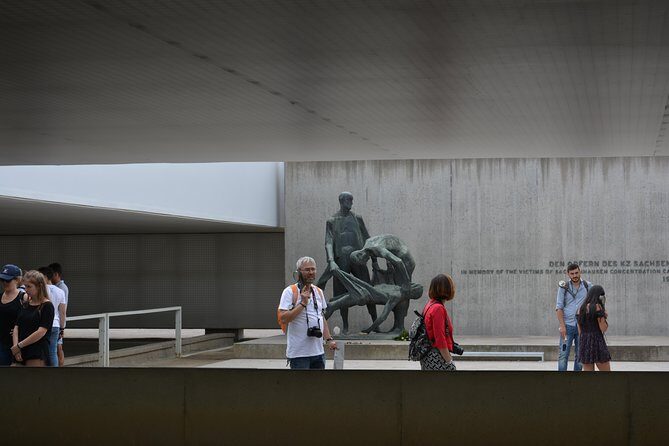
You’ll visit the SS and Gestapo Prison. This stop anchors the camp in the Nazi security structure. It’s not just about the camp’s internal brutality. It’s about how the SS and Gestapo fit into the larger plan of control, repression, and punishment.
When this section is done well, it answers a question people often carry into Sachsenhausen: How did this become possible across so many years and locations? Connecting the camp to the broader Nazi security apparatus helps you understand the camp as one part of a wider system of terror.
From a touring perspective, this stop helps your understanding “click.” After seeing entry points, confinement, and execution areas, you now see the enforcement engine behind it.
Prisoner barrack blocks: the numbers, nationalities, and changes over time
The tour finishes its site walkthrough at the former prisoner barrack blocks. These spaces can be hard to stand in, because they make the scale feel real. You see where people lived under confinement, even when the physical features are gone or altered.
This is also where the guide ties together what you’ve seen with the history arc. The tour is designed so that by the end you understand not only what Sachsenhausen was, but how it came into being and how it developed. You’ll learn how prisoner types, numbers, and nationalities shifted over time, with the explanation linked to the strengthening Nazi dictatorship in the 1930s and later the impact of WWII.
If you’re traveling with teens or anyone who wants structure, this ending can land well. It’s the point where the visit turns from “places” into “pattern.”
Private pacing with real room for questions
This is a private tour, meaning your group is the only one participating. That matters because difficult questions don’t always pop up on schedule. Sometimes they arrive after a stop, or when you’re walking between locations and the meaning catches up with you.
In the same spirit, the guide can shape the emphasis based on what your group cares about—history timeline, the SS and Gestapo role, or how the camp changed as WWII progressed.
If you’re curious about the guide style, examples from past groups include Aaron, praised for organizing a timeline of politics at the time and explaining how the system evolved. Other past guides mentioned include Paul, noted for going beyond basics and helping people connect the camp to wider wartime context, and Julian, praised for clear, detailed instruction even for very hard topics.
You won’t know who you’ll get in advance from the info here, but the common thread is a guide who can explain difficult material in a way that doesn’t feel like a lecture.
English-language guidance that keeps difficult topics clear
The tour is offered in English, and the guide is licensed and trained by the camp’s memorial foundation. That combination is important. English-language interpretation can vary widely at memorials. Here, the training element reduces the chances you’ll get a tour that sticks only to surface details.
What you want from a tour here is not just “what happened,” but how to understand it. A good licensed guide helps you connect the physical features to the historical story—how policies formed, how the camp system was built, and how it changed as the Nazi regime tightened its control.
You’ll also get time to absorb the grounds. Past groups appreciated having space to visit some areas on their own instead of rushing through everything with the group.
Price and value: $390.50 per group up to 5 people
The price is $390.50 per group (up to 5) for about 6 hours. That sounds steep if you compare it to a standard public group tour. But think in terms of value per person and what you’re buying.
You’re paying for:
- a licensed guide tied to the memorial foundation
- a private group setup (not competing with strangers for attention)
- time focused on key camp features rather than just a quick overview
If you’re traveling solo, the cost per person can feel high. If you’re traveling as a couple or a small family, it becomes much more reasonable—especially compared to the time and stress you’d face trying to plan a meaningful self-guided visit.
Also, this is a place where a wrong turn can waste time. Hiring a guide is one of the best uses of your money in Berlin when your goal is understanding, not just checking a box.
Transport and logistics: simple meeting point, not a full pickup service
Public transport tickets and private transportation are not included. The tour starts at a clear landmark in central Berlin, and it’s marked as near public transportation, so you can plan your route without needing a car.
Because the tour ends back at the meeting point, you can keep your day centered without worrying about complicated drop-offs.
A practical tip: if you’re organizing your own transport to the memorial, give yourself extra time. A heavy day is not the time to run on stress.
Who this Sachsenhausen private tour is best for
This is a strong choice if you:
- want a guided, structured visit that explains how the camp system formed and evolved
- prefer a smaller group and more chances to ask questions
- care about connecting the site to the broader political timeline of Nazi Germany and WWII
It may feel like too much if you’re looking for a light, casual activity. This is a difficult historical visit. Go in with the right expectations: respect, patience, and time to process.
Should you book this tour?
If your goal is understanding Sachsenhausen as a working system—entry and control, confinement, execution, and the evolution of prisoner groups—book this. The private size and the fact that the guide is licensed and trained by the memorial’s foundation make it a high-value way to do a sensitive site right.
I’d skip it only if you want a self-paced overview with no guide, or if your group is not ready for the emotional weight and walking involved. For most people coming from Berlin with a serious curiosity, this is the kind of tour that turns a difficult place into a clear lesson you can actually carry home.
FAQ
Where does the tour start?
The tour starts at Academy of Arts, Pariser Platz 4, 10117 Berlin, Germany.
Is this tour private, and how many people are in the group?
Yes, it’s private. Only your group participates, with a group size of up to 5.
How long is the Sachsenhausen memorial tour?
It runs for approximately 6 hours.
Is the tour offered in English?
Yes. The tour is offered in English.
What parts of Sachsenhausen will we visit?
The tour focuses on key sites including Tower A (main entrance), the camp infirmary and pathology building, Station Z (the purpose-built execution facility), the exhibition in the former camp kitchen building, the SS and Gestapo Prison, and former prisoner barrack blocks.
Is the memorial admission ticket included?
Yes. The tour includes admission ticket time listed as about 3 hours.
Do I need to buy public transport tickets?
Public transport tickets are not included, so you’ll need to arrange them yourself.
Do I need to print tickets?
No. The tour includes a mobile ticket.
Are service animals allowed?
Yes. Service animals are allowed.