REVIEW · BERLIN
The Cold War and The Wall – Private Tour with Jacob
Book on Viator →Operated by Nadav Jacobs Berlin experience · Bookable on Viator
Berlin can feel like two cities at once. This tour is built to explain why. You’ll walk past Cold War-era landmarks and see how East and West Berlin shaped daily life for decades, not just photos and headlines, with a guide named Jacob from the Nadav Jacobs Berlin experience.
I love that it’s a private, small-group format (up to 6), so you can ask real questions as you go. I also love the guided context at the right stops: you’re not just looking at famous buildings, you’re learning what they meant—especially around boundaries, checkpoints, and attempted escapes. One possible drawback: you cover a lot of sites in about 2 hours 45 minutes, so if you want extra time in one place—like the Trabi Museum—you may wish the day had more hours.
In This Review
- Key things you’ll notice on this Cold War Berlin walk
- Cold War Berlin on foot: what you’re really buying for $310
- Meeting point, pickup, and the kind of pace to expect
- Siegessaule (Victory Column) and the 1953 revolution story
- Brandenburg Gate: the Wall’s erection and fall in one famous frame
- Potsdamer Platz: the city divide you can still read
- Aviation Ministery of Berlin and the idea of escape
- Trabi Museum: East German life you can touch with your eyes
- Checkpoint Charlie: the best-known crossroad, explained
- Friedrichstraße and the Check points Street angle
- Unter Den Linden and the East Germany main avenue leading to the border
- Palace of Tears: the main checkpoint for citizens and communist control
- Alexanderplatz: TV tower and the space race connection
- What’s included (and what it means for your trip day)
- Value vs. other ways to see these sights
- Who this tour fits best
- Should you book Jacob’s Cold War and The Wall private tour?
- FAQ
- How long is the Cold War and The Wall private tour with Jacob?
- What’s the group size?
- Is pickup included?
- Do I need admission tickets for the main stops?
- Will I need a public transport ticket?
- Where does the tour end?
Key things you’ll notice on this Cold War Berlin walk
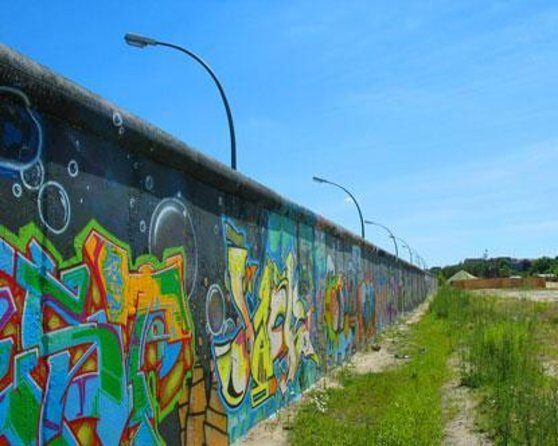
- Tons of checkpoint context: you’ll connect several key control points into one clear story of separation.
- Victory Column to Alexanderplatz: you’ll move from symbolic power to space-race modernity without losing the thread.
- A private pace with real Q&A: you can get help planning the rest of your Berlin days.
- A3 picture folder plus subway map: handy take-home tools for remembering what you saw.
- Mostly admission-free stops: you spend time looking, not paying site fees.
- Weather-ready route: it operates in all weather, so bring an umbrella if skies are grey.
Cold War Berlin on foot: what you’re really buying for $310
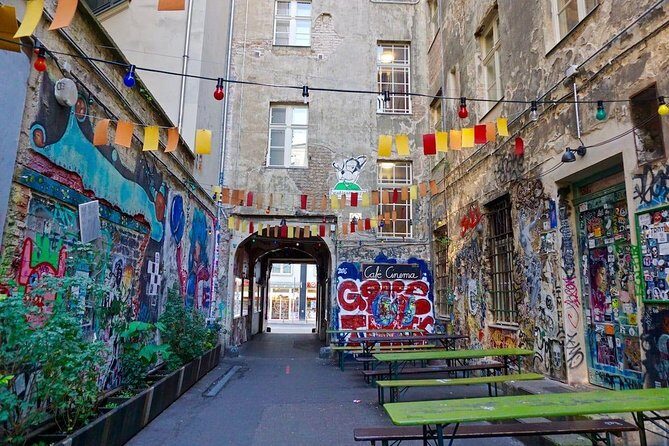
This is a private walking tour focused on Cold War sights, plus the meaning behind them. You pay $310 per group (up to 6) for about 2 hours 45 minutes, so the value depends on how many people you bring. If you fill all six spots, it works out to roughly $52 per person. If it’s just two of you, it’s more like $155 per person—but you still get that private format.
What you’re really buying is the guide doing the heavy lifting: turning scattered landmarks into a connected story about a city split for 40 years. And the reviews point to the same thing—your guide Jacob keeps it clear and practical, and he’ll also suggest options for what to do next on your own.
Another detail that matters for your day: pickups are offered from your hotel or B&B, train station, or even the airport in Berlin. That reduces stress on arrival and helps if you’re on a schedule.
You can also read our reviews of more private tours in Berlin


Meeting point, pickup, and the kind of pace to expect
The tour starts in Berlin and finishes at Alexanderplatz (10178 Berlin). You’ll likely get going with a pickup if you asked for it; otherwise, you meet at the agreed start point in Berlin.
The route is designed for walking, and most listed viewpoints are free in terms of admission tickets. That keeps you from wasting time on ticket lines at major landmarks. Still, plan for real walking time. In 2h45, you’ll see a full sampler of Cold War Berlin: symbolic monuments, divided streets, border-control sites, and a dedicated car museum.
Also, this tour runs in all weather. Berlin weather can change fast, so pack an umbrella just in case. The tour is built to keep going.
Siegessaule (Victory Column) and the 1953 revolution story
You begin at Siegessaule (Victory Column), looking toward Straße des 17. JuniStraße. This first stop sets the tone: it connects the monument landscape to the political pressures of East Germany and the 1953 revolution.
Here’s why this matters. It’s easy to think of the Cold War as one big event: the Wall goes up, then it comes down. But the split didn’t arrive fully formed. It built through unrest, government control, and crackdowns. Starting at a major civic monument helps you understand the stakes before you step into the places that enforced separation.
The timing is short—about 15 minutes—but it’s enough to get your bearings and learn what to watch for as you move east-west through the city.
Brandenburg Gate: the Wall’s erection and fall in one famous frame
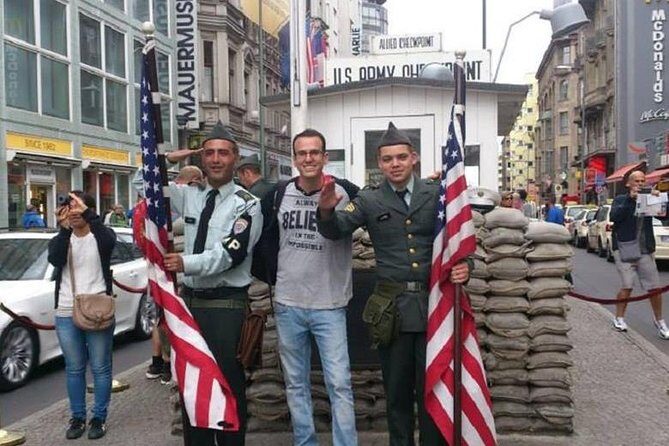
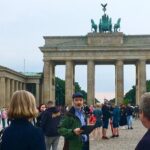
Next up: Brandenburg Gate. This is one of those landmarks you’ve probably seen in photos your whole life. On this tour, you don’t just admire the stonework. You learn how the gate became tied to the erection and fall of the Berlin Wall—the shift from symbolic division to symbolic change.
Why it works early: it gives you a reference point. Later stops cover smaller, more specific control areas—streets, crossings, border facilities. When you return in your mind to Brandenburg Gate, you’ll better understand the big-picture meaning behind all the practical checkpoints you’ll see soon.
The stop is about 10 minutes, and admission is free. It’s a quick hit, not a long museum moment, which keeps the tour moving.
Potsdamer Platz: the city divide you can still read
At Potsdamer Platz, the story turns visual. This area became a focal point during the Cold War, and the tour frames it as a place to understand the city divide and what came after—like the mention of the post-cold war freedom concert.
This is where you’ll likely feel the contrast. Potsdamer Platz today is busy and modern, but the Cold War logic still shows up in how people describe the space and how the city grew around lines it once enforced.
The stop is about 15 minutes. I like that the guide doesn’t stretch it too long, because the next sections get much more specific about how the divide operated at street level.


Aviation Ministery of Berlin and the idea of escape
You then head to the Aviation Ministry of Berlin, tied to the story of Max Linger and Heinz Holzapfel and an escape attempt connected to a communist utopia. Even if you’ve never heard these names, the tour uses them to bring home one key theme: the system wasn’t just watched, it was challenged.
Why this stop earns time: it connects ideology to real human risk. You’re not only seeing architecture. You’re hearing how people tried to break through boundaries—sometimes with careful plans, sometimes with desperation.
This stop is short—about 10 minutes—but it sets up the later checkpoint and control-center material by introducing the tension between official power and the urge to leave.
Trabi Museum: East German life you can touch with your eyes
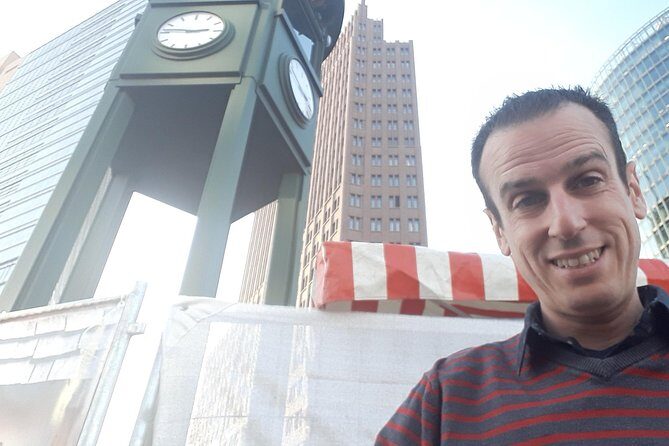
At the Trabi Museum, you get around 30 minutes. The focus is the East German car, the Trabi (Trabant). This is a smart way to slow down. After monuments and symbolic sites, you switch to an everyday object that people associate with life behind the Iron Curtain.
This isn’t a history lecture. It’s a chance to see how everyday technology and limited options shaped daily routines and attitudes. Cars are rarely political on the surface, but when a society restricts choices and controls movement, even something as normal as a vehicle becomes part of the story.
If you’re the kind of person who loves everyday details—how people lived, worked, and traveled—this stop will be a highlight. A consideration: 30 minutes goes fast. If you want to study every model or read every label, you may want to plan a return visit on your own later.
Checkpoint Charlie: the best-known crossroad, explained
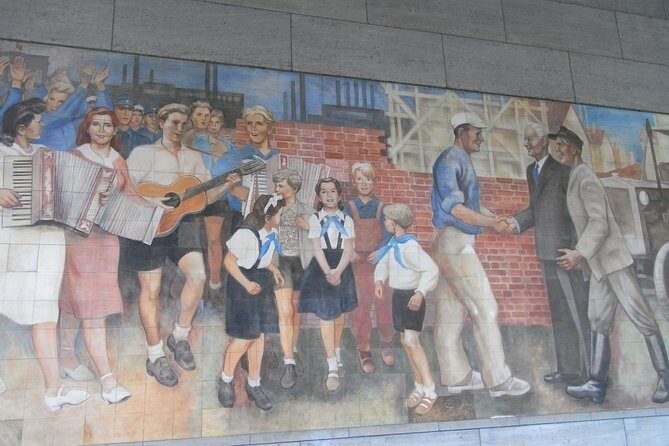
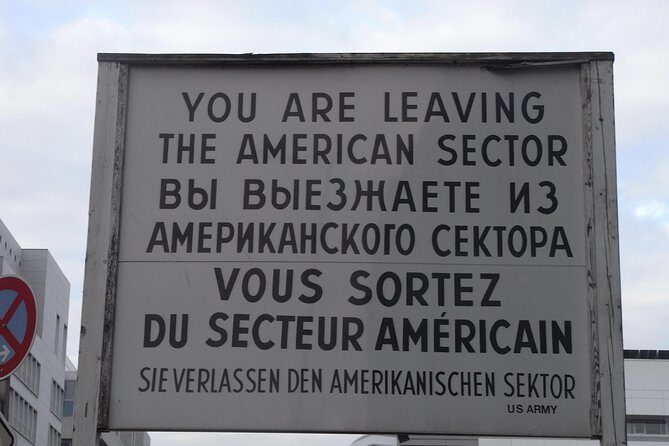
Next comes Checkpoint Charlie, described as the main crossroad between East and West. This is the Cold War stop that people usually know by name, but the tour makes it more useful by linking it to the broader history of how the border worked.
The time here is about 10 minutes. It’s enough for you to understand what made this crossing central, without turning the tour into a long photo line.
One reason I like including Checkpoint Charlie in this particular order: it’s not the first border stop you hear about. You’ve already gotten context at civic landmarks and in the story of unrest and attempts to flee. So you’ll be thinking about access, barriers, and control, not just taking in a famous sign.
Friedrichstraße and the Check points Street angle
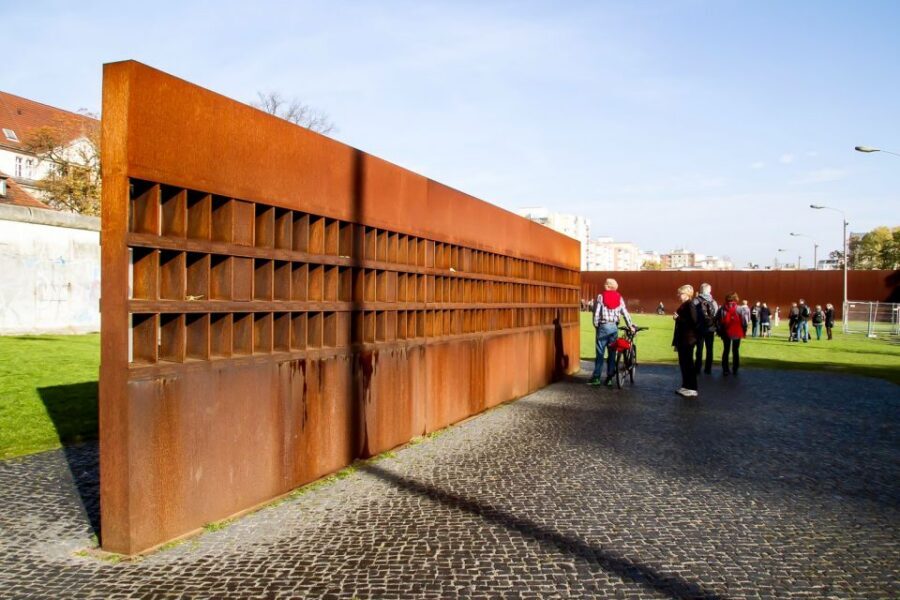
Then you go to Friedrichstraße, focusing on the Check points Street theme. This is where the Cold War feels less like a headline and more like a system made of streets, paperwork, and controlled movement.
The stop is about 20 minutes, so you should have time to ask specific questions and get the guide to connect what you’re seeing to how checkpoints affected real people. The best part of this segment is how it fills in the space between the famous border imagery and the daily reality of getting from one side to the other.
Unter Den Linden and the East Germany main avenue leading to the border
You’ll then walk Unter Den Linden, described as an East German main avenue leading to the border. This stop turns the “border story” into a geography lesson: the route mattered. Control wasn’t only at the crossing point. It was also about which streets funneled people toward the gates.
About 20 minutes here gives you time to look beyond the obvious landmark photos. You start thinking in lines and routes—where people were expected to go, where they were monitored, and how cities were arranged to guide movement.
If you’re trying to understand why Berlin’s geography feels so layered, this is a big step. The city doesn’t only remember the Wall; it still reflects how the Wall shaped movement patterns.
Palace of Tears: the main checkpoint for citizens and communist control
One of the most memorable parts of the route is the Palace of Tears, described as the main checkpoint for citizens under communist control. You spend about 20 minutes here.
This stop is emotionally heavy without being vague. The tour frames it as a checkpoint where separation wasn’t abstract—it was structured into the process of leaving or crossing. The name itself hints at what happened there, but the guide’s context helps you understand why this wasn’t just a location. It was an institution of control.
Practical tip: if you’re photographing, move thoughtfully. The value here is in what you’re hearing while you look.
Alexanderplatz: TV tower and the space race connection
You finish at Alexanderplatz, with the TV tower and the space race angle. The tour gives you about 10 minutes for this final stretch.
This ending choice is clever. After so many stops about constraints and barriers, the tour lands on a symbol of modern ambition and technical confidence. It doesn’t erase the Cold War. It shows how both sides used big projects to shape identity and future-thinking.
Also, Alexanderplatz is a strong end point in practical terms. It’s easy to continue exploring from there, catch public transport, or regroup after the walk.
What’s included (and what it means for your trip day)
You get a private guide for your group, plus pickup from Berlin hotel/B&B/train station/airport locations if you request it. You also receive an A3 guidance picture folder and a big map of the subway station. That may sound like paper, but it’s useful. When you’re in Berlin, it’s easy to remember what you saw and forget how to connect it to where you want to go next. These materials help you keep the story straight while you plan the rest of your time.
The guide is also available for questions or help with your Berlin visit. In the reviews, this is where the guide’s impact shows up: Jacob doesn’t just walk you through scenes. He helps you figure out what to do after the tour, too.
Admission is free at the listed stops, so your main “spend” is your time and your attention, not extra entry fees.
Value vs. other ways to see these sights
If you’re comparing this to reading guidebooks and doing it on your own, the difference is interpretation. Berlin’s Cold War sites are scattered. Even when you can find them on a map, they don’t automatically connect into a meaningful chain.
For $310 per group, you’re essentially paying for:
- a guided narrative that ties each location to a clear theme
- a private format that lets you ask questions as you walk
- free admission at the included major stops
- take-home tools (picture folder and subway map)
The only real value-tilting downside is time. Because the tour runs about 2h45, you don’t get long stays at every location. It’s a curated sprint through the core story, not a slow research day.
Who this tour fits best
This tour is ideal if you:
- are making Berlin your first serious stop for Cold War and Berlin Wall history
- want a private guide to translate symbols into meaning
- like a walking format that helps you build a mental map quickly
- want to connect famous landmarks to checkpoint reality, not just monuments
It also works well for couples, small groups of friends, and anyone who likes getting planning advice after the tour. If you’re a museum deep-dive person, you might still love it, then add extra time on your own around the topics that hit you hardest—especially the car and daily-life angle at the Trabi Museum.
Should you book Jacob’s Cold War and The Wall private tour?
I’d book it if you want the story of divided Berlin told in a way you can remember while you’re still walking through the city. The private format matters here. A group of up to 6 means less waiting and more question time, and the reviews highlight that Jacob brings both clarity and insight, plus options for what to do next.
Skip it (or add your own research) if you’re looking for a long, slow pace or you already know the checkpoint history in detail and just want photos. The tour is designed to cover the essentials in under three hours, and it’s best when you’re excited to learn how the pieces fit.
FAQ
How long is the Cold War and The Wall private tour with Jacob?
It’s approximately 2 hours 45 minutes.
What’s the group size?
It’s a private tour with your group only, up to 6 people.
Is pickup included?
Pickup is offered from your hotel, B&B, train station, or airport in Berlin.
Do I need admission tickets for the main stops?
Admission ticket fees are listed as free for the stops included in the route.
Will I need a public transport ticket?
Public transport ticket fees are around 3–11 euro depending on the ticket length (about 2 hours or a day ticket).
Where does the tour end?
The tour ends at Alexanderplatz (10178 Berlin).