REVIEW · BERLIN
Warnemuende Shore Excursion: Berlin Private Sightseeing Tour from Rostock
Book on Viator →Operated by A Friend in Berlin UG · Bookable on Viator
Berlin in one long day works.
This private sightseeing tour gives you a full sweep of Berlin’s biggest sights with a real guide to connect the dots. I also like how the plan hits both showpiece landmarks (hello, Brandenburg Gate) and hard history stops (Topography of Terror and the Holocaust Memorial) without making you figure things out on your own. The one drawback to plan for is timing: it’s a 12-hour day, so you’ll be in transit and on your feet more than you might expect.
The ride out of Rostock/Warnemünde is part of the fun. You’ll head through Mecklenburg-Vorpommern, the Land of 1000 Lakes, and the route can look especially bright with yellow rape fields in May and June. Then Berlin goes into fast, organized mode with short, efficient stops and a few moments to get oriented before the next landmark.
Because it’s up to 6 people in a private vehicle, it can feel like you’re tailoring the pace to your group. Many major stops are set up as ticket-free viewing (based on the itinerary notes), and you get a mobile ticket plus a driver for port pickup and drop-off. Still, if you want Reichstag roof time, that’s not a last-minute add-on—it needs advance reservation and ID details.
In This Review
- Key highlights worth planning for
- From Warnemünde to Berlin: the 2-hour drive through Mecklenburg-Vorpommern
- Charlottenburg Palace and Kurfürstendamm: Berlin’s royal face meets West-Berlin life
- KaDeWe and department-store Berlin: where your break can become a shopping stop
- Topography of Terror: the history stop that gives weight to the whole route
- Checkpoint Charlie and the Holocaust Memorial: two short stops with huge gravity
- Potsdamer Platz and Gendarmenmarkt: modern Berlin energy with a classical frame
- Reichstag Building and the roof reservation: a standout if you plan ahead
- Brandenburg Gate and Unter den Linden to Alexanderplatz: finishing with the postcard lines
- Price and logistics: does $1,967.92 per group feel worth it?
- What the private guide experience should feel like
- Lunch at the top of the Reichstag: a nice option with an important catch
- Who this tour is best for (and who should rethink it)
- Should you book this Berlin day trip from Rostock?
- FAQ
- How long is the Berlin tour?
- Is pickup and drop-off included from the port area?
- Is this a private tour?
- How many people are in a group?
- What kind of transport is used?
- Are there tickets included for the main sights?
- Can I go up to the Reichstag roof?
- Is mobile ticketing provided?
- Is there a dress code?
Key highlights worth planning for
- Port pickup and drop-off from Warnemünde/Rostock, so you don’t waste your dock time finding transport
- Charlottenburg Palace and KaDeWe for a quick hit of imperial Berlin and modern West-Berlin shopping culture
- Topography of Terror + Holocaust Memorial for two of the most important remembrance stops in the city
- Checkpoint Charlie as a short, photo-friendly marker of Cold War geography
- Reichstag roof option if you reserve ahead and bring the required ID details
- Unter den Linden to Alexanderplatz for a clean “old center to modern skyline” ending
From Warnemünde to Berlin: the 2-hour drive through Mecklenburg-Vorpommern
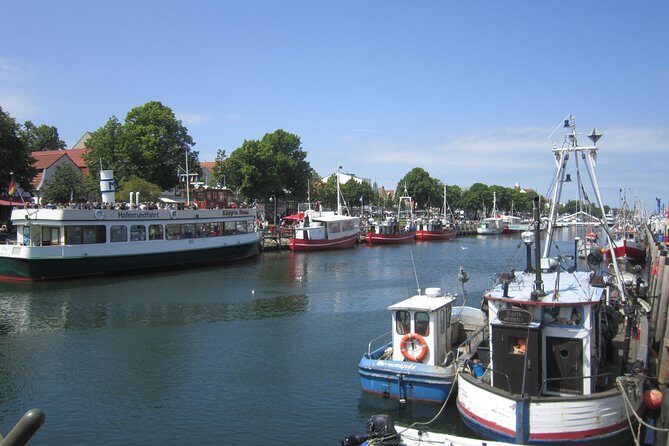
The day starts with the key convenience: pickup is offered from the port area, and you’re back at the ship or departure point at the end. That matters a lot on a shore excursion, because Berlin is far enough away that “finding your way” eats your hours fast.
On the transfer, you’ll pass through the Land of 1000 Lakes region. From the road you’ll see multiple lakes and stretches of countryside, and in the right season (May/June) the fields of rape can be a striking yellow that makes the whole route feel less like a chore and more like the warm-up before the capital.
You’ll also learn how the tour treats pacing. The plan assumes you’ll watch, ride, and then move briskly between stops—so build in a calm mindset. If you’re the type who needs long museum-level time at every site, this format will feel quick. If you want a guided hit list with smart context, it’s a good match.
You can also read our reviews of more private tours in Berlin


Charlottenburg Palace and Kurfürstendamm: Berlin’s royal face meets West-Berlin life
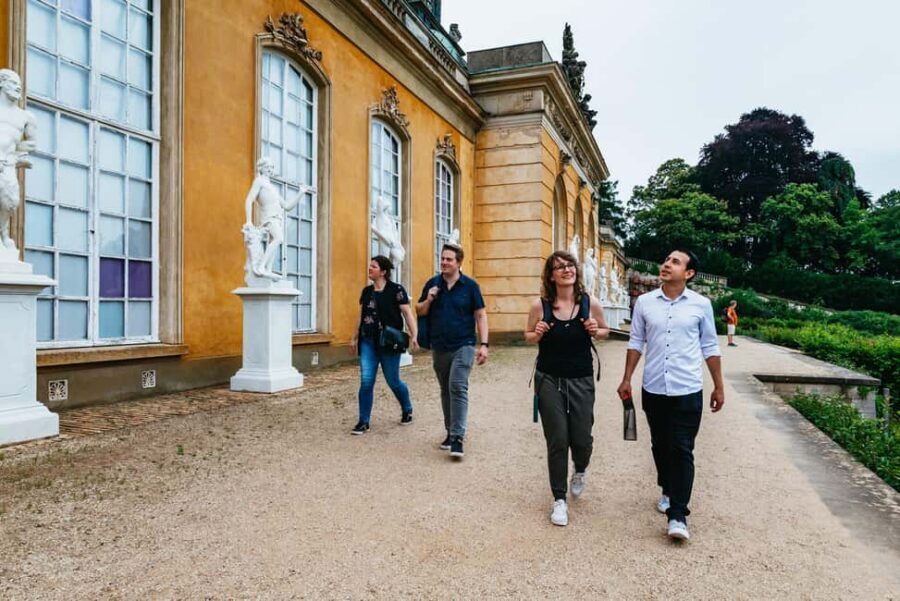
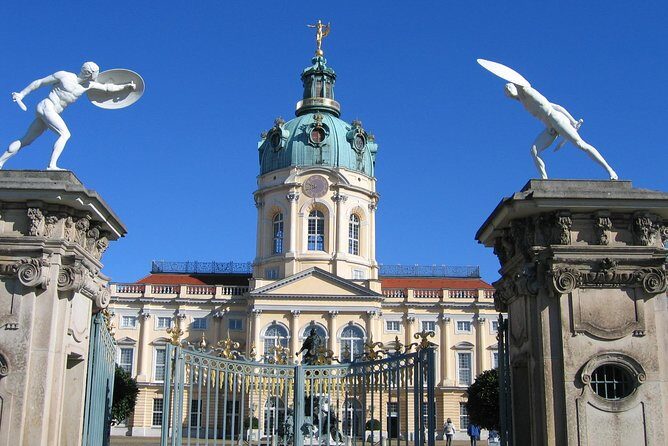
Once you’re in Berlin, you start with Charlottenburg Palace, which is the most beautiful Hohenzollern palace built in this style, named for Sophie Charlotte. This stop is short, but it’s a smart opener. You get a quick sense of the city’s power and aesthetics before you’re thrown into 20th-century history.
Then you roll into the Kurfürstendamm area. This is Berlin’s big boulevard and used to be the center of night-life in the roaring 1920s and a main shopping street in West Berlin. Today it’s still very much a day-to-night corridor: cafes, dining, shopping, and theater energy. Even if you don’t plan to spend much time here, it helps you understand why Berlin can feel both grand and everyday at the same time.
For me, the value of this early section is that your guide can set the timeline early. Palaces and boulevards don’t just look nice; they explain the city’s “before” so the “after” makes more sense.
KaDeWe and department-store Berlin: where your break can become a shopping stop
One of the more enjoyable flexible parts of the day is the possible longer stop at Kaufhaus des Westens (KaDeWe). It’s described as the largest department store in continental Europe, and it’s also treated as an easy win if your group wants more than just photos.
Since the itinerary frames this as a “choose a couple of longer stops” type of moment, you can use it strategically. If your feet are already tired from the morning, this is a place to slow down without abandoning the tour. If you love food halls and people-watching, it’s a great pause during the middle of a long day.
The only thing to keep in mind: KaDeWe can turn into a time sink if you go in with a shopping mission. If you have a strict dinner plan later, set a mental clock for yourself.
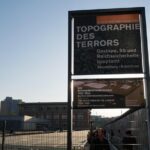
Topography of Terror: the history stop that gives weight to the whole route
Next up is Topography of Terror, a memorial and documentation center at the former SS and Gestapo headquarters. The itinerary also notes that you can see an original stretch of the Berlin Wall here.
This is the kind of stop where a guide earns their fee. Without context, the location can feel like a set of plaques and walls. With the right explanation, it becomes a map of how power worked and how terror was organized—right where it happened. The short time slot here is deliberate: it gives you a foothold without forcing you into a full research session.
One practical note: this isn’t a stop you can skim and forget. If the subject matter hits you hard, give yourself a minute after you walk out to reset before heading to lighter photo stops.
Checkpoint Charlie and the Holocaust Memorial: two short stops with huge gravity
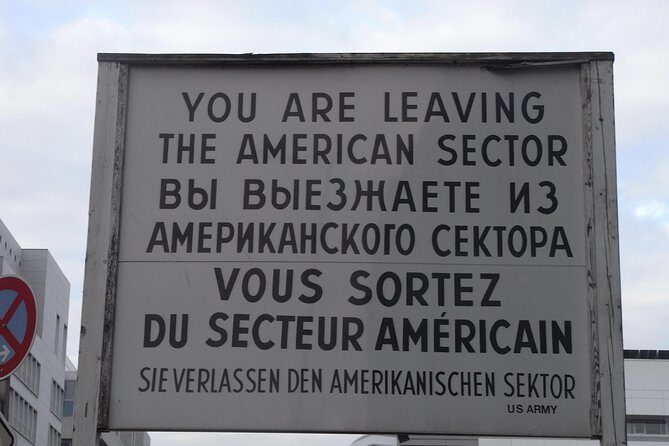
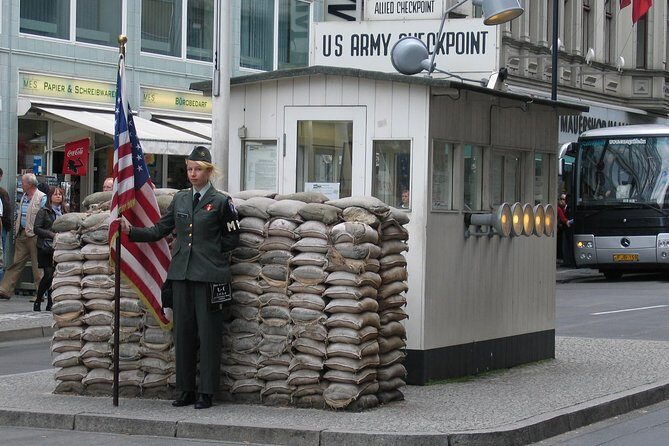
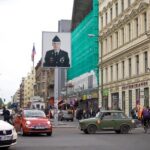
Checkpoint Charlie is next, and it’s brief by design: you’ll see the replica guard house and the sign indicating the American sector boundary. It’s one of those places people think they already know from movies and photos, but the guide helps bring it back to geography—where the split actually sat and how movement was controlled.
Then you’re at the Memorial to the Murdered Jews of Europe (the Holocaust Memorial) by Peter Eisenmann. It’s only a 10-minute stop on the plan, placed near the Brandenburg Gate and the US Embassy. Even in that short time, it’s likely to be one of the most emotionally intense moments of your day.
If you’re going with family or a mixed-age group, this is where you’ll appreciate a guide’s tone. You don’t want a lecture vibe, but you do want respectful clarity. This stop can be heavy; the tour’s structure keeps it from ballooning into a full-day immersion while still honoring its importance.
You can also read our reviews of more tours and experiences in Berlin
Potsdamer Platz and Gendarmenmarkt: modern Berlin energy with a classical frame
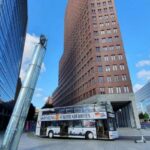
After the intensity of the history stops, the itinerary gives you a change of pace with Potsdamer Platz. The area used to divide East and West. The itinerary describes how it was once a waste land, and how today it’s back as a center with highrises, hotels, movie theaters, and shops.
This is useful because it gives you a visual sense of Berlin’s rebuilding. You’re not just looking at old walls or old documents. You’re seeing what came later and how quickly a city can rewire itself after division.
Then there’s Gendarmenmarkt, known for the domes and the Schinkel theater building at the center. It’s a classic-looking square that also helps you “breathe” between bigger monuments. Even if you only pause briefly, it’s one of those places where Berlin looks like Berlin—symmetric, photogenic, and quietly dramatic.
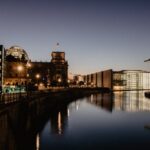
Reichstag Building and the roof reservation: a standout if you plan ahead
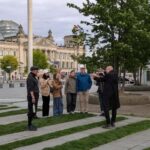
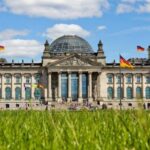
The Reichstag Building stop is one of the day’s anchors. The itinerary notes the building’s political story: Hitler rose to power, then a fire destroyed the building, and it wasn’t used during the Third Reich. After 1990, it became the seat of the German parliament.
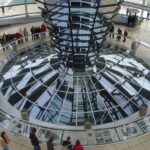
You have an option to go up to the roof if you want it, but it’s not automatic. The tour requires advance notice so they can reserve a time slot. You’ll have to provide your full name and date of birth and bring ID.
This is a big decision point for your day. If roof access is a “must” for you, treat it like the main event. It can add meaning to everything you’ve seen—because the views from above make Berlin’s geography click into place.
If you’re not interested in the roof, it still remains worthwhile to stand outside and take in the building’s presence. Just don’t assume you’ll add roof time on the fly.
Brandenburg Gate and Unter den Linden to Alexanderplatz: finishing with the postcard lines
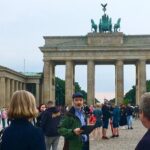
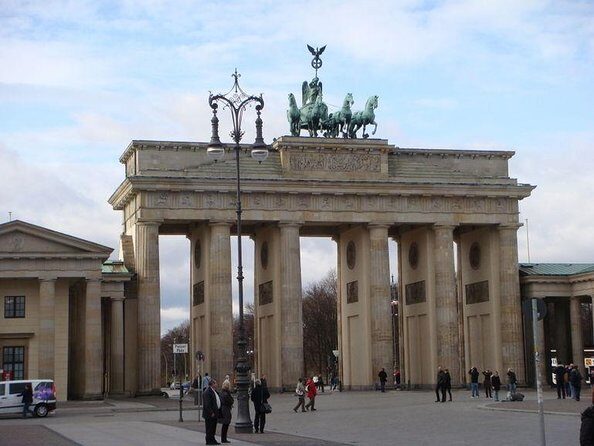
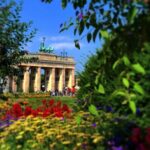
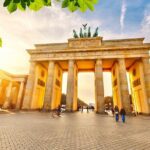
After the Reichstag, the tour heads to Brandenburg Gate, Germany’s most famous landmark. The itinerary also ties it to major moments: Hitler’s march of torches, the Berlin Wall death strip, and Reagan’s Tear down this Wall speech.
This is a good stop for photos, yes, but the better payoff is the guided context. Brandenburg Gate is where the city’s story compresses into a single view. You can feel why it became an international symbol.
Then the route shifts to Unter den Linden, passing the Opera, the New Guard House, and the New Humboldt Forum (noted as the rebuilt Hohenzollern Palace). You continue on toward Alexanderplatz, the large square with Germany’s tallest building, the TV tower.
Even if you don’t get long for every location here, the drive-through sequence helps you build a “Berlin map in your head.” Old center streets, big landmarks, then a modern skyline finish.
Price and logistics: does $1,967.92 per group feel worth it?
The tour is priced at $1,967.92 per group for up to 6 people, for about 12 hours with private transport. That’s expensive if you compare it like a hop-on-hop-off ticket. But private, door-to-door service from the port area changes the math.
If you fill all 6 spots, that’s roughly $330 per person. You’re paying for:
- A private guide who can explain what you’re seeing in the moment
- An air-conditioned minivan for a long day
- Port pickup and drop-off so your shore schedule stays protected
Also, there’s a subtle value point: the itinerary includes many stops listed as ticket-free viewing (based on the time blocks). You’re not constantly juggling entry lines, which is a big deal on a short port day.
So for families, small groups of friends, or anyone who hates wasting time on logistics, it can be a good value. For solo travelers or couples who don’t want to share the group cost, it’s harder to justify.
What the private guide experience should feel like
The whole tour is built around one idea: you shouldn’t have to learn Berlin from a map. You get a guide who meets you at the first city stop and stays with you through the key sites.
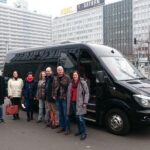
One example from real operation: a guide named Luca has been reported as meeting the group as soon as you arrived in Berlin, with explanations that kept everything moving even with limited time. A punctual driver is also part of the success story, with on-time pickup reported from the cruise port area.
The best way to use a private guide is to give them one or two priorities in the morning:
- Are you most interested in the Cold War and division?
- Or do you want Nazi-era history context and remembrance stops?
- Or are you a architecture-and-city-layout person?
Then you can let the guide guide your choices on flexible stops like KaDeWe and the Reichstag roof.
Lunch at the top of the Reichstag: a nice option with an important catch
The itinerary says lunch can be arranged at the top of the Reichstag if you’d like. That’s a tempting way to make the roof plan more than just a viewpoint.
But plan on lunch being at your own expense. If you’re cost-conscious, treat this as an upgrade option. If you love a “view with your meal” moment, it can turn the final third of the day into something memorable.
Timing matters here. If you’re also hoping for roof access, coordinate your preferences early with your guide so the schedule doesn’t get tight.
Who this tour is best for (and who should rethink it)
This is a strong fit for:
- Couples or families who want a structured overview without the stress of trains and timed tickets
- Groups who want history with context but can’t spend a full week in Berlin
- People who like seeing many key landmarks in one go, then deciding on their own afterward
You might want to rethink it if:
- You want long, slow museum time at every stop
- You get worn out quickly by back-to-back walking and short viewing windows
- You expect to “wing it” with major timed entry without advance planning (the Reichstag roof is the clear example)
Should you book this Berlin day trip from Rostock?
If your priority is getting the biggest Berlin landmarks into your day—Checkpoint Charlie, the Holocaust Memorial, Brandenburg Gate, Reichstag—with private transport and a guide handling the story, this tour is a very practical choice. The price makes sense most when you’re traveling as a group of up to 6 and you want the convenience of port pickup and drop-off.
My advice: if the Reichstag roof is important to you, plan early and provide the required ID details in advance. If your focus is remembrance and Cold War geography, you’ll get a clean route without wasting time.
FAQ
How long is the Berlin tour?
It runs for about 12 hours.
Is pickup and drop-off included from the port area?
Yes. Port pickup and drop-off are included.
Is this a private tour?
Yes. It’s private, and only your group participates.
How many people are in a group?
The tour is priced per group for up to 6 people.
What kind of transport is used?
An air-conditioned minivan is used for transport.
Are there tickets included for the main sights?
The itinerary notes many stops as admission ticket free for the time you visit, but lunch (if you choose it) is at your own expense.
Can I go up to the Reichstag roof?
You can, but you need to let them know in advance so they can reserve a time slot. You’ll need your full name, date of birth, and you must bring ID.
Is mobile ticketing provided?
Yes. A mobile ticket is included.
Is there a dress code?
No dress code is required. Dress comfortably.