REVIEW · BERLIN
Kreuzberg Walking Tour: Immigrants, Artists & Hipsters
Book on Viator →Operated by Insight Cities · Bookable on Viator
Kreuzberg reads like a living map. This 3-hour tour starts on Oberbaumbrücke and keeps the group to a maximum of 6, so you can actually ask questions. It’s mostly outdoors with a few public-transport hops, so pack for the weather.
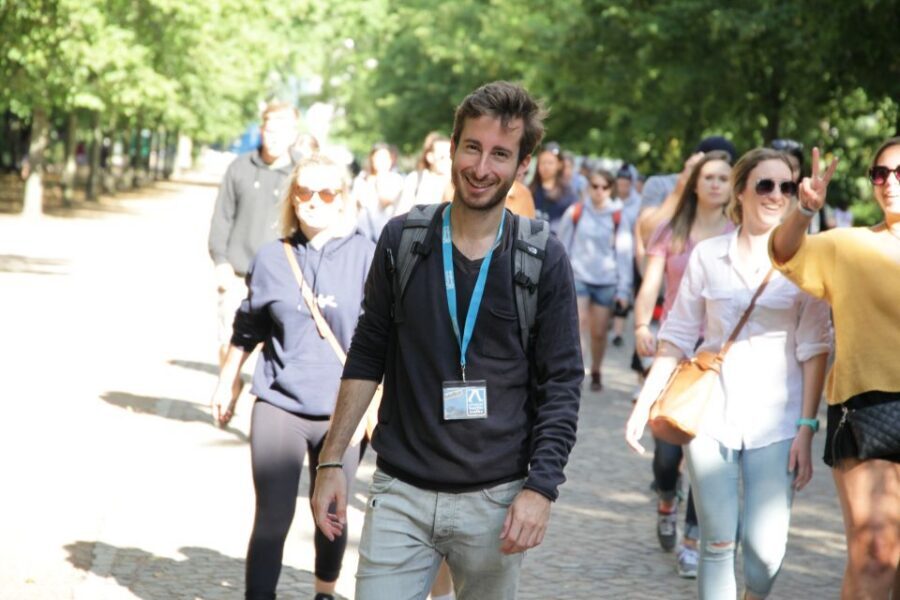
I also like how the stories feel personal, even when the topics are big. With guides such as Peter or Ronan, you get clear context on immigrants, artists, and the street-level choices that shaped today’s Kreuzberg.
In This Review
- Key Points You’ll Appreciate
- Kreuzberg in Three Hours: Why This Route Works
- Schlesische Str. Start, and the Oberbaumbrücke Opening Move
- SO36, the Cold War Layers, and What Changed After 1989
- Abandoned Space Turned Into Art Space
- Görlitzer Park Break, Then Markthalle 9’s Market-Hall Power
- Turkish Culture Stops, Spices, and Gözleme Moments
- Ending at Riverside Development: Why Kreuzberg Keeps Debating Itself
- Price and Logistics: Getting Value for $153.85
- Who This Tour Suits Best
- Should You Book This Kreuzberg Tour?
- FAQ
- How long is the Kreuzberg Walking Tour?
- How big is the group?
- Is this tour offered by foot or by bike?
- Is the tour in English?
- Where do I meet the guide?
- Is food and drinks included?
- Will we use public transport during the tour?
- Can I cancel for free?
Key Points You’ll Appreciate
- Maximum 6 people means a small-group feel, not a camera-club herd.
- Bridge to Berlin Wall remnants keeps the Cold War timeline easy to follow.
- Professional art historian guide turns graffiti and street art into something you can read.
- Markthalle 9 plus Turkish market stops add food culture without making the whole tour about eating.
- An end-point debate on riverside development shows why Kreuzberg is always changing.
Kreuzberg in Three Hours: Why This Route Works
Kreuzberg can feel like a patchwork—industrial edges, immigrant neighborhoods, creative squats, hip cafés, and places where locals are still fighting for space. This tour tries to explain that mix in a tight time window, which is exactly why the 3-hour format is smart.
The small group size also matters. With a guide who can actually talk at street level, you’ll get the “why” behind the visible stuff: the graffiti, the repurposed buildings, and the cultural crowds around the markets.
If you prefer your Berlin stories through neighborhoods (not just monuments), this is a strong fit.
You can also read our reviews of more walking tours in Berlin



Schlesische Str. Start, and the Oberbaumbrücke Opening Move
The meeting point is Schlesische Str. 18, 10997 Berlin. From there, you set off with a headline location: Oberbaumbrücke, one of Berlin’s most beautiful bridges.
This start works for two reasons. First, it gives you a clean visual anchor right away—big sky, river lines, and a sense of how Berlin divides and connects. Second, it sets a tone for the whole walk: Kreuzberg’s identity sits right on Berlin’s fault lines, literally and socially.
You can do the tour on foot, but it’s also offered as a bicycle tour. The bike option covers more ground while still staying within the district, which helps if you want to see more without turning your day into marathon commuting.
SO36, the Cold War Layers, and What Changed After 1989
A core part of the tour passes through the area associated with SO36, and your guide connects what you see today with what happened before. Kreuzberg’s reputation didn’t appear out of nowhere; it was shaped by borders, neglect, and the kind of street life that grew where official plans didn’t reach.
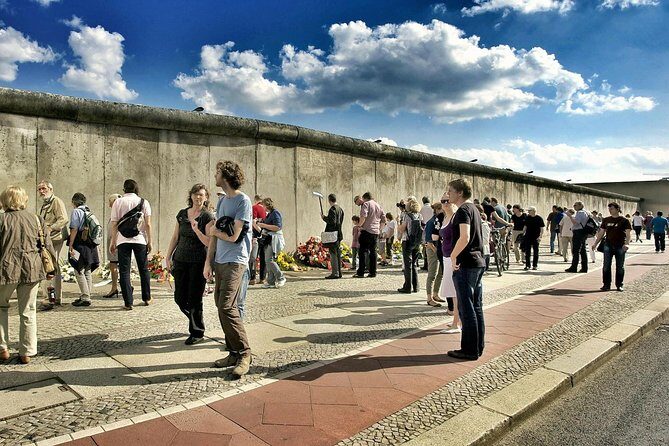
The tour also brings in the Cold War angle in a way that’s easy to track on the street. You’ll look at remains of the Berlin Wall, and you’ll hear how the neighborhood moved from a “no-go” story into something more open and creative after 1989.
One of the more interesting details is how music culture shows up in the neighborhood story. The tour notes that rock legends walked the streets during the Cold War—an example of how culture can float through barriers, even when policy says people shouldn’t cross.
Practical note: this is not a lecture-only route. The history gets tied to what’s directly around you, so you’re constantly making small connections instead of trying to memorize dates.
Abandoned Space Turned Into Art Space
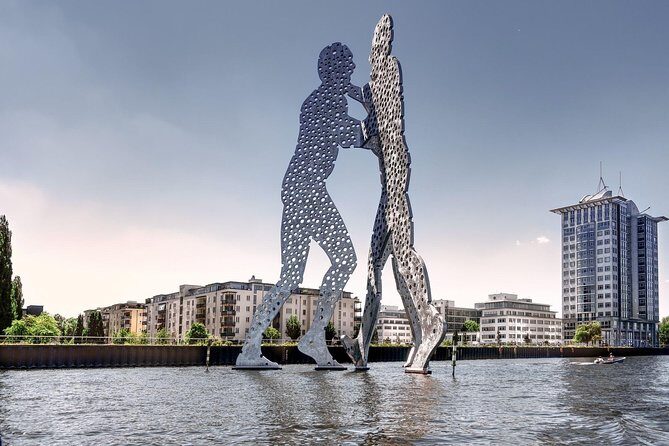
A big theme in Kreuzberg is what people do with leftover city land. As you move through the neighborhood, your guide points out creative uses of abandoned buildings and plots of land.
This matters because Kreuzberg’s look isn’t just a “style.” It’s a response. When formal development slows or excludes people, the streets often invent their own solutions—community projects, informal art, and spaces that feel temporary even when they become familiar.
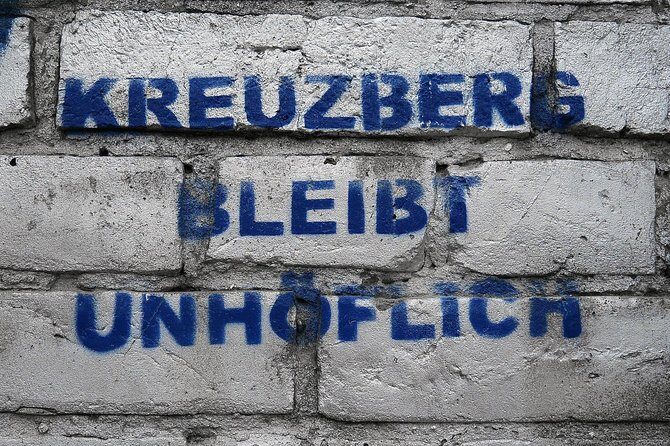
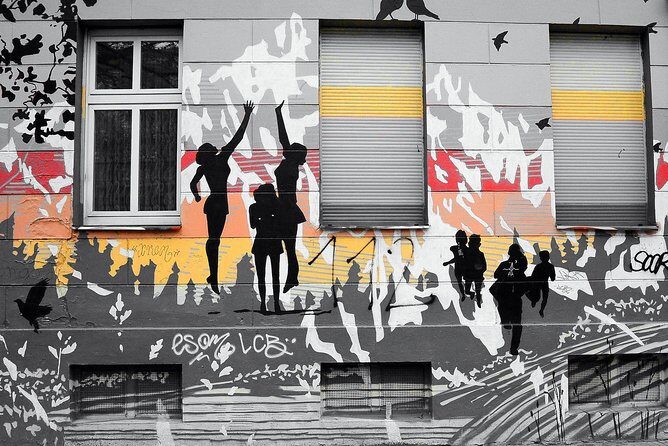
That’s where the tour’s art historian angle pays off. Instead of treating graffiti as random decoration, the guide helps you understand why it’s central to Kreuzberg’s identity and how it communicates locally—about territory, creativity, politics, and belonging.
If you love street art, you’ll get more out of this than a quick photo stop. If you don’t usually notice graffiti, you’ll still come away with a better set of eyes.
Görlitzer Park Break, Then Markthalle 9’s Market-Hall Power
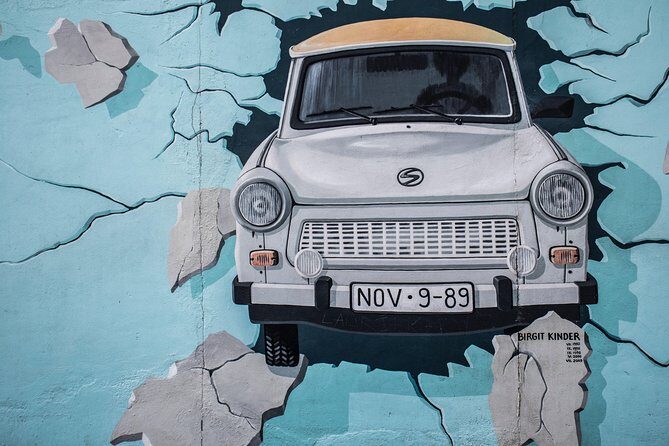
Midway through the walk, you’ll spend time around Görlitzer Park, described as graceful and easy compared to the harsher edges of the past. It’s a useful breathing point—part scenic pause, part reminder that this neighborhood has its own pace, not just its history.
Then comes Markthalle 9, a market hall that’s about 120 years old. This stop is one of the best “time machine” moments in the route: you’re in an old structure, but the neighborhood culture is doing what it always does—adapting.
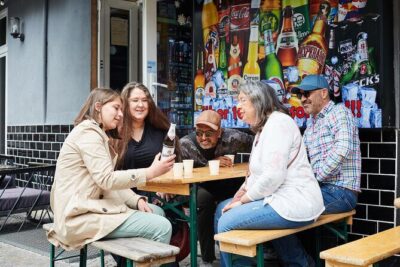
Markets are also where you can understand cultural mixing in real life. Kreuzberg’s identity isn’t just murals and myths. It shows up in the shopping habits, the smells, and the way people grab food on the go.
The tour’s structure is helpful here: you get history, then you get the marketplace proof.

Turkish Culture Stops, Spices, and Gözleme Moments

After Markthalle 9, you move into the Turkish culture scene—shops, colorful market areas, and plenty of everyday life. Expect flowers, spices, and street-food energy all around you.
One of the specific foods mentioned is deep-fried spinach and cheese Gözleme. The important thing to know is that the tour doesn’t list food as fully included across the board. It says food and drinks aren’t included unless specified, so treat these stops as sampling opportunities rather than a guarantee of a full meal.
That said, the route is designed so you’re not just watching. You’re learning how food fits into the neighborhood’s social rhythm.
If you’re the type who likes to taste a place rather than just photograph it, this portion is the highlight that makes the tour feel real.
Ending at Riverside Development: Why Kreuzberg Keeps Debating Itself
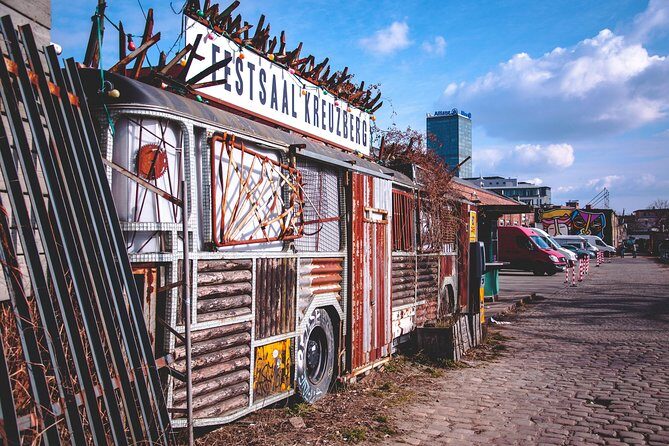
The tour closes by discussing controversial riverside development plans. This ending is more than a political sidebar—it’s the logic of Kreuzberg in one question: who gets to decide what the neighborhood becomes next?
You’ve spent the previous hours seeing layers—Wall remnants, repurposed spaces, street art, and immigrant culture. Ending with development debates ties it together. Kreuzberg isn’t a finished story. It’s constantly negotiating space, rent, identity, and survival.
Even if you’re not deeply political, this ending is valuable because it shows the stakes behind the visuals. You start to see why change can feel like progress to some people and a loss to others.
Price and Logistics: Getting Value for $153.85
The price is $153.85 per person for about 3 hours, and it includes a small-group tour (up to 6) plus a professional art historian guide. You’re also offered a mobile ticket, and the tour runs in English.
Is it worth it? For me, the value comes down to two things:
- You’re paying for interpretation, not just movement. Kreuzberg is easier to understand with an expert guiding your eye at graffiti, buildings, and markets.
- You’re paying for small-group attention. With a max of 6 on the core tour, you can ask follow-ups instead of letting questions die in a crowd.
Optional cost: bike rental is listed at 10EUR/person if you choose the bicycle option. So if you’re budget-tight, the foot tour may be the simpler play.
Getting around: you’ll use public transport a few times because some key sites are too far to walk. There’s no hotel pickup or drop-off, so plan to get yourself to the meeting point and then return to wherever the tour ends in the central area of Berlin.
Timing: since it’s outdoor-heavy, you’ll want to dress for cold or rain just like you would for any walk in Berlin. One of the reviews specifically calls out bad weather didn’t slow them down, which tells you the tour won’t pause just because it’s unpleasant—so go prepared.
Who This Tour Suits Best
This is a great choice if you want Berlin that isn’t centered on famous landmarks. You’ll spend your time inside a neighborhood story—immigrants, artists, street art, and the city’s constant negotiation over space.
It’s also a solid option even if you already know Berlin. One of the comments from a Berlin resident frames it as an eye-opener and something that adds fresh perspectives, not just tourist facts.
You’ll probably love this most if you:
- Like street art and want the context behind it
- Enjoy food markets and want a route that includes them
- Prefer guided interpretation over solo wandering
You might think twice if you:
- Want mostly indoors, museum-style stops
- Dislike outdoor walking on a 3-hour schedule
Children can participate, but they must be accompanied by an adult. The tour is marked as suitable for most travelers, and it’s offered in English.
Should You Book This Kreuzberg Tour?
Book it if you want Kreuzberg explained through real neighborhood cues—Wall remnants, repurposed spaces, graffiti meaning, and the market culture around Gözleme and the spice-filled lanes. The small group size and the art historian guide setup make it feel like a guided walk with actual context, not a checklist tour.
Skip it (or consider something else) if you’re only looking for iconic sights or you hate being outside for hours. Also, if you’re strict about food being included, plan on budgeting for snacks, since food and drinks aren’t guaranteed as part of the price.
If your goal is to leave with a clearer sense of why Kreuzberg looks the way it does—and why people argue about its future—this route is a strong match.
FAQ
How long is the Kreuzberg Walking Tour?
It runs for approximately 3 hours.
How big is the group?
It’s a small-group tour with a maximum of 6 people. The booking information also notes a maximum of 8 people per booking, and the activity has a maximum of 10 travelers.
Is this tour offered by foot or by bike?
Both are offered. You can do it on foot, and it’s also offered as a bicycle tour. Bike rental is optional and costs 10EUR per person.
Is the tour in English?
Yes, it’s offered in English.
Where do I meet the guide?
The start meeting point is Schlesische Str. 18, 10997 Berlin, Germany.
Is food and drinks included?
Food and drinks are not included unless specified. The route does include opportunities to sample street food such as deep-fried spinach and cheese Gözleme.
Will we use public transport during the tour?
Yes. You’ll use public transport a few times because some key sites are too far to walk between.
Can I cancel for free?
Yes. You can cancel for free up to 24 hours in advance for a full refund. If you cancel less than 24 hours before the start time, the amount paid won’t be refunded.