REVIEW · BERLIN
Berlin History Walking Tour with a French-Speaking Guide
Book on Viator →Operated by Vive Berlin Tours · Bookable on Viator
Berlin teaches hard lessons on foot. This tour strings together WWII trauma and Cold War showdowns into one very walkable 3-hour route, with a French-speaking guide who keeps the story clear. You’ll hit major landmarks like Potsdamer Platz and the Brandenburg Gate, but the emotional weight stays centered on the sites that matter most.
I especially like the pace: it’s long enough to make connections between eras, but short enough to still grab lunch afterward. I also like that you get guided time at the Holocaust Memorial and Hitler’s Bunker, where context makes the experience land harder than just seeing plaques.
One practical consideration: there are no audiophones mentioned, so if you end up on the edge of the group, you may miss a few details during the louder stretches of street talk.
In This Review
- Key things that make this walk worth your morning
- Why this 10:00 AM route is a smart start in Berlin
- Potsdamer Platz to Checkpoint Charlie: getting your bearings the hard way
- Fuhrerbunker: when the tour slows down without getting dramatic
- Holocaust Memorial: why guided context changes everything
- Unter Den Linden and Bebelplatz: reading Berlin’s layers like a timeline
- Museum Island to Brandenburg Gate: modern landmarks with Cold War meaning
- Price and what you’re really buying with $27.81
- The guides and group pace: what makes the experience feel easy
- How to get the most from this walk (without burning out)
- Should you book this Berlin History Walking Tour?
- FAQ
- How long is the Berlin History Walking Tour?
- What time does the tour start?
- Where do I meet the guide?
- Where does the tour end?
- What language is the tour conducted in?
- What’s included in the price?
- Is transportation included?
- Does the tour work in bad weather?
- Is the tour physically demanding?
- Is cancellation free?
Key things that make this walk worth your morning
- Two admission stops that need context: Hitler’s Bunker and the Holocaust Memorial are both included.
- Cold War to reunification storyline in one loop: from Checkpoint Charlie to Brandenburg Gate.
- First-time Berlin orientation: you get a map of the city’s political geography, fast.
- French guidance with Q&A energy: guides like Anouk, Martin, Paul, Céline, and Arthur are repeatedly praised for clear explanations and responsiveness.
- Small group feel (max 25): easier to hear and stay together on busy sidewalks.
Why this 10:00 AM route is a smart start in Berlin
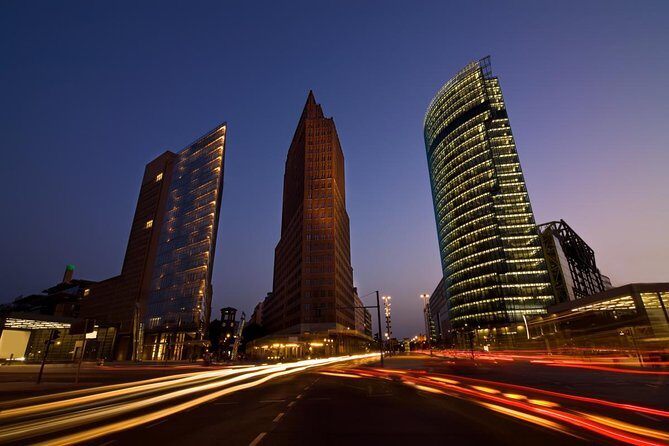
Berlin is a city you can see in pieces, or you can see it as a chain reaction. This tour does the second one. You start at Potsdamer Platz and spend your morning moving through places that explain how Germany got from dictatorship to division, and then to reunification.
The timing is another big plus. With the tour starting at 10:00 am and running about 3 hours, you finish while it’s still morning and you’ll have the rest of the day for museums, neighborhoods, or a long lunch. That matters here because the sites with weight (like the Holocaust Memorial) are not “quick photo stops.” You need a little time to think.
And since the walk happens in all weather, you should dress for whatever Berlin is doing that day. The good news is that this route is outdoors-heavy in a way that still works when you’re bundled up.
You can also read our reviews of more walking tours in Berlin



Potsdamer Platz to Checkpoint Charlie: getting your bearings the hard way
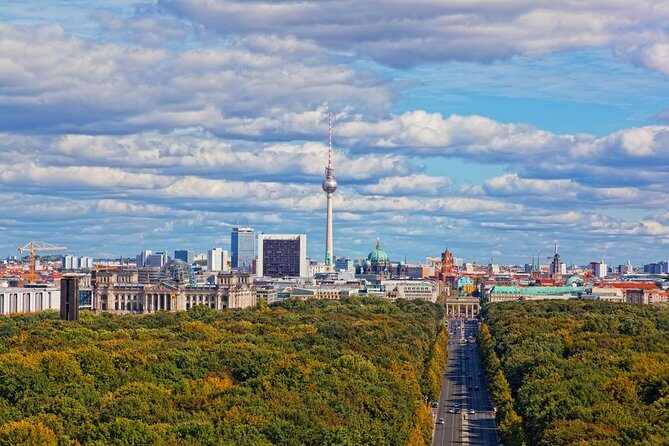
The tour starts at Potsdamer Platz, at Potsdamer Platz 10 near the Gabriele-Tergit-Promenade. This is a fitting beginning because the area is all about modern Berlin meeting the city’s divided past. Even if you don’t know a lot yet, your guide can point out what you’re looking at and why it has meaning.
Then comes Checkpoint Charlie. It’s symbolic, because it’s the Cold War collision point made simple for visitors. You don’t need to be a policy nerd to understand the basics here: East and West confronted each other for decades right on streets like these.
What I like about the way this segment is built is that it doesn’t get stuck in a single era. You’re learning the “then” of Berlin’s split while you’re physically standing near the “now” of Berlin’s architecture and street life. That helps you stop seeing the city as separate postcards.
A downside to expect: this is a popular area, and your group is moving through it. If you’re the type who likes slow wandering with zero crowds, you might feel a bit rushed during the most visited stretches. The tradeoff is that you’re building a story quickly.
Fuhrerbunker: when the tour slows down without getting dramatic
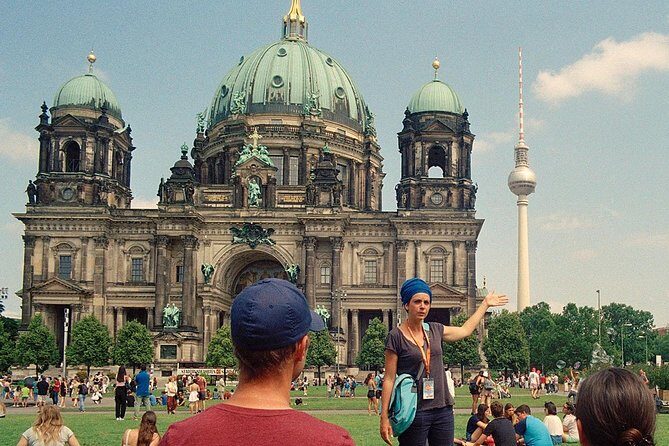
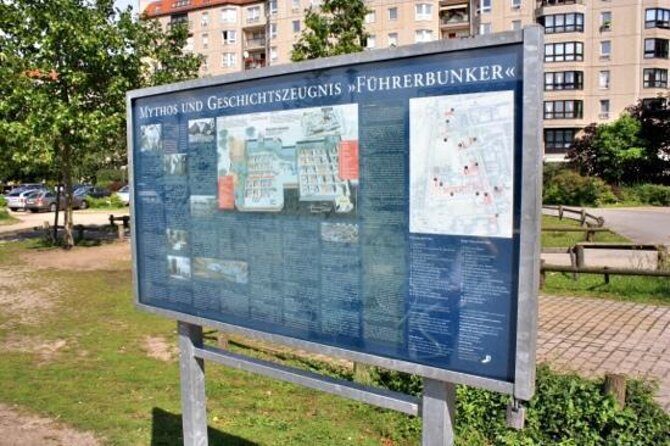
The Fuhrerbunker stop is where the walking tour becomes serious. This is the place where the bunker was, and where Hitler spent his last days. The guide uses that location to explain the meaning of the site and why it exists in the cityscape today.
This is one of the tour’s most important values: you’re not just looking at a spot. You’re hearing how and why the city remembers it now. Admission here is included, so you don’t have to puzzle out ticket timing or costs before you arrive.
A note on how to handle the emotional aspect. Even if you’ve read about WWII before, hearing it in a guided, site-specific way can feel heavier than you expect. You don’t need to force your feelings. Just let yourself pause, listen, and then keep walking when your body is ready.
Holocaust Memorial: why guided context changes everything
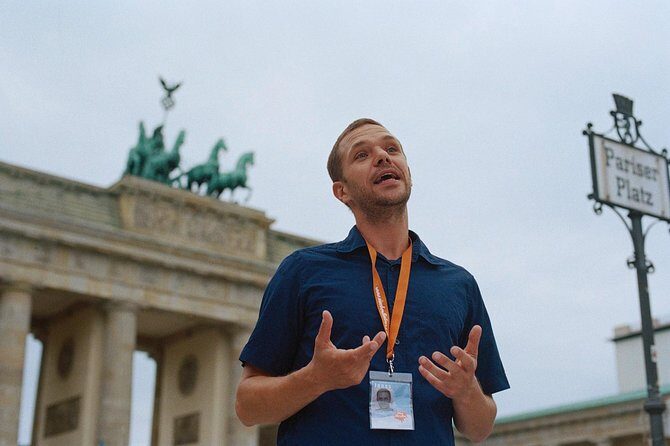
Next is the Holocaust Memorial, officially the Memorial to the Murdered Jews of Europe. The guide’s job here is crucial. Without context, people often treat it like a powerful photo set. With context, it becomes what it’s meant to be: remembrance tied to human stories and state crime.
Your stop time is around 15 minutes. That’s enough for the guide to set the scene, explain what you’re looking at, and give you a moment to absorb it yourself. You’ll see why it’s a symbol in Berlin to remember the greatest crime committed by the German state during the Nazi era.
This is the kind of stop where location does half the work for you. The other half is the guide’s framing. In the feedback tied to this experience, the French guides are repeatedly praised for clear explanations and good handling of questions, which is exactly what you want at a place like this.
Practical tip: wear shoes you can stand in, and don’t plan to race through the surrounding areas right afterward. Even if you only spend 15 minutes here, it can reset your whole mood for the rest of the walk.
Unter Den Linden and Bebelplatz: reading Berlin’s layers like a timeline
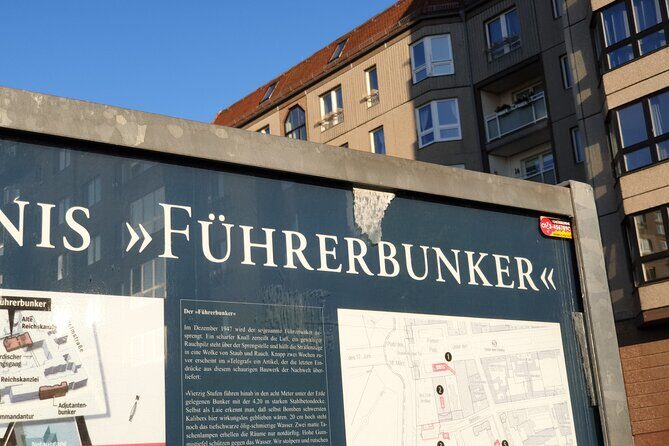
After the emotional stops, the tour shifts into “how Berlin changed” mode.
Unter Den Linden is the big avenue moment. It’s tied to imperial access in earlier centuries, and you’ll walk through the corridor that once connected key power sites. Your guide helps you recognize different building periods and the visible wounds left by the war.
Then you’ll reach Bebelplatz. This square is known for the Nazi book burnings, but it’s also connected to Humboldt University and the Catholic Cathedral. In other words, you’re looking at a location where censorship and learning sit side by side, literally across the same urban stage.
This pairing works well because it turns the walk into an education about memory. You can see how the city keeps moving forward, even when it’s carrying terrible reminders. You’re not just collecting facts. You’re learning how to notice the city’s survival instincts.
Admission is marked as included at these stops as part of the tour experience, but the real value is your guide’s ability to translate architecture and street layout into history you can picture.
You can also read our reviews of more guided tours in Berlin




Museum Island to Brandenburg Gate: modern landmarks with Cold War meaning
Near the end, the tour moves toward Museum Island, ending next to it. The area is known for major institutions like Berliner Dom (the Protestant Cathedral) and the reconstructed Humboldt Forum. Even if you don’t go inside on this walk, you get a strong feel for Berlin’s architectural storytelling.
Museum Island is also a good place for closure because it’s cultural rather than confrontational. After hearing about dictatorship and division, your brain needs a different kind of “Berlin.” This transition is helpful.
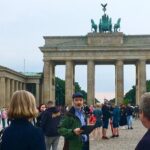
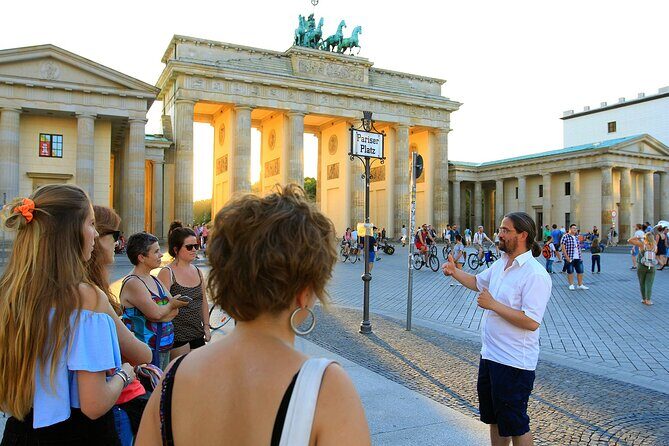
Then comes the Brandenburg Gate. It’s the most famous gateway to Berlin, and you’ll likely see why it’s a top photo magnet even beyond the tour crowd. Your guide tells the story arc: from a symbol of royal strength to a Cold War icon, and finally to a symbol tied to German reunification.
This is where the tour earns its “first-time Berlin” reputation. You finish with a landmark people recognize, but you understand what it used to mean. That turns the Brandenburg Gate from a postcard into a chapter.
Price and what you’re really buying with $27.81
At $27.81 per person, this tour is priced like a budget-friendly orientation with serious add-ons. The key is that admission is included for two of the most important stops: Hitler’s Bunker and the Holocaust Memorial.
So you’re not just paying for walking and talking. You’re paying for guided interpretation at the hardest sites in the route, plus covered entry where relevant. In a city where some history experiences add up quickly, this is a strong value play.
Also, you’re paying for French guidance specifically. Language matters here. WWII and Cold War stories contain details that are easier to grasp when the guide can answer you naturally instead of forcing you into a translation workaround.
If your budget is tight and you still want the emotional “core” of Berlin’s 20th-century story, this is one of the better deals to consider.
The guides and group pace: what makes the experience feel easy
The tour is built for a maximum of 25 travelers, which helps. Smaller groups are easier to manage at busy intersections, and it’s easier to keep your hearing clear when the guide is talking at street level.
The feedback names a few guides that come up often, including Anouk, Martin, Paul, Céline, and Arthur. The themes across those names are consistent: clear explanations, good pacing, enthusiasm for Berlin, and willingness to answer questions. That’s exactly what you want when the content is dense and emotional.
One small caution: because you’re walking for three hours, the guide can’t be a slow museum docent at every corner. You get short, focused stops that build into a bigger narrative. If you prefer to linger for long periods of personal reflection, you might want to plan extra time after the tour near one of the major sites.
How to get the most from this walk (without burning out)
This route covers both heavy and landmark stops, so energy management matters.
Start with this mindset: you’re not going to “learn everything.” You’re going to get a working timeline you can build on later. That’s why the order is helpful, and why the first half sets up the second half.
Bring:
- Comfortable shoes for a lot of walking
- A light layer (Berlin mornings can feel different from afternoons)
- Water if you need it for your own pace (food and drinks are not included)
Then plan your next steps. Since the tour ends near Museum Island, you’re in a great position to keep going with a museum visit or a longer lunch nearby.
If you’re someone who likes to ask questions, this is one of those tours where that pays off. Guides are described as responsive and articulate, so don’t be shy about clarifying a date, an event, or why one site matters more than another.
Should you book this Berlin History Walking Tour?
Book it if you want a structured morning that helps you understand Berlin fast: WWII aftermath, the Cold War standoff, and reunification landmarks, all connected by a French-speaking guide. It’s also a good pick if you want included entry to both Hitler’s Bunker and the Holocaust Memorial, without extra ticket juggling.
Skip or reconsider if you need an audio system to catch every detail from any spot in the group, or if you dislike tours that move you through multiple sites in one session. Also, if you’re the type who prefers reading slowly on your own and only visits one or two sites deeply, you might feel the walking pace is a lot.
If you’re visiting Berlin for the first time and want your bearings plus context you can’t easily get from plaques alone, this is a strong bet.
FAQ
How long is the Berlin History Walking Tour?
The tour runs about 3 hours.
What time does the tour start?
The meeting time is 10:00 am.
Where do I meet the guide?
You meet at Potsdamer Platz 10, 10785 Berlin, Germany.
Where does the tour end?
The tour ends next to Museum Island (Museumsinsel, 10178 Berlin, Germany).
What language is the tour conducted in?
The tour operates in French.
What’s included in the price?
The tour price includes the local taxes, a local guide, and a professional French-speaking guide. Admission is included for Hitler’s Bunker and the Holocaust Memorial.
Is transportation included?
No. Transportation to and from attractions is not included.
Does the tour work in bad weather?
Yes, it operates in all weather conditions. Dress appropriately.
Is the tour physically demanding?
It’s intended for travelers with a moderate physical fitness level, since it’s a walking tour.
Is cancellation free?
Yes. You can cancel up to 24 hours in advance for a full refund.