REVIEW · BERLIN
Berlin: Sightseeing Walking Tour of the Top 20 Attractions
Book on GetYourGuide →Operated by TOURGUIDEME BERLIN · Bookable on GetYourGuide
Berlin makes more sense on foot. This private, 3-hour walking tour strings together the city’s biggest landmarks and hard history in a way that feels logical, not random, and yes, you get Berlin humor along the way. You’ll move through major German, Nazi, and Cold War sites, then end in a spot that’s easy to keep exploring.
I like two things most. First, the guide brings landmarks to life with quick street-level storytelling that connects politics to everyday Berlin. Second, the pacing feels human: you can ask questions, slow down for photos, and get practical tips for what to do next.
One watch-out: it’s about 6 km of walking, and it runs in all-weather conditions. If your feet hate long strolls, plan to rest afterward.
In This Review
- Key highlights at a glance
- A 3-Hour Berlin Walk Focused on the Big Stories
- Meeting at Paul-Löbe-Haus: Start in the Government District
- Brandenburg Gate and the Reichstag Area: Why This Block Matters
- Holocaust Memorial: Seeing the Weight Without Making It Abstract
- Potsdamer Platz and Checkpoint Charlie: Cold War Reality on a Street Corner
- Topography of Terror: The Gestapo Site Context You Shouldn’t Miss
- Gendarmenmarkt and Bebelplatz: Architecture With a Moral Edge
- Lustgarten, Berlin Cathedral, and the New City Palace Area
- Museum Island and Alte Nationalgalerie: Ending With Big Art Energy
- What You Actually Get From a Certified Local Guide
- Price and Value: Is $94 Worth It for 3 Hours?
- Who This Tour Fits Best (and Who Should Think Twice)
- Should You Book This Top 20 Berlin Walking Tour?
- FAQ
- How long is the Berlin Top 20 walking tour?
- Where does the tour meet?
- What start times are available?
- How much walking is included?
- Is the tour private?
- What languages are available?
- Does the tour run in bad weather?
- Is the tour wheelchair accessible?
- Which major sights are included?
- Does the price include skipping the ticket line?
- What is the cancellation window?
Key highlights at a glance
- Top 20 sights in 3 hours: a fast route that still explains what you’re seeing
- Brandenburg Gate and Reichstag area: a strong start in the government district
- Checkpoint Charlie and the Wall story: Cold War details on the street, not in theory
- Topography of Terror: direct context for the Gestapo headquarters site
- Museum Island and Berlin Cathedral area: finish with architecture and scale
A 3-Hour Berlin Walk Focused on the Big Stories
This is the kind of tour you choose when you want your Berlin to have shape. You’ll cover the main showpieces, but the real value is the connecting thread: Germany’s shifts in power, how Berlin split, and how the city reassembled itself afterward.
Because it’s a private or small-group setup, you’re not stuck with a loud marching pace or a one-size-fits-all script. The guide keeps the tone light with dry jokes, but the topics stay serious when they should.
You’ll be mostly walking, and you should treat it like a mini walking tour + mini history lesson you can actually use later. You get oriented quickly, and you leave knowing what neighborhoods and sights mean in real terms.
You can also read our reviews of more walking tours in Berlin



Meeting at Paul-Löbe-Haus: Start in the Government District
Your tour begins at the Paul-Löbe-Haus, opposite the Federal Chancellery, on Konrad-Adenauer-Straße 1. That’s a smart place to start because it drops you right into Berlin’s political center, not a tourist strip.
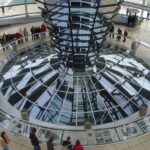
From here, the walk pulls you toward the German Chancellery and the Reichstag area. Even if you never go inside, seeing these buildings from street level helps you understand how power looks when it’s made permanent in stone, glass, and ceremony.
If you’ve ever looked at Berlin photos and thought, I can’t tell what connects to what, this start helps. The guide sets up the geography early, then keeps returning to it as the story gets more intense.
Brandenburg Gate and the Reichstag Area: Why This Block Matters
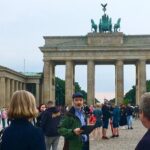
The Brandenburg Gate is the obvious star, but the tour makes it more than a postcard. You’ll learn how this area became a stage for major historical turning points, including the way Berlin’s fate got tied to symbols and public space.
You’ll also see how the government district layout works. When you understand where major buildings sit relative to each other, the rest of Berlin stops feeling like disconnected sights.
It’s also one of those parts where a good guide can change your experience. Guides such as Max or Antonella are praised for being friendly and for making the facts easier to hold in your head. If your brain likes stories more than timelines, you’ll likely feel at home here.
Holocaust Memorial: Seeing the Weight Without Making It Abstract
The Holocaust Memorial stop is where the tone shifts from sightseeing to reflection. The experience is less about checking a box and more about understanding the purpose of a memorial in a living city.
You’ll get a guided look and some space to take it in. If you want photos, be thoughtful and slow down. With a site like this, the best pictures often come from stepping back and letting the scene settle, not from rushing to capture the angle.
This is also where the private format pays off. You can ask questions, and the guide can adjust the pacing to what you need in that moment.
Potsdamer Platz and Checkpoint Charlie: Cold War Reality on a Street Corner
Potsdamer Platz is one of Berlin’s major crossroads—modern, busy, and easy to misunderstand if you only see it as a shopping and transport hub. On this tour, it’s treated as a hinge point: a place where different Berlin eras collide.
Then you move toward Checkpoint Charlie. Expect the story to focus on what a border looked like in daily life, not just what it meant on paper. This stop works best if you listen for details about movement, rules, and the human scale of confrontation.
You’ll also pass Martin-Gropius-Bau, which helps connect the city’s architectural identity with the period you’re learning about. The guide’s job here is to keep the route from turning into separate facts. Instead, you get continuity: one era explains the next.
And yes, guides with personal Berlin experience can make this section especially vivid. Carlos and Carlo are both praised for bringing firsthand understanding, including how they relate to the era of the Wall’s fall. When that happens, the Cold War stops feeling like a distant concept.




Topography of Terror: The Gestapo Site Context You Shouldn’t Miss
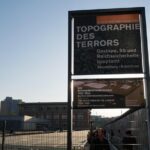
Topography of Terror is not the place for a quick stroll mindset. The stop is on the grounds of the former Gestapo headquarters, and the tour gives you the context so the memorial sites make sense.
This is where you’ll likely do more listening than photographing. The guide helps you connect what you’re seeing to the larger mechanism of repression: who was targeted, how the system functioned, and why it left a lasting mark on Berlin’s identity.
If you’re the kind of person who likes to understand why a place feels heavy, this stop delivers. If you’re sensitive to difficult topics, pace yourself. The private format makes it easier to pause and regroup without holding up a big group.
Gendarmenmarkt and Bebelplatz: Architecture With a Moral Edge
Gendarmenmarkt is classic Berlin in the best way: crisp squares, grand facades, and that sense of order you don’t get everywhere. On this tour, it’s not just pretty scenery. The guide ties it back to how Berlin presented itself in calmer, powerful periods.
Then comes Bebelplatz, where the story turns darker. You’ll hear about books burned here, and why that matters in a city that later fought authoritarianism. It’s a reminder that control of ideas can be as destructive as control of people.
Right nearby, you’ll be positioned to appreciate Berlin’s mix of monumental architecture and moral lessons in the same walking radius. It’s not always comfortable, but it’s honest.
Lustgarten, Berlin Cathedral, and the New City Palace Area
The tour continues through the area around Lustgarten, where open space makes the architecture feel even larger. This is one of those places where the city’s scale surprises you once you’re there in person.
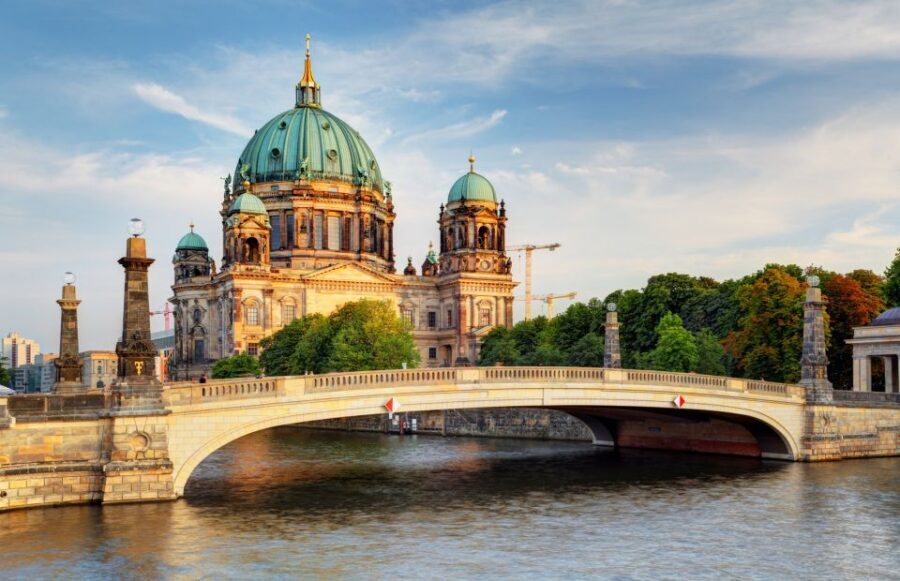
You’ll see the Berlin Cathedral as part of this stretch, with the guide connecting it to Prussian-era ambition and later Berlin identity. The New City Palace area is also included, which helps you understand how Berlin reshaped its own image over time.
If you like your history tied to streets and buildings, this section is satisfying. You’re not just hearing names. You’re seeing how different eras left their fingerprints on the skyline.
Museum Island and Alte Nationalgalerie: Ending With Big Art Energy
Museum Island is a fitting place to end the story of Berlin’s transformation. You’ll walk through this cultural zone and get a guided explanation of why this island became a symbol of education, collecting, and public identity.
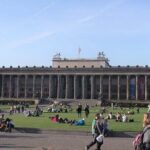
The Alte Nationalgalerie stop continues that theme. Even if you skip museum entry, the exterior and setting matter. You’ll leave with a better sense of how Berlin used culture as a public language.
This final stretch also helps you transition from history mode to travel mode. Once the tour ends at Friedrichsbrücke, you’re in a practical spot to keep moving on your own.
What You Actually Get From a Certified Local Guide
The biggest reason this tour stands out isn’t the list of sights. It’s the guide style. People praise the guides for being entertaining, friendly, and attentive, with enough flexibility to adapt to what you care about.
A few patterns show up in the guide stories. People mention guides stopping for time when photography matters, and one guide even ran about 30 minutes over because of extra points worth sharing. Others note that guides like Carlos kept the group comfortable, even during nonstop rain and wind, including a hot drink break.
That adaptability matters because Berlin is full of layers. If you’re only half listening, you can miss the connections. A good guide keeps those connections alive, even when you’re tired.
Price and Value: Is $94 Worth It for 3 Hours?
At $94 per person for a 3-hour private/small-group walking tour, the value depends on your travel style.
You’re paying for three things:
- Time saved by having the route and context handled for you
- Guide attention compared to big group tours
- More coverage than a shorter “top sights” walk, including added Nazi and Cold War stops
For first-time visitors, that combination can be a strong deal. You get a lot of major landmarks in about 6 km, and you come away with a mental map and historical context that’s hard to piece together from apps alone.
If you’re a fast self-guided walker who already knows Berlin well, you might not need this much structure. But if you want to understand what you’re looking at while you walk, the price feels easier to justify.
Also, multiple language options (English, Spanish, and German) help if you’re traveling with mixed preferences. And the included option to skip the ticket line can reduce small delays that eat into a short vacation day.
Who This Tour Fits Best (and Who Should Think Twice)
This is a good fit if you:
- Are in Berlin for a short time and want major landmarks plus context
- Prefer walking to hopping between stops
- Want a guide who can answer questions, not just deliver a script
- Are curious about both the Cold War and the Nazi era, without turning it into a heavy lecture
It may be less ideal if you:
- Want a low-effort sightseeing loop with minimal walking
- Don’t care about history explanations and only want photo stops
- Have limited mobility and expect minimal walking, since the route is still about 6 km even though the tour is listed as wheelchair accessible
Should You Book This Top 20 Berlin Walking Tour?
I’d book it if you want Berlin to click quickly. The route covers the most important anchors—Brandenburg Gate, Reichstag area, Holocaust Memorial, Potsdamer Platz, Checkpoint Charlie, Topography of Terror, and the Museum Island zone—and it links them with real street-level storytelling.
Do it if you’ll actually listen for meaning. This isn’t just sightseeing; it’s a guided way to understand how Berlin became Berlin.
Before you go, pack comfortable shoes, a camera, and a water bottle. If the weather looks messy, don’t cancel automatically. The tour runs in all conditions, and guides are known for keeping the group moving and comfortable.
If you want, tell me your travel dates and which sights you care about most (Wall, Nazi history, museums, architecture). I’ll help you decide whether this tour should be your first Berlin morning, midday reset, or afternoon anchor.
FAQ
How long is the Berlin Top 20 walking tour?
The tour lasts 3 hours.
Where does the tour meet?
It meets in front of the main entrance of the Paul-Löbe Haus, opposite the Federal Chancellery, Konrad-Adenauer-Straße 1, 10557 Berlin.
What start times are available?
It runs daily at 10:00 AM and 2:00 PM.
How much walking is included?
Expect about 6 km of walking.
Is the tour private?
The experience is offered as private or small groups.
What languages are available?
The live guide is available in English, Spanish, and German.
Does the tour run in bad weather?
Yes, the tour runs in all-weather conditions.
Is the tour wheelchair accessible?
The activity lists wheelchair accessibility.
Which major sights are included?
Key stops include Brandenburg Gate, Checkpoint Charlie, Gendarmenmarkt, Bebelplatz, Berlin Cathedral, Museum Island, and the New City Palace area, plus sites connected to Nazi and Cold War history like Topography of Terror.
Does the price include skipping the ticket line?
The activity notes include skip the ticket line.
What is the cancellation window?
You can cancel up to 24 hours in advance for a full refund.