REVIEW · BERLIN
Where It All Began: Berlin’s Queer & Trans History Tour
Book on Viator →Operated by BerlinGuide.de · Bookable on Viator
Berlin’s queer history hits hard on foot. This 3.5-hour Berlin walking tour traces LGBTQ+ and trans stories through real locations, with iPad AR to overlay past and present. It’s a small-group experience capped at 10 people, guided by a queer activist and gender scholar.
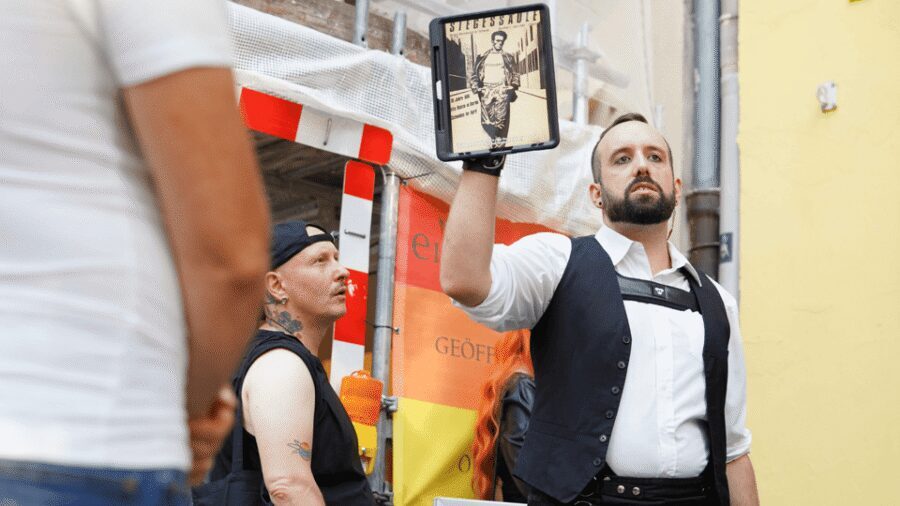
What I like most is the balance: it’s funny, moving, and specific without turning into a lecture. You’ll get an iPad-based augmented reality experience (plus Mixies AR photos), and the guide brings in rare archival photos and videos so the streets feel like evidence, not just scenery.
One thing to consider: the tour covers heavy topics (Nazi persecution, the pink triangle, and the AIDS crisis), and it also depends on good weather, since it’s primarily outdoors.
In This Review
- Key highlights at a glance
- From Alnatura to Metropol: how the route actually feels
- Ulrichs and Hirschfeld: when rights ideas became visible in public
- Nazi persecution at Nollendorfplatz: where a pink triangle entered the story
- Queer nightlife origins: Eldorado drag culture and what it costs to survive regimes
- Lesbian life and cabaret inspiration: Toppkeller, Claire Waldoff, and Isherwood
- The police, the institute, and why “official” power matters
- Post-war activism and a trans icon: from West Berlin clubs to East Berlin memory
- AIDS crisis at the divided memorial: organizing under pressure
- Metropol and today’s Berlin: Pride, fetish festivals, and the fight against affordability loss
- Price and value: what $83.13 buys you (and why it’s more than a walking tour)
- Pacing, comfort, and what to bring
- Should you book the Berlin queer and trans history tour?
- FAQ
- What is the duration of the Berlin queer and trans history tour?
- How much does the tour cost?
- Where does the tour start and where does it end?
- Is the tour offered in English?
- How big is the group?
- Is there a guided component, or is it self-guided?
- What AR and photo features are included?
- Do you need to pay admission fees at the stops?
- What happens if the weather is poor?
- Can I cancel and get a full refund?
Key highlights at a glance
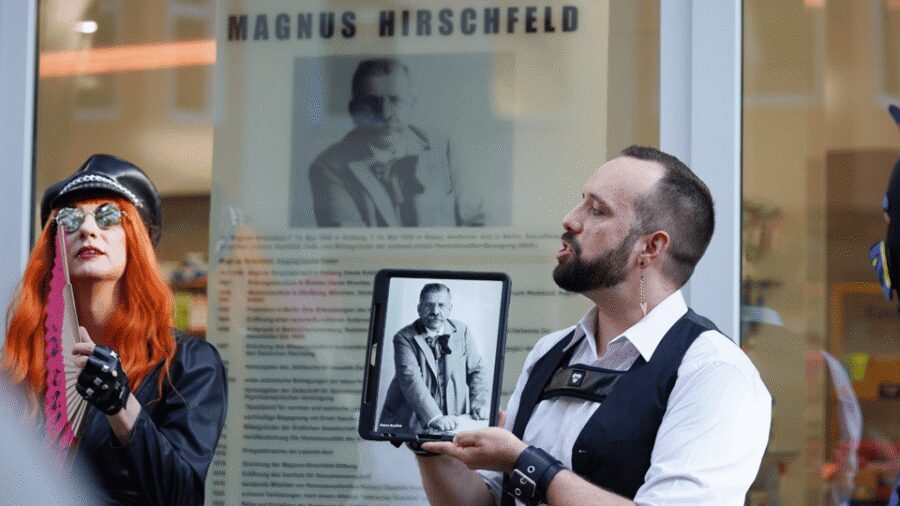
- iPad augmented reality on the street: see historical photos placed over today’s locations
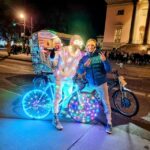
- Mixies AR group photos: fun, personalized images to take home
- A small group capped at 10: more time for questions and a calmer pace
- All walks between free public sites: the stops themselves don’t require paid entry
- Stories you usually miss on your own: from early rights advocacy to post-war activism and drag culture
- Tonight’s Berlin context: nightlife pointers tied to the history
From Alnatura to Metropol: how the route actually feels
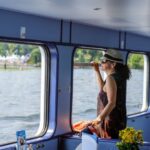
You start near Alnatura Super Natur Markt on Else-Lasker-Schüler-Straße at 2:00 pm, then finish at Metropol near Nollendorfplatz. The whole thing is about 3 hours 30 minutes, and the time spent at each stop is short enough that you keep moving, but long enough for the guide to explain what you’re looking at.
Berlin can be easy to explore, but it’s also easy to miss the meaning of a street corner. This tour is built to help you read the city—what happened here, who was affected, and how queer and trans communities created safety, culture, and resistance.
Because the group size stays small, the tone stays personal. If you ask a question, you’ll usually get an answer that fits the exact moment you’re standing in, not a generic history summary.
You can also read our reviews of more historical tours in Berlin

Ulrichs and Hirschfeld: when rights ideas became visible in public
The tour begins at Karl-Heinrich-Ulrichs-Straße 1, named for Karl Heinrich Ulrichs, widely described as one of the earliest public gay rights advocates. You’re introduced to how he argued for decriminalization of homosexuality long before the modern terms took hold, and how his framing influenced later movements.
From there, the story grows bigger with Magnus Hirschfeld at Stop 5 (Magnus-Apotheke). This is where Berlin becomes a global reference point. You’ll hear about Hirschfeld’s Institute for Sexual Science and the Scientific-Humanitarian Committee—often described as the world’s first organization dedicated to queer rights and gender studies.
You also get details that make the topic real, not abstract. The guide talks about Hirschfeld’s theories (including ideas about sexual “intermediaries” and Berlin’s “third gender”), and the fact that the institute era is linked to world-first gender-affirming surgeries for people such as Dora Richter, Lili Elbe, and Karl M. Baer.
And then comes the brutal part: the institute was destroyed by the Nazis. Standing there, you don’t just learn that persecution happened—you feel how cultural and scientific work can be erased when power turns against identity.
Nazi persecution at Nollendorfplatz: where a pink triangle entered the story
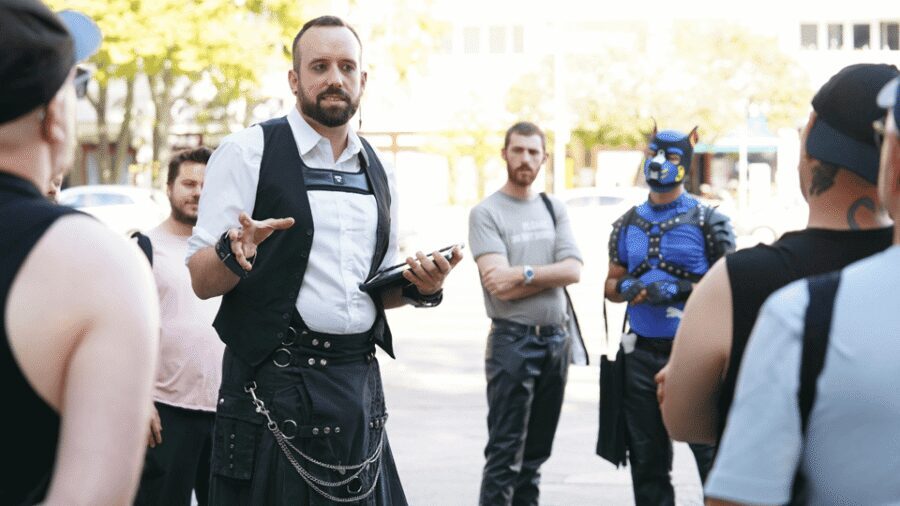
At Nollendorfplatz, you get the stop that changes the atmosphere. This is Stop 2, focused on persecution of LGBTQIA+ people in Nazi Germany, including the complex roles of Ernst Röhm and gay activists like Adolf Brand.
You’ll hear how Hitler’s stance on homosexuality fed mass persecution, then how the Night of the Long Knives turned against people within the Nazi party, including many who were queer. The tour connects that shift to what happened afterward, including forced identification in concentration camps—people made to wear the pink triangle.
One reason this stop works is that it doesn’t treat the Nazis like a single, faceless villain. It shows how regimes can use stereotypes, then turn on anyone who doesn’t fit the desired script of “acceptable” life.
This is also a place where you might need a pause. If you’re sensitive to details, know that the tour doesn’t shy away from names and mechanisms of oppression.
Queer nightlife origins: Eldorado drag culture and what it costs to survive regimes
Stop 6 brings you to the former site of Eldorado, one of Berlin’s famous drag bars of the 1920s. Drag here isn’t framed as entertainment only—it’s framed as gender-nonconforming presence, performer-led community, and visibility in a city that could still be dangerous.
The guide also points out a historically unsettling contradiction: Eldorado is described as having included even high-profile Nazis like Ernst Röhm as patrons, even while the regime later persecuted LGBTQIA+ people. That contrast is hard to hold, but it makes an important point about how oppression can coexist with pockets of tolerance—until it doesn’t.
This stop sets you up well for the later story of post-war queer spaces, because you start to see a pattern: communities build rooms for safety, and then power tries to break them.
Lesbian life and cabaret inspiration: Toppkeller, Claire Waldoff, and Isherwood
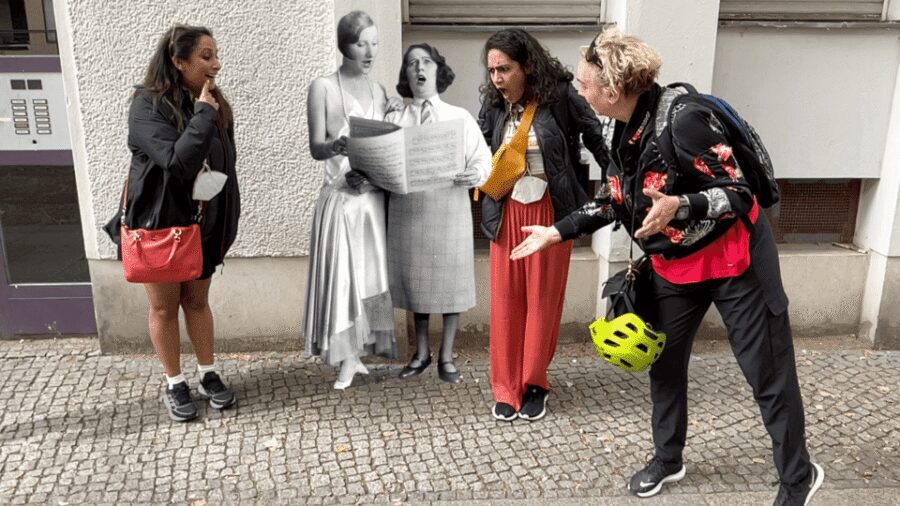
Stop 3 (Schwerinstraße 13) shifts focus to lesbian life in 1920s Berlin. You visit the site connected to Toppkeller, described as a famous lesbian bar, and you hear how spaces like these helped queer women build community and safety.
It’s not just “where they went.” The guide connects these places to culture and voice, including mentions of Claire Waldoff, a lesbian cabaret singer whose songs became anthems of defiance.
Stop 4 (Nollendorfstraße 17) adds a different thread: Christopher Isherwood and the queer inspiration behind Cabaret. You learn how Isherwood’s Berlin experiences influenced the later Cabaret musical and film, and you hear a personal layer too—his relationship with Heinz Neddermeyer and their escape from Nazi Germany as queer refugees.
What I like here is how the tour treats art as documentation. Cabaret isn’t sold as trivia; it’s presented as an echo of lived experience, filtered through writing and performance.
The police, the institute, and why “official” power matters
Stop 4 includes something surprising: the homosexual department of the Berlin police force. That can sound like an odd inclusion, but it matters. It shows you that queer life wasn’t only policed through violence and rumor—it also existed inside bureaucratic systems, which shaped how people were targeted.
Then you circle back to Stop 5’s institute work, and the contrast becomes clearer. Hirschfeld’s institute represented scientific and rights-focused thinking, while Nazi rule represented the machinery of suppression. Together, these stops help you understand why queer history includes institutions—research groups, committees, and, sadly, systems designed to control and punish.
Even if you’ve visited Berlin before, this part makes you slow down. You start noticing how power maps onto buildings, addresses, and street names.
Post-war activism and a trans icon: from West Berlin clubs to East Berlin memory
After the Nazi era, the tour moves into post-war queer activism starting at Stop 7 (Prinz Eisenherz). You’ll learn about Homosexuelle Aktion West-Berlin, one of the early queer rights organizations after WWII, and you’ll hear how SchwuZ became one of Berlin’s iconic queer clubs.
Then the tour highlights Charlotte von Mahlsdorf, described as a trans woman who preserved Berlin’s queer history and created safe spaces in East Berlin. This isn’t presented as a vague inspiration story—it’s tied to actual memory-keeping and community space-making, which is a different kind of activism than protest alone.
Stop 8 (Connection) takes you to the trans community and queer club revolution in West Berlin during the 1970s and 1980s, including the impact of Chez Romy Haag. The guide describes it as a legendary, trans-led nightclub that helped revolutionize Berlin’s nightlife by giving gender-diverse people room to exist freely.
If you’re someone who loves nightlife but also wants meaning behind it, this is the sweet spot. You leave it understanding that queer clubs weren’t just parties—they were survival infrastructure.
AIDS crisis at the divided memorial: organizing under pressure
Stop 9 is Internationale Stele GEGEN DAS VERGESSEN, focused on the AIDS crisis in Berlin and how it affected the divided city. The tour explains how queer community organization was essential for survival and response.
You’ll also hear about Rita Süssmuth, highlighted here as a politician who advocated for AIDS awareness. Another detail connects politics and culture: the Berlin Wall is described as being called the condom of the GDR, pointing to differences between East and West Berlin in handling the crisis.
This stop can feel heavier than the club stops. That’s part of the intent. It makes the history of nightlife and activism feel responsible, not just romantic.
Metropol and today’s Berlin: Pride, fetish festivals, and the fight against affordability loss
The finale takes you into contemporary queer nightlife at Metropol (Stop 10). You’ll explore the club’s role in early gay community and techno culture, and you’ll also hear about its connection to world-famous modern venues like Berghain and Lab.Oratory.
From there, the tour ties history to current events and the political fights that still matter. The guide brings up SO36’s legendary queer nights, plus Folsom Europe (described as Europe’s biggest fetish festival), Kreuzberg Pride, and the Dyke March.
There’s also a practical economic thread: the ongoing fight for an affordable Berlin, including mention of the Tuntenhaus squat. This is one of those “you live here too” reminders. Culture isn’t only about identity; it’s about access to space.
By the time you end at Metropol, you’re not just learning what happened. You’re getting a map for what’s happening now, with context that makes it easier to choose where to go next.
Price and value: what $83.13 buys you (and why it’s more than a walking tour)
At about $83.13 per person for roughly 3.5 hours, you’re paying for three things that most city walks don’t bundle well.
First, you’re paying for a small-group format capped at 10 people, which keeps the experience interactive. Second, you’re paying for iPad augmented reality and Mixies AR photos, plus access to 200+ rare historical photos, videos, and archival materials. That last part matters because it turns the tour into something you can revisit mentally and visually later.
Third, you’re paying for a guide who connects the facts to the street. In the reviews, people consistently praise Jeff’s engaging delivery, mixing emotion and humor while keeping the details grounded. You’ll feel that as you walk—he doesn’t just name places; he explains why those places matter.
One more value angle: the stops are described as free in terms of admission tickets, so you’re not stacking extra entry costs onto the base price.
Pacing, comfort, and what to bring
This is a walking tour, and it covers a string of meaningful addresses. Wear comfortable shoes, because you’ll be on your feet for the full 3.5-hour block.
Bring a water bottle if you tend to get thirsty easily. You also might want layers, since weather can shift in Berlin and the tour requires good weather to run.
If you like history that uses real-world visuals, the AR component is built for you. You’ll see historical photos placed right where you’re standing, which helps your brain connect the past to the present.
And if you’re hoping for light, fluffy entertainment, you may find the emotional weight heavy at points. The material includes persecution and public violence, and the guide treats those sections with care.
Should you book the Berlin queer and trans history tour?
If you care about LGBTQ+ and trans history in a city where the streets still hold clues, I think this tour is an excellent booking. The iPad AR, Mixies photos, and 200+ archival materials turn it into more than a normal guide-and-a-brochure walk, and the small group format keeps it human.
I’d especially recommend it if you want Berlin context that makes today’s queer nightlife make sense. After this, places like Metropol aren’t just stops on a party plan—they’re part of a longer chain of community-building.
Book it if you’re up for a thoughtful walk through some difficult chapters of history. Skip it only if you know you don’t want to hear about Nazi persecution and the AIDS crisis, or if you’re traveling at a time when Berlin weather often derails outdoor plans.
FAQ
What is the duration of the Berlin queer and trans history tour?
The tour runs for about 3 hours 30 minutes.
How much does the tour cost?
The price is $83.13 per person.
Where does the tour start and where does it end?
It starts at Alnatura Super Natur Markt on Else-Lasker-Schüler-Straße 18, 10783 Berlin, and ends at Metropol, Nollendorfpl. 5, 10777 Berlin.
Is the tour offered in English?
Yes, the tour is offered in English.
How big is the group?
The experience has a maximum of 10 travelers.
Is there a guided component, or is it self-guided?
It’s a guided walking tour led by a queer activist and gender scholar, and you’ll also have AR elements during the walk.
What AR and photo features are included?
You’ll get an iPad for augmented reality, plus Mixies for personalized AR photos. You also receive access to 200+ rare historical photos, videos, and archival materials.
Do you need to pay admission fees at the stops?
The listed stops indicate admission tickets are free.
What happens if the weather is poor?
The tour requires good weather. If it’s canceled due to poor weather, you’ll be offered a different date or a full refund.
Can I cancel and get a full refund?
Yes. You can cancel up to 24 hours in advance for a full refund, and confirmation is received at booking.