REVIEW · BERLIN
Alternative Berlin Bike Tour – Off the Beaten Tracks in Small Groups
Book on Viator →Operated by Berlin on Bike · Bookable on Viator
Berlin has two faces, and this ride shows both. This 3.5-hour bike tour takes you off the main drag and into the neighborhoods where Berliners actually hang out—parks, courtyards, graffiti, and big architecture left over from the DDR era.
I particularly like the small-group feel (max 14) and the way the guide explains what you’re seeing in real human terms, not museum-poster language. I also love that bikes and helmets are included, so you skip the rental hassle and just start riding.
One thing to consider: you’re cycling in normal city traffic, and depending on your comfort level (especially with kids), the streets can feel busy. The good guides handle it well, but it’s still real urban riding, not a car-free path.
In This Review
- Key moments worth planning for
- Why this alternative Berlin bike route feels more like the real city
- Finding your start point at Kulturbrauerei (and why the location matters)
- Stop-by-stop: what you’ll actually see and what it means
- 1) Kulturbrauerei: a listed industrial setting for culture
- 2) Volkspark Friedrichshain: the neighborhood side of green space
- 3) East Berlin in Friedrichshain: techno, politics, and everyday streets
- 4) Karl-Marx-Allee: riding the Socialist Classicism and Prussian mix
- 5) RAW Tempel Nightclub: creative projects plus nightlife
- 6) East Side Gallery: the long Wall remnant as an open-air exhibit
- 7) Oberbaum Bridge: the landmark photo moment
- 8) Centre for modern visual arts: exhibitions and artist life
- Small group size and guide style: why the ride feels personal
- Bikes, helmets, and road reality: safety without killing the fun
- Parks, Wall art, and Soviet-era architecture: the tour’s best balance
- Food, drinks, and time management (plan this so you’re not hungry)
- Price and value: what you’re paying for
- Weather and comfort: what to expect before you go
- Should you book this alternative Berlin bike tour?
- FAQ
- Where does the tour start?
- What time does the tour begin?
- How long is the tour?
- Is the tour in English?
- What’s included with the ticket price?
- Are food and drinks included?
- How many people are in a group?
- Do I need to rent a bike or helmet?
- What if the weather is bad?
Key moments worth planning for
- Kulturbrauerei first stop: Start in a former industrial complex that’s now a cultural hub, inside a listed 19th-century ensemble.
- Friedrichshain on purpose: Parks and residential streets instead of only postcard views.
- Karl-Marx-Allee architecture ride: See Soviet-era grandeur at bike pace, not from behind a crowd.
- RAW Tempel’s creative energy: A project space tied to exhibitions, markets, and nightlife.
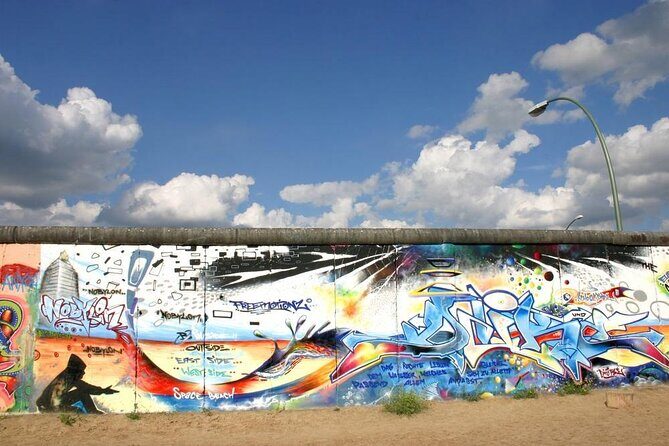
- East Side Gallery and Oberbaum Bridge: Wall art under bridges, with a skyline moment built for photos.
- Görlitzer Park reset: Finish in a big Kreuzberg green space that helps you decompress before heading back.
Why this alternative Berlin bike route feels more like the real city
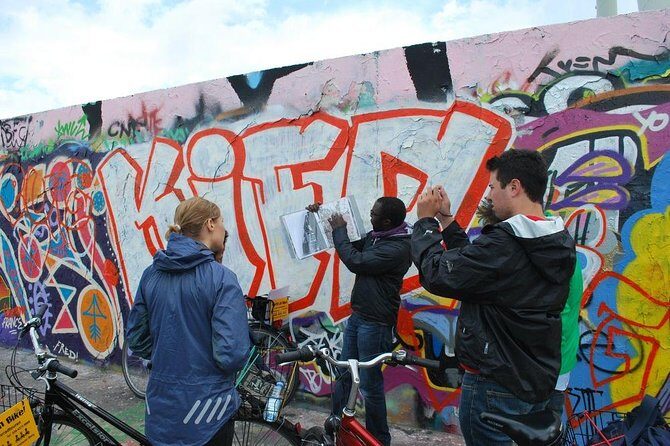
Most Berlin tours zoom you past neighborhoods like they’re scenery. This one slows the pace and makes the streets the point. You pedal along city traffic at a comfortable rhythm, so you notice the textures—shopfronts, street murals, courtyards, and the way people move through their day.
The theme is simple: how East Berlin neighborhoods became a playground for alternative culture, and how DDR-era buildings and ideas still shape what you see today. The result is a Berlin mix that’s practical and personal at the same time.
Helmets and bikes are included, which matters more than it sounds. You don’t waste time hunting a rental, worrying about whether it fits, or carrying gear for nothing. You show up ready, get on the bike, and the city starts immediately.
You can also read our reviews of more walking tours in Berlin
Finding your start point at Kulturbrauerei (and why the location matters)
You meet at Berlin on Bike’s depot at Kulturbrauerei, Knaackstraße 97, 10435 Berlin. This is a strong choice for a tour like this because Kulturbrauerei isn’t just a random meeting point—it’s the kind of place where Berlin’s old industrial structure got repurposed, and that story fits the tour’s overall vibe.
The tour starts at 3:00 pm and runs about 3 hours 30 minutes. That timing is usually great for seeing neighborhoods without the harsh midday light and still having enough daylight to enjoy outdoor stops like Wall art and park time.
Before you roll out, expect a quick setup and bike orientation. Berlin is fairly flat, but the route still includes enough riding that having your helmet on and your comfort checked early makes everything smoother.
Stop-by-stop: what you’ll actually see and what it means
1) Kulturbrauerei: a listed industrial setting for culture
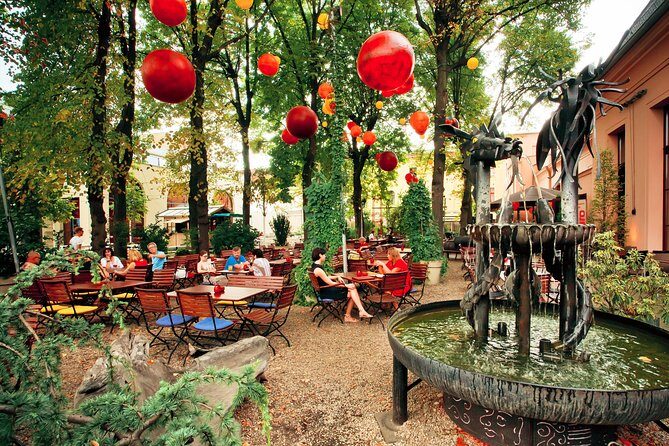
You’ll spend a few minutes at Kulturbrauerei, an about 25,000 m² ensemble of buildings with courtyards and unique architecture. It’s listed since the 1970s and is one of the better-preserved industrial architecture monuments from the late 1800s.
What I like about starting here is that it immediately gives you context. Berlin has tons of historic spots, but here the history shows up as a living space—something reused, not frozen. As you ride away, that industrial-meets-alternative energy is a useful lens.
If you’re someone who gets distracted by details, you’ll probably enjoy this early stop. It sets the tone and gets you looking.
2) Volkspark Friedrichshain: the neighborhood side of green space
Next up is Volkspark Friedrichshain, a recreation area built in 1846 as the first municipal green area in Berlin. That date matters because it ties Berlin’s public life to the city’s long pattern of building shared outdoor space, not just quick modern upgrades.
During these park moments, the tour does something smart: you get a break from constant streets while still staying connected to the neighborhood feeling. It’s not a long rest. It’s a reset so you can process what you’re seeing.
The possible drawback here is simple: if you’re hoping for big, obvious sightseeing backdrops every minute, parks may feel quieter than a famous landmark. But for a tour themed around local life, that’s the point.
You can also read our reviews of more cycling tours in Berlin
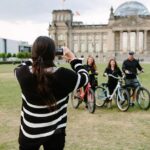
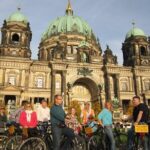
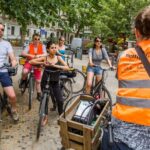
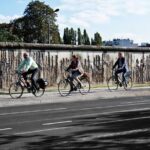
3) East Berlin in Friedrichshain: techno, politics, and everyday streets
Then the route pushes into Friedrichshain’s alternative side, the part of Berlin people talk about when they mention techno culture and political street art. You’ll also pass or reference the East Side Gallery, including the idea of it as a listed Wall section with major graffiti history.
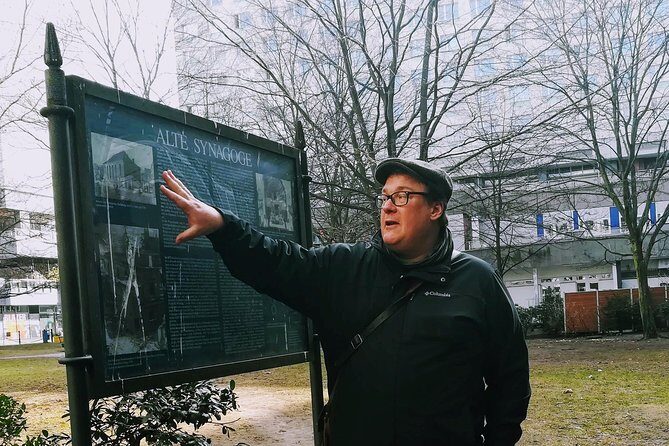
This is where the guide’s storytelling really matters. Architecture alone can be impressive, but a good explanation connects the buildings to how people used them—then and now. The DDR-to-now contrast is woven into the ride rather than dumped into a lecture.
If you like Berlin’s “small signals”—the kind of places locals mention, the graffiti you wouldn’t seek out, and the vibe shift from street to street—this is where you’ll feel it most.
4) Karl-Marx-Allee: riding the Socialist Classicism and Prussian mix
You’ll hit Karl-Marx-Allee, known for apartment blocks and towers built in a style mix associated with Socialist Classicism and the Prussian Schinkel School. You get to see this kind of monumental architecture as it was designed: wide, meant for public presence, and very much about perspective.
On a bike, you can actually take in the scale. From a bus window, it becomes a blur. From behind a crowd, it’s hard to judge distance. On two wheels, you get time to notice repetition—patterns in facades, how streets open up, and how the buildings guide your line of sight.
The catch: this section can involve busier road conditions than the quietest park stretches, so your comfort with urban riding matters.
5) RAW Tempel Nightclub: creative projects plus nightlife
Another highlight is RAW Tempel, described as a space for intercultural projects, exhibitions, and markets, and also home to many clubs and bars. It’s a good stop for the theme of alternative Berlin because it’s not just about art on walls. It’s about a scene that keeps producing stuff.
I like stops like this because they don’t force the tour into one definition of culture. Here, you see how culture can be practical—projects, exhibitions, markets—while also feeding nightlife.
Just don’t expect a quiet, museum-like experience. The energy of RAW Tempel is more “scene” than “silence.”
6) East Side Gallery: the long Wall remnant as an open-air exhibit
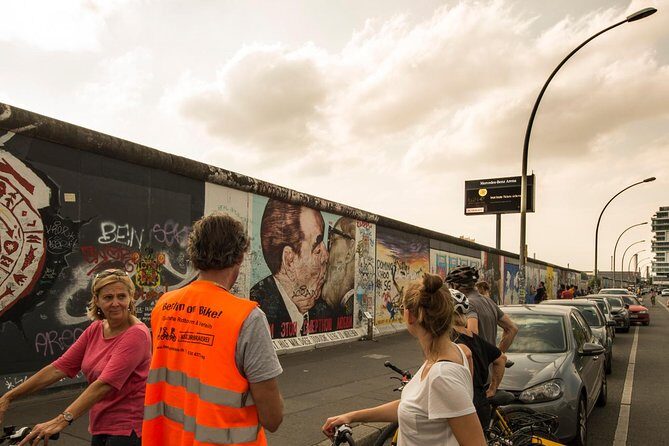
You’ll also come across the East Side Gallery, described as a permanent open-air gallery on the longest remaining section of the Berlin Wall. It’s recognized as a listed section, which helps explain why the art and the history sit together instead of being treated as separate things.
This stop is powerful partly because it’s outdoors. You can walk a little, look up, and see how the Wall functions like a backdrop—literally part of Berlin’s visual landscape now.
The possible drawback is weather and time-of-day. If it’s wet or windy, outdoor viewing can feel less comfortable. The tour runs in all weather conditions, so bring the right layers.
7) Oberbaum Bridge: the landmark photo moment
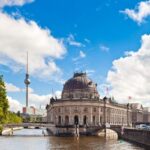
You’ll also get a look at Oberbaum Bridge, described as one of Berlin’s most beautiful bridges and a Friedrichshain-Kreuzberg landmark connecting both districts over the Spree.
Bridges are great tour stops because they work in two directions: they’re a view, but they also show how the city is physically stitched together. For this route, the bridge helps connect the Wall-adjacent story with the Kreuzberg side of the alternative vibe.
This is often where you’ll feel that the tour is more than a list of sights. It’s a geography lesson you can ride through.
8) Centre for modern visual arts: exhibitions and artist life
The route includes a stop described as a centre for modern visual arts, with exhibitions, workshops, and an artist-in-residence program. Even when you only spend a short time here, it supports the tour’s core idea: Berlin’s creative energy isn’t only something you read about—it’s built into places where work happens.
If you’re the type who enjoys watching how a city organizes ideas into real spaces, this kind of stop can be a highlight.
Small group size and guide style: why the ride feels personal
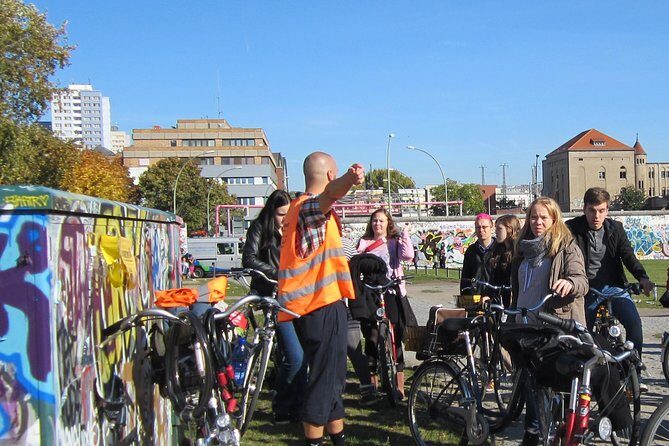
This is capped at 14 travelers, which changes the whole experience. The guide can slow down when someone asks a question. You’re less bunched up at stops. And you can actually follow the rhythm of the route without feeling like a moving line.
The guide quality also shows in how the tour lands. In the past, this tour has been led by guides including Anna, Paul, Marcus, Edgar, George W., Lauren, Klaus, and Maria. You’ll see the same core approach no matter who you get: clear explanations, storytelling that connects history to life, and a knack for getting the group to engage.
One detail I really like from guide anecdotes is how they make the ride enjoyable for mixed ages—so if you’re bringing a teenager (or even a kid who can handle bike time), there’s usually a way the guide brings the material down to scale.
And yes, it’s still street cycling. One important consideration: traffic—both auto and bike—can feel intense at times, especially for younger riders who are still learning how to read road situations. The guide does their part, but your kid’s comfort matters.
Bikes, helmets, and road reality: safety without killing the fun
Bike touring is fun until you feel tense. The good news here is that helmets and bikes are provided, so you don’t start the tour already stressed. It’s a relief.
Berlin’s streets are also fairly flat, which helps a lot. But distance still matters. The tour is long enough to qualify as real exercise, not a short spin around the block.
If you’re new to biking in cities, I’d suggest you do two things before you ride:
- Bring your own comfort check. If you feel shaky early, say something right away.
- Pay attention to how the group moves at intersections. City tours live or die on that part.
Once you’re synced, the pace works. You get the feeling of motion without feeling rushed.
Parks, Wall art, and Soviet-era architecture: the tour’s best balance
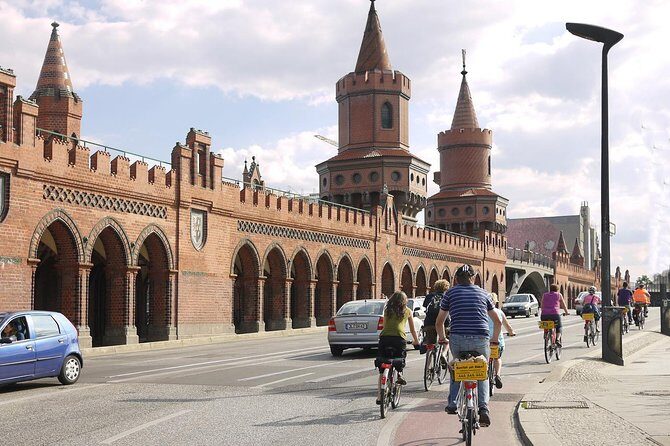
What makes this tour hit is the balance between contrasts:
- Green space (Volkspark Friedrichshain and later Görlitzer Park) so you breathe and think.
- Architecture with political DNA (Karl-Marx-Allee) so you understand why the city looks the way it does.
- Street-level expression (Wall art at East Side Gallery and political graffiti energy in the Friedrichshain story) so you see Berlin’s social voice.
You finish with Görlitzer Park, described as a large park and recreation area in Kreuzberg. It was created in the late 1980s and early 1990s after the old Görlitzer Bahnhof rail facilities were removed. That detail ties in nicely with the city’s larger theme: redevelopment, repurposing, and change.
This last park stop is a good way to end. You come down off the intensity of Wall and nightlife stories and land in a space where people just relax.
Food, drinks, and time management (plan this so you’re not hungry)
Food and drinks are not included. That’s normal for bike tours, but it still affects your experience. With about 3.5 hours of riding and stops, you’ll probably want a snack planned before you meet—or at least ready to grab something after.
The tour finishes back at the meeting point, so plan an easy next move: you’ll likely want a calm dinner in the area once you’re done.
Price and value: what you’re paying for
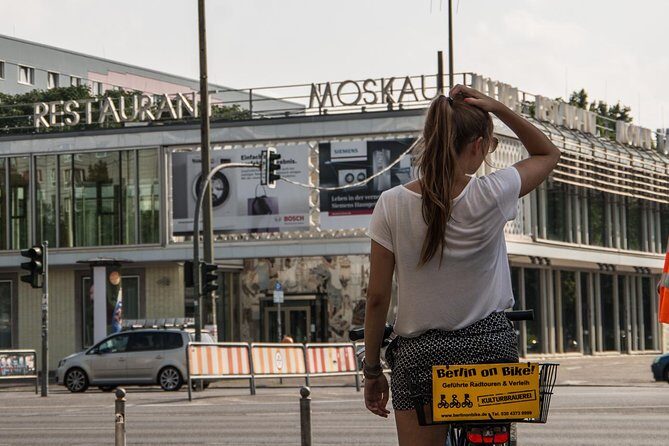
At $43.54 per person, you’re paying for more than “someone walks you around.” You’re paying for:
- a local guide
- bike use
- a helmet
- and a route that focuses on neighborhoods and history you’d have trouble stitching together on your own in a few hours
Also, many stops are described as admission free, which matters because you aren’t burning your budget on ticket lines. You’re spending your money on guidance and route selection, not museum fees.
If you were planning to rent a bike anyway, this becomes even better value because the tour bundles the equipment into the price.
Weather and comfort: what to expect before you go
The tour operates in all weather conditions, so dress for the day you get, not the forecast you hope for. It’s also noted that the experience requires good weather, and if it’s canceled for poor weather you’ll be offered a different date or a full refund.
For most people, the bigger comfort issue isn’t warmth—it’s whether your clothing lets you ride without getting miserable. Bring layers, and think rain protection if skies look questionable.
Physical fitness is described as moderate. Berlin is flat, but you still need enough stamina for a longer bike ride with short stop-and-go breaks.
Should you book this alternative Berlin bike tour?
Book it if you want Berlin that feels lived-in: street art, Wall remnants, Soviet-era streetscapes, and creative neighborhoods you might skip if you only follow the usual highlights. I also think it’s a strong choice if you like the idea of getting around under your own power but still want a guide to explain what you’re seeing.
Skip it or choose another style of tour if you’re uncomfortable with urban cycling in traffic. The route is timed and paced for riding, and even though the guide helps, you’ll still feel the city.
If your goal is to leave Berlin with a sharper sense of how the east side changed—and where the culture comes from—this one is a smart bet. You pedal, you stop, you look up at bridges and Walls, and you end in a park that lets the city settle back into focus.
FAQ
Where does the tour start?
The tour starts at Berlin on Bike – Radtouren & Fahrradverleih, Kulturbrauerei, Knaackstraße 97, 10435 Berlin, Germany.
What time does the tour begin?
The start time is 3:00 pm.
How long is the tour?
It’s approximately 3 hours 30 minutes.
Is the tour in English?
Yes, it’s offered in English.
What’s included with the ticket price?
The tour includes a local guide, use of a bicycle, and use of a helmet.
Are food and drinks included?
No, food and drinks are not included.
How many people are in a group?
The maximum group size is 14 travelers.
Do I need to rent a bike or helmet?
No. The bike and helmet are included.
What if the weather is bad?
The tour operates in all weather conditions, but it also requires good weather. If it’s canceled due to poor weather, you’ll be offered a different date or a full refund.