If Berlin has a postcard square, it is Gendarmenmarkt. This 2-hour walk turns that pretty view into a street-level story, tying together architecture, famous names, and major moments that shaped modern Berlin.
I especially love how the tour makes three landmark buildings feel personal, not just impressive. You’ll also get a tight, friendly small-group feel, with guides who bring the square’s changing roles to life. One consideration: the live tour is in German, and it is not suitable for people with visual or hearing impairments.
In This Review
- Key things I think you’ll notice on this walk
- Starting at Gendarmenmarkt: the easiest way to get your bearings
- Why people call it Berlin’s most beautiful square
- German Cathedral, French Cathedral, and the Konzerthaus: architecture you can actually read
- The personalities behind the stone: Hoffmann, Baker, Dietrich, and more
- 1989 and freedom to travel: a moment you can feel in the streets
- Hausvogteiplatz and Jägerstraße: how Berlin became fashion and finance
- Mohrenstraße: the connecting thread through Berlin-Mitte
- Group size, pacing, and who this tour fits best
- Price and value: what $20 buys you in Berlin
- Before you go: how to get the most out of the walk
- Should you book this Gendarmenmarkt walking tour?
- FAQ
- How long is the Berlin: Hidden gems around the Gendarmenmarkt guided walking tour?
- How much does the tour cost?
- What’s the group size like?
- What language is the live tour guide in?
- Where do we meet for the tour?
- Is the tour wheelchair accessible?
- Is the tour suitable for visually or hearing-impaired participants?
Key things I think you’ll notice on this walk
- Cathedral-to-concert hall architecture: German Cathedral, French Cathedral, and the Konzerthaus in one focused loop
- A square with a changing purpose: you’ll learn why the Gendarmenmarkt became such a key stage for Berlin’s public life
- Famous cultural figures connected to real places: from E.T.A. Hoffmann to Marlene Dietrich
- A clear historical pivot: the stop tied to the 1989 proclamation about freedom of travel
- Fashion and finance in nearby streets: Hausvogteiplatz and Jägerstraße, plus names like Moses Mendelssohn
Starting at Gendarmenmarkt: the easiest way to get your bearings
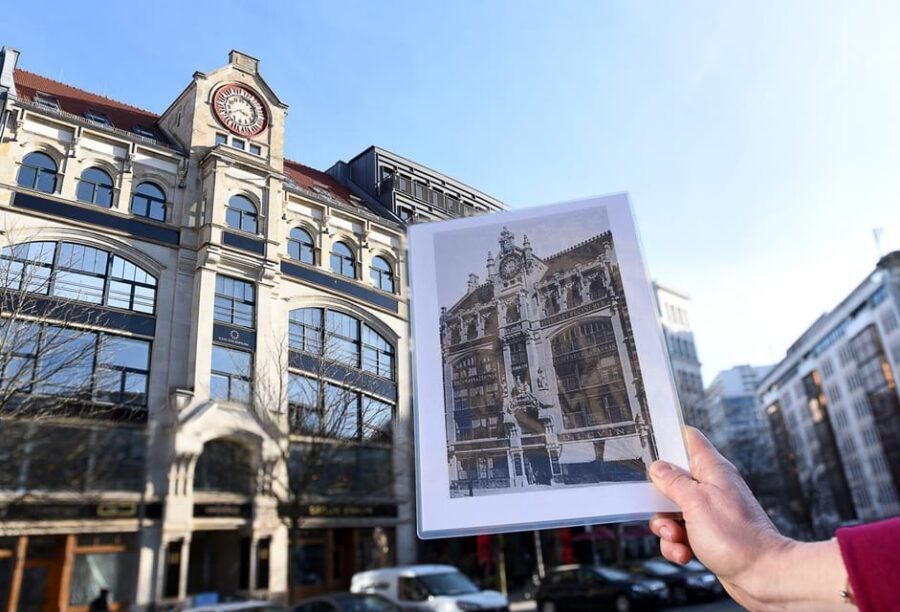
You meet at Gendarmenmarkt, opposite the house address Französische Straße 44. From there, the walk is built so you start with the obvious star of the show, then peel back the context street by street. The tour ends back at the same meeting point, so you do not have to figure out a complicated end-game.
Two hours is a sweet spot for a neighborhood walk in Berlin Mitte. It is long enough to connect the dots between what you see and what it meant, but short enough that you can still do something else afterward—coffee, a museum, or just more wandering. The group stays small, up to 15 people, which matters in a city where big groups can steamroll the details.
If your goal is to walk through Berlin without feeling like you’re reading alone off a plaque, this format works well. You get story-driven direction while still moving through real streets—Mohrenstraße, Hausvogteiplatz, and Jägerstraße—rather than staying stuck at one viewpoint.
You can also read our reviews of more walking tours in Berlin



Why people call it Berlin’s most beautiful square
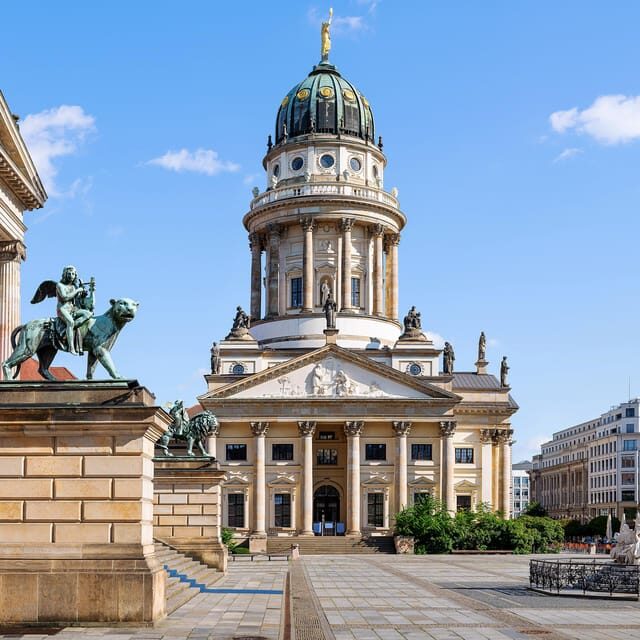
The Gendarmenmarkt is famous for looks, but the tour’s real value is the explanation behind the reputation. You learn that the square is not just a pretty backdrop; it has a past shaped by planning, power, culture, and public events over time. Once you know what to watch for, the facades start to make sense as part of Berlin’s larger evolution.
One key idea the tour emphasizes is change: the square’s identity shifts with the city around it. That is what makes it more than a photo stop. When your guide points out what shaped the square and what happened around it, you stop treating it like scenery and start treating it like a stage.
You’ll also hear why it remained a major construction site in recent years. Even if you’re only passing through, it’s helpful to know that cities keep updating their landmarks. Berlin does this in a very honest way—you can often see new layers joining old ones.
The payoff: when you look at the architecture again later, you’ll see Berlin’s decision-making, not just its design.
German Cathedral, French Cathedral, and the Konzerthaus: architecture you can actually read
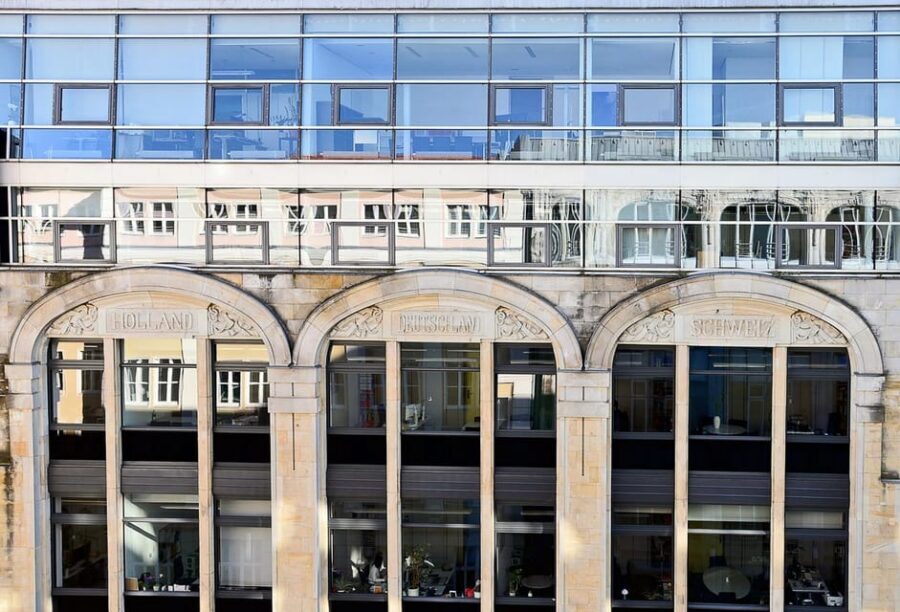
The walk begins with the three buildings that define the Gendarmenmarkt skyline: the German Cathedral, the French Cathedral, and the Konzerthaus. The tour slows down enough to help you notice differences that most people miss when they rush past for pictures.
Here’s what makes this part click for me: the buildings are close enough that you can compare them, but distinct enough that you can’t lump them together. The German Cathedral and French Cathedral create a visual balance on the square, while the Konzerthaus adds a performance-hall feel that reinforces the square’s role as a public cultural space.
You’ll hear architectural features and why these landmarks matter to the city, plus some surprising details that make the buildings feel less like generic grandeur and more like deliberate choices. If you’ve ever looked at European squares and thought, okay, it’s pretty, but why did people build it like this?—this is the section that answers that.
Practical note: bring your eyes. This stop is about what you see, not what you sit through. Stand where the guide suggests, and take a minute to compare symmetry, proportions, and how the buildings frame the square.
The personalities behind the stone: Hoffmann, Baker, Dietrich, and more
The square isn’t only tied to rulers and planners. It’s linked to people—writers, performers, and influential families—so the story has personality.
On this walk, you meet major figures such as E.T.A. Hoffmann, Josephine Baker, Marlene Dietrich, Claire Waldoff, and the Mendelssohn family. The guide’s job here is to connect those names to place, so you stop thinking of them as random facts and start seeing how cultural life clusters around landmarks like this.
This is also where the tour earns its best praise. When a guide can weave people and public spaces together across centuries, the square turns from static to human. I like experiences where names feel anchored to an actual street corner, not floating in a lecture.
One more thoughtful detail: you don’t just hear about famous artists. You also get a sense of Berlin’s social scene—who moved through these spaces and how creativity, entertainment, and intellectual life fed off each other.
1989 and freedom to travel: a moment you can feel in the streets
A standout stop is the place where the freedom to travel was proclaimed in 1989. This is a turning point in German history, and it changes how you read everything around the square.
Even if you already know the headline version of 1989, you’ll likely appreciate the on-the-ground framing. The tour helps you understand why that proclamation mattered, not only as a political event but as a shift in everyday possibility—freedom of movement, freedom to connect, freedom to plan a life beyond borders.
What I like about including this kind of stop on a walking tour is that it avoids museum-only history. You encounter history where it happened and where people still walk and meet. You can stand in the same general space and feel why the location mattered.
If you like your history grounded in real places and not kept behind glass, this section is worth the whole tour by itself.
You can also read our reviews of more guided tours in Berlin



Hausvogteiplatz and Jägerstraße: how Berlin became fashion and finance
Once you step away from the main square, the tour starts doing something smart: it maps Berlin’s identity onto nearby streets.
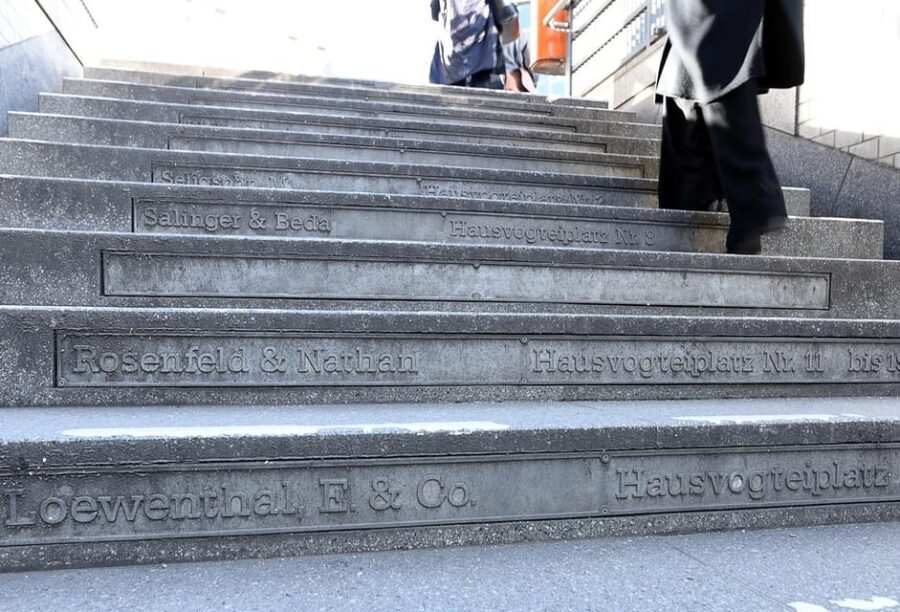
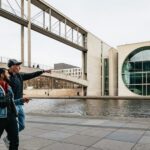
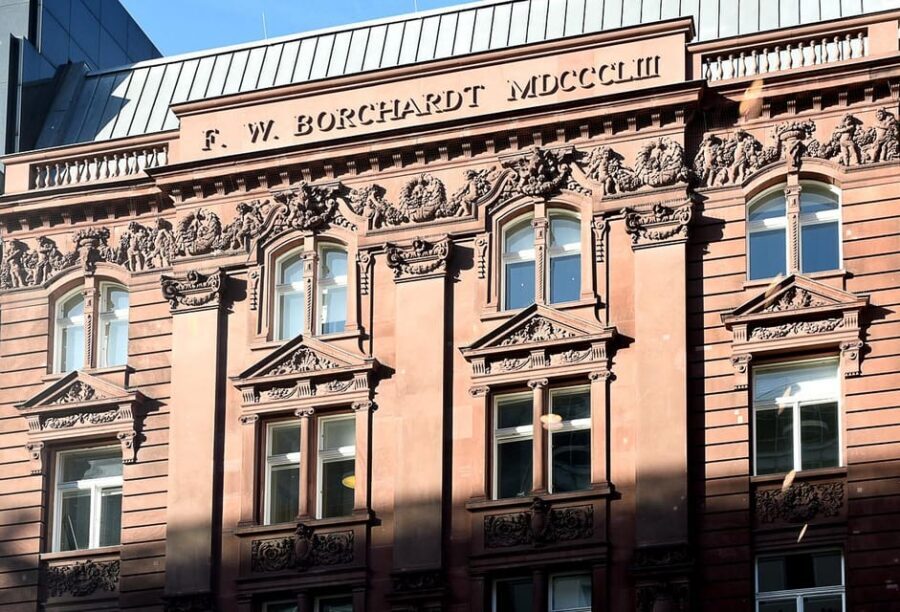
First up is Hausvogteiplatz, once at the center of Berlin’s fashion industry. The guide explains how Berlin grew into a fashion metropolis and how creative minds influenced the fashion world. This isn’t just fashion trivia. It helps you understand that fashion has always been part of Berlin’s public story—linked to business, culture, and who had the influence to set trends.
Then comes Jägerstraße, described as the heart of Berlin’s financial world, including the Mendelssohn Bank. That financial power isn’t presented as dry. It’s paired with the idea of intellectual inspiration—people like Alexander von Humboldt, Rahel Varnhagen van Ense, and Moses Mendelssohn meeting here and shaping cultural life.
So the streets are not random. They’re a network: money connected to ideas, ideas connected to culture, and culture connected back to the kind of public spaces Berlin built and maintained.
If you like walking routes where each stop adds a new layer, this is the part that makes you look up. You’ll start noticing how the city’s roles overlap, even when the streets look calm and ordinary on the surface.
Mohrenstraße: the connecting thread through Berlin-Mitte
Mohrenstraße is part of the surrounding route, and it helps tie the square to the larger neighborhood story. This is a good example of what I think makes this tour different from a basic landmark sweep: you don’t just orbit Gendarmenmarkt, you move through the surrounding grid where Berlin’s layers sit close together.
Even without turning every corner into a deep lecture, the guide uses this street and the nearby squares to keep the theme consistent—architecture, cultural life, and the way major institutions influenced the city’s direction. It’s a practical way to understand Berlin-Mitte as more than a set of famous points.
If you’re the type who likes to connect your sightseeing with how the city actually works, this “between stops” time is useful. It helps you build a mental map rather than collecting isolated photos.
Group size, pacing, and who this tour fits best
This is a guided walking tour in a small group, up to 15 people, lasting about 2 hours. That size matters for two reasons. First, you can hear the guide. Second, the route stays lively without feeling chaotic.
The guide is German-speaking, and the tour is live. So if you’re traveling with limited German, plan to rely on the big visual cues and on what you can follow from context. Also, the experience is not suitable for visually impaired people or hearing-impaired people, so it’s best to pick something else if accessibility needs apply.
On the brighter side, it is wheelchair accessible, which is a meaningful plus in Berlin, where walking routes can be uneven or long. If you’re managing mobility needs, this is at least one option that is designed with access in mind.
Overall fit: I think this tour is best for people who want a story-led walk through Berlin Mitte, and who like history that connects to architecture and recognizable names rather than only dates.
Price and value: what $20 buys you in Berlin
At $20 per person for a 2-hour small-group guided walk, the value comes from concentration. You’re paying for someone to point out what to look at and to connect buildings, streets, and historical moments into one understandable flow.
You get:
- A focused look at the three key landmarks at Gendarmenmarkt
- Context for the square’s reputation and changing roles
- Cultural names like Hoffmann, Baker, Dietrich, Claire Waldoff, and the Mendelssohn family
- A specific historical stop tied to 1989 freedom to travel
- Nearby streets that explain Berlin’s fashion and finance chapters
For me, this pricing makes sense because you’re not trying to replicate it alone. Yes, you can read about these places on your own, but a guide saves you time and helps you connect the why behind the what.
Also, the tour has strong feedback for being informative and for having a very friendly, competent guide. When the group is small, that kind of guidance can turn an ordinary walk into one that actually changes how you see the city.
Before you go: how to get the most out of the walk
If you want this tour to feel like more than a scenic stroll, here’s how to set yourself up.
First, bring comfortable shoes. It’s a walking tour, and the value is in moving between places quickly enough that the story keeps flowing.
Second, use the guide’s prompts as your checklist. When you’re told to compare the German Cathedral, French Cathedral, and the Konzerthaus, do it. Look at the way each building holds its portion of the square, not just how it photographs.
Third, treat the street names as clues. When you hear Mohrenstraße, Hausvogteiplatz, and Jägerstraße, you’re being guided toward themes—fashion, money, ideas, and cultural life. If you can keep the theme in your head while you walk, everything connects faster.
Finally, don’t be afraid to ask simple questions if your guide allows it. With a small group, you have a better chance of a real conversation than in a mega-tour.
Should you book this Gendarmenmarkt walking tour?
Book it if you want a compact, story-driven walk that turns a famous Berlin square into something you can explain afterward: architecture with purpose, people with place, and a clear historical moment tied to 1989 freedom to travel.
Skip it if your German is limited and you rely heavily on spoken detail. Since the tour is German and it is not suitable for certain accessibility needs, it’s better to choose an option that matches how you take in information.
One more tipping point: if you like tours where the guide’s personality comes through—friendly, competent, and able to keep the group engaged—this one has a reputation for exactly that. For $20, it’s a reasonable gamble with a strong chance of turning into one of those “now I see Berlin differently” afternoons.
FAQ
How long is the Berlin: Hidden gems around the Gendarmenmarkt guided walking tour?
The tour lasts about 2 hours.
How much does the tour cost?
It costs $20 per person.
What’s the group size like?
The tour is a small-group experience with a maximum of 15 people.
What language is the live tour guide in?
The live tour guide speaks German.
Where do we meet for the tour?
You start at Gendarmenmarkt, opposite the house at Französische Straße 44.
Is the tour wheelchair accessible?
Yes, it is wheelchair accessible.
Is the tour suitable for visually or hearing-impaired participants?
No. It is not suitable for visually impaired people or for hearing-impaired people.