REVIEW · BERLIN
Berlin: Private walking tour through the city center
Book on GetYourGuide →Operated by Sightseeing Point GmbH · Bookable on GetYourGuide
Berlin walks talk back. This private route strings together Cold War icons and hard history, with a guide keeping it clear and human. I especially like the mix of Berlin Wall remains and modern-city contrasts around Potsdamer Platz. You’ll also get a focused pass by the Memorial to the Murdered Jews of Europe. One thing to consider: in a short 2-hour format, the pace may feel brisk if you want extra time to linger or ask lots of deep questions.
What makes this tour work is that it’s not just photo stops. You learn how the fall of the Berlin Wall, the Third Reich’s impact on the city, and the later rise of modern architecture fit together street by street. The private format also matters because you can steer your attention—whether you’re more interested in the Cold War sites or the memorial’s meaning. Guides assigned to this tour, like Stefan, have been noted for combining history with storytelling that keeps you paying attention even when it’s cold outside.
My main caution is pacing and language variability. The tour runs in 2 hours, so you should expect a schedule that moves. If your German is limited and you’re picky about English, plan to ask your guide how they explain key points before you get fully set on a slow, word-by-word rhythm.
In This Review
- Key things you should notice on this private Berlin walk
- Why this route makes sense in Berlin’s center
- Checkpoint Charlie: where the Cold War becomes real
- Finding remaining Berlin Wall pieces in today’s streets
- Topography of Terror: the hardest stop, kept factual
- Potsdamer Platz and the Sony Center: when modern design takes over
- Holocaust Memorial: how to experience it respectfully on a walk
- Brandenburg Gate: closing on the big icon with a sharper lens
- Price and value: what $22 buys you in Berlin
- What to expect from the guide (German or English)
- Logistics that can make or break a walking tour
- Who this tour suits best
- Should you book this private Berlin walk?
- FAQ
- Where does the tour start?
- Where does the tour end?
- How long is the tour?
- How much does it cost?
- Is this a private tour?
- What languages are offered?
- What is included in the price?
- Are entrance tickets included for attractions?
- What is the cancellation policy?
- Is there a pay-later option?
Key things you should notice on this private Berlin walk
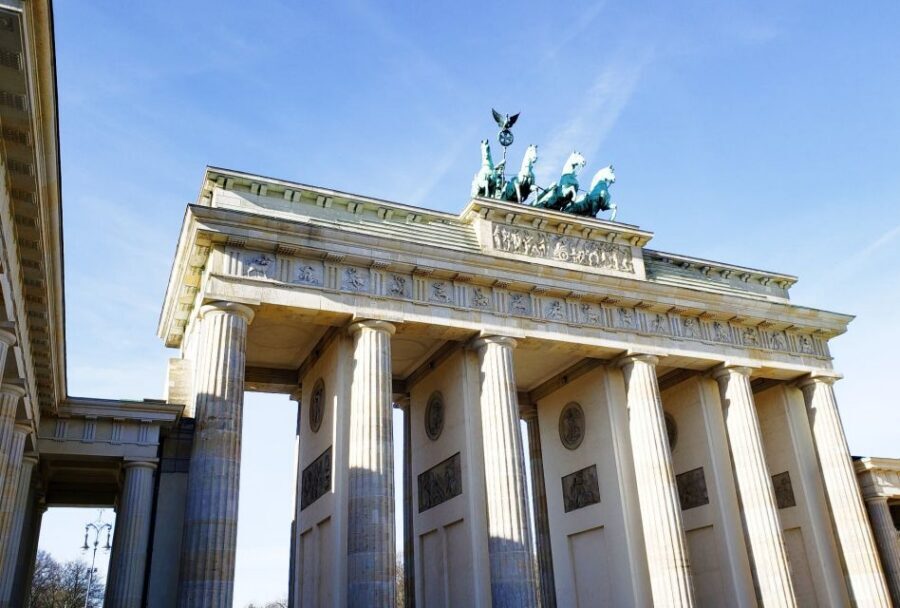
- Checkpoint Charlie to Brandenburg Gate in one sweep: you finish at the iconic gate instead of looping back.
- Berlin Wall remnants you can actually see: not just a lesson—real pieces in the urban fabric.
- Topography of Terror stop included: a heavy pivot point in the story of 1930s–1940s Berlin.
- Sony Center and Potsdamer Platz contrast: shiny modern design right where you’d expect history to dominate.
- Memorial to the Murdered Jews of Europe: the tour doesn’t skip the moral center of Berlin’s 20th-century story.
- Private guide attention: you can ask questions without waiting for a big group.
Why this route makes sense in Berlin’s center
Berlin is big, but the most important layers tend to sit close together. This walk focuses on a tight corridor of sights, so you get to connect the dots quickly instead of jumping by bus and guessing what you’re looking at. In two hours, you cover Cold War symbolism, the physical reminder of the Wall, and a major remembrance site.
I like the structure because it builds momentum. You start with the feeling of the divided city, then you move through transitional zones where old and new collide. By the time you reach the Brandenburg Gate, you have a clearer mental map of what changed—and what didn’t.
For the best experience, treat it as an orientation plus history primer. If you’re the type who likes Berlin best when it makes you think, not just when you collect landmarks, this tour fits your style.
You can also read our reviews of more walking tours in Berlin



Checkpoint Charlie: where the Cold War becomes real
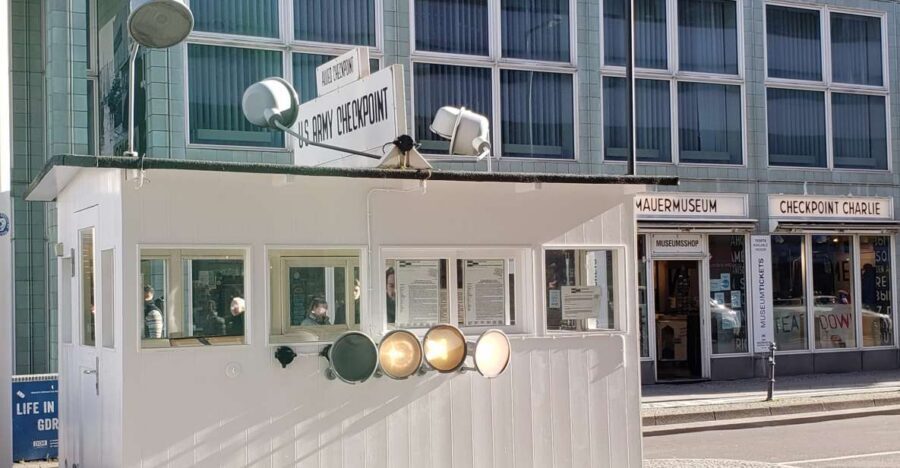
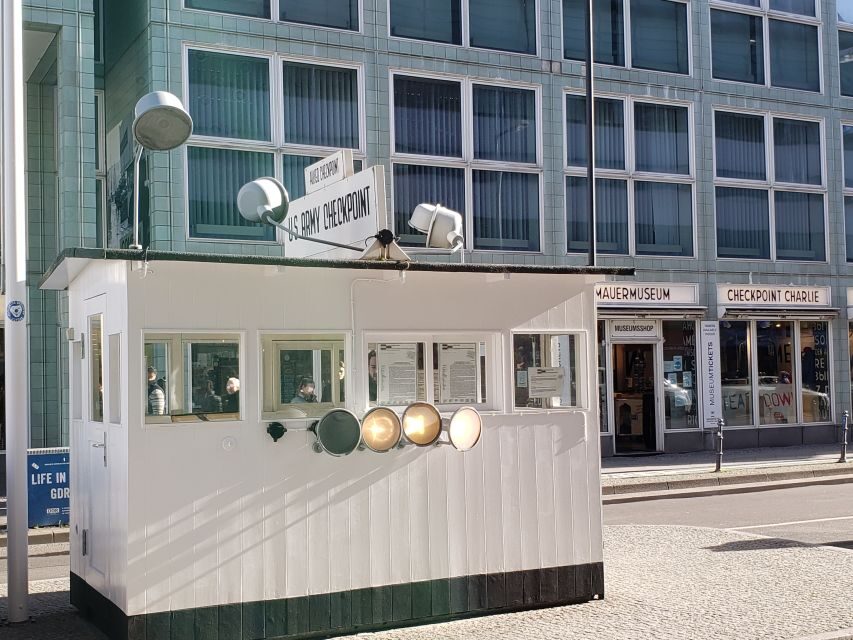
You begin at Checkpoint Charlie, right in front of the Asisi Mauerpanorama exhibition. That’s helpful because it anchors you immediately in the “divided Berlin” story, not in vague background. Your guide meets you there with a sign showing your name, which is a nice low-stress start.
At this stage, the tour’s main job is setting the mood. You’ll learn how the Cold War shaped the city’s layout and public life, and why places like this became symbols. It’s also a good moment to ask practical questions like what you’re seeing today versus what once stood here.
Possible drawback: this first stop can feel familiar to people who’ve seen the area in photos. The difference is that your guide can point out what’s still meaningful now and how the rest of the walk explains it.
Finding remaining Berlin Wall pieces in today’s streets
Next, you move toward the Berlin Wall—not as an abstract idea, but through remaining pieces that still sit within the city. This is where the walking format pays off. You can look at a real fragment and then immediately hear how Berlin went from separation to collapse, and how that shift affected the center.
I like how this part teaches you to read the city like a document. A Wall fragment isn’t just a monument; it’s a clue about control, borders, and daily life. Your guide’s explanations focus on the fall of the Wall and what it meant for Berlin’s identity afterward.
Here’s the practical tip: keep your camera ready, but don’t rush the listening. If you capture every frame first, you miss the “why” your guide is giving you.
Topography of Terror: the hardest stop, kept factual
The walk then includes Topography of Terror, another major checkpoint in Berlin’s 20th-century story. This is where the atmosphere shifts, because the topics are darker and the stakes are real. Your guide connects what happened in Berlin during the Third Reich era and how those events left lasting influence.
You can expect a guided tour that explains the context and helps you understand why this location matters. Even if you’ve read about the period before, this stop is the kind of place where you want someone to keep the story organized.
Consideration: if you’re sensitive to heavy subject matter, know that this is part of the route. The goal isn’t to shock you—it’s to give meaning. Still, it’s okay to take a breath and pause for a second before continuing.
Potsdamer Platz and the Sony Center: when modern design takes over
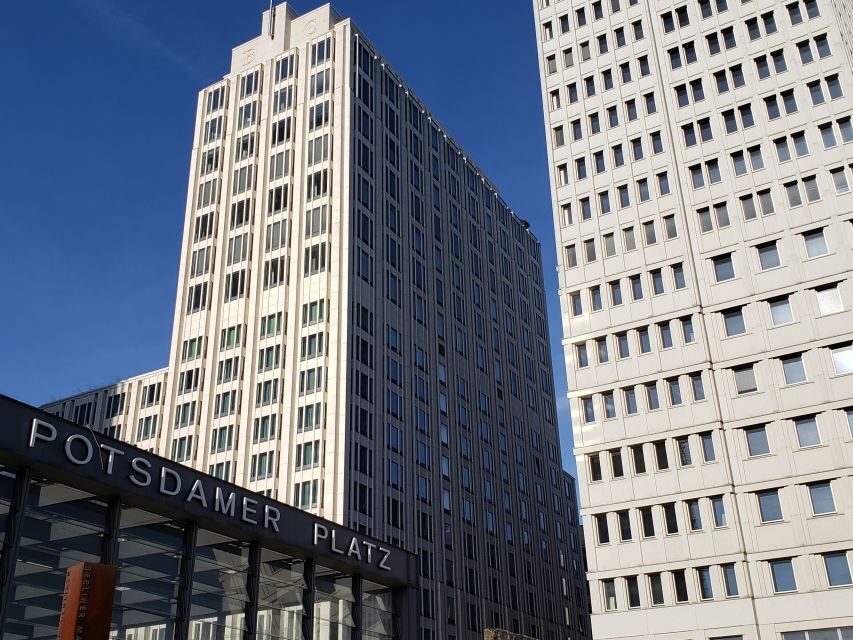
After the weightier stops, the walk shifts into contrast: Sony Center and Potsdamer Platz. The guide points out the modern architecture and the way these buildings emerged between historical sites. That’s a key theme of the tour—how Berlin didn’t just “move on.” It rebuilt, often dramatically, right around memory.
The Sony Center gets called out for a reason. It’s shiny, bold, and very much a symbol of post-Wall Berlin. Seeing it as a stop on a history walk helps you understand the city’s direction after division ended.
What I like about this section is that it helps you avoid the common Berlin mistake: thinking modern Berlin is separate from the past. Here, you’re shown how they overlap in physical space and in the story your guide is telling.
Quick practical note: this part can be great for photos, but stay aware of where you’re standing relative to viewpoints and street corners. Your guide will likely orient you so you don’t just photograph the buildings—you understand what you’re seeing.
You can also read our reviews of more city tours in Berlin




Holocaust Memorial: how to experience it respectfully on a walk
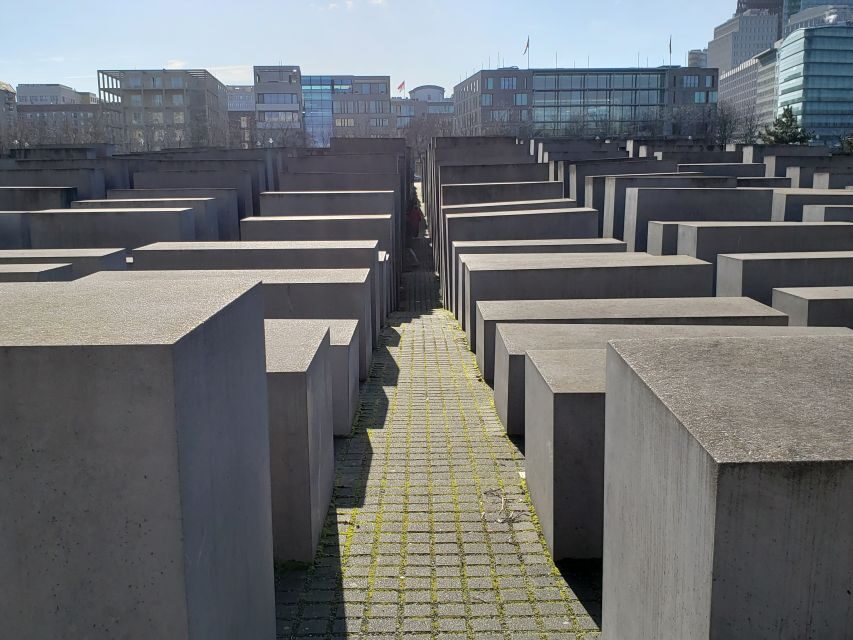
The tour then moves to the Memorial to the Murdered Jews of Europe. This is the memorial that changes the tone of the entire outing. Even if you’ve already seen it from a distance, being on foot with a guide helps you slow down and approach it with the right mindset.
Your guide uses the time to connect the memorial to what happened in Berlin and why remembrance is essential. The emphasis here is on understanding, not checking a box. It’s also the part of the route where private pacing can help, because you’re not trapped waiting for a larger group to move.
A consideration: memorials like this don’t always match the idea of a fast, landmark-hopping tour. If you want to stand with your thoughts, factor in that you might need an extra pause. Since the tour is 2 hours total, your guide may keep the group moving, so consider asking for a minute to reflect before you continue.
Brandenburg Gate: closing on the big icon with a sharper lens
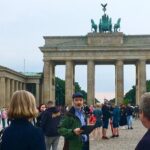
You finish at the Brandenburg Gate, the most recognizable endpoint in the route. But the value isn’t just reaching a famous picture spot. It’s that you’re arriving with context: you’ve already walked through the markers of division and the reminders of the city’s darkest chapters, plus the modern layers that grew afterward.
By the time you stand here, you’ll likely see more than an archway. You’ll connect it to the Cold War story and to Berlin’s transformation after the Wall. That’s what turns the Gate from a postcard into a meaningful final stop.
If you want to keep the momentum after the tour, the Gate is a strong starting point for wandering on your own. But don’t rush right away. I’d give yourself a few minutes to let the walk’s story settle before you head elsewhere.
Price and value: what $22 buys you in Berlin
At $22 per person for a 2-hour private walking tour, you’re paying for direct guide time and a tight route. That’s usually the best bargain type of tour in Berlin because transportation hassles shrink when someone else handles the pacing and orientation.
Private tours are often pricier, so the value here comes from focus. You’re not paying for long transfers or scattered stops. You get a guided narrative across major Berlin center sites, with a route designed to be efficient.
Entrance tickets are not included, so if you want to go inside any attractions along the way, you’ll need to budget separately. The good news is that the tour still works as a guided experience even without museum entries, because many of the key elements are built into the walking stops.
If you’re traveling with someone and you want a shared experience with a guide tailored to your pace, this format is a smart use of money.
What to expect from the guide (German or English)
This tour runs with a live guide in German or English. Because the group is private, you can also adjust what you ask for as you go. That matters on history tours, where you might want more detail on one part and less on another.
From past guide styles associated with this tour, like Stefan, the guidance tends to combine solid historical knowledge with clear storytelling, plus a bit of entertainment to keep the flow moving. That said, language skill can vary by guide and situation, so be ready for an explanation style that might not match every expectation—especially if you’re very particular about nuance.
My practical suggestion: if English is your only language, ask your guide upfront how they plan to structure the key points. If you’re comfortable with a conversational style, you’ll likely have a smooth time.
Logistics that can make or break a walking tour
This is a straightforward walking day, but a few details matter.
- You meet at Checkpoint Charlie, in front of the Asisi Mauerpanorama entrance area, and your guide holds a sign with your name.
- You finish at the Brandenburg Gate, so plan your onward route from there.
- Expect winter weather to be real. Even with a great guide, cold legs are cold legs, so dress for the temperature and for standing around while you listen.
Also, because it’s a short 2-hour timeline, come ready with a simple goal. For example: want a clear Berlin “storyline,” or want to understand how modern architecture grew after the Wall? If you know your goal, you’ll ask better questions and get more out of each stop.
Who this tour suits best
This is ideal if you:
- want a guided history walk through Berlin’s center without arranging multiple tickets and transfers
- like the connection between old and new—how Cold War sites sit next to modern architecture
- appreciate a private format where you can focus on what you care about most
It’s less ideal if you:
- want long museum time inside ticketed attractions
- prefer an extremely slow pace with lots of lingering and open-ended exploration
Think of it as a smart “big picture” tour with meaningful anchors, not as a full day of deep museum study.
Should you book this private Berlin walk?
I’d book it if your trip is short and you want your bearings fast while still taking Berlin’s heavy history seriously. The route efficiency is the big win: Checkpoint Charlie to Brandenburg Gate, with the Berlin Wall, Topography of Terror, Potsdamer Platz/Sony Center, and the Holocaust Memorial built into the story.
Skip it if you already know Berlin’s timeline and want lots of independent wandering, or if you’re determined to spend substantial time inside attractions that require entrance tickets. In that case, you might prefer a self-guided plan with more unstructured time.
If you like clear guidance, street-level context, and a private pace, this one is a strong fit.
FAQ
Where does the tour start?
It starts at Checkpoint Charlie, in front of the entrance to the Asisi Mauerpanorama exhibition.
Where does the tour end?
The tour finishes at the Brandenburg Gate.
How long is the tour?
The duration is 2 hours.
How much does it cost?
The price is $22 per person.
Is this a private tour?
Yes. It’s a private group tour.
What languages are offered?
The live guide is available in German and English.
What is included in the price?
Included: a local tour guide and a private tour.
Are entrance tickets included for attractions?
No. Entrance tickets to attractions are not included.
What is the cancellation policy?
There is free cancellation up to 24 hours in advance for a full refund.
Is there a pay-later option?
Yes. You can reserve now and pay later.