REVIEW · BERLIN
Berlin City Walking Tour of Scheunenviertel and Hackesche Höfe in Berlin Mitte
Book on Viator →Operated by Travelxsite Swen Goetz · Bookable on Viator
Jewish Berlin, told on foot. This private Berlin Mitte walking tour takes you through Scheunenviertel and Hackesche Höfe with a guide who connects the past to the street-level reality you see today. I love the story focus, especially the human details behind places like old courtyards and secret hiding spots.
I also like the way the pacing moves across eras without feeling like a lecture. You get a 1920s-feeling atmosphere at spots that are still standing, plus a look at how East Berlin could feel in the 1980s, all while the stops are ticket-free.
One consideration: if you go on a Sunday, you may find many businesses closed, so the courtyards and surrounding streets feel calmer and less “in action.”
In This Review
- Key highlights at a glance
- Berlin Mitte Jewish Stories, Without the Museum Detour
- Price and value for a private group (up to 15)
- Where you start, where you end, and how the route feels
- Stop 1: Scheunenviertel and the 1920s-feeling suburb
- Stop 2: Hackescher Markt, Haus Schwrzenberg, and a wartime hiding place
- Hackesche Höfe: eight Art Nouveau courtyards you can actually stand in
- Stop 3: Stiftung Neue Synagoge Berlin – Centrum Judaicum and Clärchens Ballhaus
- The guide makes or breaks it: Swen Goetz’s style
- Timing: what 2 hours gets you (and what it doesn’t)
- After the tour: what to do with your newfound map
- Should you book this Scheunenviertel and Hackesche Höfe walking tour?
- FAQ
- How long is the Berlin City Walking Tour of Scheunenviertel and Hackesche Höfe?
- Is the tour offered in English, and is it a private tour?
- What is the group size limit?
- Where do I meet the guide, and where does the tour end?
- Are tickets or admissions included for the stops?
- Is hotel pickup or drop-off included?
Key highlights at a glance
- Private group up to 15 people: only your group participates, so questions stay easy
- Jewish heritage on a real walking route: Scheunenviertel to courtyards tied to survival stories
- Hackescher Markt + house history: a look at a former blinds workshop and a hiding place
- Hackesche Höfe Art Nouveau courtyards: eight courtyards with greenery, shops, and bars nearby
- Clärchens Ballhaus at the end: a near-unchanged 1920s-style venue inside the route
- Professional guide: Swen Goetz (often listed as Herr Götz) leads with photos and anecdotes
Berlin Mitte Jewish Stories, Without the Museum Detour
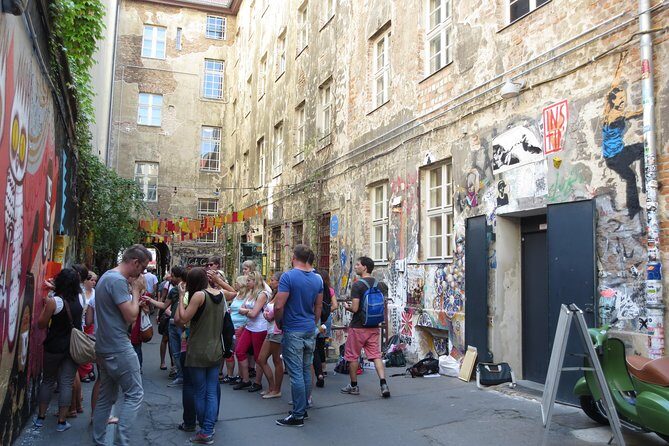
This is one of those Berlin walks that helps you see a neighborhood instead of just ticking off sights. You start in central Berlin at Rosa-Luxemburg-Straße and end at the New Synagogue area near Oranienburger Straße, with stops that turn the streets into a timeline.
What makes it work is the mix of dramatic and everyday. Some places come with big stories—prisoners, wartime concealment, and community life. Others feel small and specific, like what courtyards look like when you’re standing inside them and noticing how the buildings frame the space.
Also, it’s built for conversation. In a private group, you can ask why something was set up a certain way, or what you should look for once the guide moves on.
You can also read our reviews of more walking tours in Berlin



Price and value for a private group (up to 15)
The price is $289.95 per group for up to 15 people, and the tour runs about 2 hours. That matters because you’re not paying per head in the usual way. If you fill close to the top end of 15, it’s dramatically better value than many standard walking tours. If you’re a smaller group, you’ll feel it more—but you still get the private-format experience.
Another value point: admission at the stops is free based on the tour details. That keeps the budget steadier. You’re paying for the guide and the route knowledge, not for timed entries or surprise ticket fees.
So the real question isn’t just what it costs. It’s what you want from your Berlin day: a quiet self-walk, or guided storytelling that helps you understand what you’re looking at.
Where you start, where you end, and how the route feels
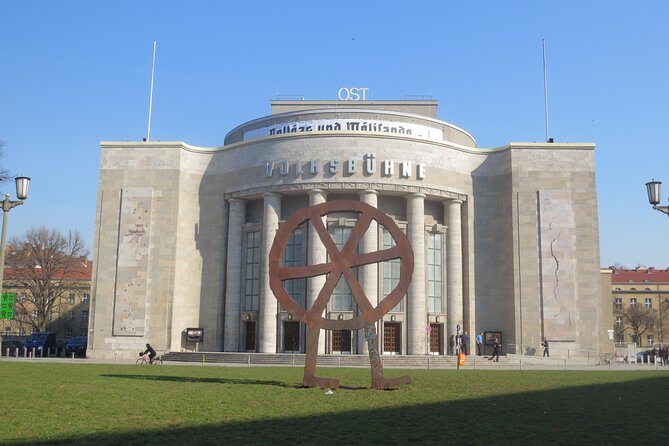
You meet at Rosa-Luxemburg-Straße 41, 10178 Berlin. The tour ends at New Synagogue Berlin – Centrum Judaicum, Oranienburger Str. 28-30, 10117 Berlin.
Because everything is in Berlin Mitte, you’ll likely be able to reach the start by public transport without fuss. The walking itself is the point, so wear comfortable shoes. The duration is short enough that it won’t drain your whole day, but long enough to feel like you went somewhere beyond a quick photo stop.
A nice practical note: the tour uses a mobile ticket, so you don’t have to hunt for paper vouchers once you’re on the move.
Stop 1: Scheunenviertel and the 1920s-feeling suburb
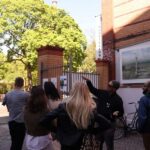
The tour begins in Scheunenviertel, the former Jewish suburb. You’re not going in blind; the guide sets a scene so the neighborhood makes sense as a community space, not just a name on a map.
This stop is about getting close to daily life in the early 20th century. You’ll hear stories tied to associations of former prisoners and what life looked like around 100 years ago. And because this is Berlin, there’s room for the lighter side too—stories that mention famous bars and the social world around the neighborhood.
How it feels: you’ll be walking through an area where modern Berlin and older layers overlap. The goal here is orientation. You come away with a clearer mental map of why this area became so important, and why it still matters in the city’s identity.
Possible drawback to plan for: this stop is story-heavy. If you prefer strict “see-and-go” sightseeing, you might need to stay mentally engaged to get the most from it.
Stop 2: Hackescher Markt, Haus Schwrzenberg, and a wartime hiding place
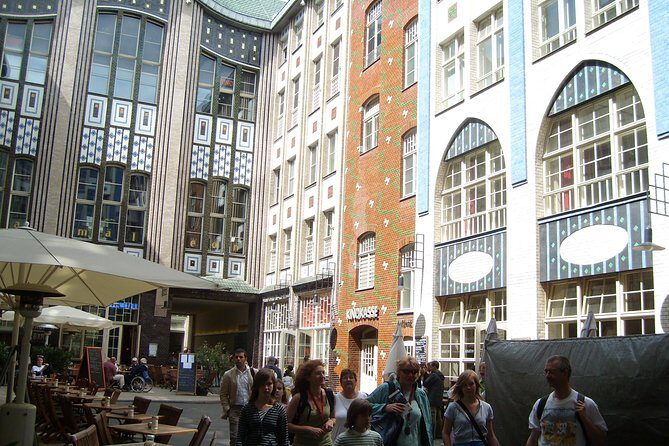
Next you head to Hackescher Markt, where the tour shifts from “then” to a different kind of “then.” The route includes Haus Schwrzenberg, and the guide connects it to an East Berlin 1980s look-and-feel.
This is where the tour turns particularly cinematic—without losing its grounding in real life. One of the standout elements here is the story of a former workshop for blinds that also contained a hiding place used to conceal a Jewish family during the former time. Places like this make history feel less abstract because you’re literally standing where the concealment happened.
You’ll also likely notice how Berlin can layer time. You can look at a building and understand the neighborhood’s survival logic: the city didn’t just have big events. It had careful decisions made under pressure.
Practical tip: if you’re the type who likes taking photos, keep your camera ready here. The stories give context to what you’re photographing, and you’ll understand the angles and entrances better.
You can also read our reviews of more city tours in Berlin





Hackesche Höfe: eight Art Nouveau courtyards you can actually stand in
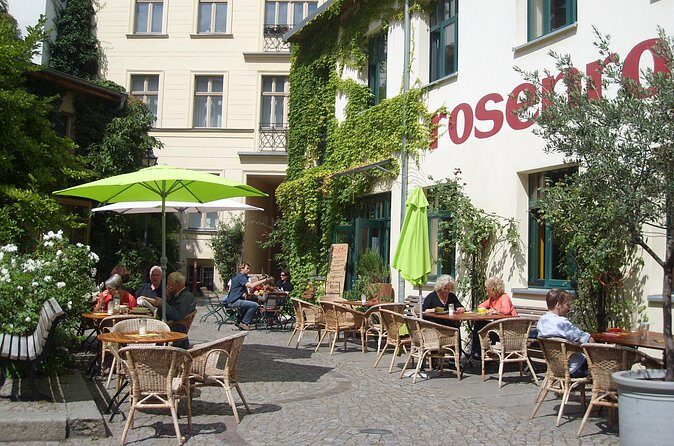
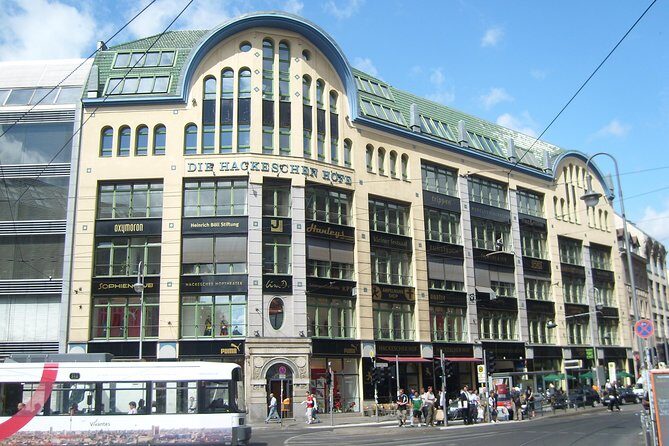
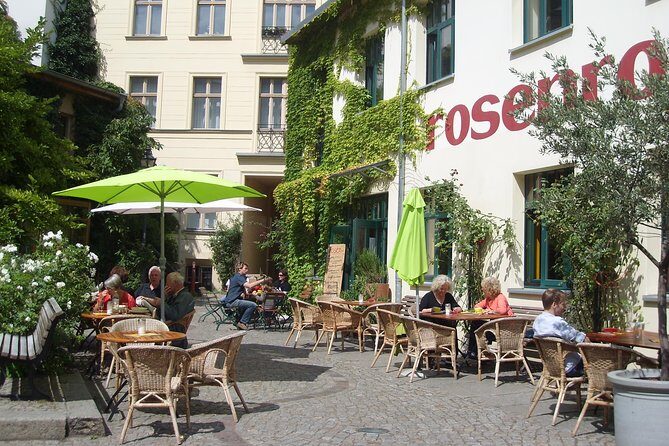
Right near Hackescher Markt, you spend time at Hackesche Höfe, a complex of eight Art Nouveau-style courtyards. This is one of the most visually rewarding parts of the tour because the “sight” isn’t a single building—it’s the space you move through and then pause to observe.
You’ll learn why courtyards like these were arranged the way they were, and how the surrounding buildings create the feeling of a private world inside a busy city. Based on what you’ll see in person, the courtyards have greenery and are surrounded by apartments and street-level businesses.
Here’s the key value: you get a guided way to read architecture as survival and community. Courtyards are not just pretty. They can shape movement, privacy, and everyday routines—things that matter when you’re talking about historical neighborhoods.
And yes, the courtyards can be lively or quiet depending on the day. If you’re there on a Sunday, many shops and businesses may be shut, so the area won’t feel as active. You can still enjoy the architecture, but you’ll lose some of the street-life atmosphere.
Stop 3: Stiftung Neue Synagoge Berlin – Centrum Judaicum and Clärchens Ballhaus
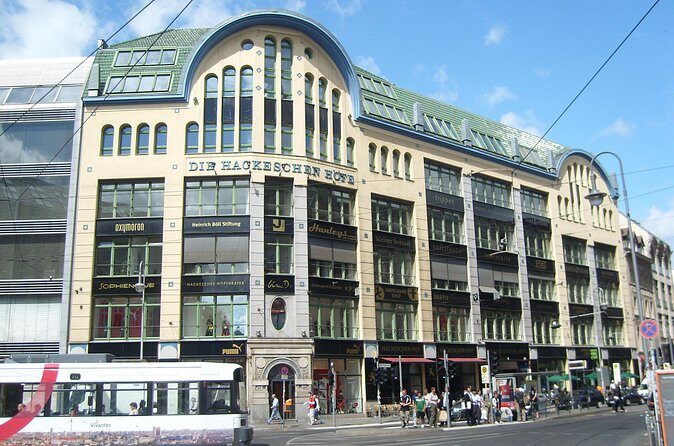
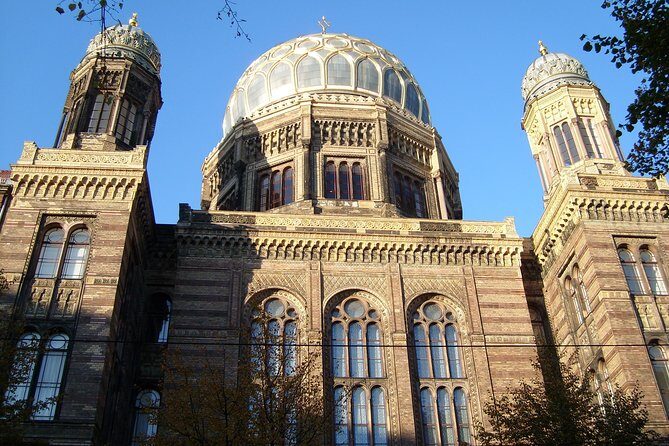
The final stop brings you to Stiftung Neue Synagoge Berlin – Centrum Judaicum. This part of the tour mixes worshiplandmark context with a venue that helps you picture the 1920s more vividly.
You visit Clärchens Ballhaus, a historic club where, in the tour’s framing, the atmosphere feels closely tied to the time period. The guide’s job here is to help you notice what hasn’t changed in spirit, even if the city around it has evolved.
After that, you explore the Heckmannhöfe, including a focus on the courtyard as a meaningful space. Courtyards show up again and again on this route for a reason: they’re where daily life can continue even when the street outside is under stress.
Finally, you hear the story tied to the New Synagogue itself. This is where the tour pulls themes together: community presence, interruption, and the rebuilding of public Jewish life in Berlin.
Why this ending lands: by the time you reach the New Synagogue area, you’ve already walked through hidden-place stories and courtyard logic. So the last segment doesn’t feel like a random landmark stop—it feels like a conclusion to the walking narrative.
The guide makes or breaks it: Swen Goetz’s style
The tour is led by Travelxsite Swen Goetz (often referenced as Herr Götz). The guide’s approach, as described in the tour’s feedback, is story-driven and visual. You’ll be told anecdotes, and you’ll likely see how the guide uses photos to reinforce what you’re seeing on the street.
This matters because Scheunenviertel and Hackesche Höfe are places you can physically walk through on your own. The difference here is that you get context fast—prison associations, wartime concealment, social life, and the way different eras show up in the same blocks.
If you like history that points you back to the street, this guide style fits well.
Timing: what 2 hours gets you (and what it doesn’t)
The schedule is roughly 45 minutes for Scheunenviertel, 30 minutes around Hackescher Markt and Hackesche Höfe, and another 45 minutes for the Centrum Judaicum and the Clärchens Ballhaus area.
In 2 hours, you won’t get every museum detail you could pack into Berlin. That’s not the goal. The value is that you come away with a coherent walking narrative and a handful of very specific places to revisit later at your own pace.
So if your plan is to do Berlin Mitte and then branch out for the rest of the day, this tour works as a foundation. You’ll understand what you’re looking at when you roam—especially around courtyards and central neighborhood transitions.
After the tour: what to do with your newfound map
When you finish near Oranienburger Straße, you’re in a part of Berlin that’s easy to explore on foot. The route you’ve just walked also gives you a practical strategy for the rest of your day: slow down in courtyards, notice entrances, and look for where the street gives way to semi-private space.
You’ll also know what to look for if you want to grab a drink or snack nearby. The area around Hackesche Höfe includes bars and restaurants, and if you catch it when places are open, you’ll get that mix of locals, visitors, and city rhythm.
If you went on a day when many businesses are closed, treat it as a reason to come back later. Courtyards still photograph well and still feel meaningful, even without the full storefront scene.
Should you book this Scheunenviertel and Hackesche Höfe walking tour?
Book it if you want Jewish heritage in Berlin Mitte explained through the places themselves—courtyards, historic venues, and wartime stories—rather than through a generic overview.
Skip it if you only want quick photo stops and minimal listening. The tour is built around a guide’s storytelling, so it rewards attention.
One more deciding factor: your group. If you can get enough people to share the group cost (up to 15), the value jumps. If it’s just a few of you, you’ll pay more per person, but you’re still buying a private, ticket-light route with a focused guide.
If your goal is a meaningful Berlin walk that leaves you with an emotional and practical understanding of what you’re seeing, this one is a strong choice.
FAQ
How long is the Berlin City Walking Tour of Scheunenviertel and Hackesche Höfe?
It runs for about 2 hours (approximately).
Is the tour offered in English, and is it a private tour?
Yes, it’s offered in English. It’s also a private tour/activity, meaning only your group participates.
What is the group size limit?
The price is listed per group for up to 15 people.
Where do I meet the guide, and where does the tour end?
You start at Rosa-Luxemburg-Straße 41, 10178 Berlin, and end at New Synagogue Berlin – Centrum Judaicum, Oranienburger Str. 28-30, 10117 Berlin.
Are tickets or admissions included for the stops?
Admission tickets are listed as free for the stops on the itinerary.
Is hotel pickup or drop-off included?
Hotel pickup and drop-off are not included if that option is not selected.