REVIEW · BERLIN
Berlin: Guided Walking Tour around the Reichstag
Book on GetYourGuide →Operated by Paaßens & Kniestedt Berlin kompakt GmbH · Bookable on GetYourGuide
Berlin’s parliament zone has a pulse. In just 2 hours, you trace how modern Germany runs—starting at the Chancellery and ending near the Reichstag. What makes it extra good is the way the walk connects real places to real questions, like where the Chancellor meets visitors and how the Bundestag works day to day.
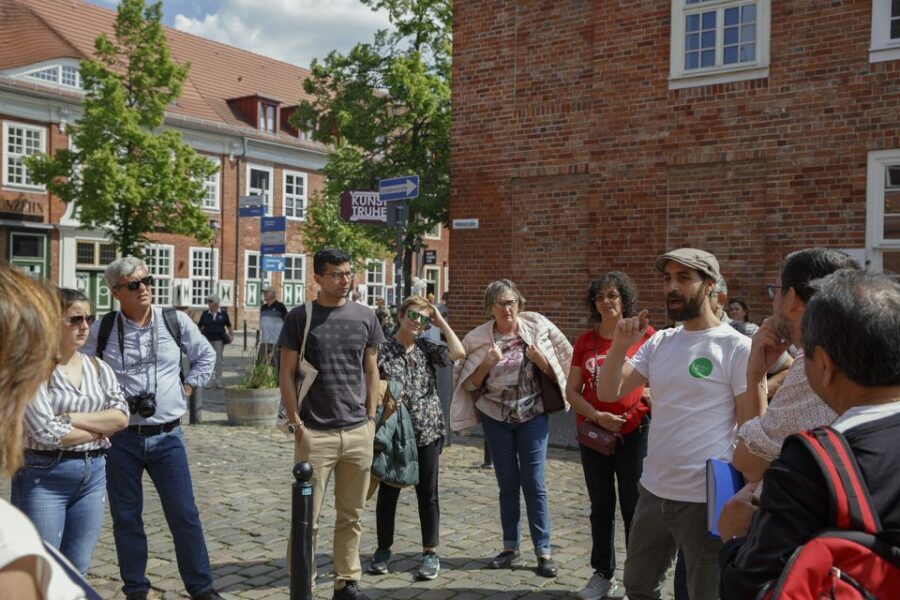
I also love the storytelling tone. One guide named Stefan brings a personal East Berlin perspective from before the Wall came down, with humor that keeps the group focused. And the route isn’t just buildings on a map—you walk by the Spree and along the Wall strip, so the political story has a physical setting you can feel under your feet.
One consideration: there’s no interior tour of the Reichstag or the Chancellery. You’re mostly outside, looking in, and learning through explanations rather than walking rooms like a VIP. Plan for that, and you’ll get your money’s worth.
In This Review
- Key highlights worth showing up for
- Why the Reichstag government zone feels different
- Meet at Paul-Löbe-Allee: the simple starting move
- German Chancellery stop: what happens behind official walls
- Swiss Embassy and the Paul Löbe House: power has neighbors
- White Crosses and Marshall Bridge: learning the mood, not just the facts
- ARD Hauptstadtstudio and Bundestag administration: politics meets the media
- Jakob-Kaiser-Haus and the art of parliamentary space
- Reichstag exterior finale: you learn to read what you see
- Price and what you’re really paying for
- Who this walk suits best (and who might skip it)
- Should you book the Berlin Reichstag government walking tour?
- FAQ
- How long is the Berlin guided walking tour around the Reichstag?
- Where do I meet for the tour?
- Is the tour in English or German?
- Will I go inside the Reichstag and the Chancellery?
- How is the group set up?
- Is the tour wheelchair accessible?
- What does the guide provide?
- What route will we walk?
- Can I cancel or change my plans?
Key highlights worth showing up for
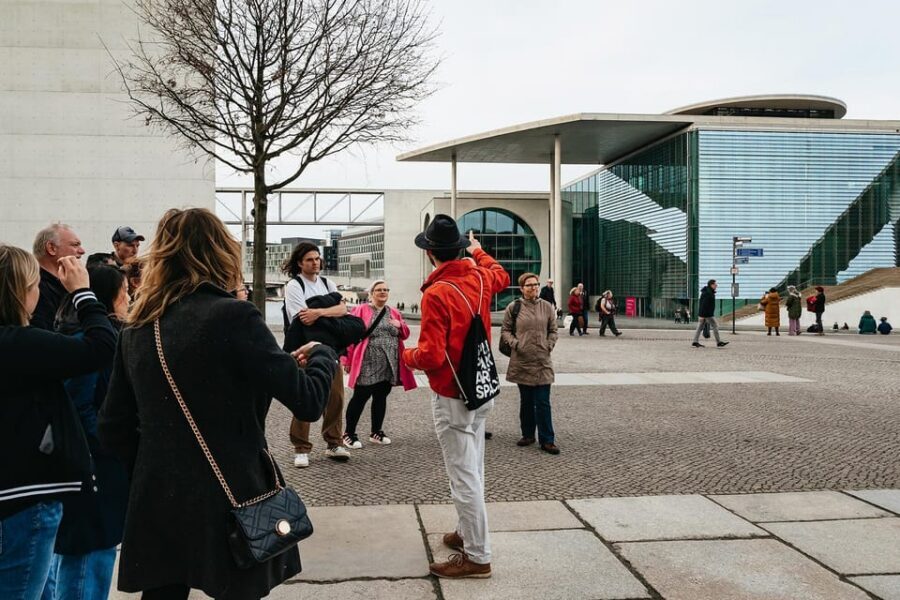
- Government district, compact and focused: you cover the key sites around the Reichstag without turning it into an all-day slog.
- Spree + Wall strip walking: the route ties today’s government to the geography of division.
- Practical questions answered on the go: how parliament works, how it communicates, even whether there are tunnels.
- Architecture and art explained where you’re standing: the buildings are treated like messages, not backdrops.
- A guide can make it personal: Stefan’s East Berlin viewpoint is a standout example.
Why the Reichstag government zone feels different
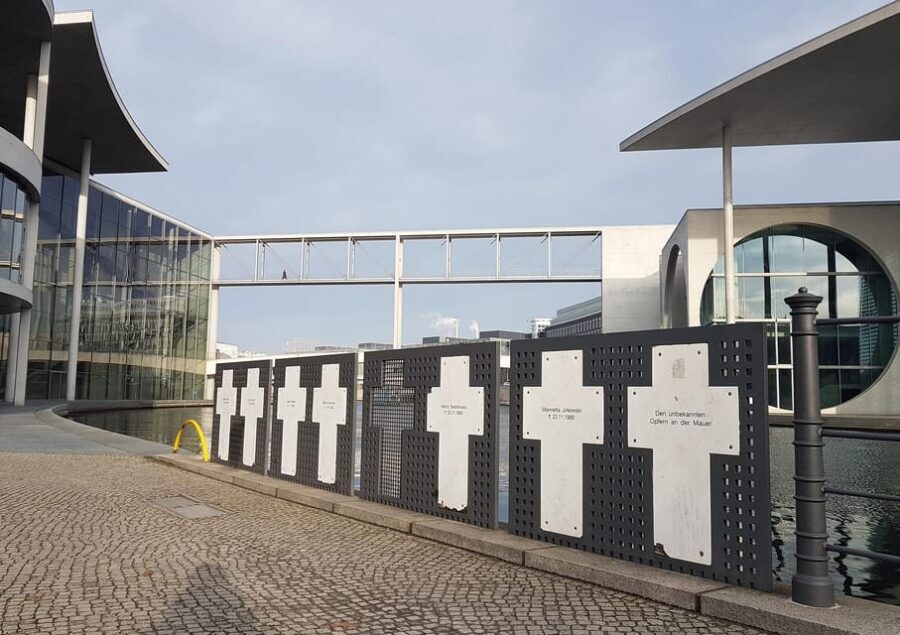
The Reichstag area isn’t like the rest of Berlin. Yes, you’ll see big landmarks, but the real point is how power gets performed here—through meetings, symbolism, and public communication. A normal city walk can show you where things are. This one teaches you what those places are for.
You’ll also notice that the government district is designed to be understood visually. That means the architecture matters. You’ll get explanations tied to questions like whether a functioning parliament has to be representative, and how visitors can read meaning from what they see. It’s a good reminder that politics isn’t only speeches and votes. It’s built into the setting too.
Finally, the walk has the advantage of being in one coherent area. Instead of hopping across town and losing time in transit, you cover the core sites in two hours—enough to feel oriented, not enough to feel rushed.
You can also read our reviews of more walking tours in Berlin



Meet at Paul-Löbe-Allee: the simple starting move
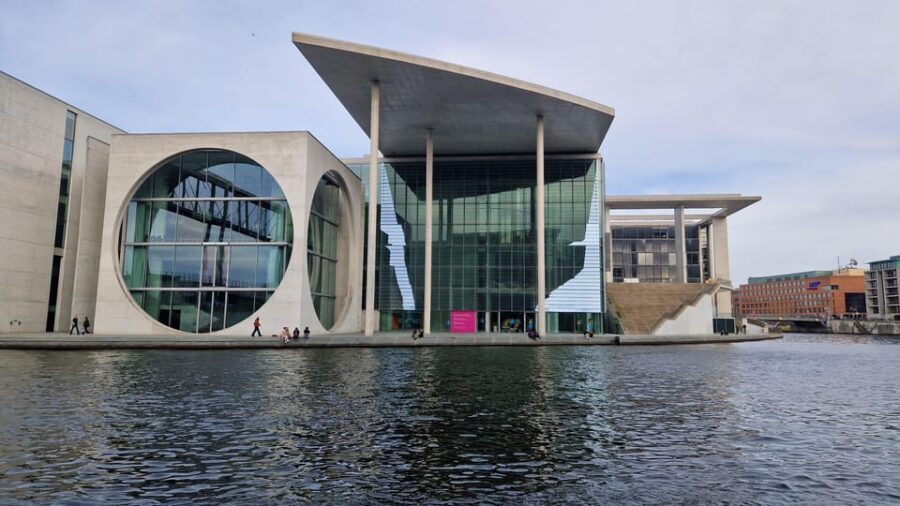
You start at the intersection of Paul-Löbe-Allee and Konrad-Adenauer-Straße, right next to the subway exit for the Bundestag line (U5) exit D. The meeting spot is in front of the elevator, which is an easy landmark for keeping your group together.
This matters more than it sounds. The government district can feel like a sea of official buildings and fences, and it’s easy to waste time hunting for the right entrance. Starting near the U5 stop helps you arrive on time without stress, and you get walking quickly.
Because it’s a private group, the pace tends to feel more manageable. You’re not fighting for attention with a huge crowd, and you can ask follow-ups while you’re outside seeing the next building.
German Chancellery stop: what happens behind official walls
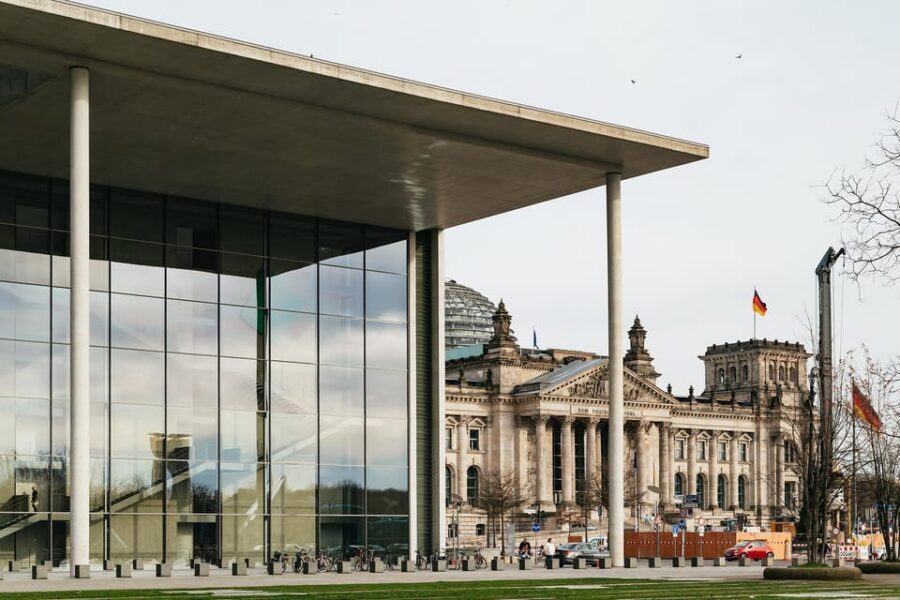
The first building you reach is the German Chancellery. In that short guided moment, you’re not just told what it is—you’re given the type of behind-the-scenes context people usually miss.
Expect your guide to connect the building to real functions, including how the Chancellor meets guests and how government work gets organized in practice. Even if you already know the basics, the explanations are framed around everyday ideas: where key meetings happen, how the system communicates, and why the district is arranged the way it is.
Quick reality check: you won’t go inside. There’s no interior tour of the Chancellery here, so the value comes from learning how to read the exterior—what the place signals, and what roles different parts of the government district play.
Swiss Embassy and the Paul Löbe House: power has neighbors
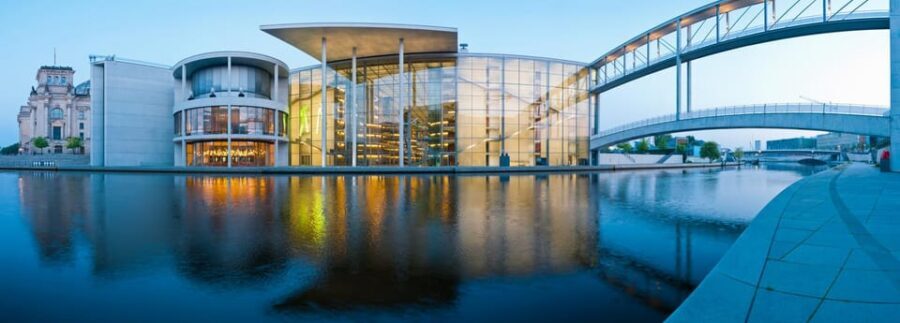
After the Chancellery, you move to the Swiss Embassy for another brief guided stop. That might sound random at first, but it’s actually smart. Government districts are rarely isolated islands. Diplomacy and international relationships sit close to the institutions where decisions are made.
Then comes Paul Löbe House, a key name in the area. This is one of the stops where you’ll likely start linking the larger system together. You’ll hear how parliament-related work connects to the surrounding institutions—what each building contributes to the overall flow.
Even without stepping inside, you’re building a mental map. And that’s the big win for a short tour: by the time you reach the Reichstag area, you’re not starting from scratch. You already understand how the pieces fit.
White Crosses and Marshall Bridge: learning the mood, not just the facts
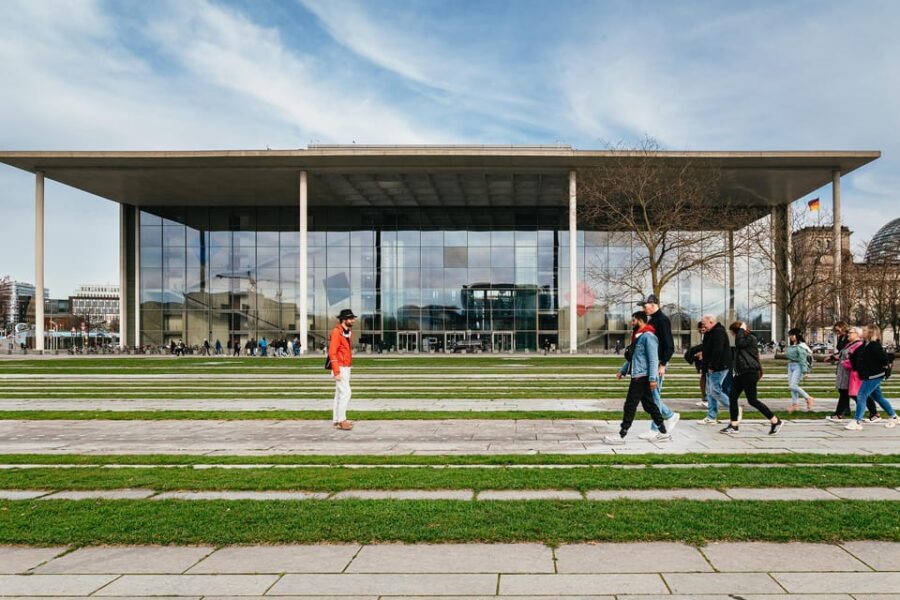
Next up are the White Crosses and the Marshall Bridge. These aren’t just “nice photos.” They add emotional weight to the route.
The White Crosses point you toward the human side of the Wall era—how remembrance appears in the cityscape. The bridge reinforces the idea that waterways and crossings shaped movement, boundaries, and daily life. You’re walking the Spree corridor while the guide explains what it meant to live, work, and move in divided Berlin.
This is where the Spree + Wall strip part of the experience becomes more than a route detail. It turns the walk into a story with stakes. You’re not only learning modern government. You’re also learning the geography that forced Germany to rebuild itself.
If you’re curious about how art and architecture communicate meaning, this section helps set the tone. It’s a reminder that buildings and monuments aren’t neutral—they carry messages.
You can also read our reviews of more guided tours in Berlin




ARD Hauptstadtstudio and Bundestag administration: politics meets the media
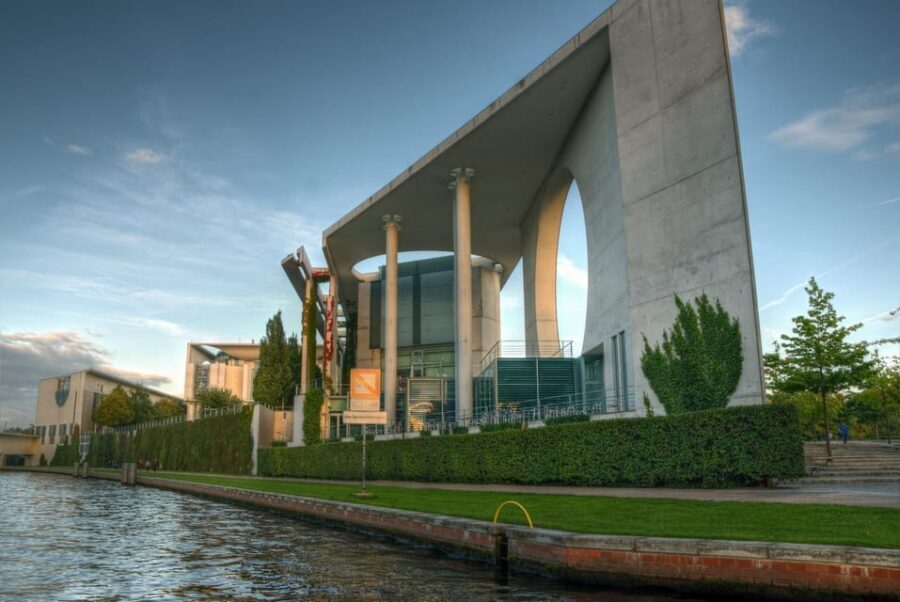
A big part of how modern politics works is visible communication. That’s why you stop at the ARD Hauptstadtstudio Berlin. The point isn’t to do a media tour. It’s to understand how coverage, messaging, and public attention relate to the official institutions nearby.
Then you reach the Verwaltung des Deutschen Bundestages (administration of the Bundestag). This stop is useful because people often focus only on the dramatic parts—speeches, votes, big headlines. Administration is where things keep moving: the support systems and behind-the-scenes organization that make formal decisions possible.
Together, these stops help answer questions like:
- How does parliament function beyond the public moment?
- How does politics get communicated in the public sphere?
You’ll get explanations that tie practical work to public visibility. It’s a perspective shift, and it’s one reason this walk is more valuable than a photo-only sightseeing loop.
Jakob-Kaiser-Haus and the art of parliamentary space
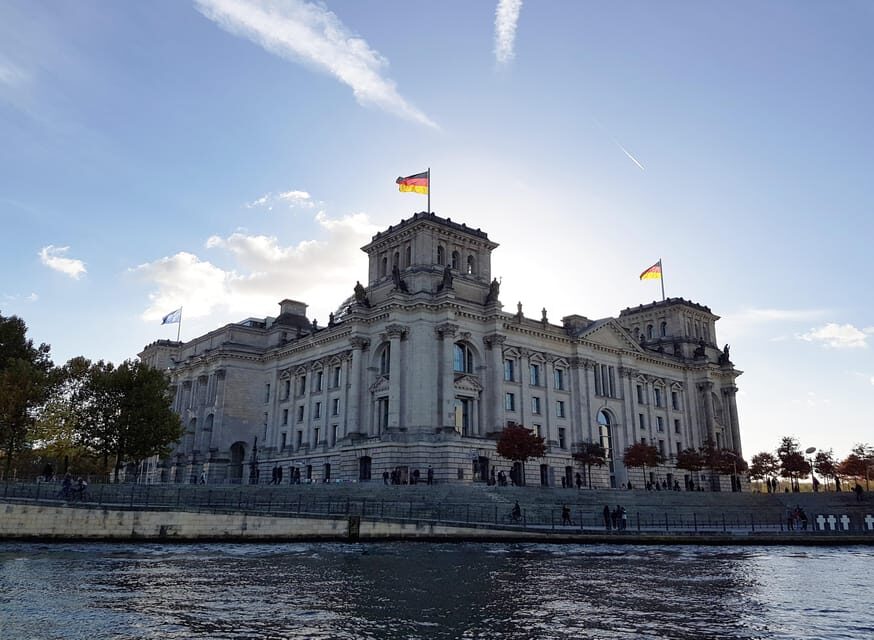
After the administrative stop, you’ll continue to Jakob-Kaiser-Haus. This is another point where the guide can explain how the parliamentary system connects through different buildings and functions around the district.
This is also where you may get more of the tour’s thematic material: how the typical architecture of a working parliament looks, and whether it needs to be representative. The guide also addresses questions like what artworks in the government district communicate—what art in this setting means, and how it fits into the daily reality of government.
One small tip: keep your eyes moving while you listen. These explanations make more sense when you’re looking at the surrounding structures and noticing how space is shaped for visibility, movement, and formal presence.
Reichstag exterior finale: you learn to read what you see
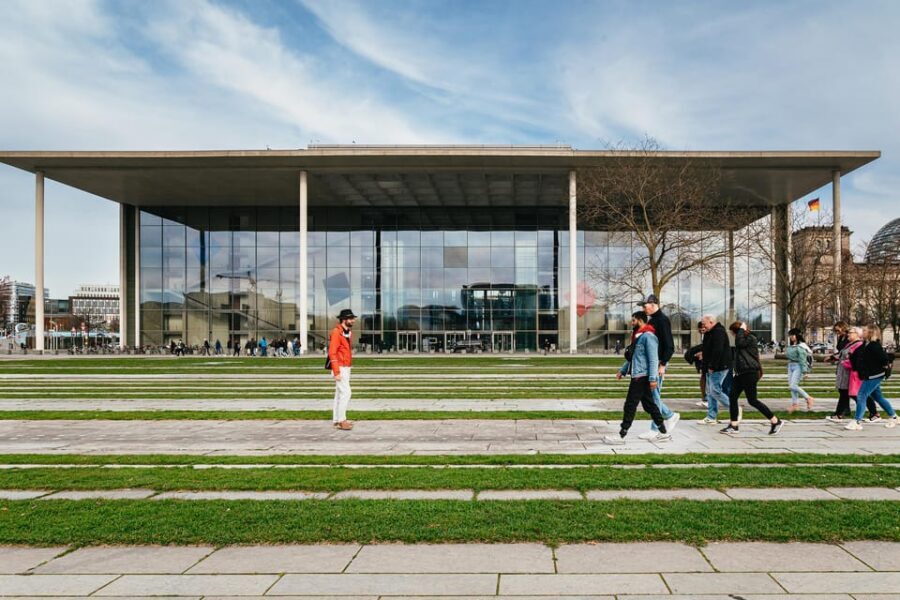
The tour finishes at Reichstag, with the final stop at Platz d. Republik. This is your big moment, but it’s worth setting expectations correctly: there’s no interior access here. You’ll learn through the exterior viewing points and guided explanations.
Still, it’s a strong way to end, because by the time you reach the Reichstag you’ve already walked past the Chancellery, Paul Löbe House, and the other key components of the district. The Reichstag isn’t a standalone monument anymore—it’s one part of a system you can now picture as a whole.
And that’s also where personal guide style shows up. One standout story from a past booking was a guide named Stefan who kept the group engaged with humor and personal East Berlin context from before the Wall came down. That kind of framing turns the Reichstag from a landmark into a narrative anchor.
There’s also a note of possibility for special circumstances. In one instance, a group got to access more spaces around the Reichstag due to a specific democracy-related day. Don’t assume that will happen for your date. Just know the guide approach is often tailored to what’s going on that day.
Price and what you’re really paying for
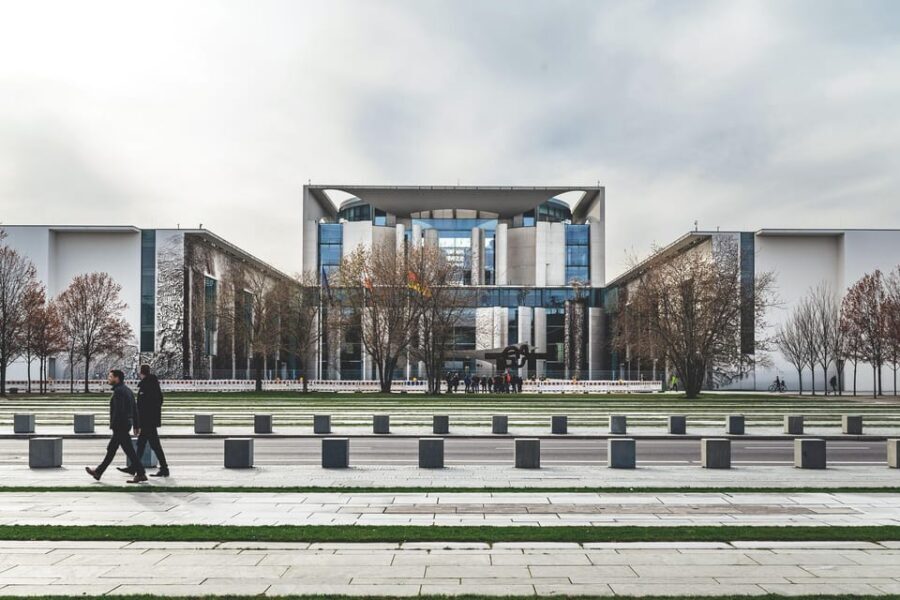
The price is listed as $234 per group up to 30, and the tour runs about 2 hours. That pricing model makes the value depend on your group size—so do the math in your head.
- If the group is closer to the full 30, the cost per person can be surprisingly low.
- If you’re only a few people, it becomes more of a private-leaning expense.
So here’s how I’d judge value: you’re paying for a guided framework that turns a confusing-looking official area into something you can understand fast. You’re also paying for trained interpretation of multiple themes—government function, symbolism, and the Wall’s impact on the same corridor.
If you’re a first-time visitor to Berlin, or you want government-district context without spending hours researching, this can be a solid spend. If you prefer total freedom and self-guided wandering with no explanation, you might find it less worth it.
Who this walk suits best (and who might skip it)
This tour fits well if you:
- Like walking with an explanation instead of a list of facts.
- Want to understand how the Bundestag and Chancellery area work together.
- Enjoy context that connects history to place, especially by the Spree and Wall strip.
- Want a compact hit in two hours rather than an all-day plan.
It may be less ideal if you:
- Specifically want to enter the Reichstag or the Chancellery building interiors (this tour does not do that).
- Dislike walking outdoors for short stretches between official buildings.
If you fall in the first group, you’ll likely feel more “oriented” in Berlin afterward. You’ll know what you saw, why it matters, and how to connect it to the bigger political story Germany tells in public.
Should you book the Berlin Reichstag government walking tour?
Book it if you want the district explained in a way that makes the architecture and symbolism click. The standout strength here is the guided approach: practical answers to how politics works, plus a route that ties the modern government area to the physical memory of the Wall strip.
If you can handle the fact that you won’t go inside the Reichstag or Chancellery, this is one of the better ways to turn “I saw the place” into “I understand what that place is doing.” And if your guide brings a personal perspective like Stefan did—East Berlin before the Wall—your tour experience can feel a lot more human than you expect.
If you want, tell me your travel dates and whether you’ll be a solo traveler or with a group. I can help you decide whether this format is a strong match for your Berlin plan.
FAQ
How long is the Berlin guided walking tour around the Reichstag?
It lasts about 2 hours.
Where do I meet for the tour?
Meet at the intersection of Paul-Löbe-Allee and Konrad-Adenauer-Straße, next to the subway exit for Bundestag (U5) exit D in front of the elevator.
Is the tour in English or German?
Yes. The live tour guide speaks English and German.
Will I go inside the Reichstag and the Chancellery?
No. There is no interior tour of the Reichstag and the Chancellery.
How is the group set up?
It’s a private group.
Is the tour wheelchair accessible?
Yes, the tour is wheelchair accessible.
What does the guide provide?
A guide is included.
What route will we walk?
You’ll walk through the government district around the Reichstag, including stops by the Spree and the Wall strip, and you’ll see places such as the Chancellery, Paul Löbe House, White Crosses, Marshall Bridge, ARD Hauptstadtstudio Berlin, Bundestag administration buildings, Jakob-Kaiser-Haus, and the Reichstag.
Can I cancel or change my plans?
Free cancellation is available up to 24 hours in advance for a full refund, and you can reserve now and pay later.