REVIEW · BERLIN
Berlin’s Jewish Heritage: Private Tour of the Vibrant Jewish District
Book on Viator →Bookable on Viator
Jewish Berlin leaves marks you can’t ignore. This private 3-hour walk connects pre-WWII life in Scheunenviertel with Holocaust-era memory sites, including the New Synagogue’s golden domes, Stolpersteine, and the Trains To Life Trains To Death memorial at Friedrichstraße Station.
I love the undivided feel of a private guide, and how guides such as Orit can mix location-by-location context with a personal thread that makes it human. I also like that many stops are free, so you spend money on the guide, not a stack of timed tickets.
One watch-out: the New Synagogue stop notes admission not included, so plan for exterior viewing unless you’re willing to pay separately if you want to enter.
In This Review
- Quick highlights before you go
- Why this walk matters in Berlin, not just on a map
- The value of a private guide: time, attention, and a human voice
- Price and logistics: what $23 buys you in real terms
- Stop 1: New Synagogue Berlin at Centrum Judaicum and its golden domes
- Stop 2: Scheunenviertel streets, Moses Mendelssohn, and Stolpersteine
- Stop 3: Trains To Life Trains To Death at Friedrichstraße Station
- Stop 4: Museum Blindenwerkstatt Otto Weidt and a rescue story you can picture
- How the 3 hours actually feels: pacing, stops, and your day plan
- What makes the guides’ style so important here
- Who this tour fits best (and who might want a different option)
- Should you book this Berlin Jewish Heritage private tour?
- FAQ
- How long is the tour?
- Is this a private tour?
- Does the tour include pickup?
- Is a guide included?
- Will I need museum tickets?
- What are the main stops on the route?
- Are the memorial stops free?
- Is food and drink included?
- When do I get confirmation after booking?
- What if my plans change and I need to cancel?
Quick highlights before you go
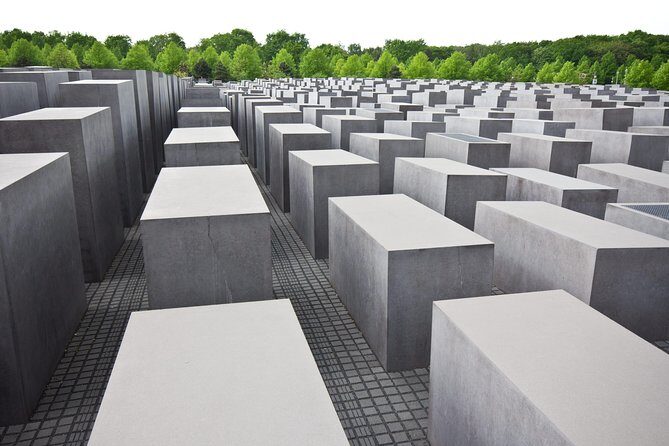
- New Synagogue Berlin (Centrum Judaicum): See the ornate golden domes linked to what was once the largest Jewish place of worship in Germany
- Scheunenviertel streets: Walk the former Jewish Quarter and visit the gravesite of Moses Mendelssohn at the oldest Jewish Cemetery in the city
- Stolpersteine memorials: Pay tribute in the real streets, not just inside a museum
- Friedrichstraße Station memorial: Trains To Life Trains To Death focuses on young and infant victims, including deportations linked to Auschwitz-Birkenau
- Otto Weidt Museum: Learn how a German factory owner hired mainly blind and deaf Jewish workers to help save them from Nazi persecution
Why this walk matters in Berlin, not just on a map
Berlin’s Jewish story is easy to remember as dates and buildings. This tour helps you remember it as streets, names, and specific places you can point at. The route is built around locations tied to community life before WWII, and then around sites that mark the violence and disruption that followed.
What I like best is that the tour doesn’t jump straight to tragedy and stop there. You spend real time in the Scheunenviertel area, where you’re shown how Jewish life was part of the city’s everyday geography. Then, you walk into memory spaces that force you to slow down: Stolpersteine in the streets and memorials at a station tied to deportations.
This is also the kind of tour where your guide’s approach matters. In the past, guides like Orit and Walid have been praised for staying professional while also sharing a personal angle. That combination can turn a history walk into something that feels steady and respectful rather than rushed.
You can also read our reviews of more private tours in Berlin


The value of a private guide: time, attention, and a human voice
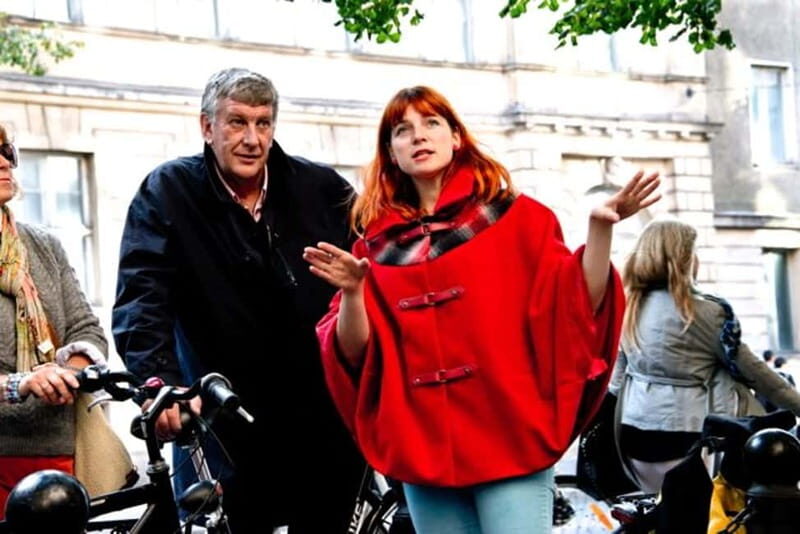
A private tour is simple in concept: it’s just your group with a guide, not a herd. Here, that matters because the subject matter is heavy and detailed. You don’t want to be listening through headphones at the back of a group while the guide moves on.
This tour includes a professional local tour guide. And depending on your chosen option, you may also get a private vehicle with a professional driver. Even if you do most of it on foot, that means you can get from one emotional stop to the next with less friction.
The most praised element in the feedback is the guide quality—especially Orit’s mix of deep local context and a personal story, and Walid’s personable, professional style. For you, the practical upside is clear: if you have questions, you can ask them. If something feels confusing, you can slow the pace and get clarity right away.
Price and logistics: what $23 buys you in real terms
At $23 for about 3 hours, the value is mostly about structure. The tour includes your guide, and the stops are arranged so you’re not constantly hunting for entrances or paying for random add-ons.
Here’s what to keep straight:
- Guide is included. That’s the core value.
- Museum entries aren’t required for the tour.
- Food and drink are not included. Plan on buying water or a snack near the route if you need it.
- The New Synagogue stop lists admission not included, even though the tour notes no museum entries are required. In practice, that means you should treat the synagogue visit as a stop point you can see, and only budget extra if you decide you want to go inside.
There’s also pickup offered and group discounts. Add mobile ticket convenience, plus choices for morning or afternoon departure, and you get something that works whether you’re planning a tight sightseeing schedule or traveling at a calmer pace.
Stop 1: New Synagogue Berlin at Centrum Judaicum and its golden domes
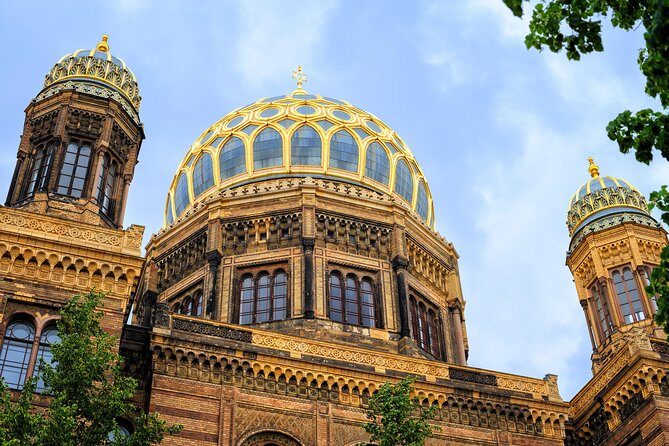
Your first stop is the New Synagogue Berlin at Centrum Judaicum. The big visual hook is the ornate golden domes, which are tied to the synagogue’s former status as the largest Jewish place of worship in Germany.
This is a good start point for two reasons. First, it gives you a strong visual anchor early on. Second, it sets the tone for the rest of the walk. You’re not just learning about the past—you’re looking at a landmark that signals how significant Jewish religious and community life once was in Berlin.
Timing is short here (about 10 minutes), so this isn’t a long architectural lecture. It’s more like a first chapter: get oriented, see what makes this place recognizable, and let your guide frame what you’ll see next.
One practical note: the stop lists that admission ticket is not included. If you care about entering, plan ahead. If you’re okay with seeing the building and learning from outside, you can keep your day simple.
Stop 2: Scheunenviertel streets, Moses Mendelssohn, and Stolpersteine
Then you move into the Scheunenviertel area for about 30 minutes. This is where the tour earns its walking-tour credibility, because you’re shown the former Jewish Quarter not as a postcard, but as real streets.
You’ll also hit two very specific memory elements:
1) The gravesite of Moses Mendelssohn at the oldest Jewish Cemetery in the city
2) Stolpersteine memorials, where you pay tribute to victims of Nazism
I like this combination because it shifts the emotional focus. The cemetery gravesite gives you a sense of continuity—names and burial grounds linked to real people in this city. Then Stolpersteine brings the memory into the present-day street level. Instead of moving from one room to another, you’re walking alongside remembrance in the same kind of space where everyday life continues.
A practical tip: Stolpersteine moments work best when you slow down. Don’t let your feet rush you through. If your guide points out specific placements, give them a minute. Even in a short stop, that pause helps the meaning land.
You can also read our reviews of more historical tours in Berlin






Stop 3: Trains To Life Trains To Death at Friedrichstraße Station
Next comes a stop built for silence and attention: Trains To Life Trains To Death at Friedrichstraße Station. It lasts about 10 minutes, but it carries a lot.
The memorial focuses on young and infant victims of Nazism. It also highlights how children were moved by the regime in two different directions:
- after the Nazi pogroms of 1938, some children were transported to the safety of the west
- after 1942, children were deported eastwards toward extermination centers such as Auschwitz-Birkenau
This is the kind of information that can feel overwhelming fast. The tour’s value is that it gives you a guided frame while you stand at the spot where the story connects to Berlin’s geography.
For you, the consideration is simple: be emotionally ready for a concentrated moment. Even if you know the history already, memorials at train stations have a way of making the logistics feel personal and close.
Stop 4: Museum Blindenwerkstatt Otto Weidt and a rescue story you can picture
The final major stop is Museum Blindenwerkstatt Otto Weidt, around 30 minutes. The theme here isn’t only loss—it’s also action, taken in a brutal environment where choices were limited.
You learn about Otto Weidt, a German factory owner who hired mainly blind and deaf Jewish workers. The point, as the tour explains it, is that this work gave people a chance to be saved from certain death at the hands of the Nazis.
I like ending on this note because it changes the emotional rhythm. The tour doesn’t pretend the crimes didn’t happen. But it leaves you with a clear example of how survival could depend on practical decisions made by individuals. It’s the difference between only absorbing tragedy and also recognizing human agency where it existed.
Also, since this is a museum stop with time allotted, you won’t just skate past it. Thirty minutes gives your brain enough time to connect the story to the people it involves.
How the 3 hours actually feels: pacing, stops, and your day plan
The whole tour runs for about 3 hours. Stop times are fairly balanced: roughly 10 minutes at the New Synagogue, 30 minutes in Scheunenviertel, 10 minutes at Friedrichstraße, and 30 minutes at the Otto Weidt Museum.
That breakdown matters because it affects how you should schedule your day around it:
- You can pair this with other nearby Berlin sights without needing a full afternoon block.
- You’ll still want a little buffer afterward, because memorial sites can sit with you longer than a typical attraction.
Since this is a walking tour, wear shoes that don’t punish your feet. Also, consider bringing water if you run warm. Food and drink aren’t included, and the walking between stops won’t always let you pause whenever you want.
If you want pickup, that can help you avoid the time you’d otherwise spend moving around the city. And since the meeting area is listed as near public transportation, you can also choose to arrive on your own if that’s easier.
What makes the guides’ style so important here
When a tour covers Holocaust memory and Jewish heritage, the biggest risk is that the experience can feel robotic. That’s where guide delivery matters.
In the feedback, Orit and Walid are praised for being professional, personable, and able to make the neighborhood and history feel connected. Orit, in particular, is noted for sharing her own personal story along with the Jewish neighborhood context. Walid is described as personable and professional, with explanations that keep the walk organized and understandable.
For you, that translates into a better experience even if you already know the basics. You’ll get explanations that stick to what you’re seeing in front of you—gold domes, cemetery grounds, street-level memorial stones, and the station memory setting.
Who this tour fits best (and who might want a different option)
This private tour is listed as suitable for most travelers. It also explicitly stays private, meaning only your group participates.
I think it’s a strong fit for you if:
- you want a focused, guide-led route rather than wandering through sites on your own
- you care about both heritage (pre-WWII Jewish life) and memory (Holocaust-era sites)
- you want to ask questions and get clear explanations without time pressure
It may not be the best match if:
- you prefer light sightseeing with zero emotional weight
- you’re hoping for a long museum-style visit with lots of time inside buildings
Also, because the tour includes stops with memorial content, I’d suggest going when you have the energy to absorb it. Don’t schedule it right after a long travel day if you can avoid that.
Should you book this Berlin Jewish Heritage private tour?
Yes, if you want a thoughtful, tightly timed route through Jewish Berlin—one that connects a major religious landmark, the Scheunenviertel former Jewish Quarter, street memorials, and the station memorials—while keeping the pacing under the control of a private guide.
Book it especially if you value value in a practical way. For $23, you’re paying for a guide and a structured walking route, while many key stops are free and museum entries aren’t required. Just keep in mind the one real cost consideration: the New Synagogue admission is not included.
If you want guided context without a crowded group and you’re ready for a respectful, sometimes heavy set of stops, this tour is a smart choice.
FAQ
How long is the tour?
The tour lasts about 3 hours.
Is this a private tour?
Yes. It’s private, and only your group participates.
Does the tour include pickup?
Pickup is offered.
Is a guide included?
Yes. You get a professional, local tour guide.
Will I need museum tickets?
The tour notes that no museum entries are required. However, the New Synagogue stop specifically lists admission as not included.
What are the main stops on the route?
The stops include the New Synagogue Berlin (Centrum Judaicum), Scheunenviertel (including the gravesite of Moses Mendelssohn and Stolpersteine), Trains To Life Trains To Death at Friedrichstraße Station, and Museum Blindenwerkstatt Otto Weidt.
Are the memorial stops free?
Yes. The Stolpersteine memorials area and the Friedrichstraße Station memorial are listed with free admission. The Otto Weidt museum stop is also listed as free for the tour.
Is food and drink included?
No. Food and drink are not included.
When do I get confirmation after booking?
Confirmation is received within 48 hours of booking, subject to availability.
What if my plans change and I need to cancel?
You can cancel for free. To get a full refund, you must cancel at least 24 hours before the experience’s start time. If you cancel less than 24 hours before, the amount paid is not refunded.