REVIEW · BERLIN
Explore Berlin History and Highlights Sightseeing Walking Tour
Book on Viator →Operated by Birchys Berlin Tours · Bookable on Viator
Berlin turns into a story on foot. This small-group walk strings together major sites that explain how Berlin went from imperial power to dictatorship, then to Cold War division and reunification. You get guided commentary as you move, so the city stops being random monuments.
What I like most is the small group size (15 max). That means you can ask questions without shouting over everyone, and the pace feels human, not rushed. I also like how the route hits big emotional moments and big political ones, all in the same morning.
One drawback to plan for: this is a walking tour. If your legs are limited, you may find it harder than typical sightseeing, because you’ll spend real time moving between stops and standing for short talks.
In This Review
- Key highlights you should know
- Why this Berlin history walk works so well
- Start at Brandenburger Tor: the iconic gate, explained
- Photo tip
- Reichstag building: from imperial politics to modern attention
- Holocaust Memorial: a place for facts and feelings
- How to handle the mood
- Fuhrerbunker area: the chilling end of the regime
- Bundesministerium der Finanzen: war-era roots and Cold War echoes
- Topography of Terror: the SS and Gestapo site, remembered publicly
- Checkpoint Charlie: Cold War Berlin, in one iconic corner
- Gendarmenmarkt: history with serious style
- Bebelplatz: the book burning that still scares people
- Unter den Linden and the education-and-memory stretch
- Practical pace note
- Museum Island: from medieval Berlin to five world-class museums
- What you’ll actually get from the guide (beyond facts)
- Price and value: paying for direction, not just time
- Who this tour fits best
- Should you book this Berlin history highlights walk?
Key highlights you should know
- 15 travelers max keeps the tour interactive and easier to follow
- 3 hours 30 minutes is a smart length for a first Berlin history morning
- Major landmarks in one line from Brandenburg Gate to Museum Island
- Cold War and Nazi-era context connected stop-by-stop instead of in isolated facts
- Free admissions noted for the stops so you can focus on the stories, not ticket math
- English guide + mobile ticket means less hassle before you start
Why this Berlin history walk works so well
Berlin can feel like it’s made of eras stacked on top of each other. This tour helps you read that stack. Instead of bouncing between museum schedules, you get a guided route through the city’s most important public sites, explained as you reach them.
I like that the tour is built around cause-and-effect. You hear what a building or square meant at the time, then you hear what it became after war, collapse, and rebuilding. That’s the difference between seeing monuments and actually understanding them.
And the practical side matters. At $32.58 per person, you’re paying mostly for a guide’s time and storytelling, plus the convenience of a route that hits the right places without you having to plan every turn. With a schedule that people often book about two months out, it’s a good pick if you want a structured start to your Berlin trip.
You can also read our reviews of more walking tours in Berlin



Start at Brandenburger Tor: the iconic gate, explained

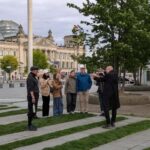
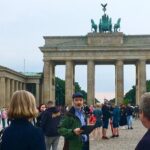
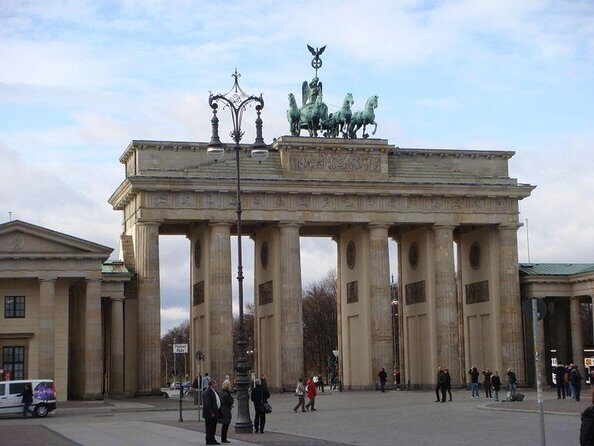
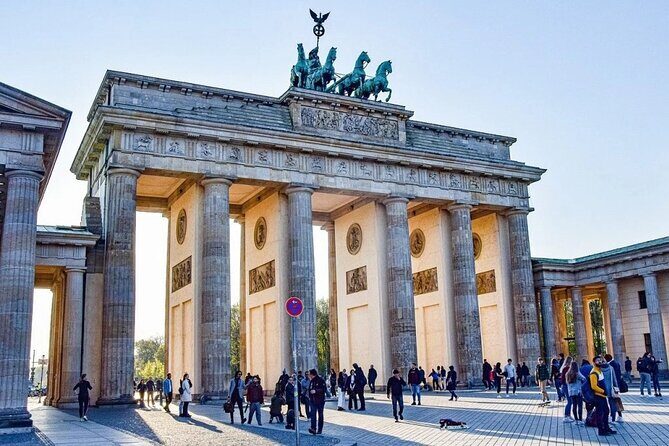
You begin at Wurst 🙂 near the Brandenburg Gate area, right where Berlin’s modern identity sits on top of older power. The Brandenburg Gate isn’t just a postcard photo stop. It’s one of those places that has been used as a symbol again and again, which is why it keeps showing up in Berlin’s turning points.
Your guide’s job here is to set the tone: this gate has witnessed shifting governments, changing ideologies, and public moments people still argue about today. Even if you’ve seen the gate in films or in photos, you’ll get a clearer sense of why it became so important.
Photo tip
If you want the cleanest shots, aim for calmer light and fewer crowds. One practical suggestion you’ll hear in Berlin is to go earlier than 10:00 or later in the day when the area is less congested.
Reichstag building: from imperial politics to modern attention
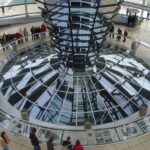
From the Brandenburg Gate, the walk brings you to the Reichstag building, Germany’s famous parliament structure. The story you get here goes beyond architecture. You’re shown how the building became tied to major political violence and major political fear, especially around moments following Hitler’s rise and later Soviet interest when Berlin fell.
This is a stop where you’ll likely notice how Berlin uses visibility and symbolism in public space. A government building can become a stage, and the Reichstag is a perfect example. Your guide connects those threads so you understand what people meant when they fought for control of the building and the message it sent.
Holocaust Memorial: a place for facts and feelings
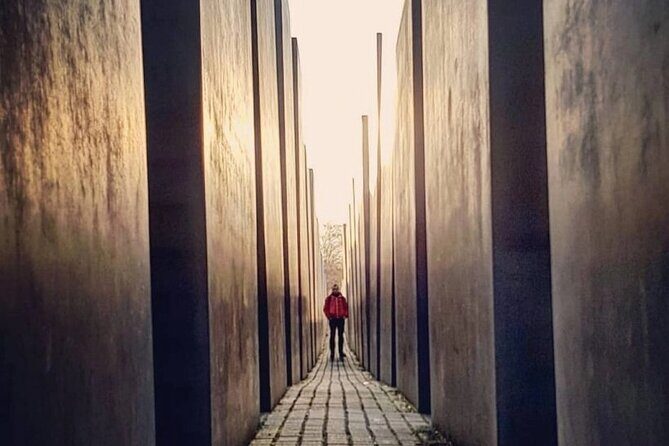
Next comes the Memorial to the Murdered Jews of Europe, the largest memorial in central Berlin. The ground here is meant to slow you down. You hear not just what it is, but why it was designed the way it was, and how the process of building it reflects the crimes it commemorates.
This is one of those stops where a guide really matters. Without context, you might see it as an impressive field of shapes. With context, it becomes harder to treat as just an image, and that’s the point.
You can also read our reviews of more historical tours in Berlin






How to handle the mood
Plan a quick breath after this stop. It’s emotionally heavy, and moving right away can feel like whiplash. If you need a short pause, do it. You’ll get more out of the next sites when you’re not rushing your own reactions.
Fuhrerbunker area: the chilling end of the regime
After the memorial, the route moves to the Fuhrerbunker area, linked to Hitler’s final days. It’s described as an infamous underground space, once connected to the gardens of the New Reich’s Chancellery complex. This stop changes the mood again, from remembrance to the practical reality of how the end of the Nazi regime played out in Berlin’s streets and buildings.
A good guide helps you avoid turning this into a horror movie scene. The focus becomes what happened here, what it meant for the city, and how the physical geography of Berlin mattered in those final days.
Bundesministerium der Finanzen: war-era roots and Cold War echoes
Then you’ll see the building that’s now the Finance Ministry but used to serve as headquarters for the Luftwaffe. This kind of stop is easy to miss on your own because the exterior can look like just another government block. The guide pulls the timeline forward: you learn what it was used for, why it was important, and what happened to the meaning of the site after Germany’s defeat and during the Cold War.
This is a stop that rewards attention. Watch how the site is positioned within the broader government district. You’re seeing how Berlin repurposed power structures after they outlived their original purpose.
Topography of Terror: the SS and Gestapo site, remembered publicly
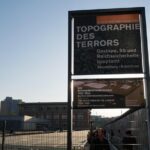
Topography of Terror is one of the most direct places to understand how Nazi power worked in day-to-day enforcement. You’re on the ground where the former headquarters of the SS, Gestapo, and SD operated. Your guide connects the Nazi era use of the location to what came after, including the efforts to memorialize and explain the site post-war.
What makes this stop valuable is the way it turns abstract historical names into real places. It helps you understand how oppression wasn’t only ideology; it was organized bureaucracy and a built environment.
Checkpoint Charlie: Cold War Berlin, in one iconic corner
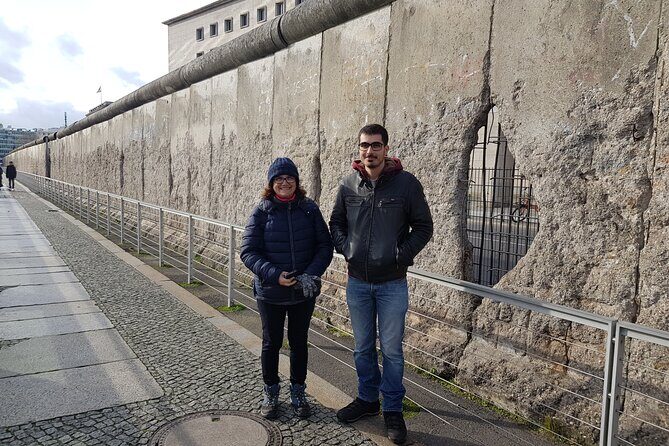
Next you’ll reach Checkpoint Charlie, one of the best-known symbols of divided Berlin. This stop is less about tragic remembrance and more about geopolitical tension made visible. You hear how this crossing point became a daily stage for Cold War uncertainty and how it’s remembered as a shortcut to understanding East-West rivalry.
If you’ve ever watched news footage from the era, this stop helps your brain place it on an actual map. You stop seeing division as a concept and start seeing it as physical boundaries and human routines.
Gendarmenmarkt: history with serious style
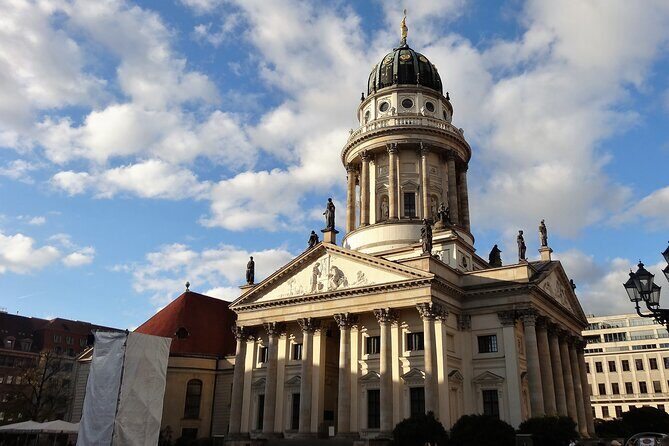
After heavy stops, the tour shifts to Gendarmenmarkt, known for impressive 18th and 19th century architecture. Your guide gives background on the square’s foundation and development, which helps you see it as more than a pretty setting.
This part of the walk gives your eyes a break. It also helps you balance the story of Berlin: the city isn’t only dictatorship and war. There are periods of cultural building and public life that matter too.
Bebelplatz: the book burning that still scares people
Then you arrive at Bebelplatz, surrounded by the grandeur of Frederick the Great’s Prussian capital. Here you learn why the buildings were constructed the way they were and you see the memorial connected to the 1933 Nazi Book Burning.
This stop lands because it’s about ideas being targeted. In Berlin, that matters: you get a reminder that oppression didn’t only work through prisons and police. It also worked by attacking culture and controlling what people were allowed to read and think.
Unter den Linden and the education-and-memory stretch
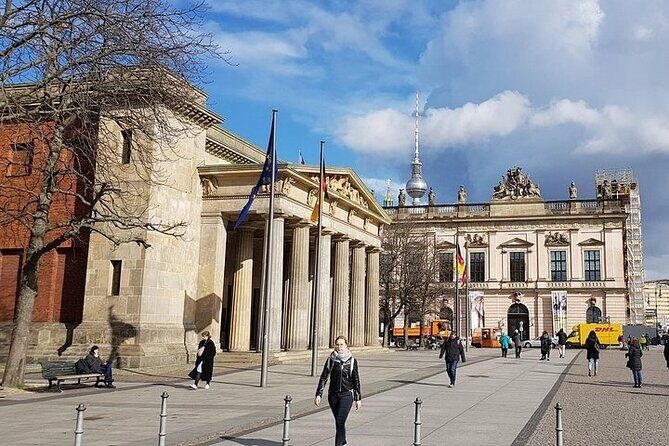
Walking along Unter den Linden, you go through a long, historically loaded corridor. The guide points out sites connected to Humboldt University, plus the Memorial to Victims of War and Tyranny and the German History Museum.
This section is useful because it shows how Germany built a national identity through education and memory. You’re moving through space where public life, learning, and commemoration overlap.
Practical pace note
This is also a good time to pace yourself. You may feel a sudden energy dip after several intense stops. Take a short breather and keep your pace steady. A well-run guide usually keeps the group moving but not sprinting.
Museum Island: from medieval Berlin to five world-class museums
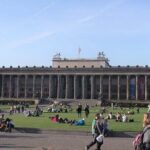
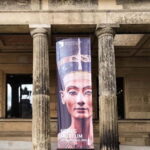
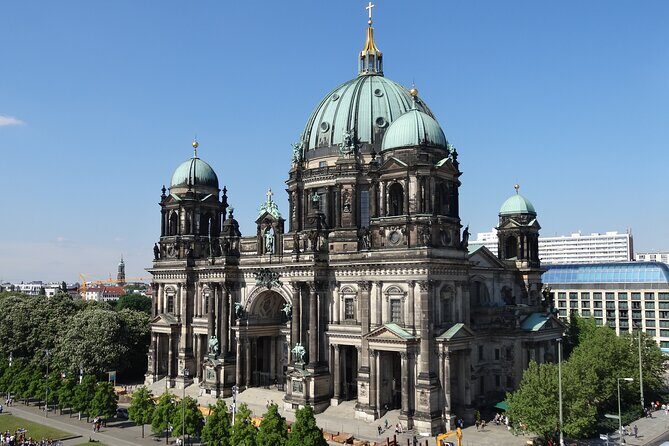
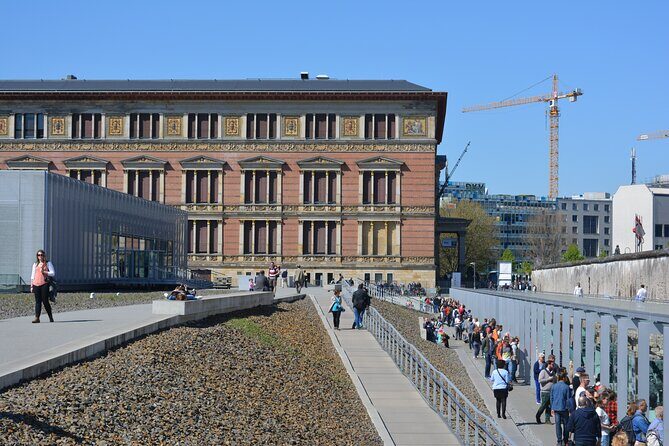
The final stretch brings you to Museum Island. You cross onto what was medieval Berlin, where the Stadt Schloss (City Palace) stood from the 15th century, and where you can still see the presence of the Berlin Cathedral. From the eastern side, the viewpoint ties the past to the post-war East Berlin story, with discussion that includes Alexanderplatz.
Even though the tour ends here, it’s a smart ending point for planning your afternoon. Museum Island gives you options: you can keep learning immediately, or you can branch out from the area with a better sense of direction.
And because the walk ends at a major cultural zone, you’re set up well for food and further exploring.
What you’ll actually get from the guide (beyond facts)
The best part of this tour is how the guide connects moments. In English, that matters. You’re not only collecting dates; you’re building a timeline you can reuse while you wander on your own later.
From what’s been shared about guides by name, the style tends to be engaging and relaxed. People mention guides such as Al, Eugen, Aurel, Rhys, Cairan, Kieran, Paul, Steve, and Aaron. A recurring theme is that the guide doesn’t just talk at you. They explain, answer questions, and sometimes use extra visuals or personal perspective to make the story stick.
That’s why a first-time visitor often loves this kind of tour. It gives you a mental map of Berlin’s major turning points, which makes later stops feel less like random sightseeing.
Price and value: paying for direction, not just time
At $32.58, you’re not buying a museum ticket experience where you stare at objects for hours. You’re paying for a guided walk through key public sites, with a guide included and the stops marked as free admission.
For me, the value comes from the route efficiency. Berlin’s most important sites are not all close enough for casual wandering if you don’t know where you’re going. This tour handles the routing so you can spend your energy on meaning instead of logistics.
Also, small-group tours tend to scale better in terms of conversation. A limit of 15 makes it more likely you’ll get your questions answered without the awkward pause where nobody hears you.
Who this tour fits best
This works especially well if you:
- Want a first, structured overview of Berlin history
- Like walking and learning as you go
- Prefer small groups and a guide-led narrative
- Plan to spend the rest of your day exploring Museum Island or the surrounding central areas
It may be a tough choice if you need lots of sitting breaks or you can’t cover long distances on foot. One caution to keep in mind: you’ll be moving for the full 3 hours 30 minutes approx., and the emotional stops ask you to slow down too.
Should you book this Berlin history highlights walk?
If you’re in Berlin for a short stay and you want your first experience to be meaningful, I’d book it. The route hits the big symbols and the big dark chapters, then balances them with major civic and cultural spaces like Gendarmenmarkt and Unter den Linden.
Choose it with realistic expectations: it’s a walking tour with several serious stops, so wear comfortable shoes and be ready for heavy topics as part of the education. If you have mobility concerns, check whether you can handle the full route length before committing.
Overall, for value, route planning, and story clarity, this is a strong pick for getting your bearings fast and understanding why Berlin looks the way it does today.