REVIEW · BERLIN
Berlin Walking Tour with Audioguide on Your Smartphone
Book on Viator →Operated by TouringBee · Bookable on Viator
Berlin in two hours, without the group rush. This self-guided route strings together key sights across the center with an offline GPS map and 24 audio recordings you can pause and replay as you go. For $6.61, it’s a low-pressure way to understand what shaped the city—Prussian power, Nazi Germany, Cold War division, and reunified Berlin.
The main catch is that you’re depending on your phone. When the app glitches (like freezing), you may have to reboot and continue from where you left off, so keep a calm mindset. Overall, it’s still a strong value if you want control over your pace and don’t mind the occasional tech hiccup.
In This Review
- Key things to know before you walk
- How the smartphone audio tour works (and what you need)
- Pariser Platz and the Brandenburg Gate: start with the big symbols
- Pariser Platz
- Brandenburg Gate
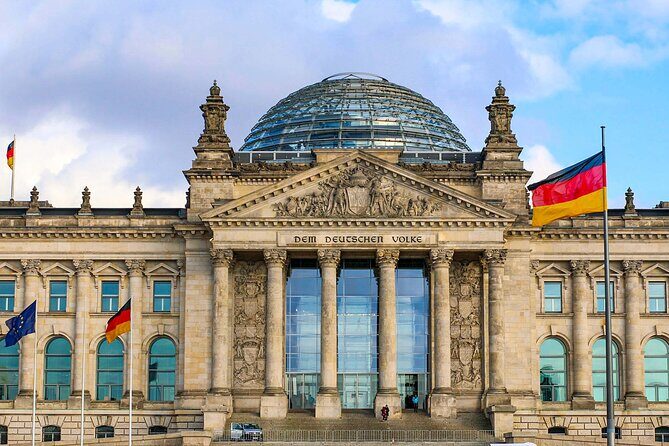
- Reichstag’s glass dome: one climb for the best payoff
- Holocaust Memorial and Fuhrerbunker: quiet stops you should not rush
- Memorial to the Murdered Jews of Europe
- Führerbunker
- East Germany details: Ampelmännchen and the Trabi vibe
- Ampelmännchen traffic lights
- The Trabant (Trabi) idea
- Checkpoint Charlie and Gendarmenmarkt: Cold War edges and elegant squares
- Checkpoint Charlie
- Gendarmenmarkt
- Bebelplatz, Unter den Linden, and Frederick the Great’s monument
- Bebelplatz and the book burning memorial
- Unter den Linden: Frederick II statue and State Opera
- Berlin Cathedral, Museum Island, and the UNESO-shaped choice
- Berlin Cathedral
- Museum Island
- Marx and Engels Forum, Red Town Hall, and the Berlin Wall remnants
- Marx and Engels Forum
- Red Town Hall (Rotes Rathaus)
- Television Tower and Alexanderplatz: the skyline and the everyday core
- Television Tower
- Alexanderplatz
- Price and value: what $6.61 gets you (and what it doesn’t)
- Should you book this Berlin audio walk?
- FAQ
- How long is the Berlin walking tour?
- Is there a human guide?
- Does it work offline?
- Do I need my own headphones?
- Where does the tour start and end?
- What’s included in the audio guide?
- Are entrance tickets included?
Key things to know before you walk
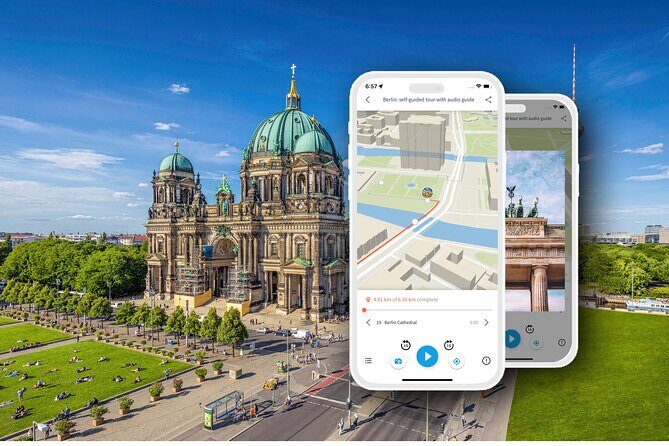
- Offline GPS route: The app includes an offline map so you can follow the line through central Berlin without constant mobile-data panic.
- Audio you can replay: You can stop for photos or a coffee and jump back in without waiting for the next group.
- 24 recordings + illustrations: Short, sight-focused segments help you recognize landmarks quickly.
- A history sweep across Berlin’s eras: The stops cover empire, WWII memory sites, East/West division, and modern-day city landmarks.
- Paced for quick visits: It’s built as a “see more in less time” walk—great for first-timers, less ideal if you want to linger for hours at every monument.
How the smartphone audio tour works (and what you need)
This is a self-guided walking tour. There’s no human guide tagging along. You download the audio guide mobile app for iOS or Android, activate your purchase, and then follow the route on the mobile app map.
What makes it practical is that it’s designed for the street: you get an offline map plus GPS navigation, so you’re not constantly stopping to check a paper map. The tour is also “modular.” If you want a break, you press pause and come back when you’re ready.
Before you start, plan for the two essentials that aren’t included:
- Your own headphones (bring them; the tour doesn’t provide them)
- Your phone with enough battery to last a couple of hours
Also, the time on the schedule is approximate. Expect the tour to sometimes take longer if you pause often for photos, read signs, or stop for food.
You can also read our reviews of more walking tours in Berlin



Pariser Platz and the Brandenburg Gate: start with the big symbols

You begin at Pariser Platz (10117 Berlin). The first stretch is built for orientation: you ease into Berlin’s central story with two iconic, easy-to-find landmarks.
Pariser Platz
This square sits right by the Brandenburg Gate and works as a warm-up. You’ll get context on why this area matters—how the place is tied to major events and how it still feels like the symbolic center of the city. It’s a great first stop because you can take a look around, figure out directions, and get the audio ball rolling without confusion.
Brandenburg Gate
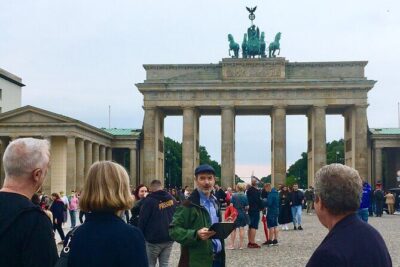
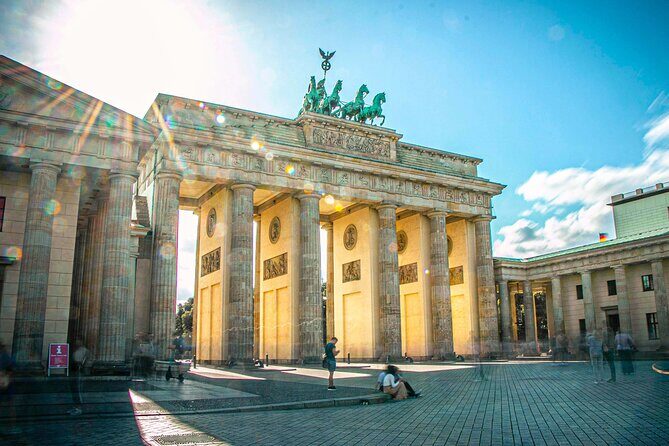
Then comes the main “wow” moment: the Brandenburg Gate. You’ll hear the story behind its neoclassical columns and the Quadriga sculpture above. The key idea is how the Gate’s meaning shifted—from a symbol tied to division to one associated with reunification.
If you only have time for one exterior photo early on, this is the one. Take it, then keep walking. The tour’s strongest feature is momentum.
Reichstag’s glass dome: one climb for the best payoff

Next up is the Reichstag. The audio frames the building as more than an architectural landmark. The focus is the glass dome, tied to the idea of transparency and democracy.
Practical tip: treat this as both a history stop and a breather. Even if you don’t spend a long time here, the views from the dome area (when open for visitors) give you a mental map of Berlin—so when the tour moves into Cold War and East/West topics, you understand where everything fits.
You can also read our reviews of more tours and experiences in Berlin




Holocaust Memorial and Fuhrerbunker: quiet stops you should not rush

Some sites are powerful enough that you’ll naturally slow down. This route includes two of them back-to-back.
Memorial to the Murdered Jews of Europe
You walk through the grid of concrete slabs. The feeling here is intentional: you move between narrow spaces that create disorientation on purpose. The subterranean Information Centre adds context, so you’re not just looking at a monument—you’re learning what it represents.
If you’re the type who usually flies through memorials, give this one time anyway. It’s the kind of stop where rushing can flatten the meaning.
Führerbunker
Then the tour takes a hard left into WWII’s final days with the Führerbunker. The audio explains the historical weight of the underground complex where Hitler spent his final days. Today, it’s a parking lot with informational displays, which makes it even more unsettling: history sits right under everyday movement.
This is not a “fun photos” stop. It’s a “stand still and absorb” stop. Bring extra mental room for it.
East Germany details: Ampelmännchen and the Trabi vibe
Berlin isn’t only tragedies and politics. This route also includes smaller, human-scale symbols from East German culture.
Ampelmännchen traffic lights
You’ll spot Ampelmännchen, the quirky traffic light figures. The audio connects them to East Germany and explains how they became a shared symbol after reunification. The point isn’t just cuteness. It’s how everyday design can become identity—then become unity.
The Trabant (Trabi) idea
The tour also calls out the Trabant (Trabi) as an automotive icon. The audio frames the Trabi as a colorful relic tied to East German life, with nostalgic rides offered in Berlin.
One note: since this is a walking audio tour, you should think of this as a “learn what it means” stop, plus a lead-in if you want to book a ride separately. Don’t assume your tour includes a car segment.
Checkpoint Charlie and Gendarmenmarkt: Cold War edges and elegant squares

This section gives you a contrast break: you go from the sharp reality of a divided city to a beautiful, postcard-like square.
Checkpoint Charlie
At Checkpoint Charlie, you’ll get the Cold War context. The audio highlights the replica of the famous border crossing and the museum area that explains escape attempts. It’s the kind of site where the details matter—because the history isn’t abstract anymore. You can stand there and understand how borders changed daily life.
Gendarmenmarkt
Then you reach Gendarmenmarkt, and the tone shifts to architectural symmetry and ceremony. The audio points you to the balanced view of the German and French Cathedrals, framed around the Schiller Monument. You’ll also hear about the Konzerthaus, which adds a strong “culture first” feel to the square.
This is where many people naturally pause. You’re not just moving forward—you’re resting your eyes after the heavier stops.
Bebelplatz, Unter den Linden, and Frederick the Great’s monument

As the tour continues, it adds intellectual and political context in a very “Berlin” way—through public spaces, monuments, and famous buildings.
Bebelplatz and the book burning memorial
At Bebelplatz, you’ll hear about the square’s connection to intellectual life and major institutions around it. The most striking element here is the underground memorial tied to the Nazi book burnings, which is a clever and unsettling piece of symbolism: you’re reminded how control of ideas can be physical.
The audio also helps you notice details you might otherwise walk past—like the way Berlin preserves these lessons in modern urban design.
Unter den Linden: Frederick II statue and State Opera
On Unter den Linden, the tour spotlights the equestrian statue of King Friedrich II of Prussia (Frederick the Great). The audio describes the monumental equestrian look and credits the artist Rauch. It’s a “read the city like a timeline” stop: Prussian power on parade, and later Berlin’s other identities reacting to that past.
Right nearby is the German State Opera. The audio frames it as a cultural jewel on Unter den Linden and points to its role in Berlin’s performance life over time.
If you like your sightseeing to include context (not just photos), this stretch is a good one.
Berlin Cathedral, Museum Island, and the UNESO-shaped choice
This section is the culture payoff—and it’s also where you have to decide your style: quick sight-and-go, or slower museum time.
Berlin Cathedral
The Berlin Cathedral is described as a Baroque masterpiece, with attention on its dome and the interior. The audio also notes panoramic possibilities from the terrace (when accessible), which is a great option if you want city views without adding extra transportation.
Museum Island
Then you reach Museum Island, a UNESCO World Heritage site on the Spree. The audio treats it like a cluster of time periods. You’ll hear about multiple museums, including the Pergamon Museum and the Neues Museum.
Practical reality: this is where a “2-hour walk” can quietly turn into “I need to go inside.” Since the audio tour is paced for walking, you may want to skim outdoors on this first pass—and if you fall in love, schedule a separate museum day later.
Marx and Engels Forum, Red Town Hall, and the Berlin Wall remnants
This part keeps the politics grounded in public space.
Marx and Engels Forum
The audio covers the tribute to the founders of communist theory and guides your attention to statues and reliefs. It also mentions remnants of the Berlin Wall, which changes how you feel about the site. It’s not just ideology—it’s physical proof that the city was divided.
One nice thing: this area can feel calmer than the busiest central corridors, so it’s a good “reset” stop before you head for skyline views.
Red Town Hall (Rotes Rathaus)
Next is the Red Town Hall, with its red brick facade and Neo-Renaissance architecture. The audio also points out the adjacent Neptune Fountain, which adds a touch of drama and mythology next to government power.
This is a good stop for people who want Berlin’s civic identity, not only its war and division stories.
Television Tower and Alexanderplatz: the skyline and the everyday core
The finale brings you back to classic Berlin energy: big views and a central transport-and-shopping hub.
Television Tower
At the Berlin Television Tower on/near Alexanderplatz, the audio frames it as a futuristic design connected to GDR-era symbolism—plus a symbol tied to unity. The payoff is the observation deck view.
Even if you don’t go up, the tower is one of those visual anchors. It helps you understand scale and distance across the city center.
Alexanderplatz
Then you reach Alexanderplatz, a busy central square with shops, cafes, and transit links. The audio also notes the historic Weltzeituhr clock, which is a fun way to connect Berlin to the world—literally.
This stop feels like a closing loop. You started with symbolic power (Brandenburg Gate). You end with a live hub where Berlin keeps moving.
Price and value: what $6.61 gets you (and what it doesn’t)
At $6.61 per person, the value comes from three things:
- You get 24 audio segments tied to a route that covers major landmarks in the center.
- The offline GPS map reduces the friction of self-guided exploring.
- You can control your pace and replay parts you want to understand again.
What it doesn’t give you:
- No human guide, so you won’t get live Q&A.
- No included headphones, so you’ll need your own.
- No included entrance tickets or timed-entry guarantees. If you want dome views or museum interiors, you’re still planning that separately.
Also, don’t assume it will be a strict 2-hour walk. If you stop for food, read signs, or linger at memorials and viewpoints, you may end up closer to a longer outing. For many people, that’s fine—just plan your day accordingly.
Should you book this Berlin audio walk?
Book it if you want:
- A low-cost way to hit the center’s must-sees without joining a group.
- The freedom to pause for photos, breaks, and rest stops.
- A guided-by-a-phone route that covers both monument-heavy history and everyday cultural details like Ampelmännchen and Trabi references.
Skip it (or pair it with extra time) if:
- You need a strict schedule with zero tech reliance.
- You prefer deep museum time built into the plan. This route is paced for walking, not for long indoor stays.
My practical advice: if you go, go with a plan to give the memorials a little extra respect—and give yourself a buffer day for anything that pulls you in, like the cathedral area or Museum Island.
FAQ
How long is the Berlin walking tour?
The tour is estimated at about 2 hours, but the actual time can vary depending on how long you spend at stops and whether you take breaks.
Is there a human guide?
No. It’s a self-guided tour using a mobile app. You follow the route on your phone map.
Does it work offline?
Yes. It includes an offline map with the route for GPS navigation.
Do I need my own headphones?
Yes. Headphones and a smartphone are not included, so you’ll need to bring your own.
Where does the tour start and end?
It starts at Pariser Platz, 10117 Berlin, Germany and ends back at the meeting point.
What’s included in the audio guide?
You get the audio guide app content with 24 audio recordings, illustrations to recognize landmarks, and 1 year access in the language of your choice.
Are entrance tickets included?
No. Entrance fees or tickets are not included. Some stops are described as free, but you may still need tickets for certain activities or viewpoints.