REVIEW · BERLIN
Street Art & Berlin Gay, Queer, Trans History + Free Gay Map
Book on GetYourGuide →Operated by Gali Jaffe - Archaeology Online · Bookable on GetYourGuide
Street art can teach you Berlin’s quieter truths. This tour pairs street art with Gay, Queer, and Trans history, using Schöneberg and the Nollendorf area as your open-air classroom. I love the way the route starts with eye-catching walls, then turns into real-life stories about community, visibility, and courage. Two things I really liked: the art-first pace and the personal touch from guide Gali, who makes the walk feel like a conversation instead of a lecture.
Keep one thing in mind: the whole experience is only 2 hours. It’s a great sampler, but you won’t get long museum time or deep research-style reading in one sitting.
In This Review
- Why This Tour Works: Art on the Outside, Identity on the Inside
- Starting at Wittenbergplatz: Easy Meeting Point, Real-World Pace
- Schöneberg Walk: Street Art Meets a Church You’ll Actually Remember
- Quick practical note
- Urban Nation Gallery Stop: Street Art Inside, Then Time to Breathe
- Nollendorf’s Key Landmarks: Isherwood, El-Dorado, and Hirschfeld
- Gali Jaffe’s Trans-Led Perspective: The Tour’s Secret Weapon
- Price and Value: Is $57 for 2 Hours Worth It?
- Who This Tour Fits Best (and Who Might Want Something Else)
- Tips to Get the Most Out of It
- Should You Book This Tour?
- FAQ
- What is the duration of the tour?
- Where does the tour start and end?
- Is the tour offered in English?
- How large is the group?
- Do I need a public transport ticket?
- Is the tour wheelchair accessible and suitable for children?
Why This Tour Works: Art on the Outside, Identity on the Inside
Berlin can feel big and split into “squares and monuments” on one side, and “alternative scenes” on the other. This tour glues those worlds together. You’ll be outside, walking through the less-touristed parts of the city, looking at street art up close. Then you’ll connect those visuals to the places where queer life shaped the neighborhood—stories you can’t really see from a guidebook map alone.
What makes it especially compelling is the focus on trans, gay, queer, and gender-diverse history in a neighborhood that still carries that energy. And the tour guide matters. With Gali Jaffe leading the experience, the tone stays warm and engaging. In a small group, her explanations land fast. You spend less time trying to decode what you’re seeing and more time actually enjoying it.
The tour also doesn’t pretend history is only something you read. It’s about locations—blocks, buildings, and the cultural “gravity” of places like clubs and institutes. That approach helps you get oriented, so you can wander independently after the tour.
Starting at Wittenbergplatz: Easy Meeting Point, Real-World Pace

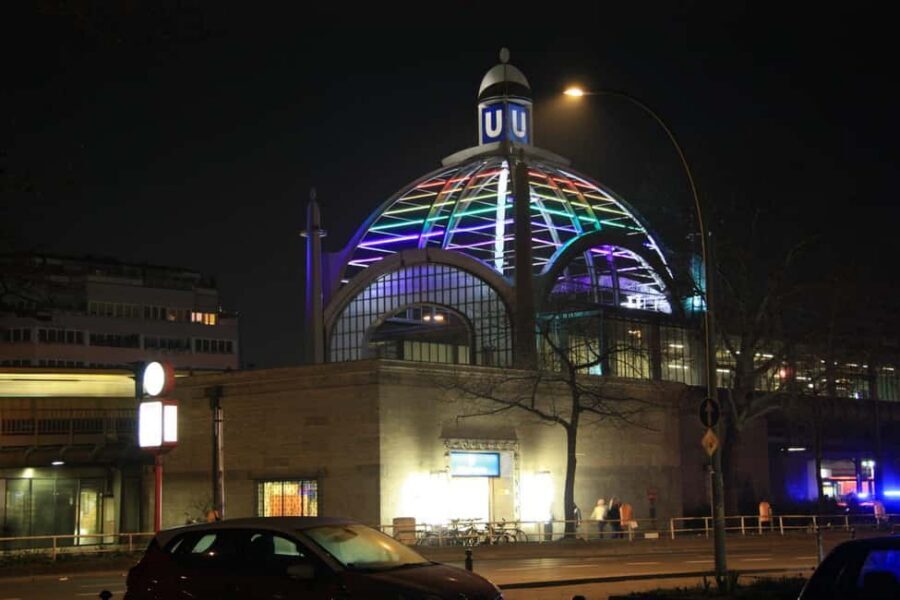
You’ll begin at the entrance to the Underground Station Wittenbergplatz, in front of the KDW department store. If you’ve used Berlin transit before, this is a comfortable start. It’s central enough to find without drama, but you’re not stuck in the most over-photographed lanes.
The schedule has a simple rhythm: walk, then a short public transport hop, then more walking. That matters because it keeps the route compact enough to fit into 2 hours. You’re not grinding your feet for long stretches, but you’re still outdoors for the moments where street art and neighborhood details matter.
Bring a public transport ticket—you’ll need it for those brief transfers. And because the group is limited to 10 participants, you won’t feel swallowed by a crowd. You’ll be able to turn your head toward the walls and still hear what’s being pointed out.
You can also read our reviews of more historical tours in Berlin



Schöneberg Walk: Street Art Meets a Church You’ll Actually Remember
After a short transit segment (about 5 minutes), you head into Schöneberg. This is where the tour shifts from “what looks cool” into “why this place matters.” The guided walk runs around 40 minutes, and it’s built around a sequence of stops that keeps your attention moving: first art impressions, then cultural context.
One highlight in this phase is a visit to a unique church—described as one of the most interesting you’ll find in Berlin. Since the church’s exact name isn’t provided in the tour details you have, I’ll frame it this way: you’re going to a place that’s visually distinctive and story-driven. Even if churches aren’t your thing, Berlin’s story often lives in surprising architecture, and this stop is chosen for a reason.
The payoff here is how the tour connects visual style with community meaning. You’re not just looking at murals; you’re also learning how queer life and identity shaped the cultural map of Berlin. And because your guide keeps it conversational, you’ll likely leave with more than facts—you’ll have a sense of how the neighborhood “feels” in layers.
Quick practical note
Dress for walking. The tour includes both guided portions and sightseeing time. Even though it’s short, you’ll want comfortable shoes for sidewalks.
Urban Nation Gallery Stop: Street Art Inside, Then Time to Breathe

Next comes Urban Nation—about a 20-minute window for a guided tour plus free time. This is a smart inclusion. Street art can be harder to interpret from the street alone, and Urban Nation gives you an indoor structure for understanding what you’re seeing outside.
You’ll get a guided visit first, then you’re released with a bit of freedom. That free time matters because it lets you linger on what grabs you personally, not just what your guide thinks you should look at. In a short tour, this split is a sweet spot: guided direction up front, flexibility afterward.
If you like street art, you’ll probably enjoy the way the gallery frames it as more than decoration. And if street art isn’t your top interest, this stop can still be worth it because it offers a lens. You’ll likely walk out better able to spot themes—identity, resistance, visibility—when you’re back outside on your own.
Nollendorf’s Key Landmarks: Isherwood, El-Dorado, and Hirschfeld

After more transit (again, roughly 5 minutes), you continue in Schöneberg with sightseeing and walking time of about 30 minutes. This is where the neighborhood history becomes very tangible.
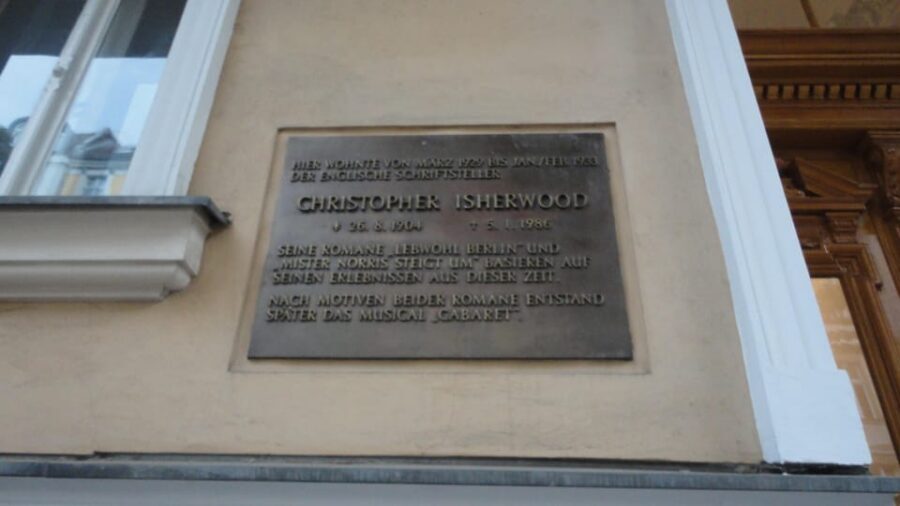
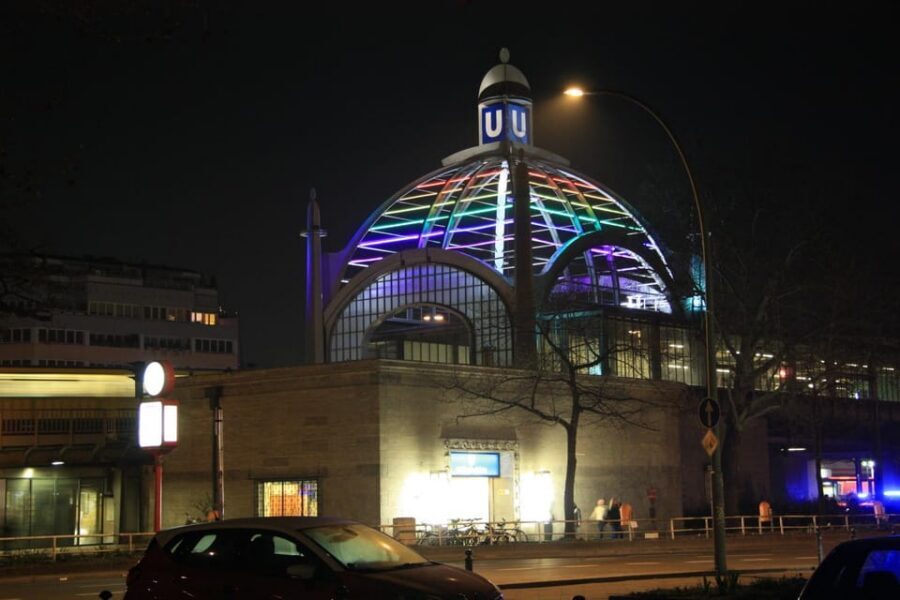
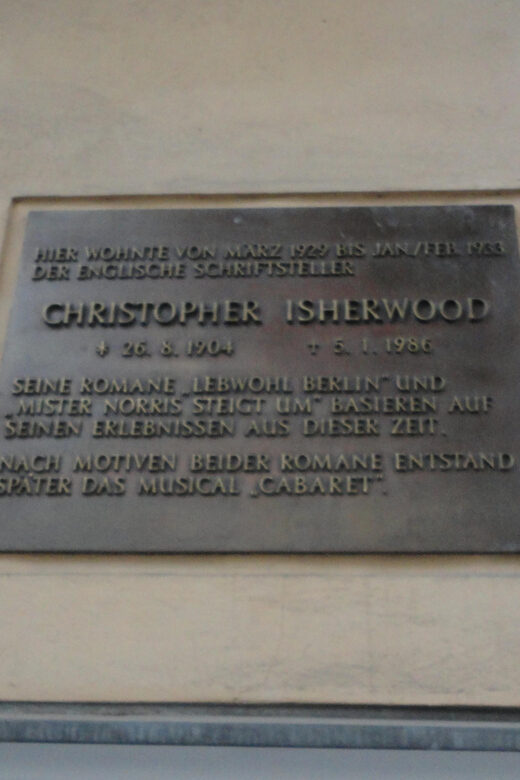
You’ll see the house of Christopher Isherwood in the Nollendorf area. Even if you only know the name in passing, the point of the stop is simple: you’re connecting literature and lived experience to a physical place. Berlin’s queer narrative didn’t stay in private conversations. It shaped art and writing, and that influence is part of why the city has such a strong reputation.
Then the tour points out the location of the famous El-Dorado club. Again, the exact building context isn’t laid out in the tour details you provided, but the inclusion is powerful for one reason: clubs are where culture becomes real. They’re where people meet, organize, and create community. Seeing a place associated with El-Dorado helps you visualize how queer life moved through the city.
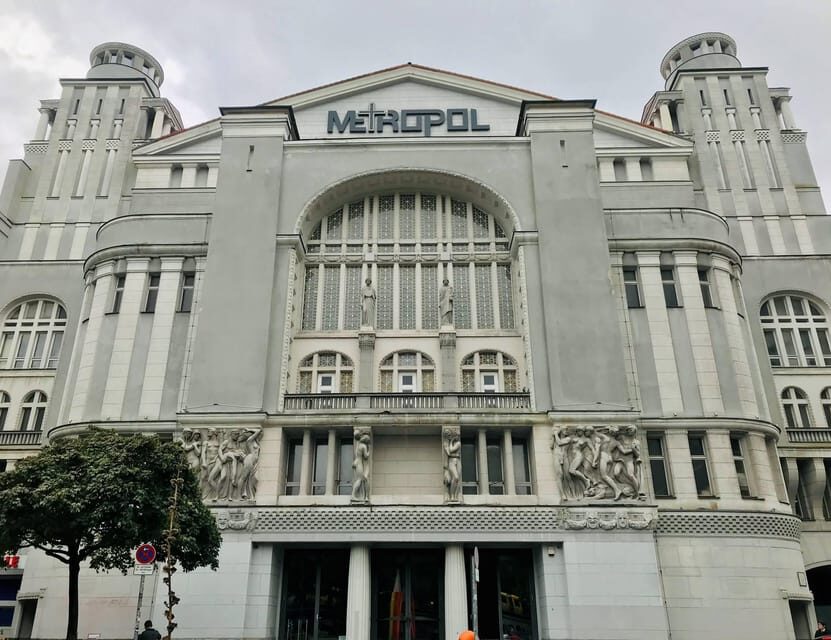
Finally, the guide brings in Magnus Hirschfeld and his world famous and first of a kind Institute for the Science of Sexuality. That topic deserves its own spotlight. An institute like that signals something bigger than individual identity—it shows how research and public attention started to exist around sexuality in a formal way. The tour’s structure helps you understand this without heavy academic overload. You hear it in context of places where community and visibility played out day to day.
If you’re the type who likes your history anchored to real corners and buildings, this part is going to feel satisfying.
You can also read our reviews of more tours and experiences in Berlin




Gali Jaffe’s Trans-Led Perspective: The Tour’s Secret Weapon
The tour stands out not only for what it covers, but for how it’s taught. The experience is led by Gali Jaffe, an expert trans woman tour guide, and that matters because trans history can be told in different ways. Here, it’s presented with care and clarity, with a focus on real people and real spaces, not stereotypes or generic slogans.
From the tone described in the feedback, Gali comes across as friendly, warm, and willing to personalize. That’s more than a nice perk. In a small group capped at 10, customization is what turns a “group walk” into something you’ll remember. You’re more likely to ask questions, and the guide can tailor what she emphasizes based on what you want to see: art interpretation, landmark context, or the way Berlin’s queer communities evolved.
Also, the tour is explicitly in English. If you’re visiting from outside Germany, that’s a big value point. You get to focus on the street scenes and the stories without playing translation roulette.
Price and Value: Is $57 for 2 Hours Worth It?

At $57 per person for about 2 hours, this isn’t an ultra-budget deal. But you’re also paying for a lot of high-quality ingredients packed into a short time: an expert guide, a street art focus, a church stop, Urban Nation (with guided time plus free time), and a route that includes queer landmark context across Schöneberg and Nollendorf.
Here’s how I’d judge the value for you:
- If you want a quick way to get your bearings in a meaningful part of Berlin, this price starts to make sense. You’ll cover multiple themes without wasting time figuring out what’s where.
- If you already know Berlin’s queer geography and you mainly want art galleries, you might prefer a longer gallery-focused outing. This is more of a guided “map with meaning” than a deep museum day.
- If your priority is learning and feeling oriented—especially with the trans-led perspective—the small group size and personal feel are worth real money.
One extra win: the tour includes a free Berlin gay map. That turns your guided time into longer-term usefulness. You’re not stuck with only the two hours; you get something you can use after the walk.
Who This Tour Fits Best (and Who Might Want Something Else)
This tour fits best if you like:
- Street art and want it connected to people and place
- queer history explained through neighborhood landmarks
- a small group setting where you can actually hear and ask questions
- a practical route that uses short transit hops to keep things efficient
It’s also a good option if you want “queer footing in the city,” as in: you want to understand where things happened and how the neighborhood tells its story today.
There’s one clear mismatch: the tour is not suitable for children under 16. Also, if you dislike walking, this might not be the best plan because even with transport hops, you’ll be outside for a meaningful chunk of the experience.
Tips to Get the Most Out of It
A few small moves can improve your time a lot:
- Plan to arrive a few minutes early at Wittenbergplatz so you don’t start rushing.
- Bring your public transport ticket, since the route uses short transit segments.
- Wear shoes that can handle uneven sidewalks and a couple of longer stretches of walking.
- If something catches your eye on the street, flag it with your guide. In a group of 10, that kind of interaction is usually welcome.
- If the weather changes (Berlin can surprise you), the tour still works because it’s built around landmark stops, not one single outdoor “perfect” scene.
Should You Book This Tour?
I’d book this if you want Berlin to feel personal, not just photo-friendly. The combination of street art + queer landmarks, the trans-led guiding by Gali Jaffe, and the tight small-group format make it a strong choice for a first or second trip to Berlin—or for anyone who wants a fresh angle without spending an entire day on planning.
I would skip it if you’re looking for a long, museum-heavy itinerary or you want a very deep academic breakdown of every topic. This is a focused walk that gives you direction and context, not a multi-day research project.
If you like your travel with meaning, and you’re curious about how art and queer life shaped Schöneberg, this one is worth your time.
FAQ
What is the duration of the tour?
The tour lasts about 2 hours.
Where does the tour start and end?
It starts at the entrance to the Underground Station Wittenbergplatz in front of the KDW department store, and it ends back at the same meeting point.
Is the tour offered in English?
Yes, the live tour guide offers the experience in English.
How large is the group?
The tour is a small group limited to 10 participants.
Do I need a public transport ticket?
Yes. You should bring a public transport ticket because the tour includes short public transport segments.
Is the tour wheelchair accessible and suitable for children?
The tour is wheelchair accessible. It is not suitable for children under 16 years.