REVIEW · BERLIN
Berlin: Historic Jewish walking tour through the city center
Book on GetYourGuide →Operated by Stitching The Past - Tour Berlin · Bookable on GetYourGuide
Berlin’s Jewish tailoring story walks the sidewalks. This center-city walk threads Prussian-era Berlin, the Roaring Twenties, and the long after-effects of the Wall fall through one focused theme: the city’s Jewish business life. I love that it turns street corners into a timeline you can actually follow on foot.
I also like the way it keeps the story grounded in industry and everyday life, not just dates. You’ll hear about the Konfektion fashion and garment trade and how political extremism changed it—and in some cases, how Jewish families managed to thrive or even survive. One drawback: the subject matter can feel heavy, so if you want only light sightseeing, you may find the themes too intense for a casual stroll.
In This Review
- Key things to know before you go
- Why this Berlin Jewish walking tour feels different
- Hausvogteiplatz: the meeting point and your first “street timeline”
- What you’ll likely notice right away
- The 30 minutes at Hausvogteiplatz: pre-war Berlin through the Konfektion lens
- Why this first stop matters for your “read” of the city
- Werderscher Markt: short visit, sharper context
- How to get the most from the Werderscher Markt stop
- Jägerstraße: where you connect commerce, culture, and change
- A practical tip for this stop
- How the tour connects the Prussian Empire to the Roaring Twenties to today
- Why this “change over time” approach is valuable for you
- What you get for the money: price and value for a 1-hour walk
- Logistics that actually matter: meeting point, timing, and pace
- Who should book this tour, and who might skip it
- Should you book Stitching The Past’s Berlin Jewish walking tour?
- FAQ
- FAQ
- Where does the tour start?
- How will I recognize the guide?
- What’s the duration of the tour?
- What language is the tour in?
- What stops are included on the route?
- Is the tour wheelchair accessible?
- Is the tour suitable for children?
- What’s the main theme of the tour?
- How much does it cost?
- Can I get a full refund if plans change?
Key things to know before you go
- A tight 1-hour route focused on Berlin city-center streets, so it fits even busy days.
- Konfektion tailoring is the anchor story, with the Jewish community’s role in the economic center.
- Prussian, Roaring Twenties, then post–Wall fall changes are connected street-by-street.
- English live guide with clear stops and a simple map and activity list.
- Hausvogteiplatz is your start and finish, near the U2 station and a fountain landmark.
- Wheelchair accessible, and the walk is designed for a city-center experience.
Why this Berlin Jewish walking tour feels different
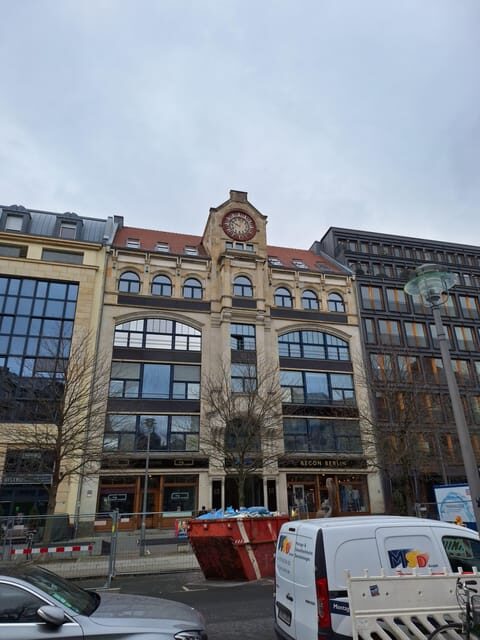
Most Berlin history tours give you monuments and big political moments. This one follows a trade. That shift matters. When you see how the garment and tailoring industry worked—who shaped it, who profited from it, and what happens when regimes attack an industry—you start understanding the city as an economic machine, not just an image.
I like how the theme is specific: Berlin’s former economic Jewish center district. That means the guide can point out places tied to the life of the Konfektion industry and talk about how fashion and the business side of glamour developed there. You get to look at the city’s historic areas with a purpose, not just for pretty photos.
There’s also a practical payoff. After this walk, Berlin’s changes after the Wall fall won’t feel random. You’ll connect the idea of political extremism reshaping an industry to what the area looks like today.
You can also read our reviews of more walking tours in Berlin



Hausvogteiplatz: the meeting point and your first “street timeline”
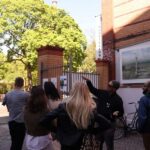
The tour begins at Hausvogteiplatz. Meet the guide in the square near the water fountain, close to the U2 train station. The guide carries a white side bag, so it’s designed to be easy to spot.
Before you even move far, you’re already in the right mindset. Starting at a well-known public space helps the walk feel anchored and not like you’re hunting for hidden corners. It also makes the route easy to replay later in your head: you start in one recognizable spot, take a short walk through the center, then return.
At Stop 1, you’ll effectively get orientation and context, and then the walk proper starts at Stop 2.
What you’ll likely notice right away
- You’re in a central area that connects quickly to transit (handy in a city with lots of walking).
- The guide can frame the route as a sequence: old economic power → fashion trade → political rupture → city transformation.
The 30 minutes at Hausvogteiplatz: pre-war Berlin through the Konfektion lens
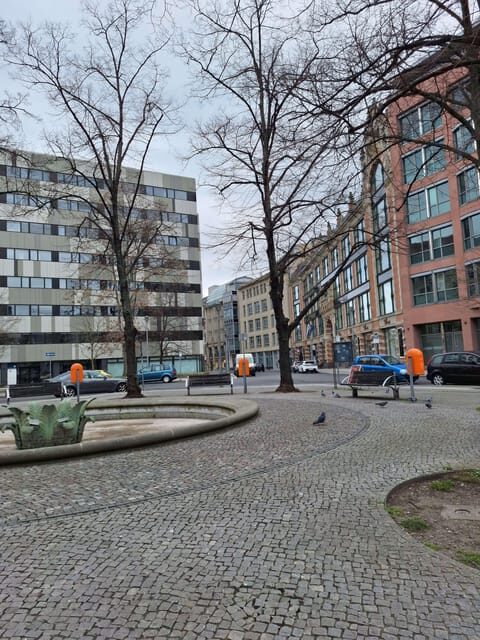
Stop 2 is a guided segment at Hausvogteiplatz lasting about 30 minutes. This is where the tour’s story gets its backbone: Berlin during the Prussian Empire and the years that led into the big cultural shift of the Roaring Twenties.
This is the part I like most for first-time visitors. You get to understand the city center before you start passing more sites. Instead of walking with only vague background, you’ll walk with a concrete frame: the Jewish community’s role in the tailoring and garment world, and how that economic engine fed the wider look of Berlin—fashion, style, and the business side of glamour.
And because the tour theme is industry, it invites you to look differently at historic buildings. Even if the exterior is familiar from photos, the guide’s explanations give it a job to do in the story.
Why this first stop matters for your “read” of the city
If you’ve ever visited a city and felt you were seeing places without understanding what was going on there, this avoids that. By placing the Konfektion industry front and center, the guide makes you ask better questions: Who worked here? What kind of work happened nearby? How did political change threaten or disrupt the trade?
You can also read our reviews of more city tours in Berlin




Werderscher Markt: short visit, sharper context
Next comes Werderscher Markt for about 15 minutes. This stop works like a quick chapter break. You’re not here for long photo time. You’re here to connect what you heard with what you can still see around you.
In a focused 1-hour tour, these short visits are useful. They keep you from getting lost in tangents, and they help you retain the main narrative arc: how the Jewish population developed and contributed to the city’s economic life, how the trade evolved through major eras, and how political extremism can reshape an industry completely.
How to get the most from the Werderscher Markt stop
- Listen for how the guide links the market-area feel to the trade and commerce side of Berlin.
- Pay attention to the way the guide explains changes after major political ruptures, including how the post–Wall fall period fits into the story.
Jägerstraße: where you connect commerce, culture, and change
The final main stop is Jägerstraße, again around 15 minutes. This is the second quick “you are here” moment, and it’s a good place to slow down mentally even if you don’t slow down physically.
Because the tour is centered on the tailoring industry, streets like Jägerstraße can feel like more than address points. The guide’s job here is to connect the look of the city to the lived experience of business and fashion—then connect that to what happened when regimes and political pressure hit the community and the industry.
A practical tip for this stop
Take a few seconds before you move to the next site and figure out your direction mentally. You’ll finish back at Hausvogteiplatz, and the more you keep the route in your head, the easier it is to keep learning after the tour ends—whether that’s finding another nearby museum or just understanding what you’re seeing as you walk.
How the tour connects the Prussian Empire to the Roaring Twenties to today
The tour promises a clear arc: you’ll explore Berlin during the Prussian Empire, then reach the Roaring Twenties, then shift to the period after the Wall fall and what the area became.
That structure is more than a timeline. It helps you understand why Berlin looks the way it does. Cities change because systems change: power, business networks, and who is allowed to participate. When the guide explains political extremism’s brutal impact on Berlin and its economic history, it’s not delivered as a vague lesson. It’s linked to the trade of Konfektion, and that trade is linked to the Jewish community’s development, thriving, and—tragically—survival in some cases.
Why this “change over time” approach is valuable for you
If you want a Berlin tour that doesn’t leave you with just an emotional takeaway, this one aims for understanding. You finish with a better sense of how an industry can be transformed by politics, and how that transformation leaves marks that persist even after major historical turning points.
What you get for the money: price and value for a 1-hour walk
The price listed is $1.70 per person. That is exceptionally low for a live, English-language walking tour with multiple stops and a guided narrative.
So here’s how I’d think about value: this tour is short—about 1 hour—and centered on a compact area. That means less time for logistics and more time for learning the main story. It’s also donation-style in spirit, because the provider notes that tours can be booked on a donation basis if you reach out.
In other words, you’re not paying for a long coach trip or a big set of included attractions. You’re paying for a focused, human explanation of how Berlin’s economic Jewish center worked and what changed when extremism took hold.
One consideration: because it’s so low-cost, your experience will depend heavily on the guide’s storytelling clarity and the group’s ability to keep moving. The route is designed to stay tight, so show up on time and be ready to walk.
Logistics that actually matter: meeting point, timing, and pace
This is a live tour in English lasting about 1 hour. You’ll want to check availability because starting times can vary.
The meeting point is clear: Hausvogteiplatz square, near the water fountain and close to U2. The guide carries a white side bag. That’s the kind of detail that makes a difference in Berlin, where it’s easy to waste time circling the wrong plaza.
The pace is also part of the value. The tour includes short visits at Werderscher Markt and Jägerstraße, with a longer guided segment at Hausvogteiplatz. That mix helps you avoid the fatigue that comes with long walking tours, especially if you’re pairing it with other sights.
Who should book this tour, and who might skip it
This tour fits best if you:
- Want history tied to real streets and a specific economic theme
- Like walking tours that feel like a story you can track block by block
- Appreciate explanations in English with a focused route you can repeat mentally later
You might skip it if you:
- Want only upbeat, feel-good sightseeing
- Prefer broader tours with many different themes and stops
- Are traveling with young kids, since it’s not suitable for children under 6
If you’re a first-time Berlin visitor, this can also serve as a strong foundation. Even after only an hour, it gives you a sharper lens for what you’ll see next.
Should you book Stitching The Past’s Berlin Jewish walking tour?
I’d book it if you want a short, meaningful walk that connects Berlin’s fashion-and-business world to the real political pressures that changed everything. The low price makes it easy to justify, and the structure is compact enough that it won’t swallow your whole day.
I’d hesitate only if you’re searching for light sightseeing with minimal emotional weight. This tour’s theme is political extremism and its impact, so you should go in with the expectation that the story includes hard parts.
If that fits your travel style, this is a great way to get new insights into the city center without cramming in dozens of stops.
FAQ
FAQ
Where does the tour start?
It starts at Hausvogteiplatz square, near the water fountain and close to the U2 train station.
How will I recognize the guide?
The guide carries a white side bag.
What’s the duration of the tour?
The tour lasts about 1 hour.
What language is the tour in?
The tour is led in English.
What stops are included on the route?
The tour includes guided time at Hausvogteiplatz and visits to Werderscher Markt and Jägerstraße, returning to Hausvogteiplatz.
Is the tour wheelchair accessible?
Yes, it is wheelchair accessible.
Is the tour suitable for children?
It is not suitable for children under 6 years old.
What’s the main theme of the tour?
It focuses on Berlin’s former economic Jewish center district and the Konfektion tailoring and fashion industry, and how Berlin changed through different eras.
How much does it cost?
The price is listed as $1.70 per person.
Can I get a full refund if plans change?
Yes, free cancellation is offered up to 24 hours in advance for a full refund.
If you want, tell me your travel dates and whether you’re staying near U2. I can suggest a simple way to pair this 1-hour walk with nearby sights so it flows naturally.