REVIEW · BERLIN
Berlin: The Wall and Cold War – a Private Walking Tour
Book on GetYourGuide →Operated by Sightseeing Point GmbH · Bookable on GetYourGuide
A border walk in Berlin feels different. This private 2-hour tour gives you a clear sense of Cold War daily life and how Berliners tried to survive—and sometimes escape. I like that it starts at Bernauer Straße, then follows the former dividing line with a local guide who explains what you’re seeing in plain, human terms.
What I especially like is the mix of big landmarks and personal stories: you’ll hear about the construction and fall of the Berlin Wall, then connect those events to day-to-day choices in a split city. The tour also hits the Palace of Tears (Tränenpalast) and ends at Checkpoint Charlie, so you don’t just read about borders—you walk past them.
One consideration: parts of the experience depend on whether the death strip viewing platform is open at the time of your tour. If it isn’t, you’ll still get the core border-station experience, but that specific viewpoint may be unavailable.
In This Review
- Key Things You’ll Notice on This Berlin Wall Tour
- A 2-Hour Cold War Walk Through Berlin’s Border Lines
- Starting at U Bernauer Straße and the Border Museum Atmosphere
- Palace of Tears (Tränenpalast): A Guided Border-Crossing Stop
- The Wall’s Footprints and the Death Strip Viewpoint (If Open)
- Checkpoint Charlie: Closing the Loop on a Famous Border
- Guides, Languages, and the Storytelling That Makes It Work
- Price and Value: Is $22 a Good Deal?
- Who Should Book This Private Berlin Wall Tour
- Should You Book This Berlin Wall Private Walking Tour?
- FAQ
- How long is the Berlin Wall and Cold War private walking tour?
- Where do I meet my guide?
- What are the main stops on the tour?
- Is the tour private or shared?
- What languages are offered?
- Is the tour wheelchair accessible?
- How much does the tour cost?
- Is free cancellation available?
- Can I reserve now and pay later?
- What if I’m late or can’t find the guide?
Key Things You’ll Notice on This Berlin Wall Tour
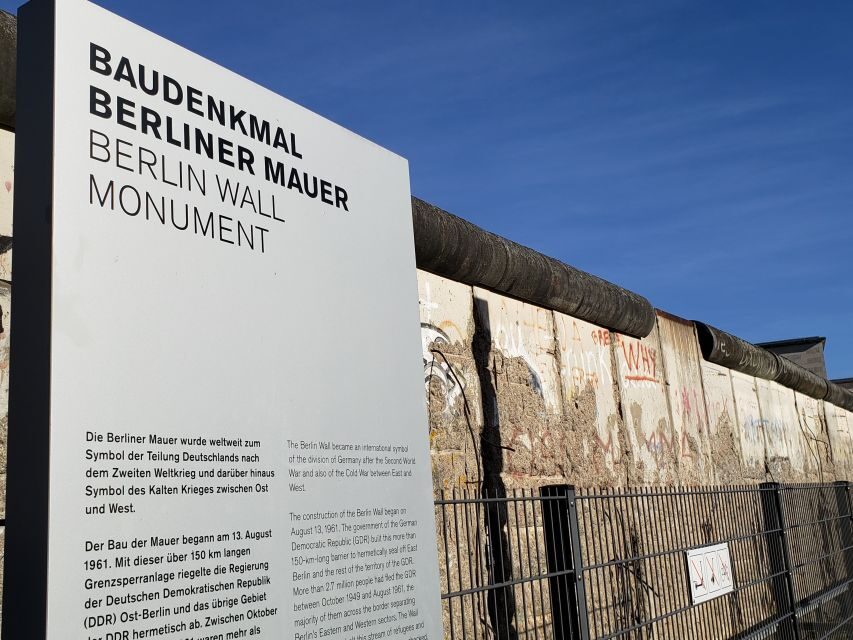
- Bernauer Straße start at the U-Bahn station, timed for a smooth kickoff and quick route understanding.
- Real border-crossing context as the walk traces the former borderline through Berlin.
- Palace of Tears (Tränenpalast) stop with guided time at an original border-crossing station.
- Death strip viewing platform only if it’s open, so plan for possible schedule changes.
- Check-point Charlie finish that ties the wall story to the world-famous border image.
A 2-Hour Cold War Walk Through Berlin’s Border Lines
This tour is short, focused, and built for people who want the Berlin Wall story to make sense in their feet and eyes, not just in photos. In about two hours, you’ll move through key border areas and hear how the Cold War shaped everyday behavior—who stayed, who left, and what people risked to try.
The private format matters more than you might think. Even if you only have a small group, you can ask questions and get answers that match what you’re curious about—whether you care most about the wall’s timeline, the border-crossing sites, or the escape attempts you’ll be hearing about along the way.
And at $22 per person for a local guide-led walk with major sites, the value is strong. Berlin history tours can get expensive fast, especially when they include more than one landmark and aim to keep the route coherent.
You can also read our reviews of more walking tours in Berlin


Starting at U Bernauer Straße and the Border Museum Atmosphere
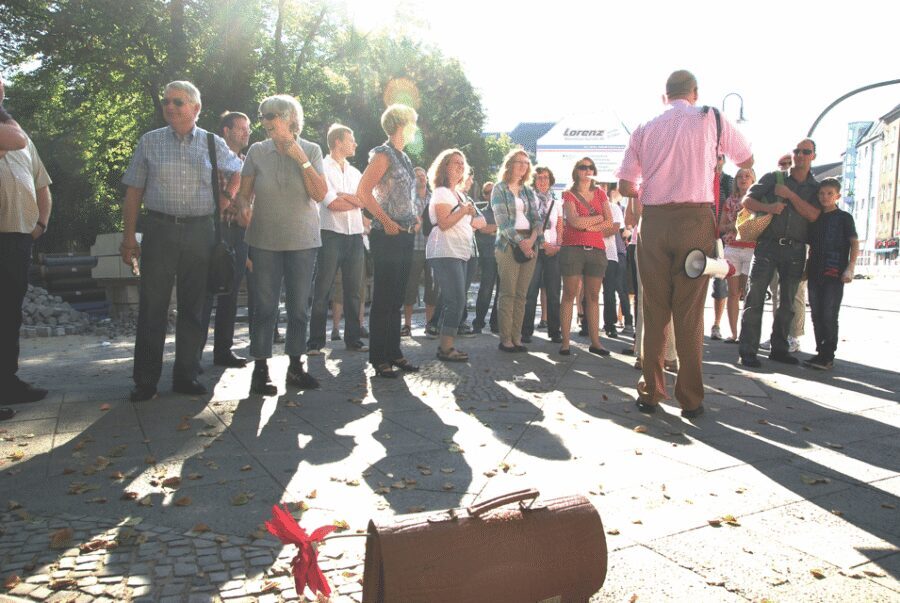
Your meeting point is easy to find once you know the exact instruction: meet your guide at U Bernauer Straße, upstairs at the exit marked Bernauer Straße. The guide will hold a sign with your name on it, so you’re not wandering around playing “guess the guide” for long.
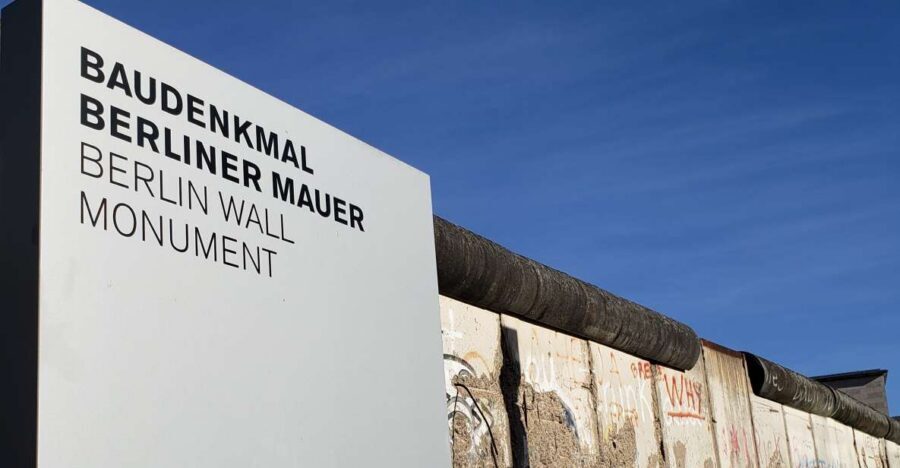
From there, the tour begins at Bernauer Strasse, which is now home to an open-air documentation museum. That matters because it sets the tone right away. You’re not starting somewhere generic; you’re starting where the city has kept the memory of division visible in an open-air way, so the walking route feels connected to the space itself.
As you move, your guide follows the former borderline through the center of Berlin. Expect storytelling that goes beyond dates and describes what it was like to live with constant constraints—how the wall changed movement, planning, and even what people dared to try.
Practical tip: wear comfortable walking shoes. Two hours sounds manageable, but you’re stopping often, and Berlin pavement plus standing to look at border-area points adds up.
Palace of Tears (Tränenpalast): A Guided Border-Crossing Stop
One of the best parts of this tour is the built-in anchor stop at the Palace of Tears (Tränenpalast). It’s not just a passing photo stop. You get a guided component there, and that guided time is the difference between seeing a landmark and understanding why people associated it with separation and reunions.
The tour is designed to treat Tränenpalast as an original border crossing station, so the stories land in the right place. You’re hearing about the Cold War from a “what it meant on the ground” angle, then you see a site tied directly to that reality.
Here’s what I think makes this stop especially valuable: it connects the big wall narrative to the personal drama of crossing attempts. Even without extra background knowledge, you’ll get the sense that borders were not just lines on a map—they were systems that affected decisions and emotions in real time.
Also, if you’re traveling with mixed interests, this stop helps. Wall history fans get the context. People who came mainly for human stories get the emotion without the tour drifting into vague generalities.
The Wall’s Footprints and the Death Strip Viewpoint (If Open)
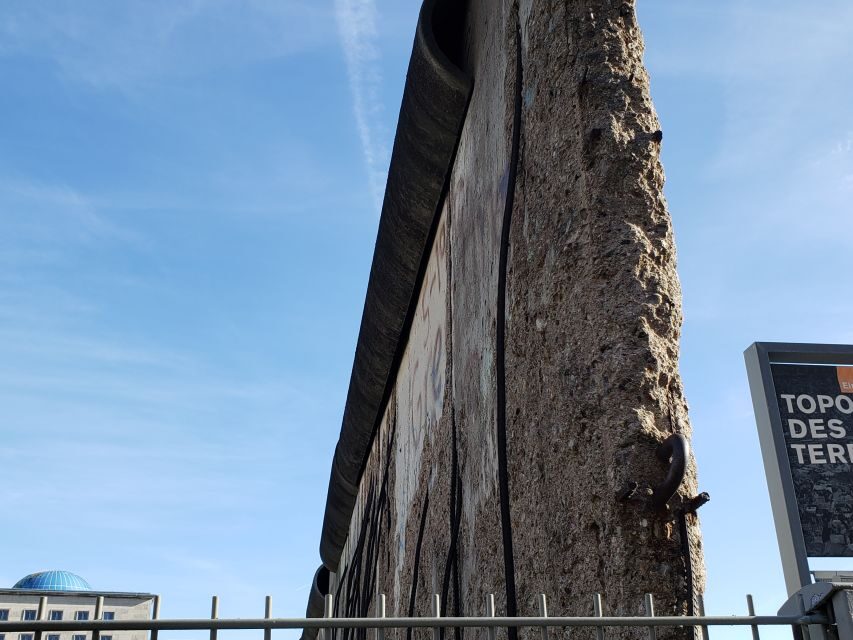
As the walk continues, you’ll learn where the Berlin Wall shaped movement and how escape attempts became part of the city’s daily pressure. The tour specifically includes a chance to view the former death strip from a viewing platform, but only if it’s open.
That “if it’s open” note is worth taking seriously when you’re planning. Berlin schedules and access points can change, and this viewpoint depends on conditions you can’t control. Still, the value isn’t only the view—it’s the guidance. Your local guide helps you understand what you’re seeing and why the area was designed the way it was to prevent escapes.
I like having this built in because it turns an abstract term into something physical. Even if the platform access isn’t available, you’ll still be walking the former borderline corridor with context that helps you picture how the wall operated.
Practical tip: if you arrive and the platform isn’t accessible, don’t treat it like a waste. Use that moment to ask your guide what you should look for from street-level instead. The guide storytelling is part of what you’re paying for.
Checkpoint Charlie: Closing the Loop on a Famous Border
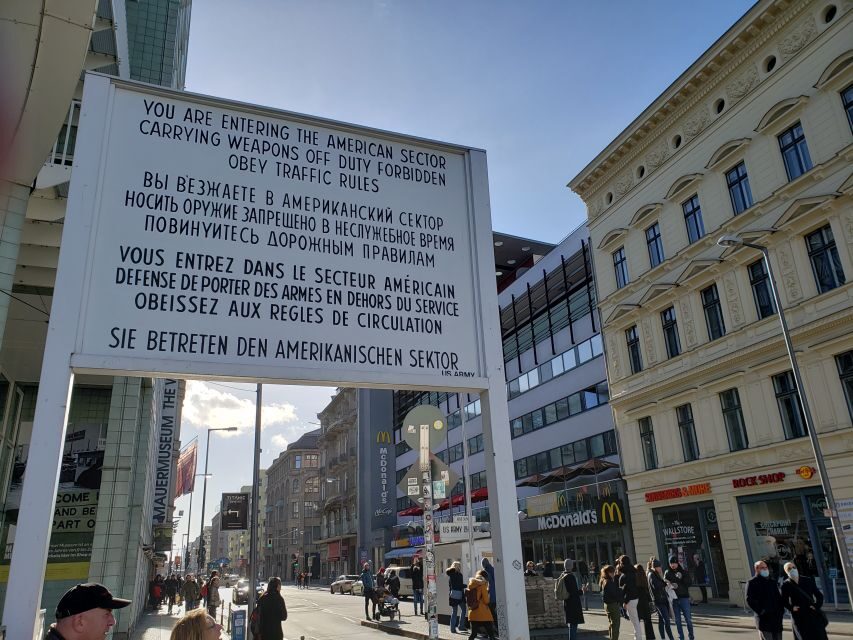
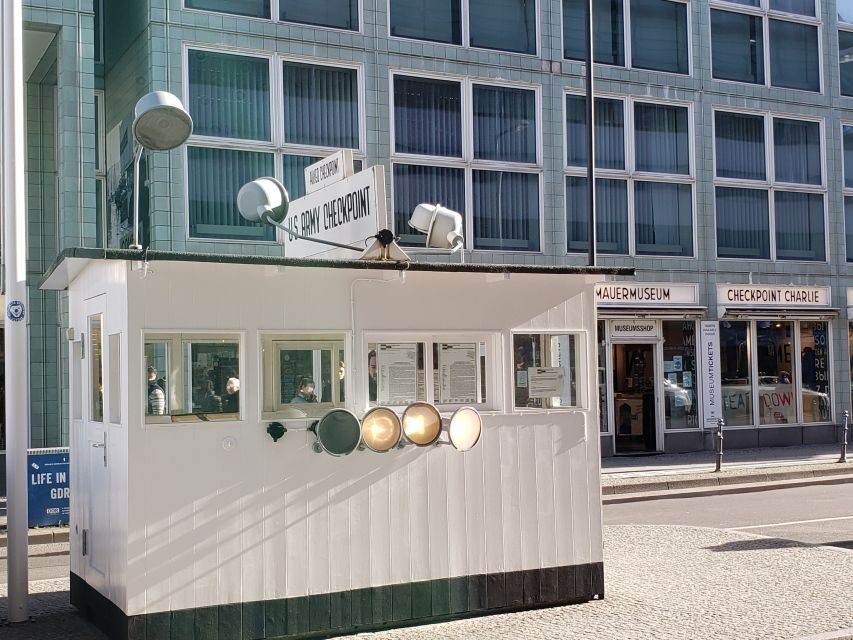
The tour ends at Checkpoint Charlie, another former border station. If you only know the Cold War from movies and classic photos, Checkpoint Charlie can feel like a stage prop. The guided approach helps it feel real again.
Finishing here makes sense because it ties the earlier parts of the walk to the world’s most recognizable border image. You’re not leaving Berlin’s division story at a random wall segment; you’re ending where global attention once focused—and where the symbolism of the border was unmistakable.
What you’ll likely appreciate most is the way the tour connects earlier themes—building, daily life, escape attempts—to this final stop. By the time you arrive, you’ll have a mental model for how Berliners experienced the border system: as something visible, regulated, and constant.
And since you’re ending at a major site, it’s often easier to continue your sightseeing afterward. You can shift from guided explanation to self-guided exploration without feeling like you’re starting over from scratch.
You can also read our reviews of more private tours in Berlin






Guides, Languages, and the Storytelling That Makes It Work
This tour’s success is closely tied to the guide. In the feedback you can see a clear pattern: guides are praised for being friendly, for telling stories in an authentic way, and for having inside knowledge rather than reciting textbook lines.
Two guide names show up in the best-rated experiences: Stephanie and Stefan. Stephanie is described as an authentic storyteller with friendly delivery and inside knowledge. Stefan is credited with leading the group through the Cold War and its meaning for divided Berlin. One account also notes language flexibility, including English for adults and German for kids, switching as needed.
That kind of adaptability can matter if:
- you want your questions answered quickly,
- your group includes different ages,
- or you prefer explanations in either English or German.
Language-wise, the tour is offered in German and English. Your guide will work with your group, so it’s a good fit if you’re not traveling with a perfect match of language comfort.
Price and Value: Is $22 a Good Deal?
At $22 per person for a private walking tour running about 2 hours, this is priced in the “reasonable” zone for Berlin history. You’re not just paying for a route—you’re paying for a local guide, private group time, and access to multiple meaningful border-related sites in one loop.
Here’s how I judge value for tours like this:
- If the route is coherent and the guide helps you connect the dots, the price feels fair.
- If you only get random stops with no explanation, it would be overpriced.
This tour is built around explanation. You start at Bernauer Straße, include the Palace of Tears, and end at Checkpoint Charlie, with storytelling built into each stretch. Even the “death strip” viewpoint is guided by context, not just sightseeing.
One more value point: private format at this price is rare. Even if you’re a small group, you get more attention and more chances to ask questions than you would on a large group tour.
Who Should Book This Private Berlin Wall Tour
This tour is a strong match if you:
- want the Berlin Wall and Cold War to make emotional and practical sense,
- like walking tours that focus on explanation rather than speed,
- want a route that covers major border stations without turning into a museum marathon,
- and prefer a smaller, more question-friendly setting.
It may be less ideal if you’re after a long, museum-style deep dive. This is two hours. You’ll leave with a clear outline and strong impressions, but you won’t leave with every detail of Berlin’s full Cold War timeline.
Also consider whether you’ll be disappointed by potential access limits around the death strip platform. If you’re the type who plans tightly around specific viewpoints, bring flexibility.
Should You Book This Berlin Wall Private Walking Tour?
Yes—book it if you want a guided, practical way to understand division in Berlin. The route is compact, the stops are meaningful, and the guide-led storytelling is clearly what makes it work. If you care about the human side of the Wall—daily life, escape attempts, and what borders did to people—this tour has the right shape.
Hold off or be flexible if the death strip platform being open is a make-or-break item for you. Everything else in the experience is still grounded in original border areas, so you won’t feel like you missed the whole point even if that one viewpoint is unavailable.
FAQ
How long is the Berlin Wall and Cold War private walking tour?
The tour lasts about 2 hours.
Where do I meet my guide?
Meet your guide at the underground station Bernauer Straße, upstairs at the exit marked Bernauer Straße. Your guide will have a sign with your name.
What are the main stops on the tour?
You’ll visit Bernauer Straße, the Palace of Tears (Tränenpalast), and end at Checkpoint Charlie. The death strip viewing platform is included if it’s open.
Is the tour private or shared?
It’s a private group.
What languages are offered?
The live guide speaks German and English.
Is the tour wheelchair accessible?
Yes, it’s wheelchair accessible.
How much does the tour cost?
The price is $22 per person.
Is free cancellation available?
Yes. You can cancel up to 24 hours in advance for a full refund.
Can I reserve now and pay later?
Yes. The listing offers reserve now & pay later.
What if I’m late or can’t find the guide?
Call the local partner’s office using the number provided on your voucher if you’re late or can’t locate your guide.