REVIEW · BERLIN
East Berlin: City of Shadows Walking Tour
Book on Viator →Operated by Insight Cities · Bookable on Viator
Berlin’s Cold War scars are still visible. This 3-hour East Berlin walk turns major landmarks into a clear DDR timeline with a local historian, and I love how the guide links today’s streets to what East Germans lived through.
You’ll also get human stories at the stops that matter, from the Palace of Tears goodbyes at Friedrichstraße to the harrowing tales tied to the Berlin Wall’s Death Strip.
One possible drawback: the tour is timed tightly, so brief stop times mean you’ll likely want to return on your own later if you want extended museum time, especially at the Stasimuseum area.
In This Review
- Key highlights worth knowing
- East Berlin in 3 Hours: What This Tour Really Helps You Understand
- Price and logistics: Is $156.53 worth it?
- Meeting at Unter den Linden 42 and getting picked up
- Transit in East Berlin: Why public transport is part of the plan
- Stop 1: Brandenburg Gate and the Soviet Embassy’s power story
- Stop 2: Friedrichstraße station and the Palace of Tears
- Stop 3: Park am Nordbahnhof and the ghost stations
- Stop 4: Karl-Marx-Allee’s socialist dream—and its failure
- Stop 5: Memorial of the Berlin Wall and the Death Strip
- Stop 6: The Stasimuseum area and how Eric Mielke built surveillance
- Stop 7: Alexanderplatz and the 1989 turning point
- What’s included (and what isn’t)
- Who this tour fits best
- Should you book East Berlin: City of Shadows Walking Tour?
- FAQ
- Where does the tour start and where does it end?
- How long is the East Berlin City of Shadows Walking Tour?
- How much does the tour cost?
- What’s included in the price?
- Is hotel pickup available?
- Do I need public transport tickets during the tour?
- Are food and drinks included?
- Can I cancel for a refund?
Key highlights worth knowing
- Small group (up to 8 travelers) for a more personal pace and easier questions
- A fast DDR timeline that moves from Soviet-era power to 1989 demonstrations
- Free-admission guided segments at every major stop listed on the route
- Stasi headquarters context tied to Eric Mielke and everyday surveillance
- Transit support baked in, with day-pass tips when walking won’t work
East Berlin in 3 Hours: What This Tour Really Helps You Understand
This is a guided history walk built to give you orientation fast. You won’t just see famous spots—you’ll learn why they were built, who controlled them, and how political decisions shaped ordinary life in East Berlin.
I like tours like this because they answer the question you’ll keep asking while you wander on your own: what am I looking at, and why does it feel so heavy? The answer here is very concrete, from the Soviet presence near Brandenburg Gate to the pressure-cooker atmosphere around the Wall and the Stasi.
You can also read our reviews of more walking tours in Berlin



Price and logistics: Is $156.53 worth it?
At $156.53 per person for about 3 hours, this isn’t the cheapest way to spend an afternoon in Berlin. You’re paying for a live local guide, a small group cap (max 8), and a tightly planned route with built-in transit.
Here’s when the value clicks:
- If you don’t know Berlin’s Cold War story yet and want a clean starting framework
- If you want someone to connect architecture to political history
- If you like hearing how control worked day-to-day, not just dates
Here’s when you should think twice:
- If you already have deep background and want long museum time, this tour’s pacing may feel short (the Stasi stop is only around 10 minutes)
Meeting at Unter den Linden 42 and getting picked up
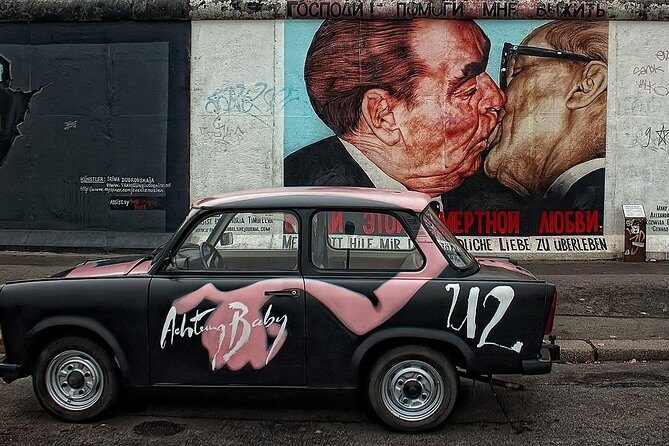
The tour’s starting point is Unter den Linden 42, 10117 Berlin. The ending point is listed simply as Berlin, Germany, so treat it as “back in the city after the final stop,” not a specific address you can pin on a map.
Pickup is listed as available: you’ll be picked up from any hotel or accommodation in Berlin. Still, the provided details also mention hotel pickup/drop-off under items not included, so I’d treat this as a “confirm in your booking details” moment. If pickup isn’t on your confirmation, plan to be at Unter den Linden 42 a bit early.
Transit in East Berlin: Why public transport is part of the plan
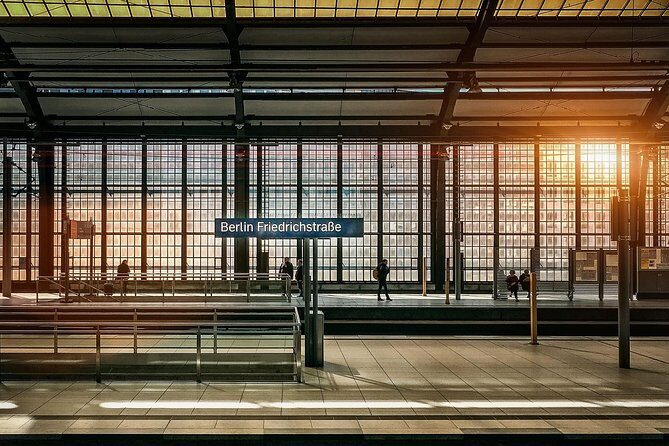
Even though it’s a walking tour, you’ll use public transport a few times. The distances between key sites are just too far to do comfortably on foot in one 3-hour block.
If you don’t already have a transit pass, the suggested option is a day metro pass:
- Berlin Transit One Way Tarif AB: 2.8 EUR
- Berlin Transit Day Ticket (one person): 7 EUR
- Senior discounts are listed too (you’ll see those values on the tour info)
If you cannot buy in advance, the guide will help you purchase at the first metro station during the tour. That’s one of the quiet conveniences here: you’re not stuck guessing which ticket type you need.
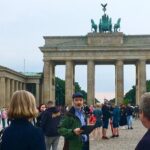
Stop 1: Brandenburg Gate and the Soviet Embassy’s power story
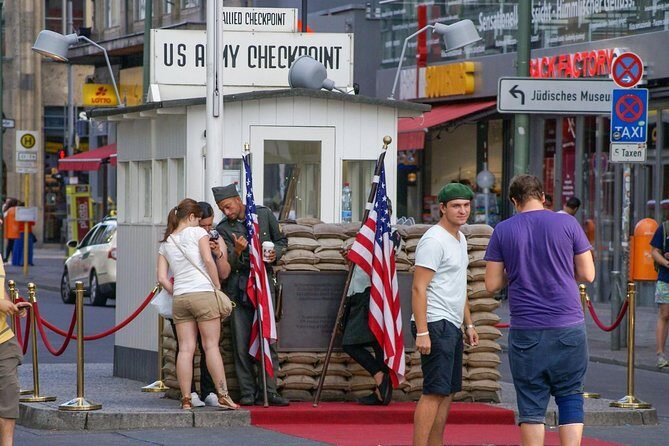
The tour begins at Brandenburg Gate, where your historian sets the stage with a Cold War lens. You’ll hear about how the built environment of modern Berlin sits on top of the darker, hidden history of the Communist era.
This start matters because Brandenburg Gate is one of Berlin’s most visible symbols. The guide connects that visibility to conflict: in June 1987, President Ronald Reagan famously called on Soviet Premier Mikhail Gorbachev to tear down the wall. Even if you’ve heard that line before, hearing it in the context of the city’s division gives it sharper meaning.
You’ll also discuss the nearby former Soviet Embassy, described as a grand, post–World War II monument built amid rubble in 1945—a clear statement of Stalin’s ambitions to control all of Berlin. And then you zoom out to the post-war reality: Germany was divided by the Allies into four parts, creating decades of Cold War tension.
Practical tip: look at the gate and surrounding buildings as political signals, not just sightseeing backdrops. This stop is about reading the city like a document.
You can also read our reviews of more city tours in Berlin



Stop 2: Friedrichstraße station and the Palace of Tears
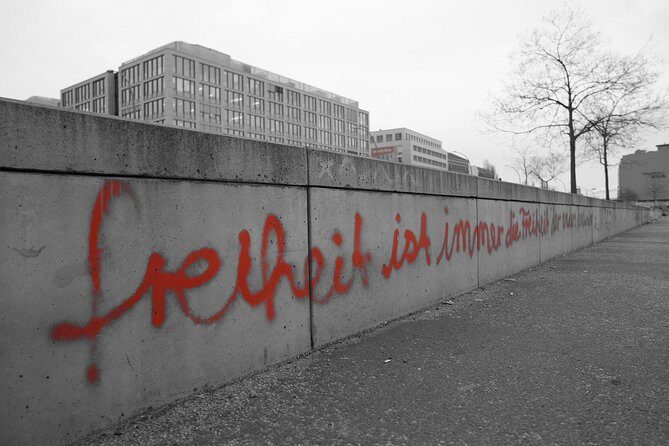
Next is Friedrichstraße, and this is where the history becomes personal. The station served as a key crossing point between East and West Berlin, so it’s tied to movement, permission, and separation.
You’ll hear about families torn apart by East Germany’s strict immigration rules. The emotional centerpiece is a specific place inside the crossing system: the office known as the Palace of Tears, where families said sad goodbyes.
This stop is short, but it does a lot. It reframes the Cold War from a contest of superpowers into a system that controlled paperwork, travel, and family life. That’s often what makes these tours click with people—suddenly you can understand why the same city felt like two different worlds.
Consideration: since this is about a crossing system, it’s less “see a building, take photos” and more “listen and connect dots.” Give yourself time to absorb the stories even if you’re in a busy station area.
Stop 3: Park am Nordbahnhof and the ghost stations
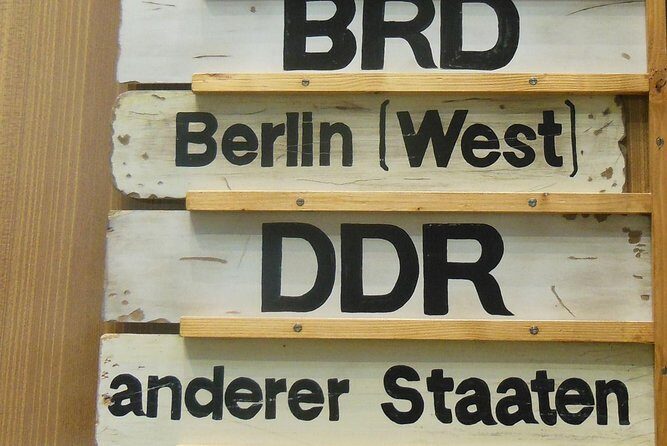
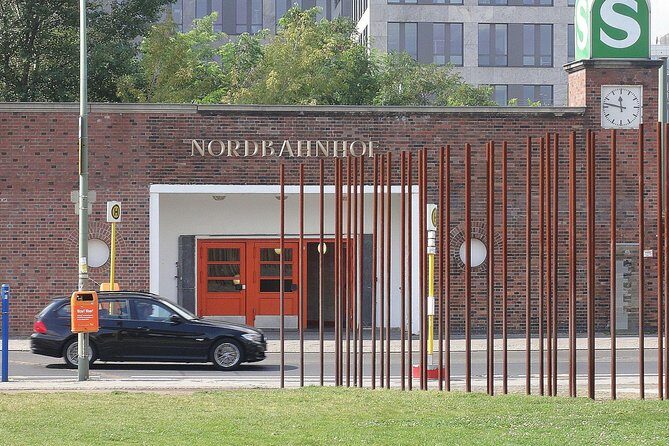
At Park am Nordbahnhof, you’ll learn how Berlin’s division created ghost stations. These were unused but heavily guarded stops on West Berlin subway lines that sat in East German territory.
That sounds strange until you picture it: a train line that still existed, but the doors didn’t open where people could live freely. The result was transit that looked normal from outside, while inside the city the rules were brutally different.
This stop is valuable because it shows you a “low drama, high control” side of the DDR. Not every piece of repression was a prison cell. Sometimes it was built into schedules, signage, and station access.
Stop 4: Karl-Marx-Allee’s socialist dream—and its failure
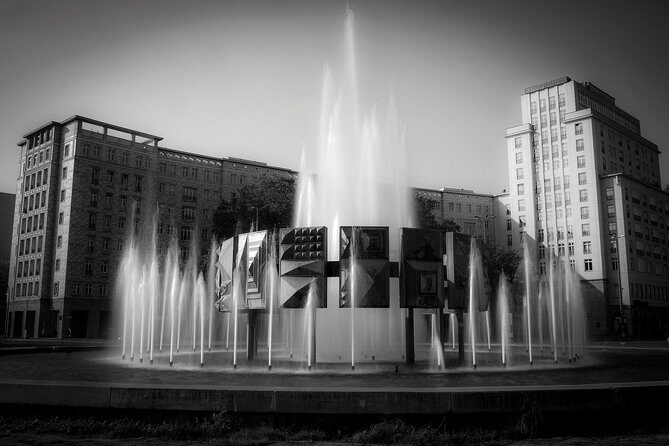
Then you move to Karl-Marx-Allee, famous for its long, grand housing complex. Here the guide tackles the gap between ideology and lived reality.
You’ll hear how East Germans were sold a socialist paradise, and then how that vision turned into deprivation, suppression, and paranoia. The architecture here helps the story land: big plans, big buildings, big promises—set against tight control and limited freedom.
This is one of the stops where you’ll likely start noticing patterns across the route. The DDR wasn’t only about policing; it was also about shaping how people saw success. Karl-Marx-Allee is where that propaganda-by-design becomes obvious.
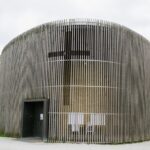
Stop 5: Memorial of the Berlin Wall and the Death Strip
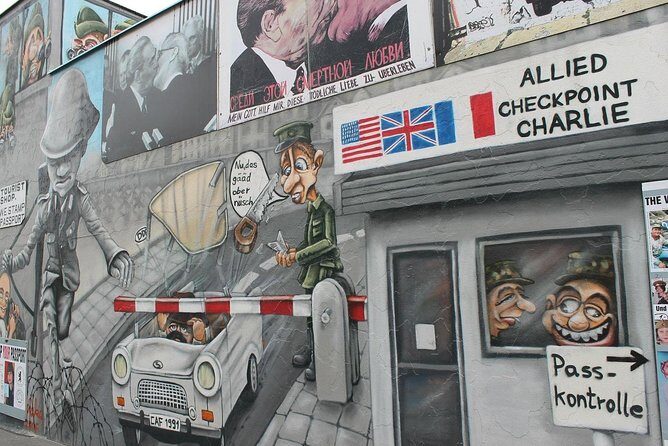
The tour then reaches the Memorial of the Berlin Wall, a place that doesn’t need theatrics. Your guide will help you experience the notorious Death Strip—and more importantly, the human attempts to escape that ended in tragedy.
This is a heavy stop. You’ll hear stories tied to escape attempts and the risks East Berliners faced when trying to leave. Even if you already understand the concept of the Wall, hearing it explained on location makes it more tangible.
Practical note: give yourself a moment before you step into the memorial area. If you’re rushed, the emotional weight can feel harder to process. The guide’s job is to connect it to the larger system, but you still need time to let it sink in.
Stop 6: The Stasimuseum area and how Eric Mielke built surveillance
Next comes the Stasimuseum stop, tied to East Germany’s secret police: the Stasi. The story isn’t just about spies and offices. It’s about what surveillance did to families and neighbors.
You’ll learn that the Stasi coerced people into spying on each other, including close family members. And you’ll hear about the feared leader Eric Mielke, including how he recruited a massive network of spies and developed surveillance techniques.
This part is one of the clearest ways to understand why the DDR felt so suffocating. The threat wasn’t always visible. It was built into trust—or the loss of it.
If you want deeper museum time: the guided stop is about 10 minutes. That’s enough for context, but not enough for slow reading and full exhibits. Plan a separate visit later if you want to go beyond the highlights.
Stop 7: Alexanderplatz and the 1989 turning point
The final major stop is Alexanderplatz, the center of public life in East Berlin. This is where the tour connects architecture to political momentum.
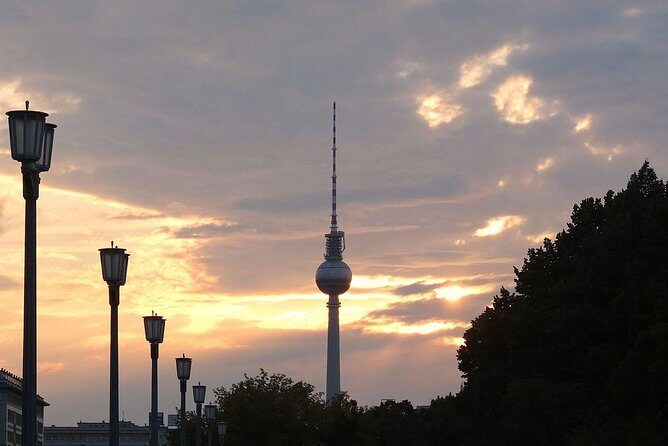
You’ll learn that Alexanderplatz was rebuilt in the 1960s and features major landmarks like the futuristic parliament building and the iconic TV Tower. Then the guide brings you to the turning point: in 1989, massive demonstrations erupted here, contributing to the regime’s downfall after 40 years of Communist rule.
This ending matters because it gives you closure. The Wall, the Stasi, and the family separation stories explain the pressure. Alexanderplatz explains how pressure broke.
Even better, the guide’s framing helps you see 1989 not as a magic moment, but as the culmination of years of control and growing resistance.
What’s included (and what isn’t)
Included:
- Local guide
Not included:
- Food and drinks
- Transportation to/from attractions: you’ll use public transport a few times
So I recommend you treat this as an active morning/afternoon. Bring a water bottle if you like. Also plan for snacks before or after, since the tour schedule doesn’t mention meal stops.
Who this tour fits best
This tour is best for:
- First-time visitors to Berlin who want a structured DDR overview
- People interested in how political systems shape daily life, not just famous sites
- Travelers who like small groups and direct conversation with a historian
You might choose something else if:
- You want long museum time and detailed exhibits during the same visit
- You already know the Cold War history well and mainly want artifacts and deep reading
The small group size (max 8 travelers) is a genuine quality-of-life factor. It keeps the pace manageable for a 3-hour route and helps you ask follow-up questions without feeling like you’re part of a moving crowd.
Should you book East Berlin: City of Shadows Walking Tour?
I’d book it if you want a strong orientation to East Berlin’s Communist-era story in a short time. The route hits the big political symbols—Brandenburg Gate and the Berlin Wall Memorial—and connects them to the systems that controlled people, especially at Friedrichstraße and the Stasi headquarters context.
If your priority is deep museum exploration, treat this as your “set the stage” visit. Go for the guide’s explanations during the walk, then return later on your own if you want more time with exhibits.
Net: this is the kind of tour that makes the rest of your Berlin time make sense. If you want Berlin’s shadow history to feel clear, not chaotic, this is a smart way to start.
FAQ
Where does the tour start and where does it end?
The tour starts at Unter den Linden 42, 10117 Berlin, Germany. It ends in Berlin, Germany, though a specific final address isn’t listed in the provided information.
How long is the East Berlin City of Shadows Walking Tour?
It runs for about 3 hours.
How much does the tour cost?
The price is $156.53 per person.
What’s included in the price?
You get a local guide. The tour uses a mobile ticket, and several stops are listed as having free admission tickets for the guided segments.
Is hotel pickup available?
Pickup is listed as being offered from any hotel or accommodation in Berlin. It’s still worth checking your booking confirmation for what’s included for your specific pickup.
Do I need public transport tickets during the tour?
Yes. You’ll need public transport a few times since some key sites are too far to walk. The info suggests buying a Berlin day metro pass if you don’t already have one, or using ticket options like the AB one-way ticket.
Are food and drinks included?
No. Food and drinks are not included.
Can I cancel for a refund?
Yes. Free cancellation is available up to 24 hours in advance for a full refund. If you cancel less than 24 hours before the start time, you won’t receive a refund.