REVIEW · BERLIN
Karl-Marx-Allee Walking Tour: Berlin’s Socialist History
Book on GetYourGuide →Operated by Beyond and Beneath Tours · Bookable on GetYourGuide
A street with political muscle still feels alive. A guided walk along Karl-Marx-Allee shows you how ideology literally became concrete, from Cold War design choices to the stories East Berliners tried to live with.
I love how the architecture does the teaching work for you. As you pass the grand housing blocks in socialist classicism style, you can feel the scale of the East German reconstruction effort, not just read about it. I also love the way the tour name-checks the uncomfortable parts of the system, like Stasi wiretaps and listening stations hidden in plain places.
One possible drawback: in about 2 hours, you cover a lot of heavy material. If you like to slow-walk history with lots of questions, wear extra-comfy shoes and go in ready to take notes fast.
In This Review
- Key things I’d circle before you go
- Why Karl-Marx-Allee Still Feels Like a Statement
- From Ruins to a National Project: Building the Socialist Boulevard
- June 1953: The Street’s Turning Point You Can Feel
- The Stasi Behind the Facade: Surveillance in Everyday Spaces
- Film-Looking Streets: Where The Lives of Others Fits In
- Stop-by-Stop: From Frankfurter Tor to Strausberger Platz
- Price and Value: Is $23 Worth It?
- Who This Tour Fits Best (and Who Might Not Love It)
- The Small Practicalities That Make It Easier
- Should You Book Karl-Marx-Allee With a Guide?
- FAQ
- How long is the Karl-Marx-Allee walking tour?
- Where do I meet, and where does the tour end?
- What languages are offered?
- Is the tour wheelchair accessible?
- Is it suitable for children?
- What should I bring?
Key things I’d circle before you go
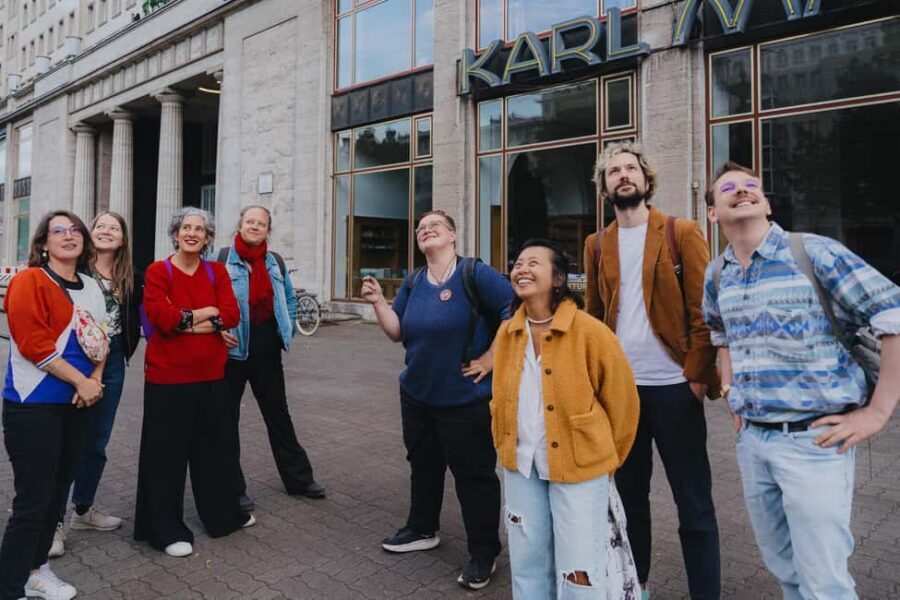
- A socialist boulevard built from postwar ruins with thousands of volunteers
- Cold War architecture that was meant to project certainty, not doubt
- June 1953 uprising and why this street almost toppled the government
- Stasi surveillance details you can spot through how the buildings were used
- Film location stops tied to The Lives of Others and The Queen’s Gambit
- Modern Berlin tensions as protests push back against gentrification
Why Karl-Marx-Allee Still Feels Like a Statement
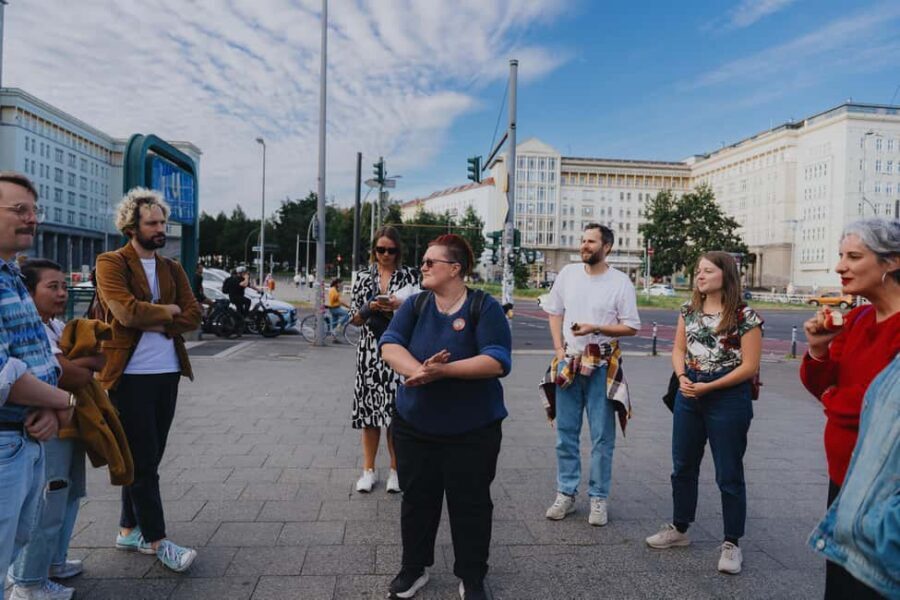
Karl-Marx-Allee is the kind of Berlin street that makes you stop mentally, not just physically. You’re walking beside housing blocks that were designed to be seen from far away and understood instantly. The East German state wanted to look solid, modern, and permanent, like a promise you could live inside.
The scale hits first. This isn’t a small, quiet “historic street.” It’s a grand, parade-size setting built for the main project of East Germany’s post–World War II national reconstruction. Standing there, you get why the street mattered even before anyone talked about politics.
Then the story layers on. The buildings you’re admiring weren’t neutral design. They were shaped by Cold War ideology, by what the regime wanted to portray as socialist success, and by what it feared would undermine that image. You’ll start noticing how architecture can be propaganda with good lighting and well-dressed facades.
You can also read our reviews of more walking tours in Berlin



From Ruins to a National Project: Building the Socialist Boulevard
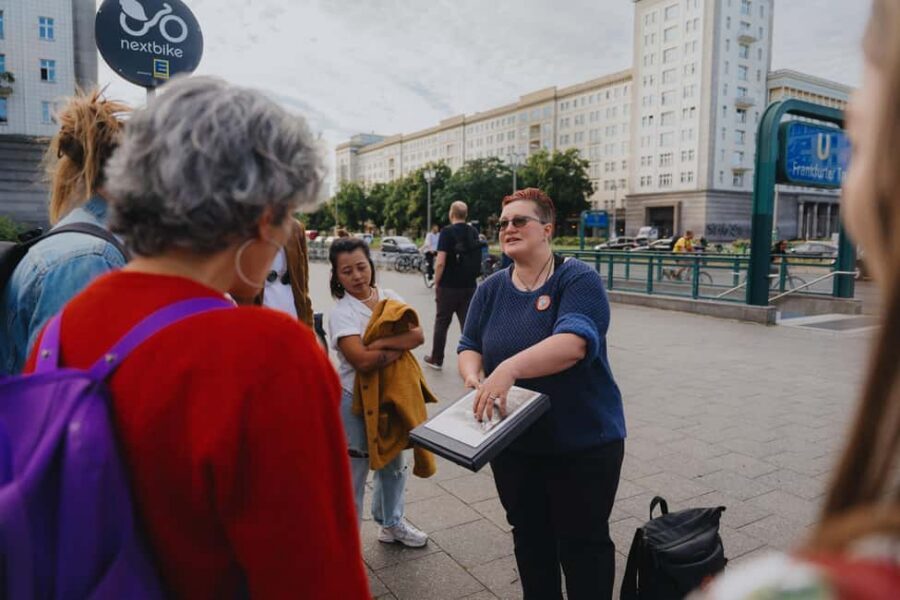
East Germany didn’t build this street on a clean slate. The project rose out of the ruins, after WWII, when Berlin was still recovering and the state was trying to show it could rebuild faster and better than anyone else. The street emerged with support from thousands of volunteers working day and night.
Here’s the part that feels surprisingly human. “Thousands of volunteers” turns a political monument into something closer to a massive collective push. Even if you don’t share the ideology, you can’t miss the effort. You’ll feel that effort in the way the buildings line up like a plan that had to be followed, not improvised.
You also get an architectural time-travel moment. The modernist architecture from the immediate postwar years reminds you of earlier utopian urban ideas that formed in Berlin’s destruction. Later on, the East German regime rejected what came before and had a radically different idea of what socialist living should look like.
One cool detail to watch for as you walk: the street’s modernist elements were intentionally hidden from passersby by fast-growing poplar trees. That’s not just landscaping. It’s literally about managing what the public can see.
June 1953: The Street’s Turning Point You Can Feel
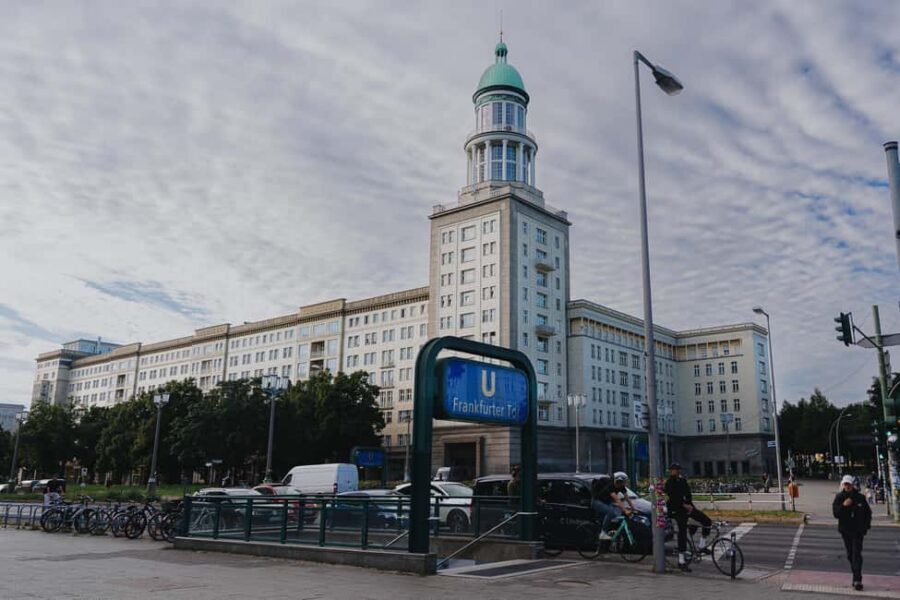
The street’s grand look doesn’t last the whole story. Under the surface is the reality of stress, anger, and pressure—so much pressure it boiled over in June 1953.
During that uprising, disgruntled workers launched a mass revolt that almost toppled the socialist government. This matters because it changes how you read the architecture. If you only see the buildings, you might think they were always destined to stand as a confident symbol. The 1953 unrest tells you confidence came with a cost—and that the system was not as stable as it wanted the world to believe.
You’ll hear how the street’s construction nearly jeopardized young East Germany’s existence. That’s a big claim, and the tour’s framing helps it make sense: rebuilding was political, and political systems can’t always control what people feel when life doesn’t match the posters.
As you move down Karl-Marx-Allee, treat the buildings like evidence. Ask yourself: would you accept this kind of promise if your own life didn’t improve? That tension is the thread running through the walk.
The Stasi Behind the Facade: Surveillance in Everyday Spaces
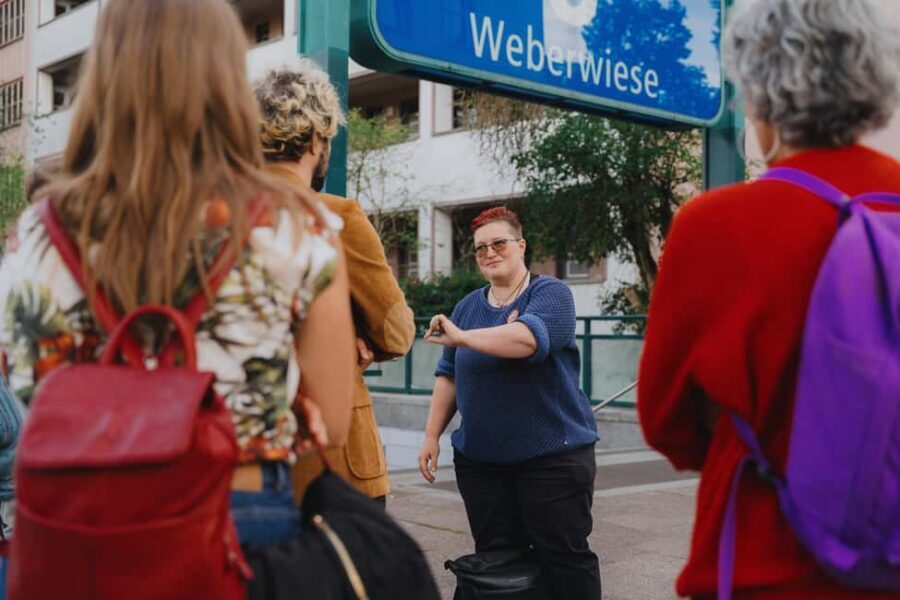
This tour doesn’t stop at buildings. It goes after the hidden machinery of the system. East Germany sold an image of idyllic life and affluence—cafes, restaurants, and well-stocked shops arranged like everyday comfort. And for a lot of people, that facade was part of the daily landscape.
But the facade had a second life. You’ll learn about surveillance and suppression by the Stasi police, including wiretaps in flats and listening stations in attics. The point isn’t to shock you for its own sake. The point is to show how a surveillance state can sit inside ordinary housing.
As you walk, keep two things in your head. One, the architecture was designed to look welcoming and ordered. Two, the same spaces could be used to monitor private life. That contrast is the takeaway you’ll carry with you long after the walk ends.
The most valuable part here is how the guide explains the mismatch between public and private. Socialism as performance is one layer. Socialism as control is another layer. Karl-Marx-Allee lets you see both without needing a museum wall to separate fact from feeling.
Film-Looking Streets: Where The Lives of Others Fits In
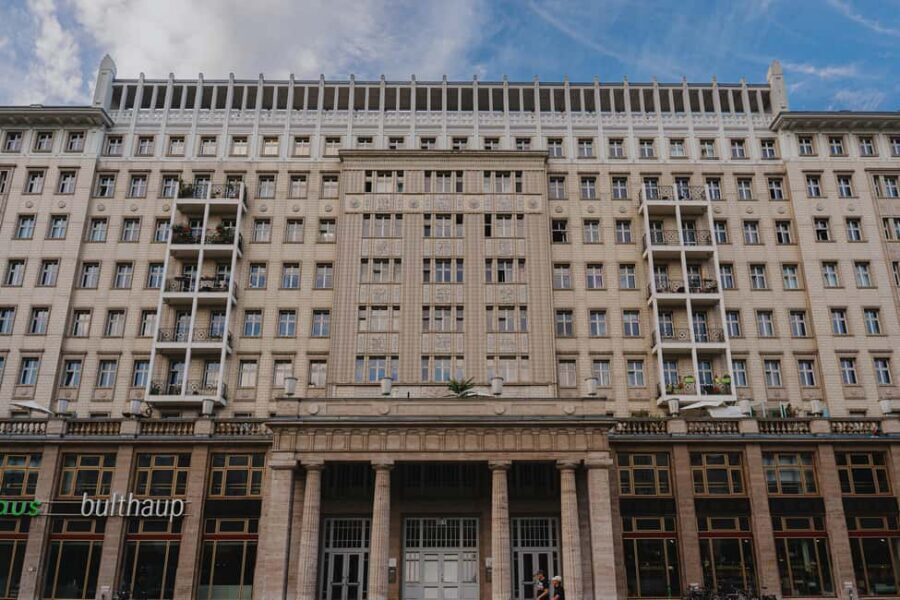
Berlin loves to reuse its real locations, and this tour connects you to that habit in a smart way. You’ll see filming locations tied to The Lives of Others and The Queen’s Gambit.
This is useful even if you’re not a hardcore film fan. Seeing real places tied to famous stories helps your brain build stronger memory cues. Instead of remembering scenes as flat screen moments, you start remembering them as specific corners, specific building frontages, specific visual moods.
It also adds a different kind of context. Spy stories and period drama work because they lean on the feeling of living under pressure. When you’re standing where filming happened, you understand why those stories looked convincing: the architecture and the street layout already carried the right atmosphere.
If you did watch either title, you’ll likely find yourself mentally overlaying scenes as you go. If you haven’t, it still works. The locations become part of the larger story of how East German life has been portrayed—and what the buildings can communicate on their own.
You can also read our reviews of more historical tours in Berlin






Stop-by-Stop: From Frankfurter Tor to Strausberger Platz

This walk runs in a clear arc: you start at U Frankfurter Tor, move along Karl-Marx-Allee for the guided portion, and end at U Strausberger Platz.
Stop 1: U Frankfurter Tor start point
Meet outside Frankfurter Tor U-Bahn station at the corner of Warschauer Straße and Karl-Marx-Allee. Your guide will be holding an orange umbrella. That sounds tiny, but it helps you get your bearings fast in a city where platforms and exits multiply like rabbits.
This start matters because you’re already in the right context. You don’t begin with a lecture in some distant spot. You begin in the streetscape itself, where the look of the area sets expectations for the political story ahead.
Stop 2: Karl-Marx-Allee guided tour (about 1.5 hours)
This is the heart of the experience. You focus on how Cold War ideology shaped Berlin’s architecture and on the scale of the ambitious postwar building project. The guide’s job here is to connect design choices to human consequences.
You’ll talk about the street’s origins after WWII, the volunteers, and the architectural shift from modernist ideas toward the socialist classicism style. You’ll also hear about the poplars used to hide what the regime didn’t want seen.
Then the narrative pivots to 1953 unrest and the Stasi’s surveillance system. The balance is key. You don’t just get a list of facts. You get a sense of how an image of socialist comfort could coexist with a reality of listening and suppression.
A practical tip: since this section is dense, pause when the guide points something out. Let the detail settle before you move on.
Stop 3: finish at U Strausberger Platz
You end your walk at the Strausberger Platz U-Bahn area. At that point, you’ve seen the boulevard from the outside and learned how the state’s messaging was embedded in layout and style. It’s a satisfying finish because you can keep exploring Berlin with your new lens.
If you want an easy next step, I’d suggest using the end station to hop to another neighborhood right away. The whole point of a walking tour like this is to keep the story in your legs and eyes.
Price and Value: Is $23 Worth It?

At $23 per person for a guided 2-hour experience, you’re buying three things: a focused route, a live guide, and context that would take you a long time to assemble on your own.
One reason it feels good value is the guide doesn’t treat this as only architecture. The tour ties together building design, 1953 upheaval, and the Stasi’s everyday presence. That combination is hard to replicate casually, especially if you only plan to spend a short time in this part of Berlin.
You also get flexibility. Start times can vary, and you can check availability rather than locking into a single fixed slot. And you’ll hear explanations in English or German, so you’re not stuck guessing what you’re looking at.
Based on what I learned from the guide-centered praise for attention and responsiveness (including mention of Martina by name), you should expect a tour that pays attention to the group’s questions. That kind of pacing can make a big difference with heavy subject matter.
Who This Tour Fits Best (and Who Might Not Love It)

This walk fits you best if you like history that connects buildings to power. If your brain enjoys cause and effect—how ideology becomes concrete, how surveillance becomes part of daily life—this is a strong match.
It also suits you if you enjoy film locations and want a practical way to connect movies to real streets. Standing where stories were shot can turn a title you’ve seen into something you understand more clearly.
It may not be the best fit if you’re traveling with very young kids or you want a light, carefree stroll. The tour isn’t aimed at children under 10, and the content covers uprising and suppression, so it’s better for adults and older teens who can handle the tone.
The Small Practicalities That Make It Easier

Bring comfortable shoes. You’ll be standing and walking through an urban space where the details matter, and you won’t want to cut the experience short because your feet are done.
Also consider pace. Two hours is long enough to learn a lot, but short enough that you’ll feel the momentum. If you’re the type who hates feeling rushed, plan for a longer personal follow-up after the tour—maybe by returning later to re-read the buildings with what you learned.
Finally, if you’re traveling during busy seasons, arrive a few minutes early. Meeting outside a major U-Bahn station sounds simple until you’re trying to spot an orange umbrella in a crowd.
Should You Book Karl-Marx-Allee With a Guide?
Yes, I think you should book it if you want Berlin beyond the postcard. This tour gives you a rare mix: socialist architecture at full scale, a turning point in 1953, and the uncomfortable truth of Stasi surveillance hidden behind everyday life.
Skip it only if your goal is purely scenic walking with no political weight. The street is impressive, but the point of this experience is what the impression was meant to do.
If you like facts with meaning, and you enjoy learning by looking at real places, Karl-Marx-Allee is exactly the kind of Berlin stop that pays off fast.
FAQ
How long is the Karl-Marx-Allee walking tour?
The tour lasts about 2 hours. The guided portion is listed as about 1.5 hours along Karl-Marx-Allee.
Where do I meet, and where does the tour end?
Meet outside the Frankfurter Tor U-Bahn station on the corner of Warschauer Straße and Karl-Marx-Allee. Look for your guide holding an orange umbrella. The tour ends at U Strausberger Platz.
What languages are offered?
The live guide offers English and German.
Is the tour wheelchair accessible?
Yes, the tour is wheelchair accessible.
Is it suitable for children?
It is not suitable for children under 10 years.
What should I bring?
Wear comfortable shoes so you can handle the walking comfortably.